
How Long Does a Custom Quinceañera Gown Really Take?
Posted by Factory Dairy on 25th Jun 2026
I’ve been making custom formal gowns for over ten years—Quinceañera dresses especially, the big, poofy ones girls wear for their coming-of-age party. So let me tell you why one of those takes a full 40 days.
People see dresses at the mall, ready to wear, ships in a week. They ask me: “Come on, are you just trying to make it seem more special? 40 days?”
I get it. But no, that’s not it. Let me walk you through what actually happens.
First, the frame. You can’t rush this part.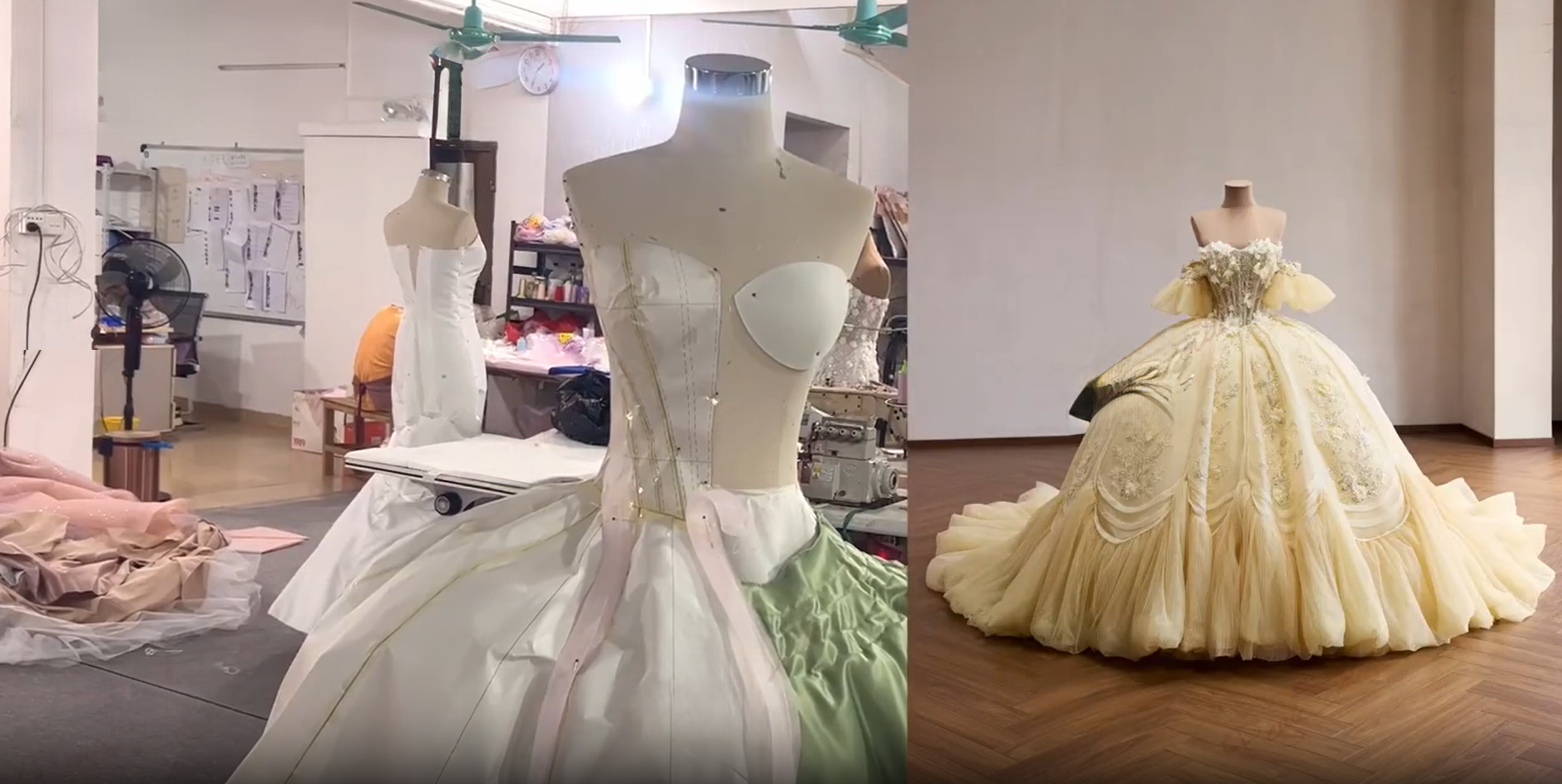
A dress that flares out like a cloud needs something underneath to hold it up. Factory dresses use cheap tulle lining, sewn fast by machine. We measure the girl—her actual body—and hand-stitch every piece of boning. The tension has to be right, inch by inch, following her waist and ribs. Too tight, it digs in. Too loose, the dress sags. That’s two or three days right there. And if the frame is off, every bead and flower you add later will sit crooked.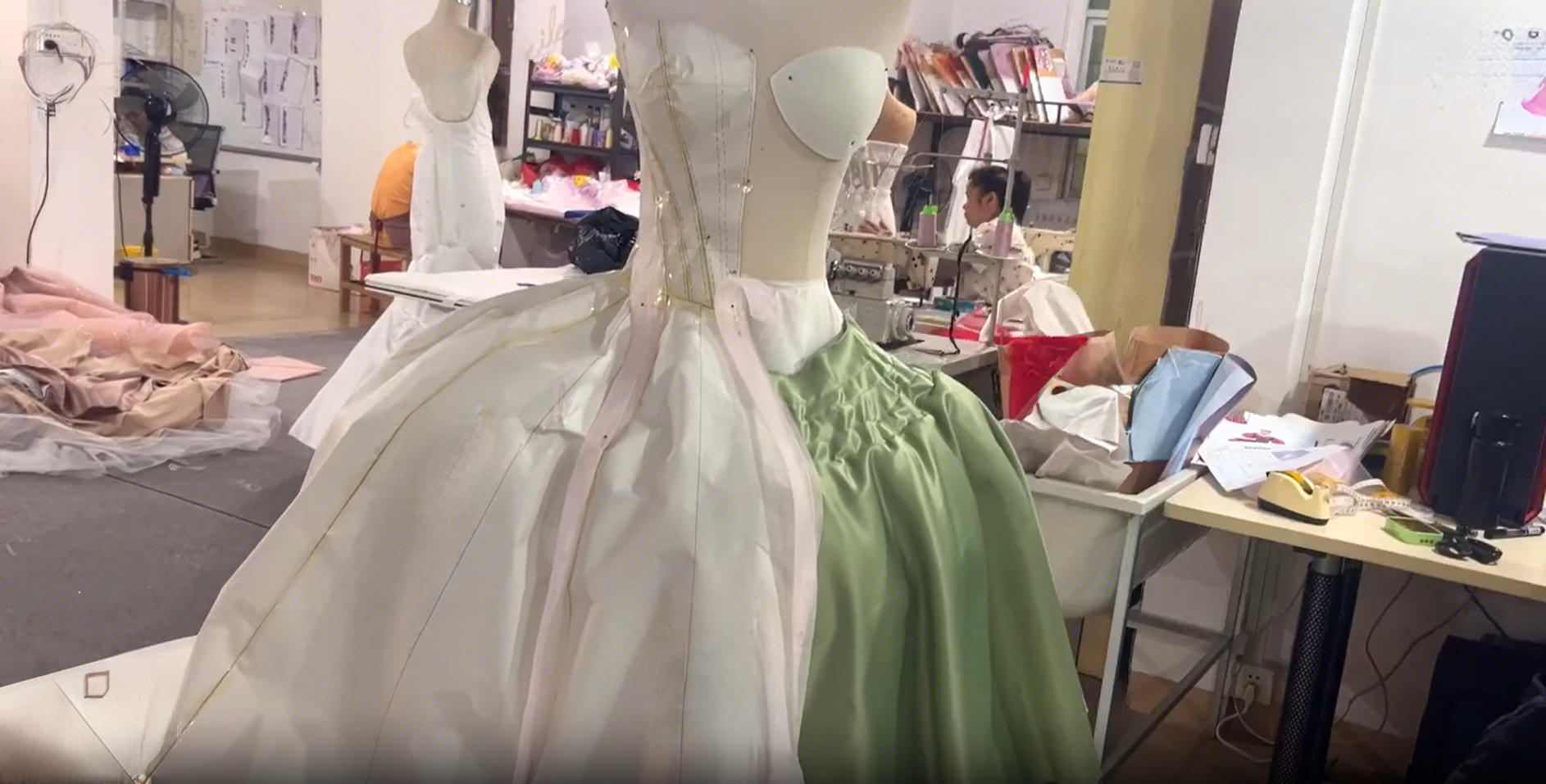
Cutting fabric. Most people think you just lay it out, draw some lines, and chop. Factories stack dozens of layers and cut them all at once. We cut each piece individually by hand. That matters a lot when you’re working with sequined tulle or embroidered lace—if you’re off by even a little, the pattern won’t line up. Plus we pre-wash or steam everything so it shrinks before we touch it. Otherwise the dress could warp after one wear and wash, and that’s not a risk I’ll take.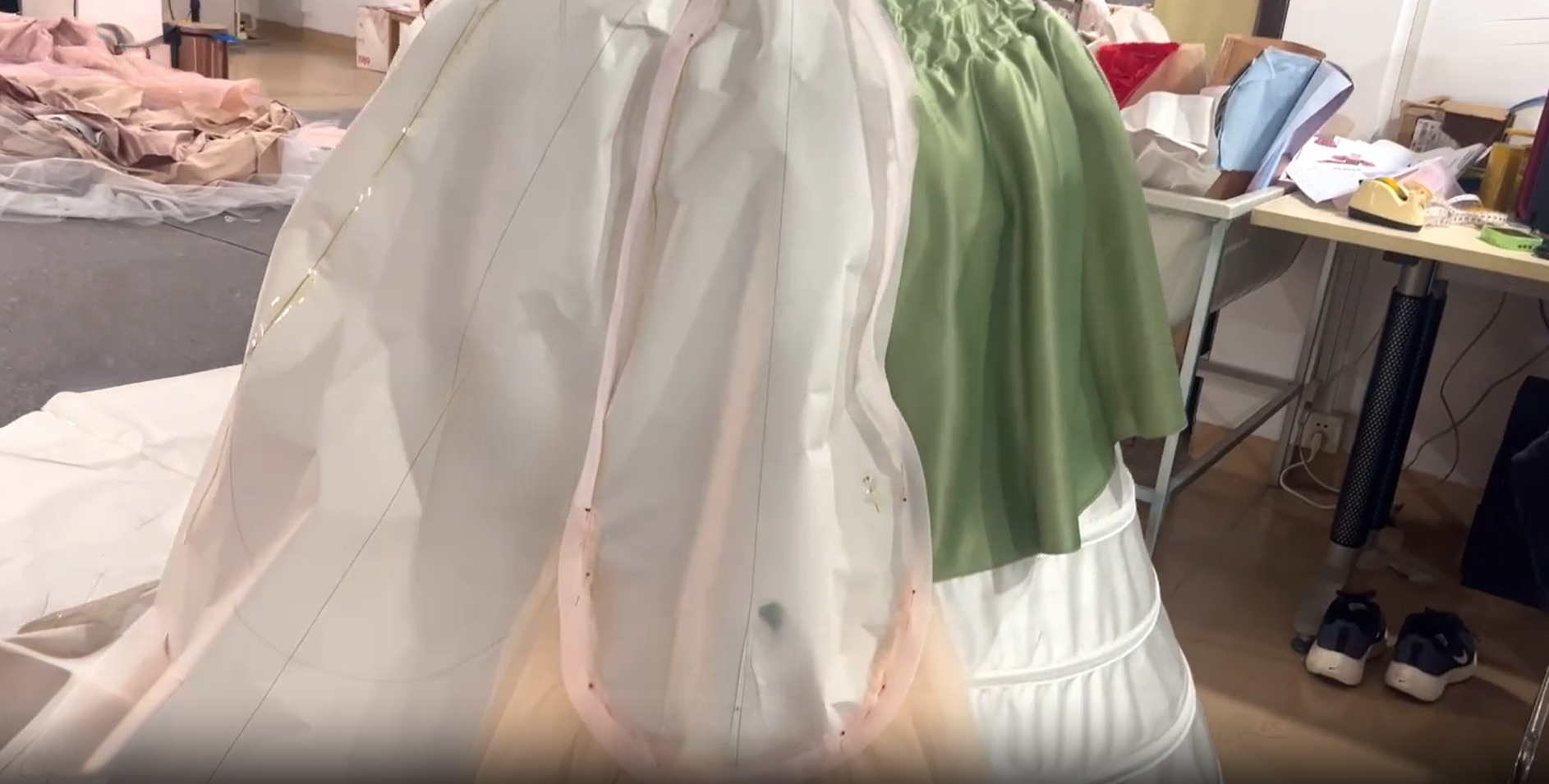
Sewing—it’s not all machine work.
For the main parts, like the waistline, straps, joining the inner and outer layers, we do a mix. High-speed machines make stitches that are too stiff. When you’ve got layers of tulle and satin stacked up, the machine pulls and the fabric puckers. So we stitch the basic shape by machine, then finish the edges and hide the loose threads by hand. Every seam gets checked by hand. No hard ridges, no rough spots that could scratch her skin. The spots that take weight, like where the bodice meets the skirt, get sewn over and over. Rush it, and it falls apart later.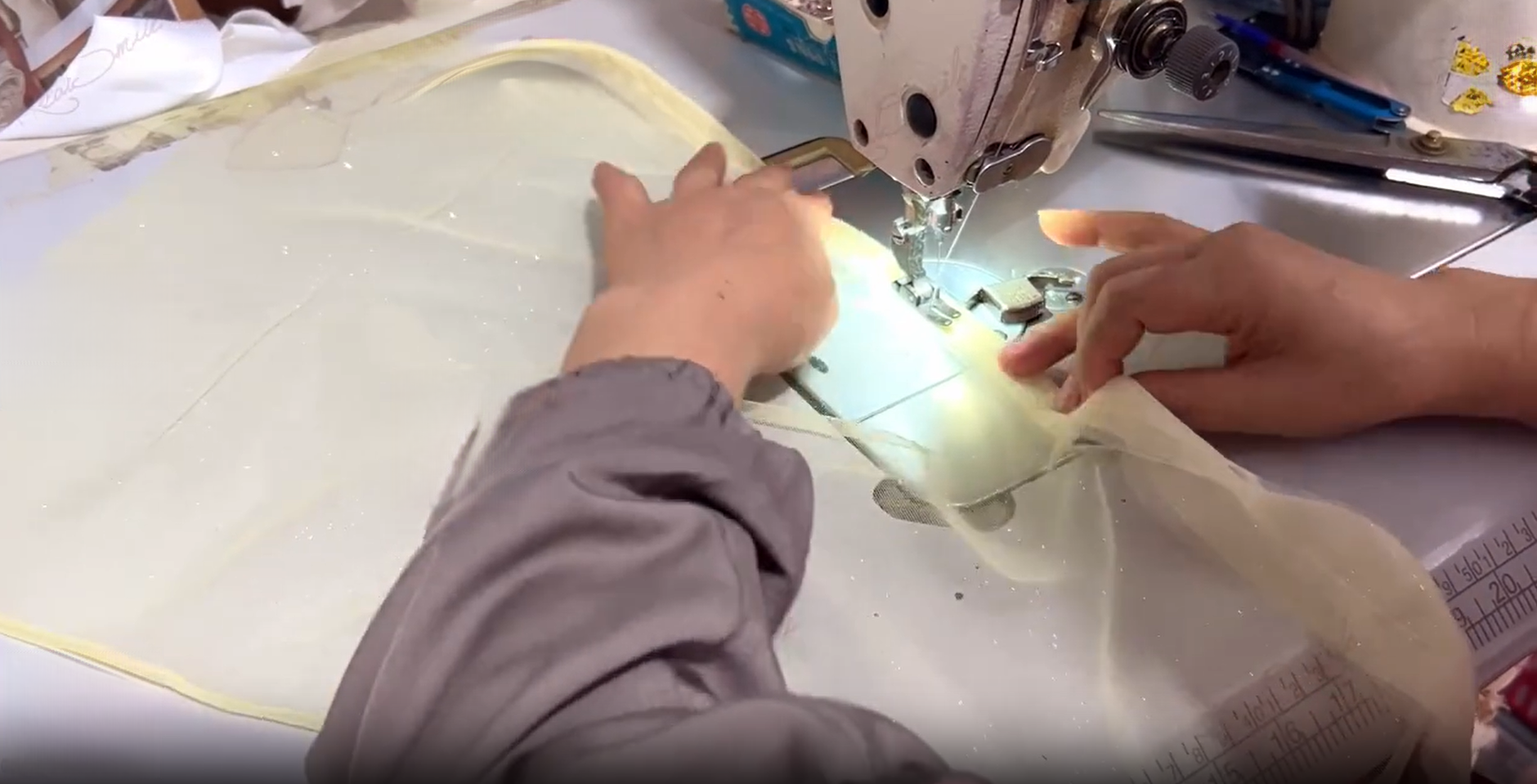
The bodice. This is where endless little adjustments happen.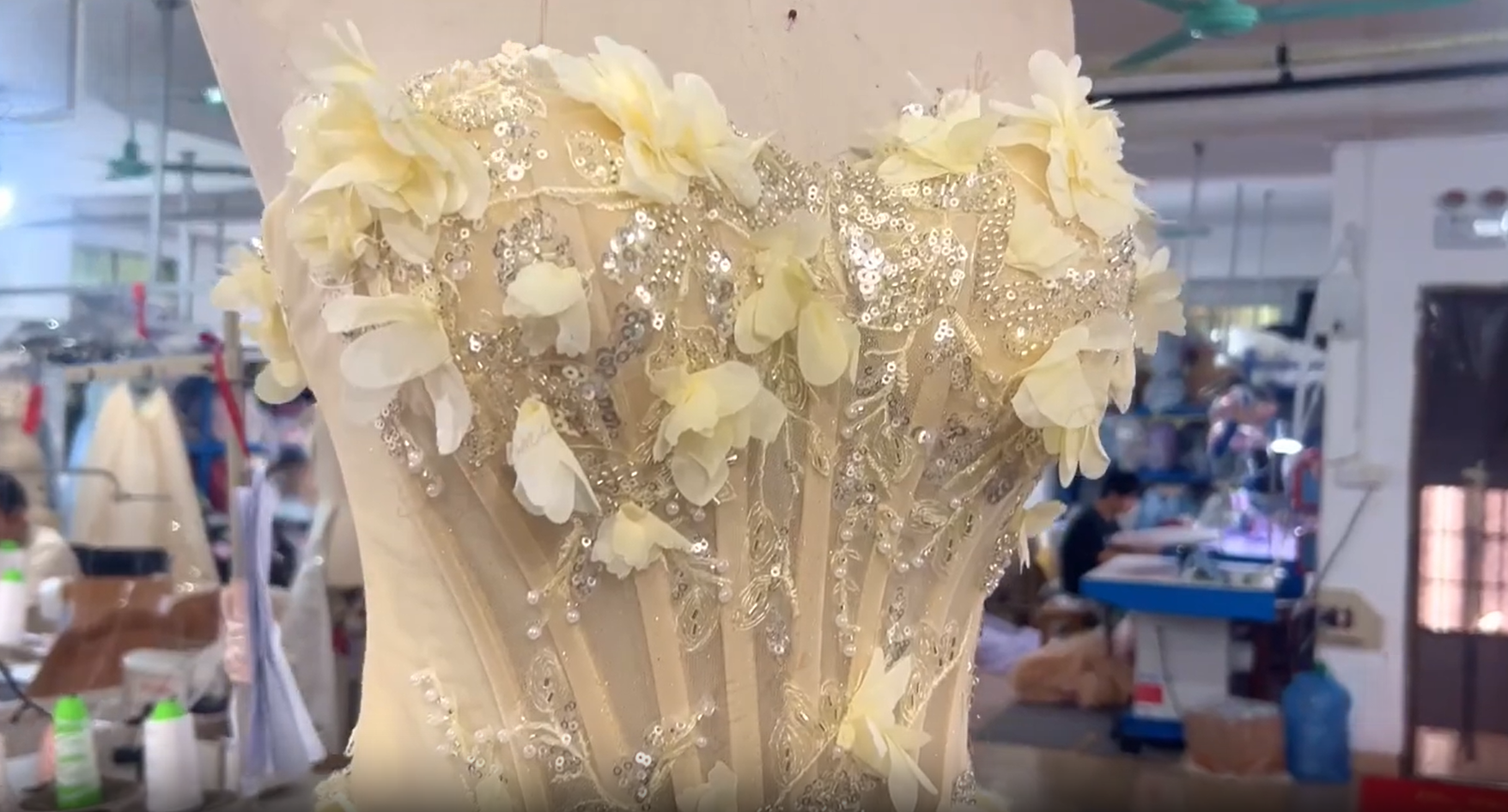
Factory dresses come in S, M, L. Ours are made for one person. We adjust for her bust, her waist, her shoulders, the curve of her back. We test the boning placement, the neckline shape, the underarm—making sure nothing pinches. We put it on a dress form, take it off, sew it again. Sometimes a curve is off by two millimeters and the whole thing looks wrong. I’m not being fussy. A formal gown has to feel good enough to dance in. It has to make her mother say, “This is for my daughter,” not just a generic shell she got stuffed into.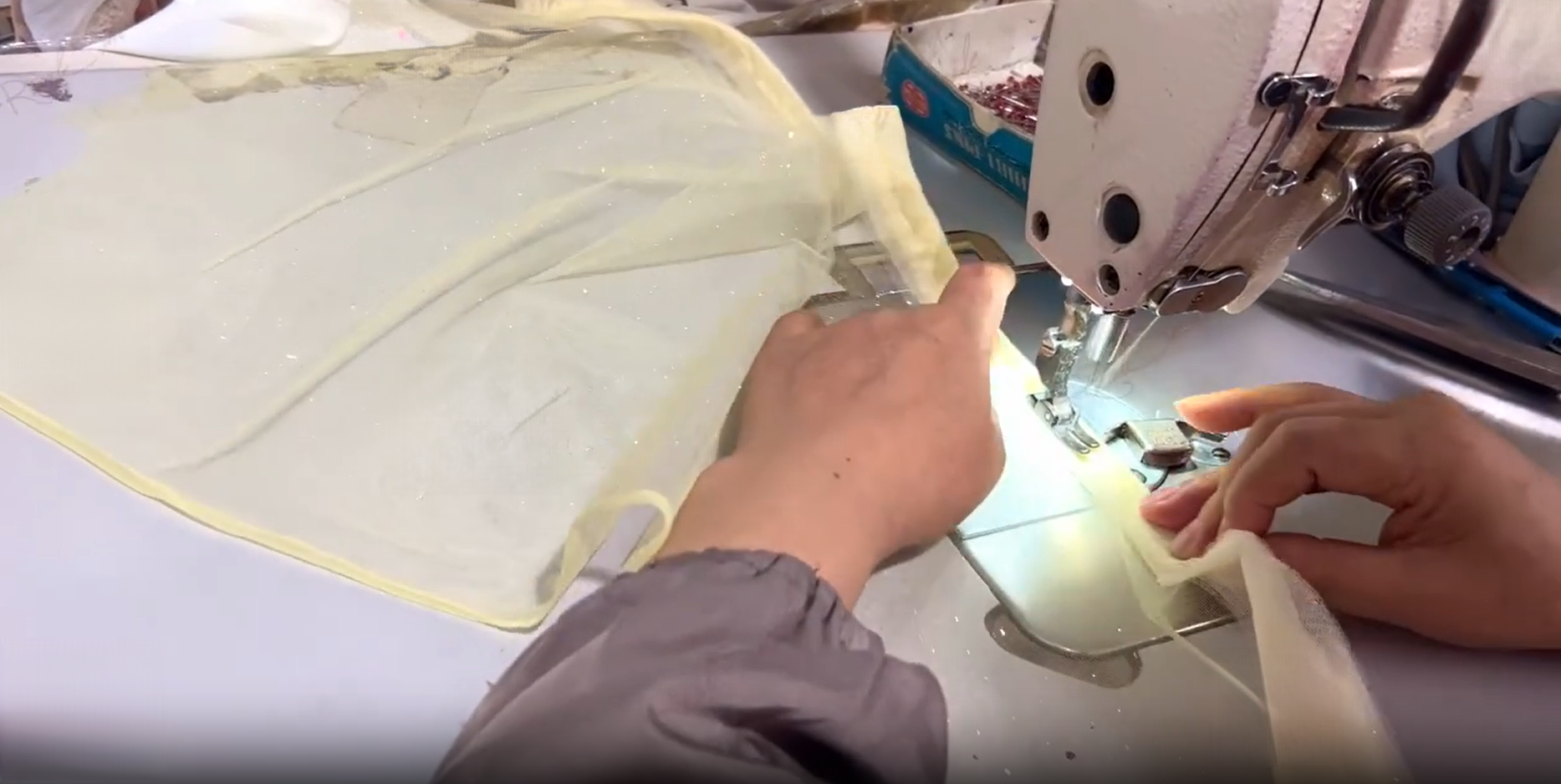
Beads and sequins. This takes forever, but it’s also what makes people cry.
Factory beadwork is mostly machine-stitched. The patterns are stiff. The machine pulls beads crooked. And there’s often glue on the back that scratches the skin. We do every bead by hand. One at a time. We look at the spacing, the density, and just go by eye. Sometimes we spend a whole morning on a patch the size of your palm. If a bead sits wrong, we pull it and start over. This step alone takes nearly two weeks. But when that girl twirls under the lights and every single bead catches the light—that’s what those hours bought.
The 3D fabric flowers. We don’t buy those ready-made.
We cut petal shapes from satin, tulle, whatever fabric works. Then we use heat and our fingers to curve them, layer them, stitch them together. We move them around like a painter moving things on a canvas until it looks right. Machine-pressed flowers look flat. Handmade ones have that soft, lifted, alive feeling. You can see the difference from across the room.
The skirt layers. This is its own art.
A big skirt lives or dies by its layers. We use different stiffnesses of tulle, sewing them onto the waistband one layer at a time, from the inside out. The gathering tension has to be exactly right—too tight and it flares out like an open umbrella, too loose and it just collapses. We want it airy. Moves gently when she walks, flares perfectly when she spins. You can’t learn that from a book. You just have to feel it. We finish a layer, hang it, look. If it’s wrong, we rip the stitches and do it again. Layering everything can eat a whole day.
Final fitting. Not just checking size.
We put it on a mannequin or have the girl come in. We look at how the skirt drapes—is it even? Are the sides straight? When she moves, do the beaded flowers stay aligned? Is there some ugly little crease at the back of the waist? We hunt for problems the customer might not even notice. Then we add a few reinforcement stitches, re-steam it. That’s another two or three days.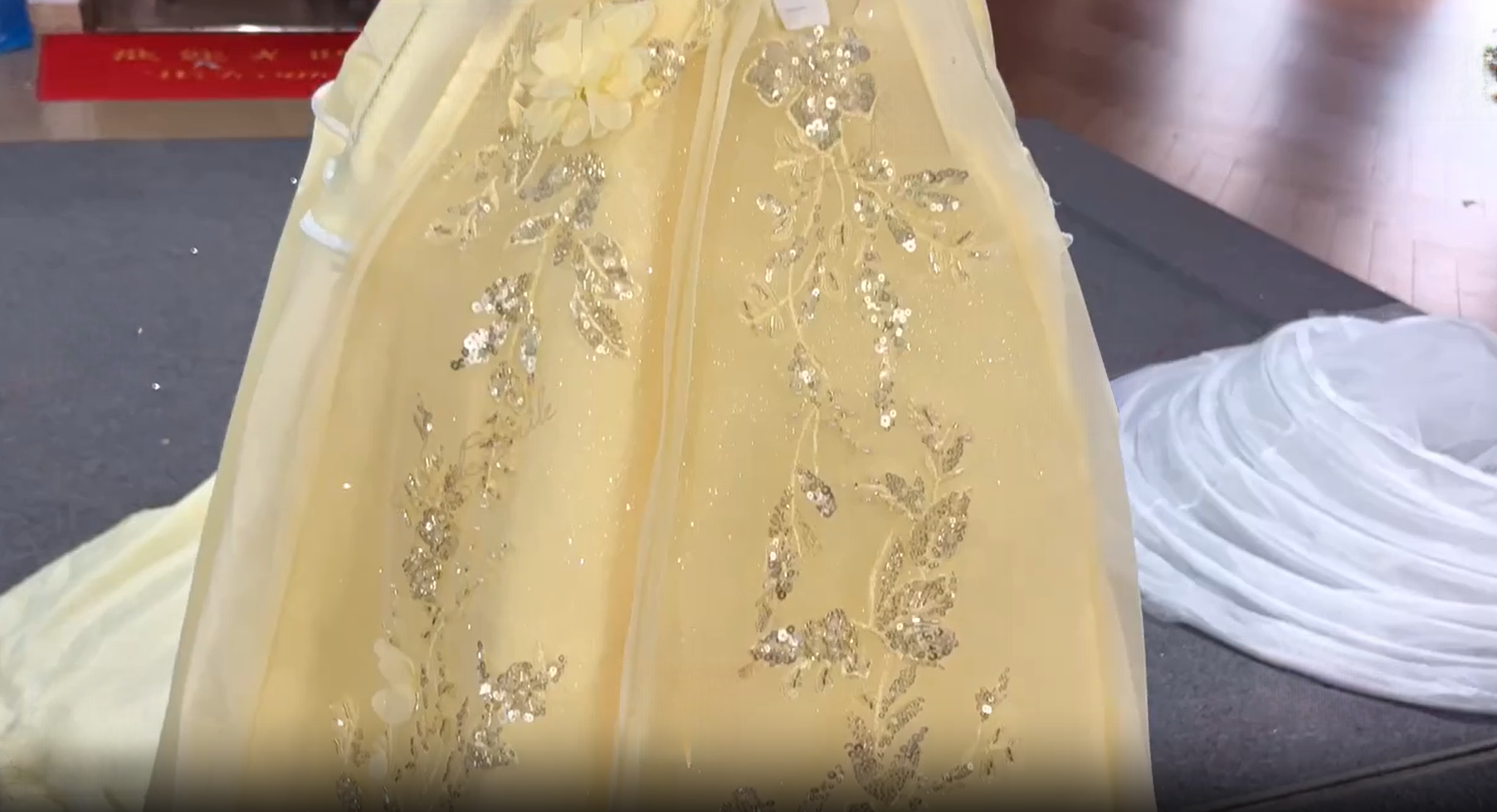
Quality control, steaming, packaging.
Last step. We look at everything under bright lights. Loose threads? Beads not secure? Boning tips poking out? Then we steam the whole dress so it’s perfectly smooth. Wrap it in acid-free paper, into a special gown bag. Sounds simple, but one impatient move and you scorch the tulle or crush the flowers. So we go slow.
So no, those forty days aren’t wasted. It’s not that we want to be slow. It’s that the work itself won’t let you go faster. Factories crank out units. We make one dress for one girl. This is her coming-of-age—once. She’ll wear it for photos, for dancing, for her whole family to see. I can’t mess that up.
Next time you see a 40-day timeline, don’t think “marketing.” Think about a pair of hands that’s been doing this for decades, one stitch at a time.