
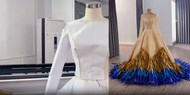
Feather Prom Dress with Gold-to-Blue Ombre: A Couture Journey
Posted by Li on 20th Jun 2026
When we first dreamed up this feather prom dress, we had no idea what we were getting into. We just knew we wanted something dramatic—the kind of gown that would walk into prom or a gala and make people stop mid-sentence. But getting from “that would be cool” to an actual, wearable dress? That took a lot of late nights, a few mistakes, and one very patient seamstress who almost quit over a batch of blue dye.
So here’s the real behind-the-scenes story,you can check the blog we have made before of the custom made prom dresses. No fluff. Just what actually happened.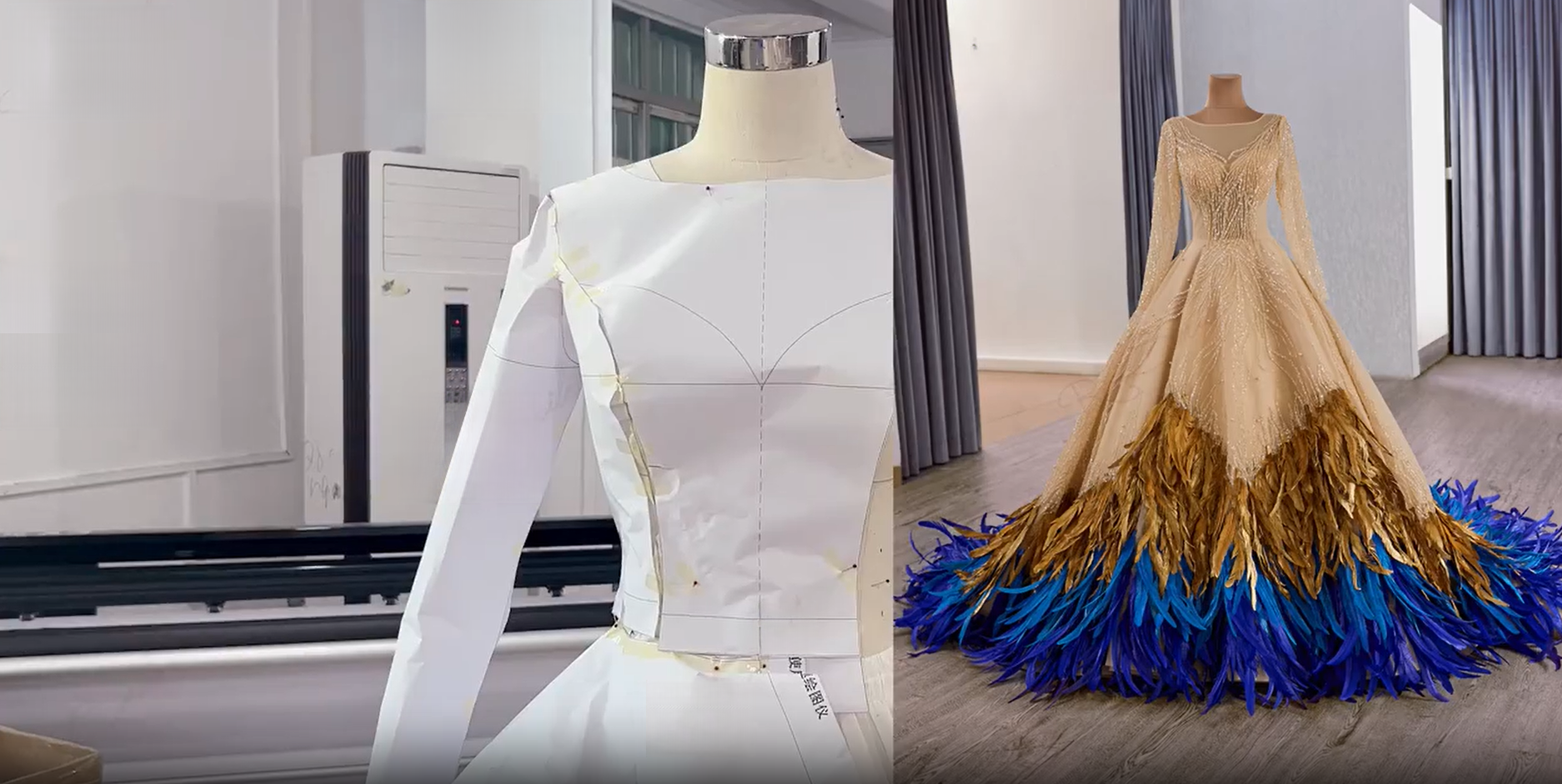
First, the pattern (and why we made three toiles before we got it right)
We started with a classic ball gown shape—fitted bodice, long sleeves, big skirt—but we wanted it to feel a little modern, too. That meant tweaking the neckline, the armhole curve, the skirt volume… over and over again. I think we went through four or five paper drafts before we even cut into muslin.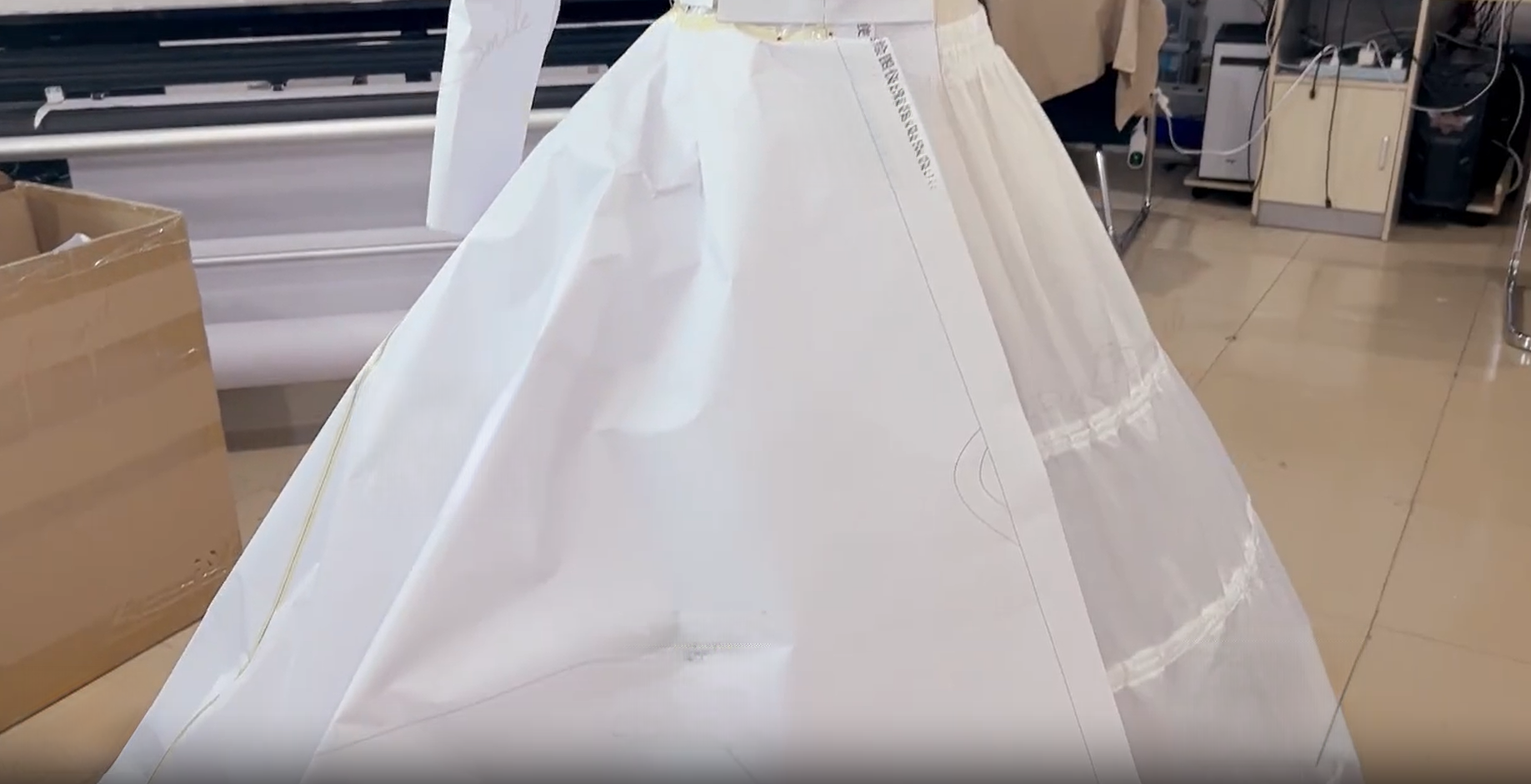
Then came the toile. For anyone who doesn’t sew: a toile is a test version, usually in cheap fabric. We put it on the mannequin, saw it was off, adjusted, cut another one. The bodice alone took three tries. We wanted it snug but not tight, supportive but comfortable enough to dance in for hours. Finally got there on the fourth version.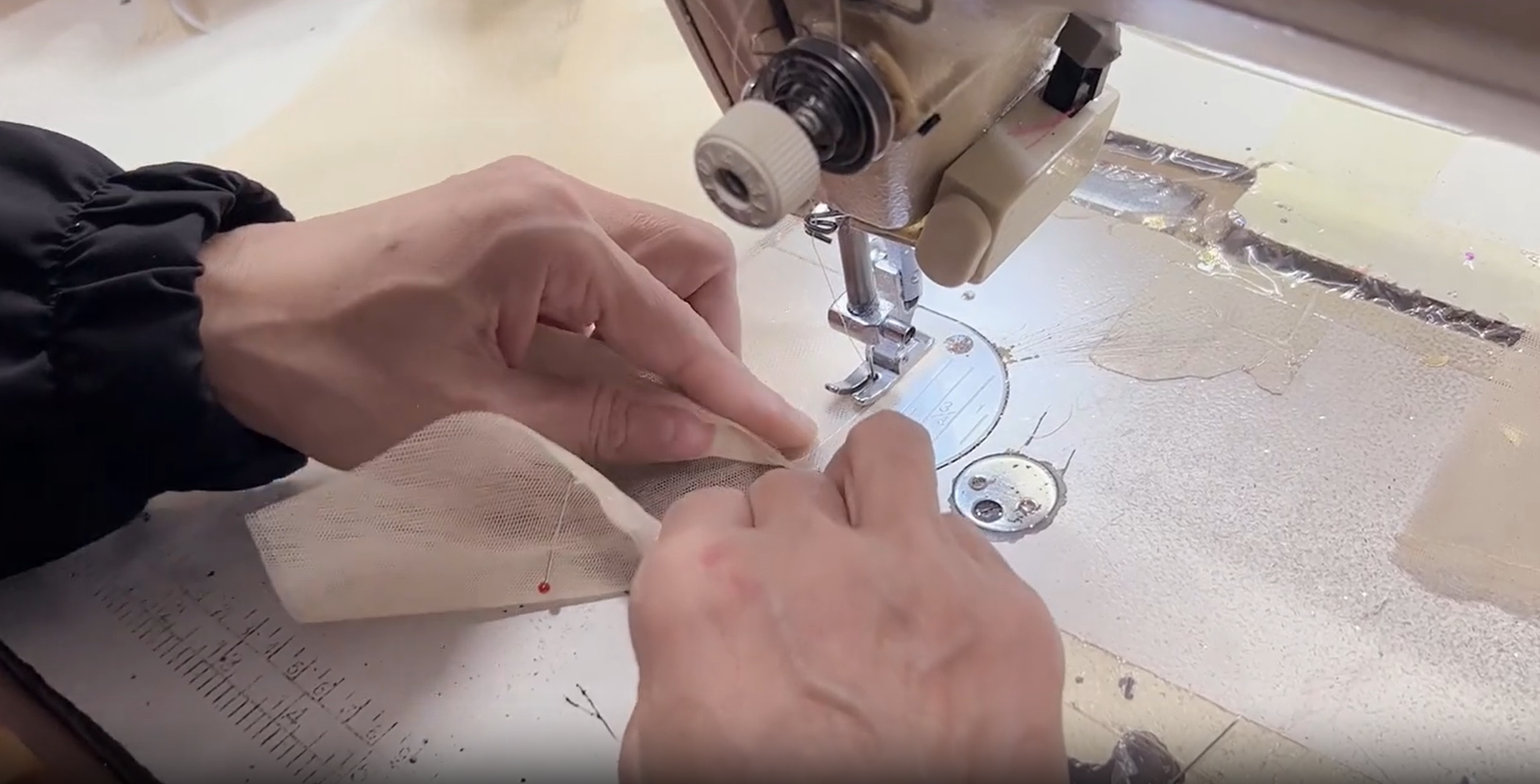
The skirt was a whole other beast. We ended up building a six-layer underskirt—tulle, lining, more tulle—to get that “princess” puff without making it too heavy. I’ll admit, I lost count of how many yards of tulle we cut. My cutting table looked like a cloud exploded.
The bodice: Swiss tulle and a lot of hand-stitching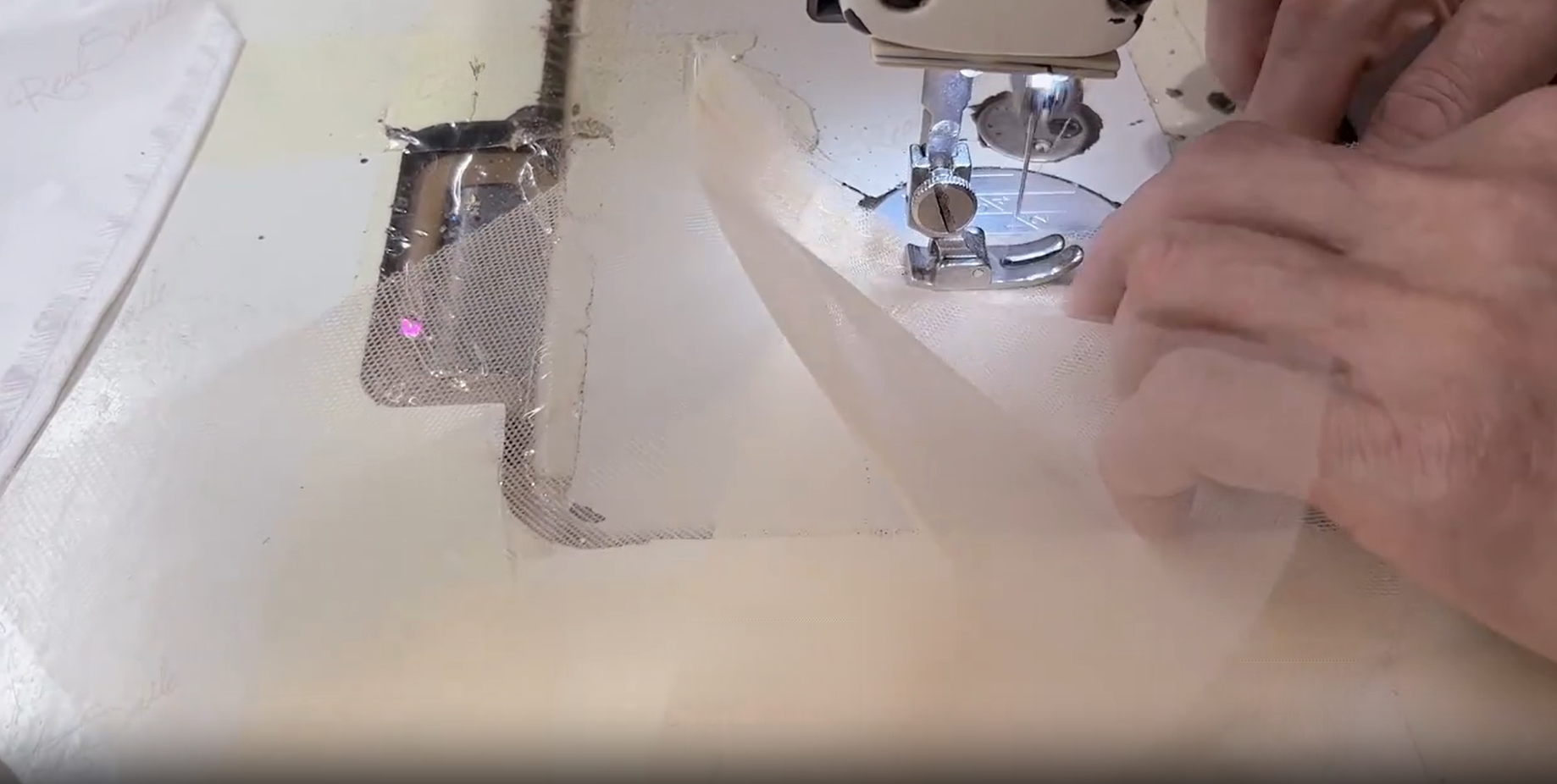
For the bodice base, we used Swiss tulle. It’s lightweight, sheer, and actually feels nice against skin (not all tulle does). The long sleeves are the same material—kind of old-Hollywood, but softer.
Now, the beading. This is where I have to say: if you hate repetitive tasks, do not become a couture seamstress. Every single bead, sequin, and pearl on that bodice was sewn by hand. One at a time. It took days. I listened to a lot of audiobooks.
We mapped out a pattern that follows the body’s curves—organic lines, not too rigid. The beads are champagne and clear, mixed in different sizes so they catch light from every angle. Under stage lights, it practically glows. But honestly, the real test was whether any beads would fall off after five minutes of wear. (We reinforced every single one with double thread. So far, so good.)
The feathers: where things almost went wrong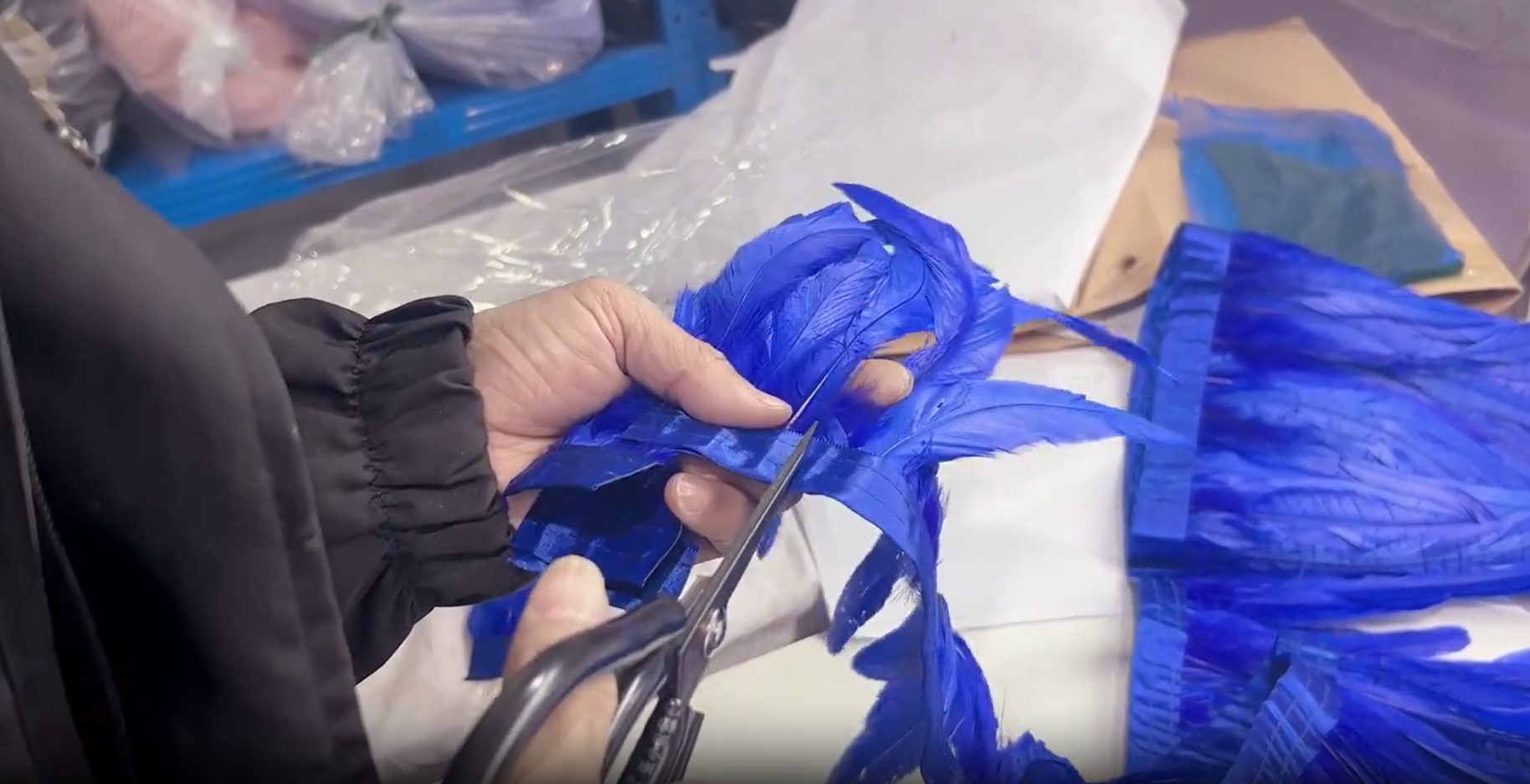
The feather train is the star of this dress, but it almost didn’t happen. We wanted a gold-to-sapphire-blue gradient—bold, but elegant. That meant custom-dyeing every feather ourselves.
First mistake: we bought cheap feathers to test the dye. They turned into a sad, clumpy mess. So we sourced higher-quality plumes, trimmed each quill by hand, and started over. Then we dyed them in small batches, tweaking the color intensity each time. The first batch of blue came out way too dark—almost black. The second was perfect. We threw out the first batch.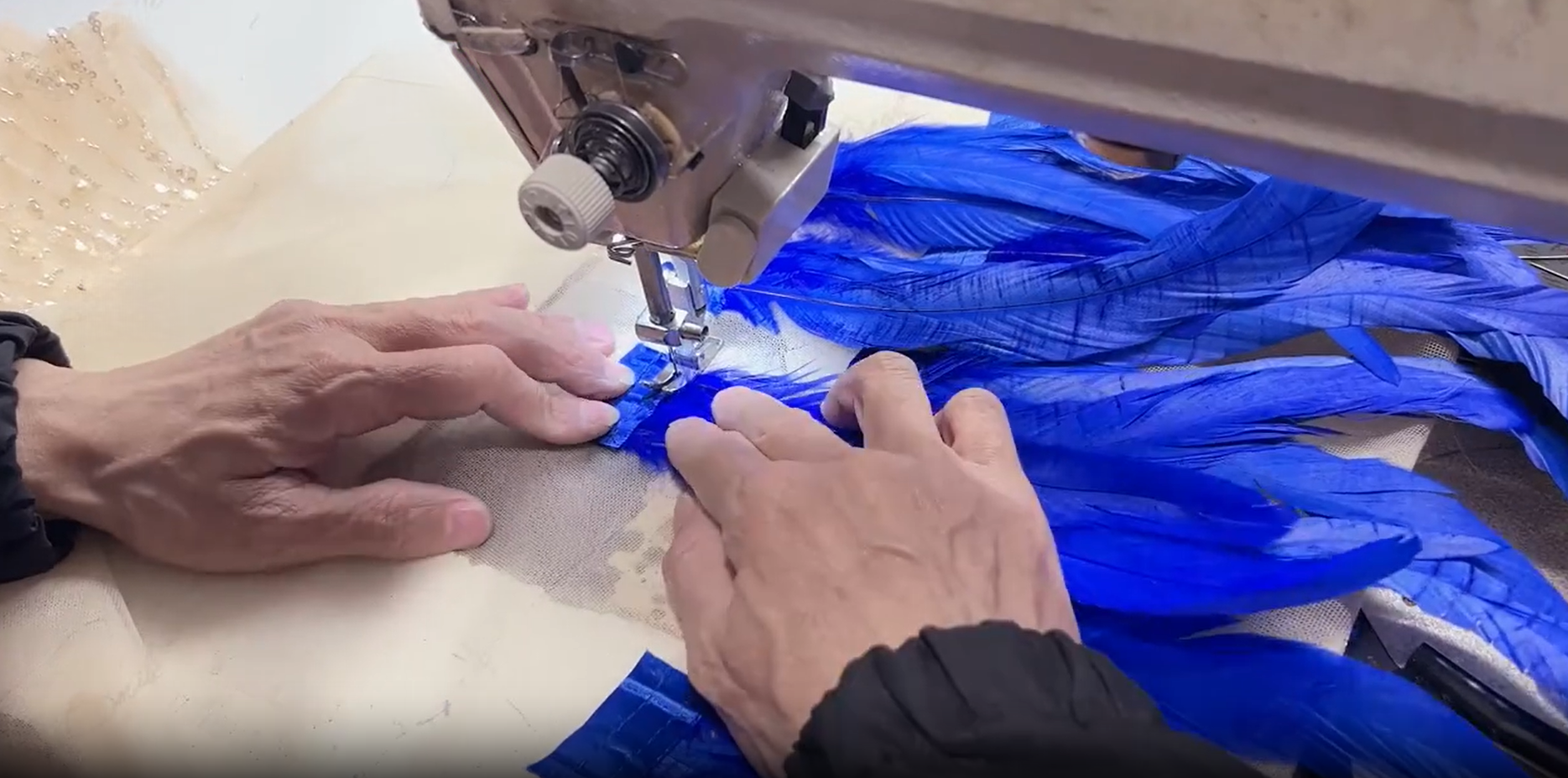
Attaching the feathers was another challenge. Gluing is faster, but feathers fall off glue over time. So we sewed each feather individually onto a strong netting base. Yes, individually. That meant hours of needlework, positioning each plume so it angled naturally, layering gold feathers first, then blue below to build the fade. No two feathers are exactly the same, which is actually the point—it looks organic, not machine-made.
We worked in sections. By the end, my fingers were sore for a week. But the effect? When you walk, the train flows and shifts like water. Worth it.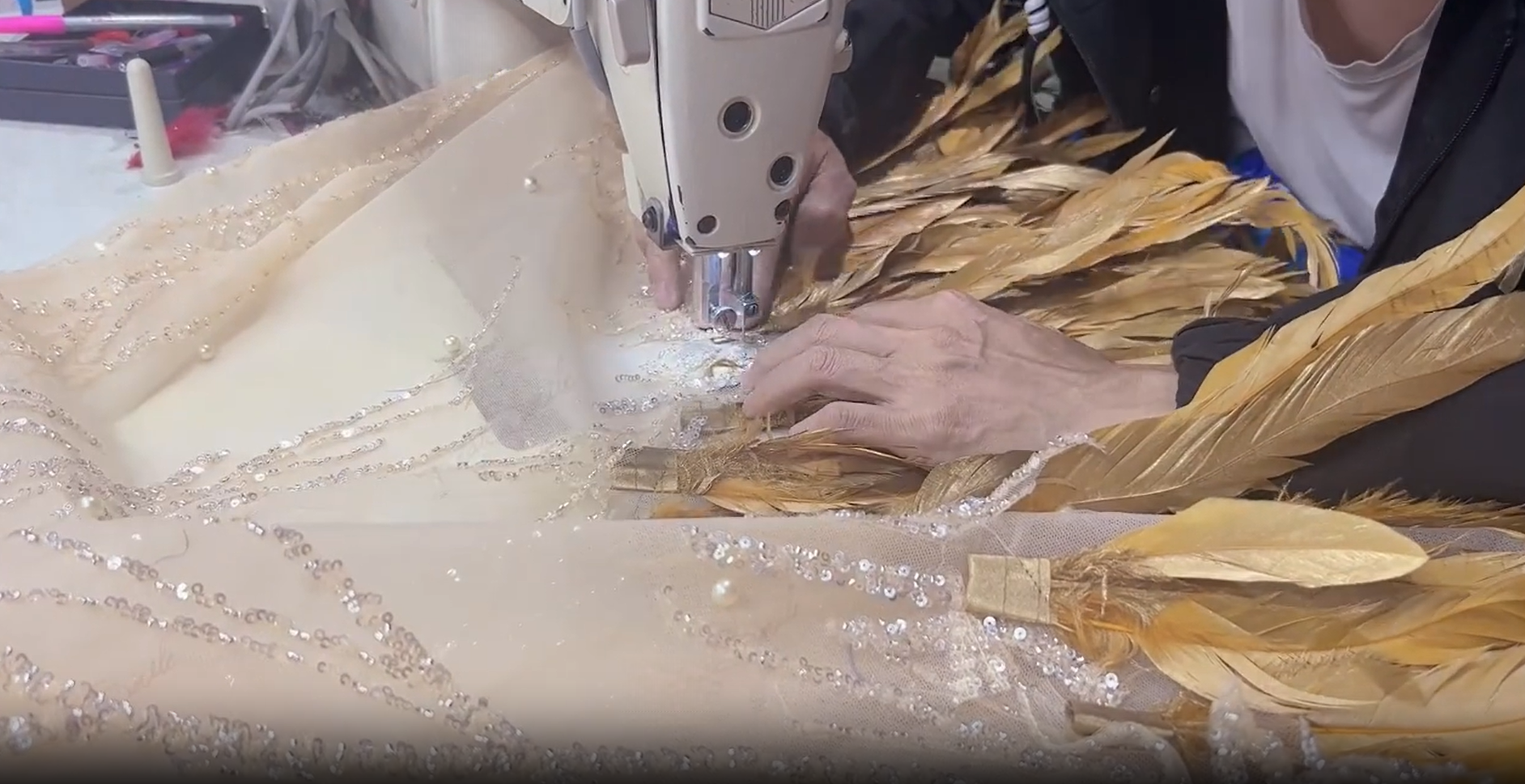
Putting it all together (and one last panic moment)
Once the bodice, skirt, and feather panels were done, we assembled everything. Bodice to skirt—seams had to line up perfectly. Then we attached the feather train in six large panels, hand-stitching each to the skirt lining so nothing would shift.
We tested the drape about a dozen times. At first, the train bunched weirdly on one side. Turns out one panel was sewn at a slightly wrong angle. Had to rip it out and redo it. That was a 2 AM fix.
Final step: steam and fluff. We steamed the whole gown to get rid of wrinkles, then carefully fluffed every feather by hand—arranging them so the gradient looked smooth and the plumes stood at the right angle. It’s a small thing, but it changes how the dress moves in photos and on the dance floor.
The moment we finally saw it finished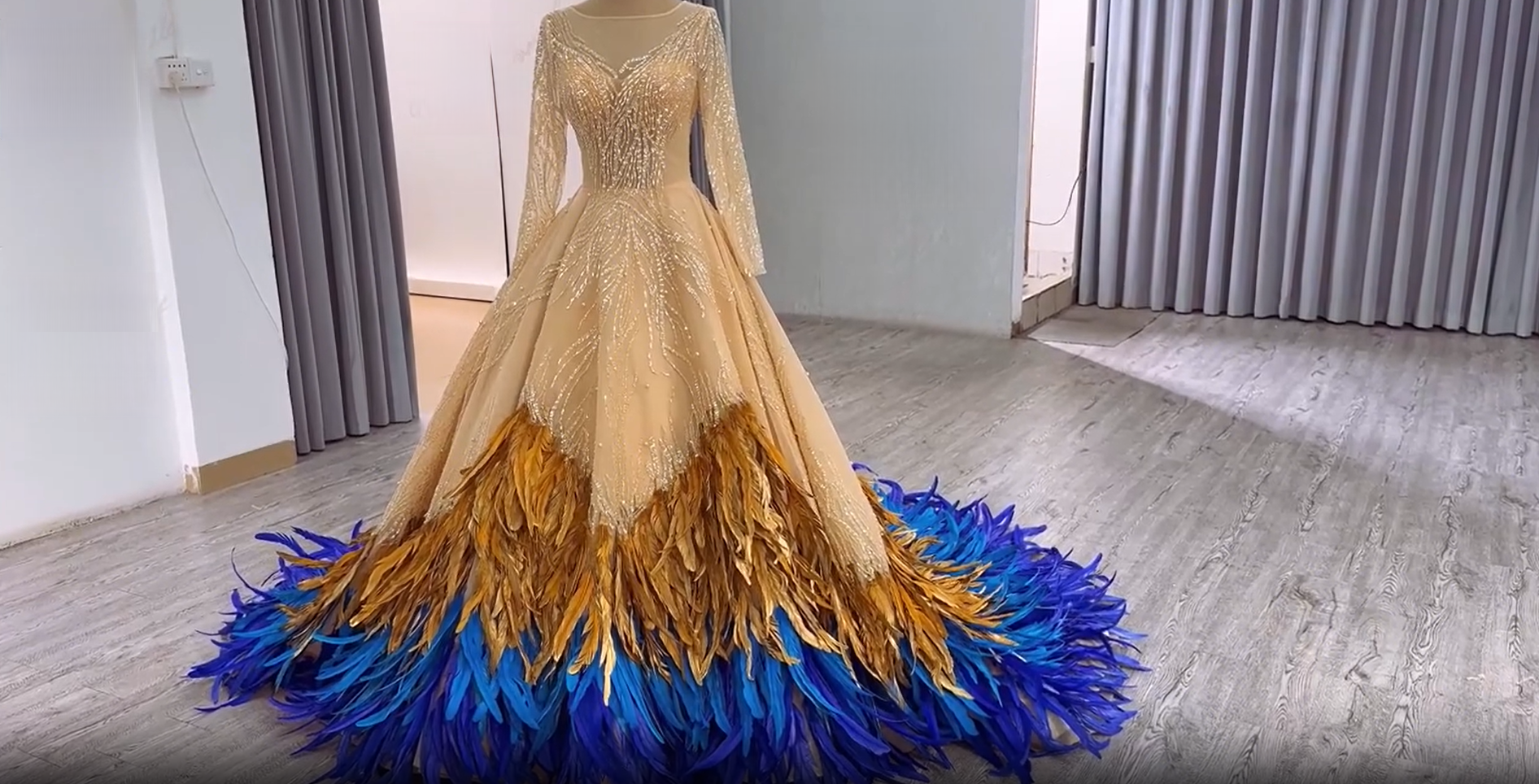
When we put the dress on the mannequin for the first time—full beading, full feathers, everything—I just stood there for a second. The champagne beads caught the light, the gold faded into deep blue, and the train spread out like a fan. It felt… real. Not just a project anymore.
This dress is not perfect in a sterile, textbook way. There are tiny variations in the feather color. Some beads are spaced a millimeter apart where my hand slipped. But that’s what makes it ours. And honestly, that’s what makes it haute couture—not flawless machine precision, but hours of human care, including the mistakes we had to fix along the way.
If you’re thinking about a custom gown for prom or any big event, we’d love to talk. Just don’t expect us to promise a perfect timeline. Feathers are unpredictable. But the result? Pretty magical.
Drop us a line when you’re ready.