

How We Made an Eyelash Lace Mermaid Wedding Dress
11th Sep 2026
Inside Our Workroom: Building a Long-Sleeve Eyelash Lace Mermaid Wedding Dress with 3D Tulle Roses
A behind-the-scenes look at how an ivory long-sleeve eyelash lace mermaid wedding dress is constructed, from layered lace ruching and paper pattern development to subtle hand beadwork and sculptural 3D tulle roses.
At a Glance: How This Wedding Dress Is Constructed
Inside the Workroom
Most gowns that come through our workroom start with the same essentials: a sketch, fabric selections, pattern development and a clear idea of how the bride wants the finished dress to feel. This gown stood out early because almost nothing about it was intended to look flat. The design called for a long-sleeve mermaid wedding dress in ivory, fitted through the bodice and hips before opening into oversized dimensional fabric roses.
Eyelash lace was selected for the neckline, bodice, sleeves and cuffs, while plain tulle was used for the sculptural roses. Keeping the floral elements visually lighter than the lace allowed the textures to work together instead of competing for attention.
The finished design combines several bridal techniques that normally compete for attention: delicate lace, sculpted ruching, subtle hand beadwork, fitted sleeves and three-dimensional floral construction. Each element was deliberately controlled so the final silhouette could remain elegant rather than overloaded.
How Eyelash Lace Is Shaped on a Mermaid Wedding Dress
Eyelash lace is named for the wispy fringe running along its edges, the little “lashes” that create a soft finish against the skin. It is one of the gentlest bridal fabrics we work with, and that softness is exactly what makes it difficult to control. A stiff corded lace may hold a crease after folding, while eyelash lace tends to relax in your hand.
The bodice was designed with diagonal ruching, folded lines that sweep across the bust and spiral gently around the torso. There is no reliable way to create that effect from a single loose layer of lace. We cut overlapping panels, shaped each fold by hand, pinned it, then layered and secured the next section. Every visible fold in the finished bodice comes from repeated positioning, checking and securing.
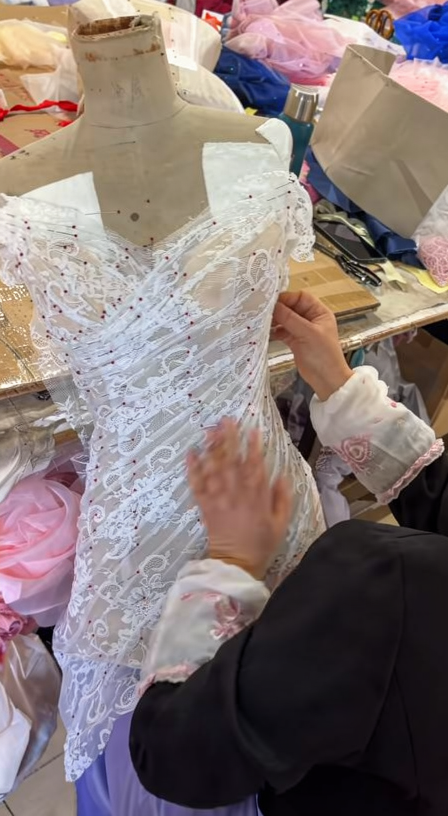
This stage is performed on the dress form rather than only on the table because flat fabric behaves differently from fabric following a three-dimensional body. Lace that appears perfectly aligned when flat can gap, pull or bunch when it follows the curves of a fitted mermaid silhouette. Each pin marks a control point where a fold is secured and compared with the center-front line before the next section is positioned.
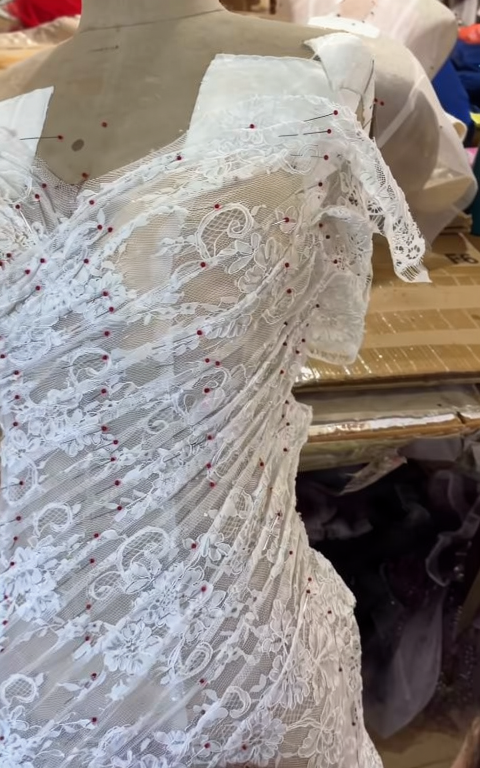
The same lace frames the off-the-shoulder neckline and continues down the long sleeves to the cuffs. We chose to leave the fringed edge exposed rather than fold it under because the soft eyelash finish is an important part of the fabric's character. Long fitted sleeves add another construction challenge: the lace must be eased around the arm without allowing the fringe to disappear into the seam.
For brides comparing different lace silhouettes, our lace wedding dresses collection shows how lace can be used across different bridal constructions. The workroom principle remains consistent: fabric should support the silhouette rather than simply decorate it.
Underneath the lace sits a smooth, close-fitting base layer cut to the mermaid shape. The lace functions as a shell built over that foundation. When separate lace panels are joined, embroidered flowers are matched across the seam line so the join can visually disappear into the existing vine pattern.
How the 3D Tulle Roses Are Built
Anyone watching a gown being made might assume beadwork is the slowest part. On this design, the most demanding element was the skirt: a cluster of large three-dimensional roses shaped from tulle and joined together so they grow outward from the waist and hips before cascading downward.
Tulle has very little memory of its own. It springs open when folded and can shift while being gathered, which makes it challenging to use for a sculptural shape that needs to maintain a controlled curve.
We started on paper before cutting the final fabric. Each rose was drawn in full, and the spacing between its petal layers was marked onto the pattern. The intervals were intentionally varied. If every layer sat at exactly the same distance from the previous layer, the flower would read as a stack of rings rather than a natural bloom. The inner petals were kept tighter while the outer layers opened progressively.
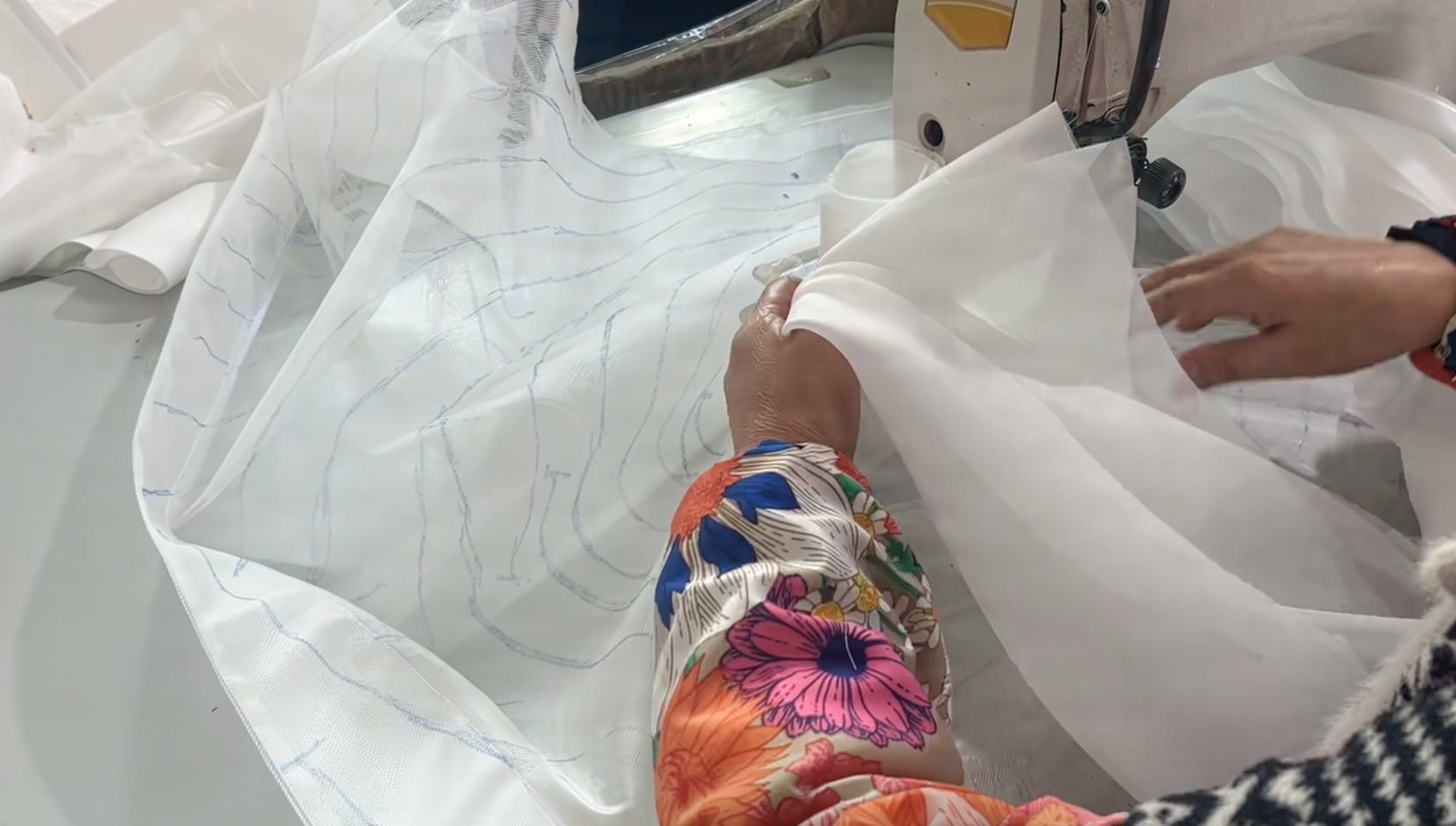
Then came the sewing. Each tulle layer is stitched and reinforced where it needs to turn a corner or hold a curve. A single line of stitching is not enough to lock a soft fabric into a firm sculptural shape. Additional stitch rows help the petals retain their intended form while remaining lightweight.
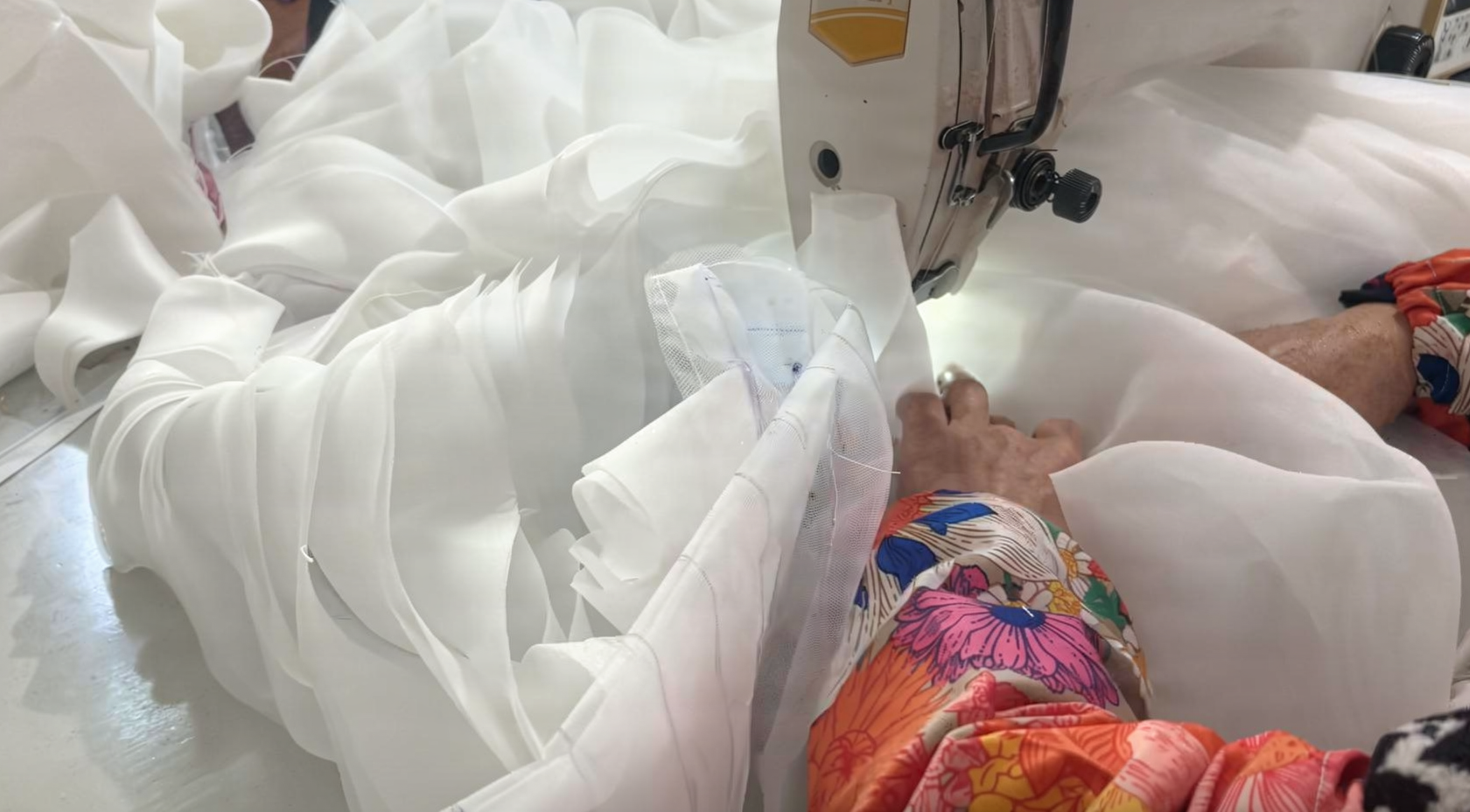
Working at this scale is physically demanding. A single rose panel can be wider than the machine table, so the fabric must be fed carefully under the needle while the remaining tulle is supported and kept in the correct order.
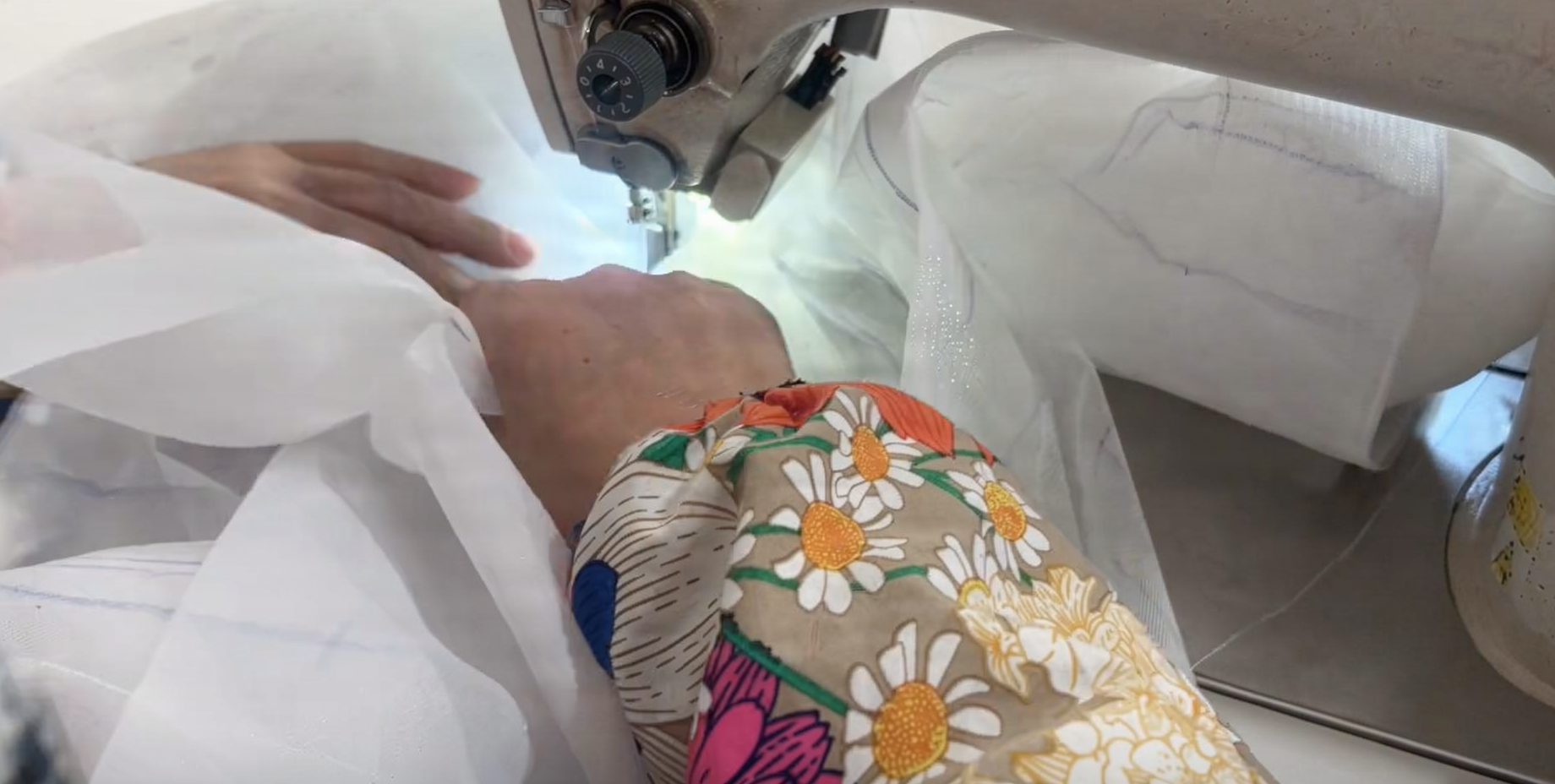
Once the individual roses were stitched, they were assembled one by one and then joined to one another, beginning around the high hip and progressing downward. Placement order matters. Attaching roses to a finished skirt while it lies flat can make them look like surface appliqués. Building the arrangement from the hip downward gives the floral volume a more natural relationship with the fitted bodice.
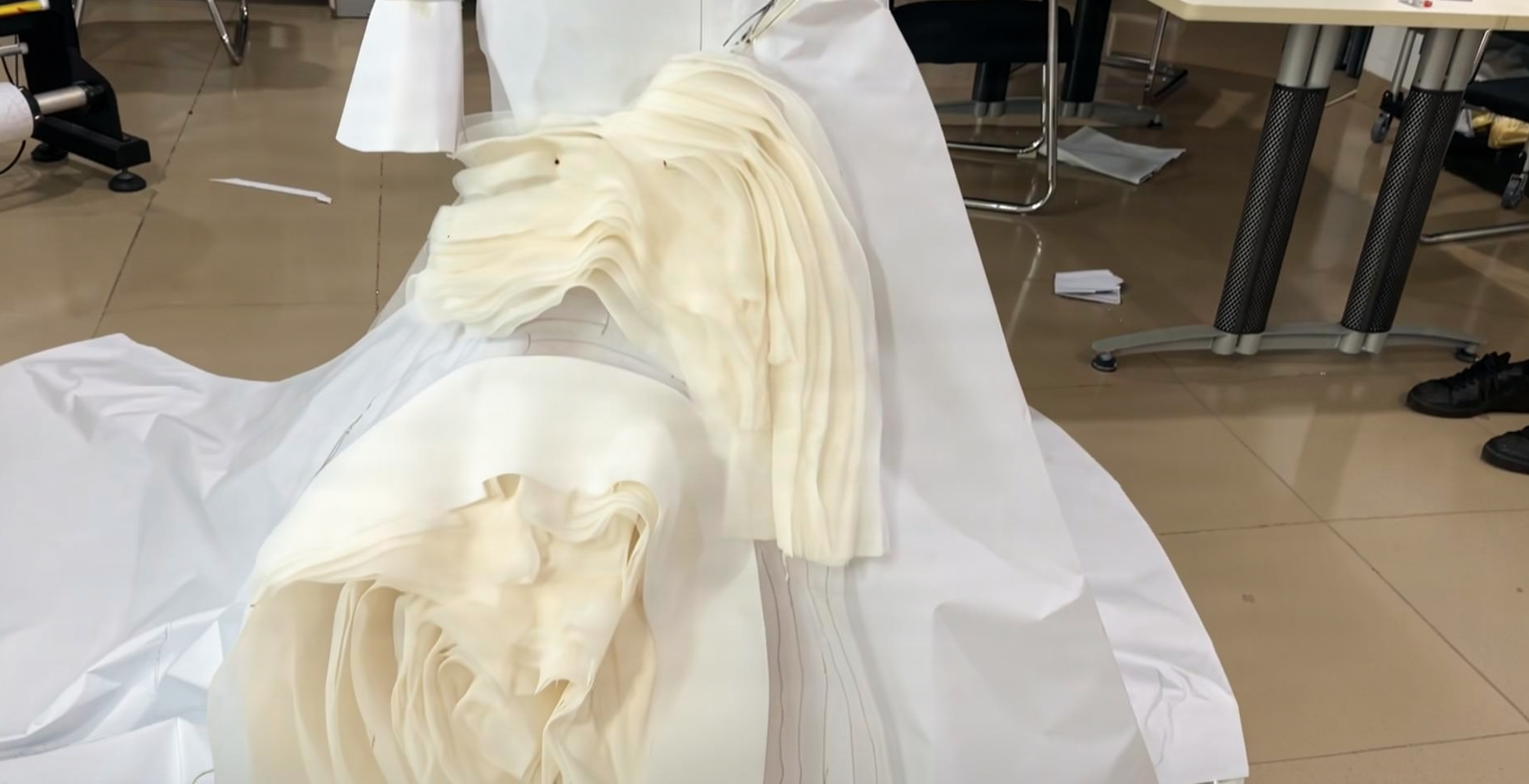
Before the final ivory tulle was used, the overall construction was tested through a paper toile. Creating the rose arrangement in inexpensive pattern paper allowed proportion, spacing and placement issues to be corrected before they reached the final fabric.
Subtle Beadwork Inside the Lace
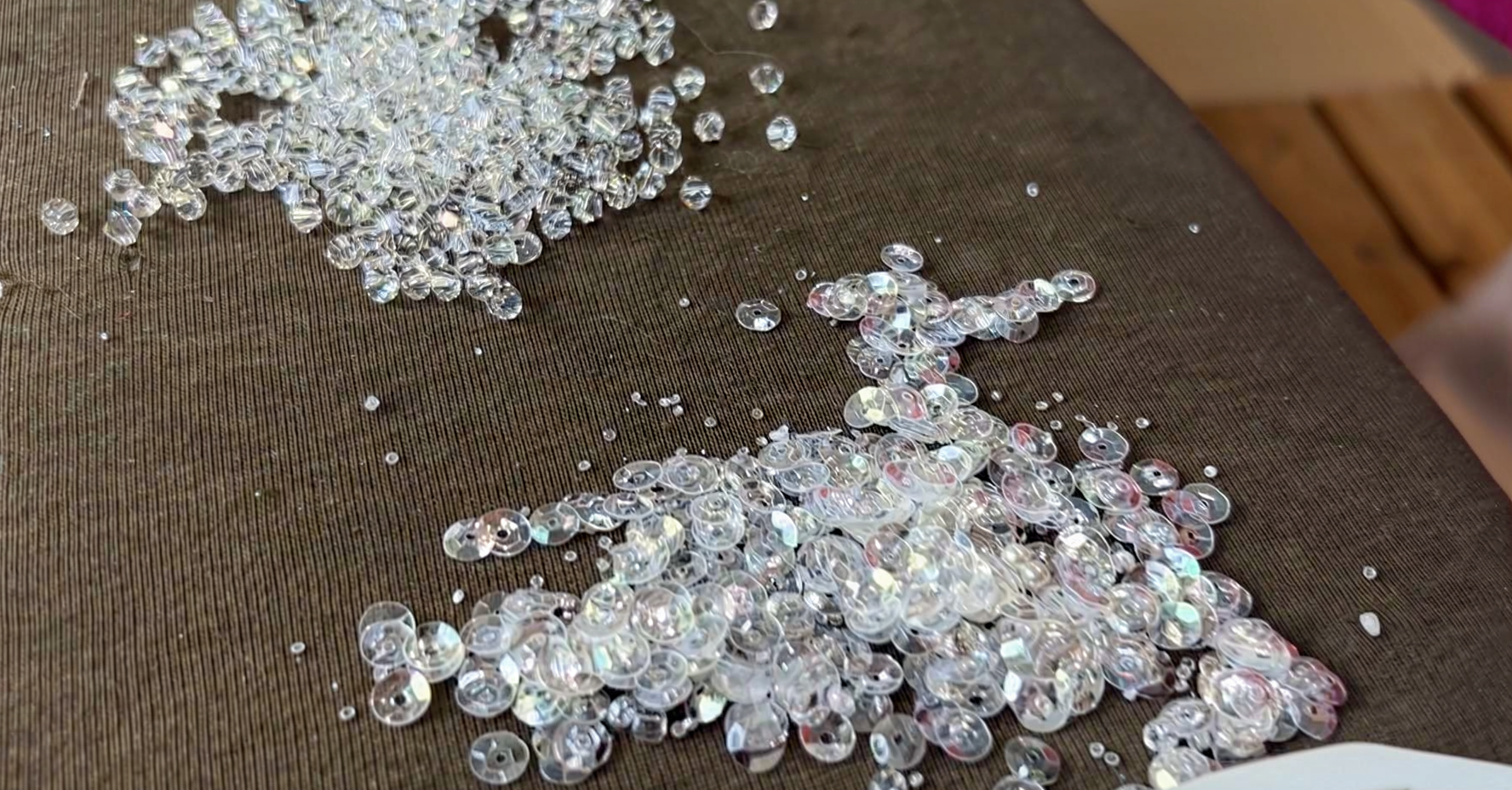
The upper bodice carries beadwork, but the embellishment was intentionally restrained. Large crystals would have competed with the delicate eyelash lace, so the design uses much smaller beads and sequins to create a quieter effect.
The goal was a low, private kind of shimmer rather than a heavily crystallized surface. At arm's length the embellishment remains subtle, while moving light reveals small flashes across the bodice.
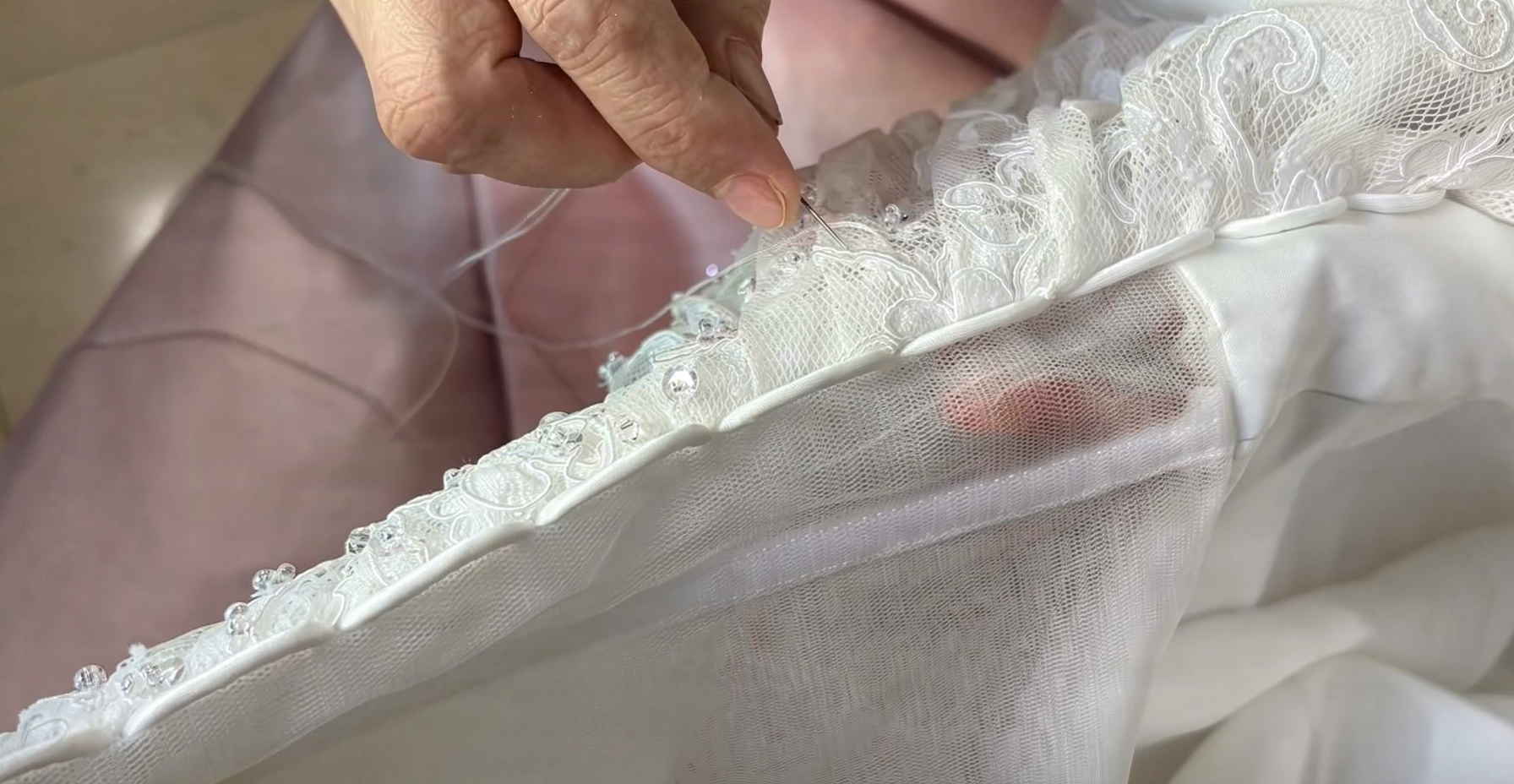
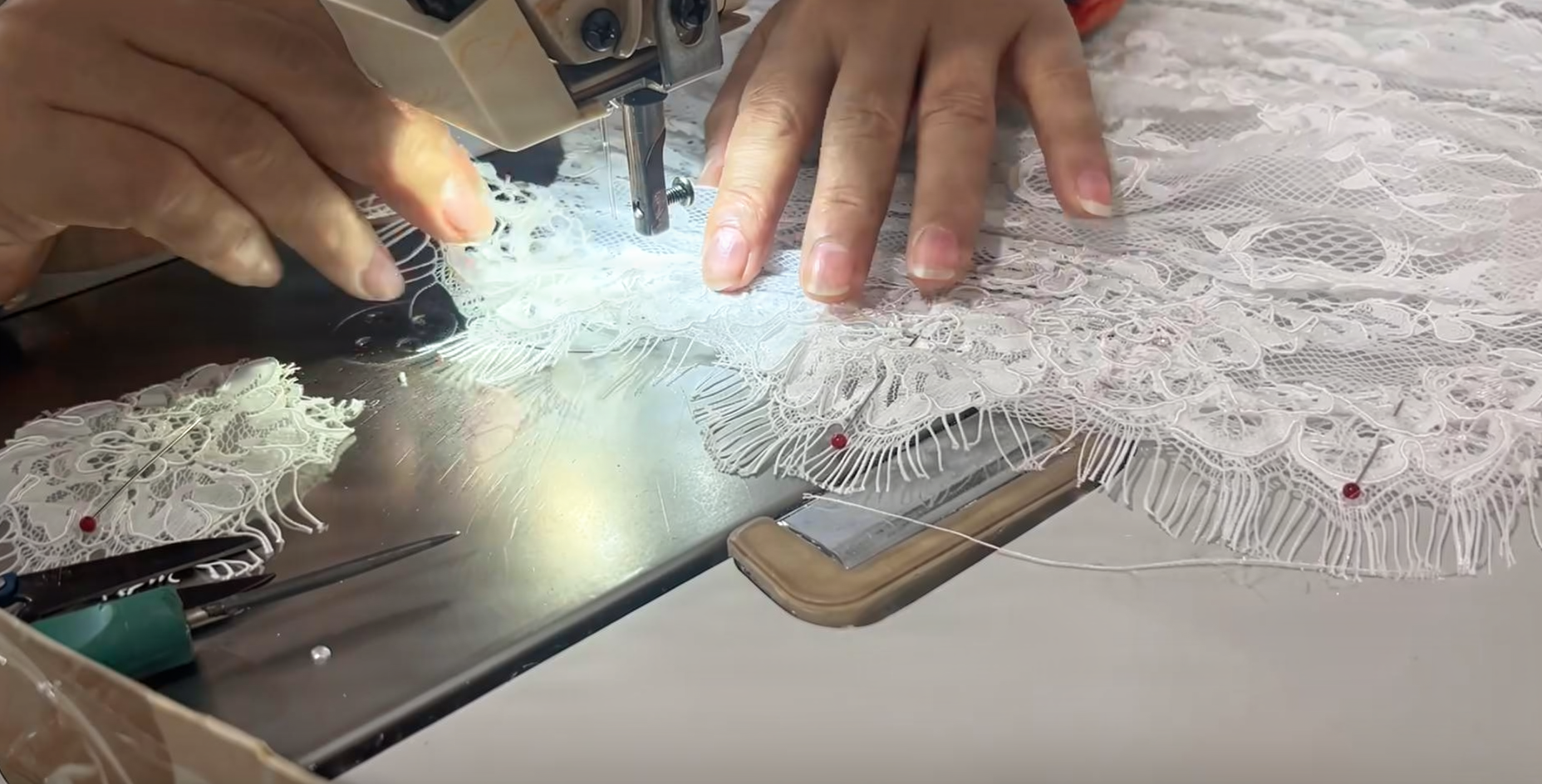
Every bead is sewn down by hand and positioned inside the lace's embroidered flowers rather than simply placed on top. The carrying thread follows the lace structure so very little of it is visible. Around the cuff and neckline, the beads follow the scalloped edge and floral motifs already created by the lace.
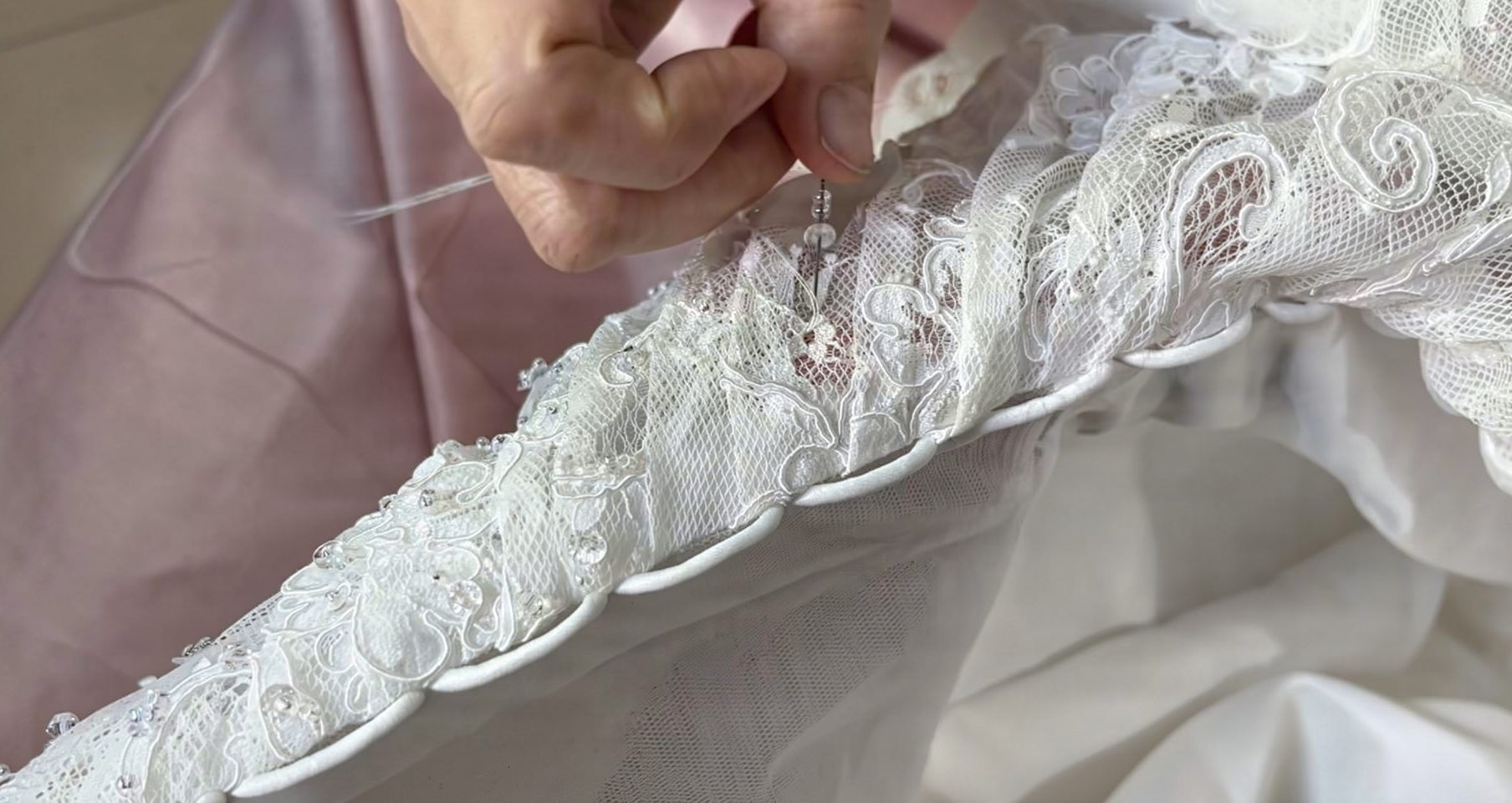
This is precise, time-intensive work. Threads can catch in the lace fringe, beads can turn during stitching and every small section needs to be checked before moving forward. The result is intentionally understated: hours of hand finishing are used to create sparkle that does not dominate the gown.
Sewing and Lace Construction
Machine work on delicate lace is less about speed than control. The fabric has to move evenly beneath the presser foot while embroidered motifs remain aligned and the eyelash fringe stays visible instead of disappearing into the seam allowance.
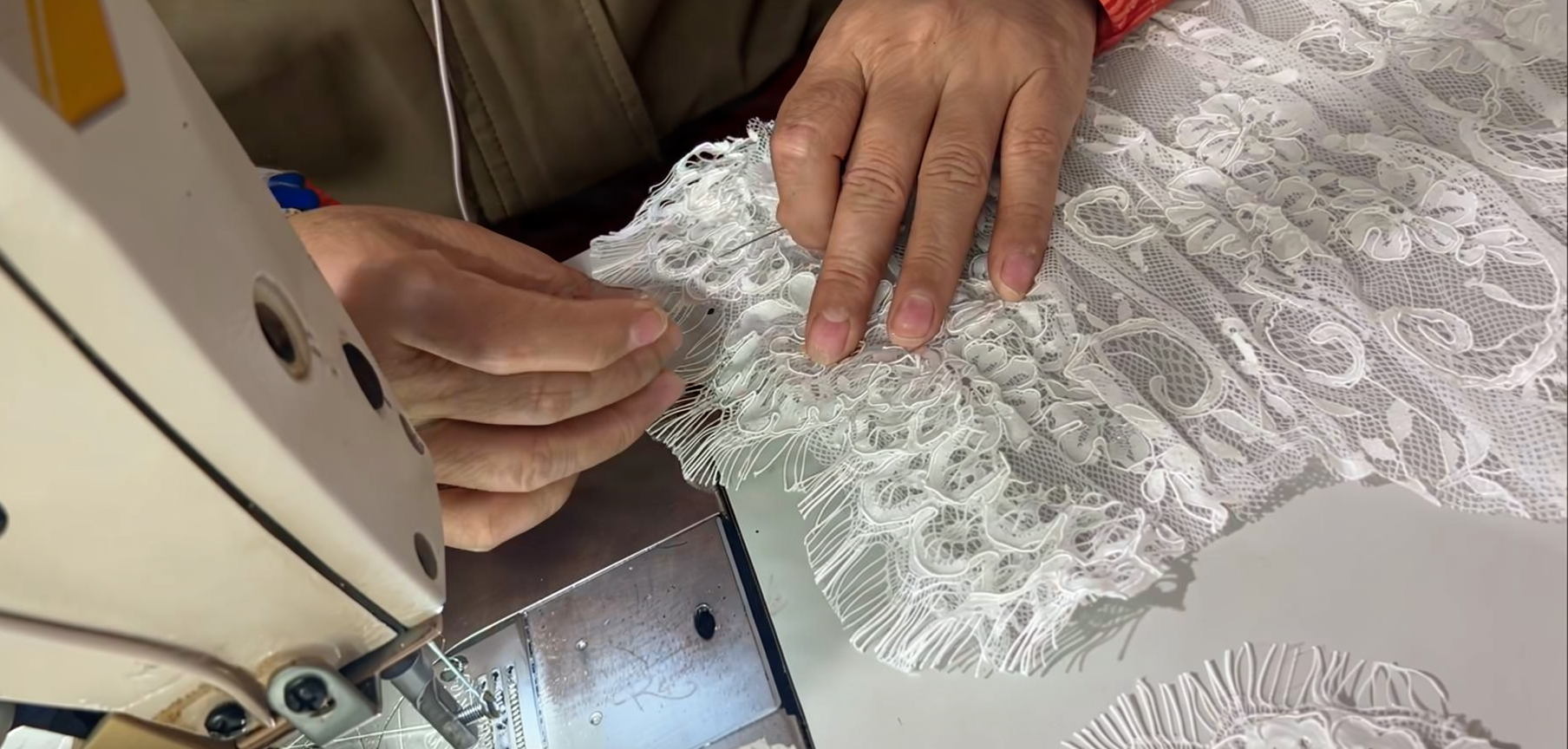
Long sleeves require additional attention because the lace needs enough ease to follow the arm while maintaining a smooth fitted appearance. Grain direction, stretch, seam placement and finishing all affect how the sleeve moves with the rest of the gown.
Brides comparing sleeve options can explore long sleeve wedding dresses for additional examples of how sleeve construction changes the overall character of a bridal silhouette.
From Paper Pattern to Finished Gown
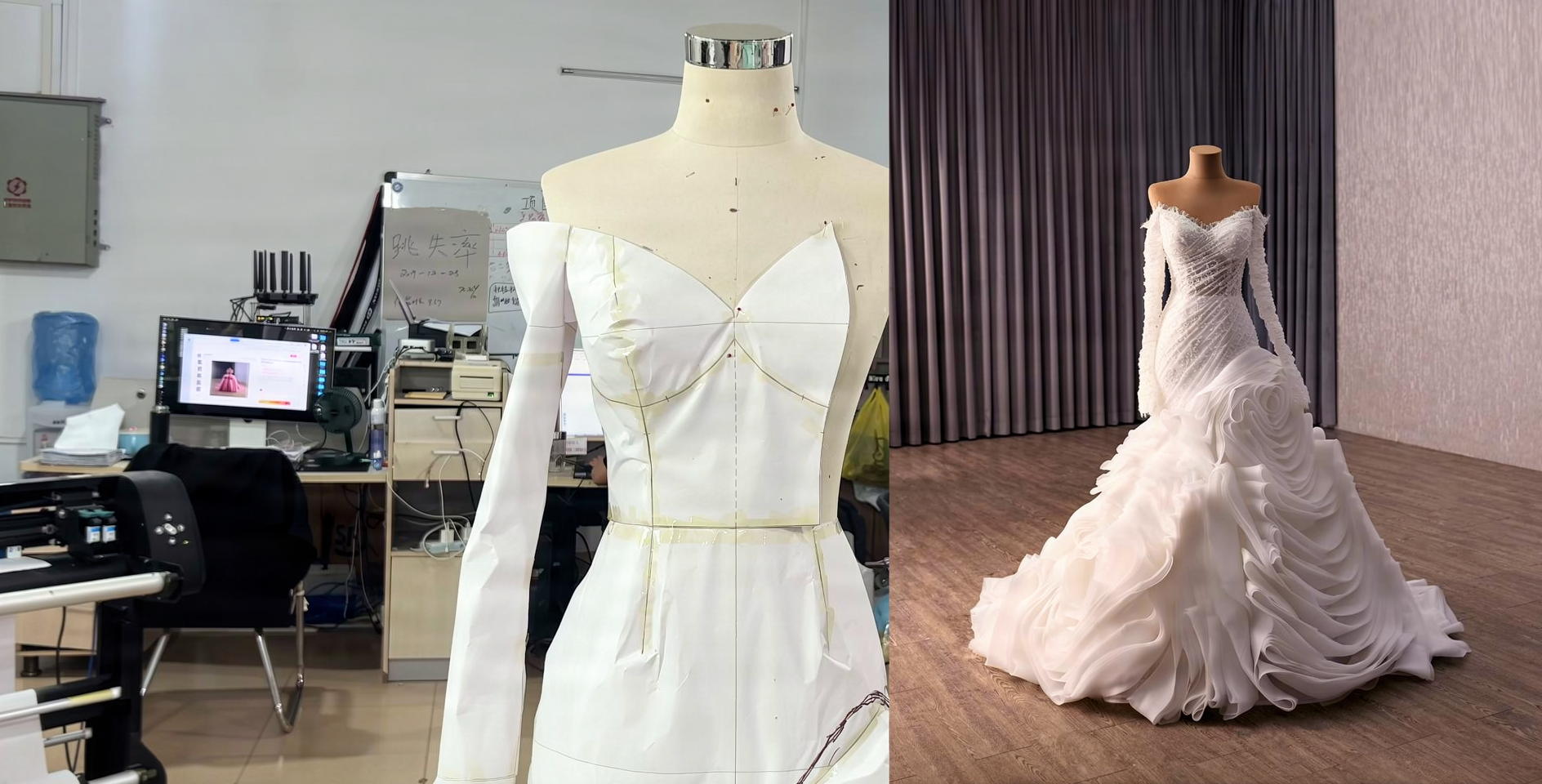
Looking at the side-by-side construction images, the transition from a paper pattern to the final gown is particularly revealing. The paper version has no color, no drape and no fringe. It contains only the geometry of where folds, seams and dimensional elements need to land. The finished gown translates that same geometry into materials that move and respond to the body.
What makes the design work is restraint. The lace remains soft while layered construction gives it structure. The roses are dramatic, so they remain visually lightweight in plain tulle. The sparkle is present, but it stays within the embroidered lace motifs instead of covering the entire surface.


See the completed white mermaid long sleeve lace wedding dress for the finished silhouette, lace placement and dimensional floral details shown throughout this workroom story.
What Makes the Construction Couture-Inspired
A gown like this sits between traditional bridal construction and couture-inspired hand finishing. The difference is not simply the amount of decoration. It comes from the number of decisions made during construction: how lace motifs meet, where a fold begins and ends, how much space separates individual rose petals, where beads disappear into embroidery and how the finished skirt is allowed to develop its shape.
This philosophy is closely related to haute couture wedding dresses as a source of design inspiration. Couture-inspired dressing works best when surface decoration follows the underlying construction rather than being added simply for visual impact.
Lace, sleeves, beading and dimensional flowers can all influence the character of a wedding gown, but the silhouette remains the foundation. In this design, the fitted mermaid shape provides a controlled base for the softer lace and sculptural tulle elements.
How to Care for Tulle, Lace and Beadwork
Sculpted tulle roses can travel well when properly supported, but they may need time to recover their shape after transportation. Hanging the gown overnight allows many petals to relax naturally. If a rose remains flattened, low-temperature steam can be used from underneath the structure rather than pressing directly across the top.
Delicate lace and beadwork require equally careful handling. Keep the gown away from rough surfaces that can catch eyelash fringe or embroidery, and use an experienced professional for cleaning. Direct heat, aggressive pressing and unnecessary friction can change the appearance of delicate lace and hand-applied embellishment.
Questions About This Long-Sleeve Lace Mermaid Wedding Dress
Why is eyelash lace difficult to work with?
Eyelash lace is soft and flexible, so it does not naturally hold folds or creases. The workroom compensates by layering, shaping, pinning and securing individual sections while the fabric is positioned on the dress form.
How are the 3D tulle roses made?
Each rose is planned from a paper template, cut into multiple tulle layers, stitched to control the petal curves and then assembled into a larger floral arrangement. The roses are attached progressively from the hip downward so they visually develop from the fitted silhouette.
Is the beadwork heavy on this gown?
No. The beadwork is intentionally subtle. Tiny beads and sequins are placed inside the lace's embroidered motifs to create a low-key shimmer rather than a heavily crystallized surface.
Why was a paper toile made first?
The paper toile allows the workroom to test proportions, seam placement and the three-dimensional rose arrangement before using the final ivory lace and tulle. It helps identify construction problems before final fabric is cut.
How should the finished tulle roses be cared for?
Hang the gown overnight after transportation and allow the petals to recover their shape naturally. If needed, use low-temperature steam from underneath the petals and avoid pressing directly on the sculpted surface.
Where can I see the finished gown?
The finished design is available as the white mermaid long sleeve lace wedding dress on Kemedress.
The Finished Result
The strongest gowns are often built from several quiet decisions that support one another. Here, layered eyelash lace provides texture, the mermaid silhouette creates structure, subtle beadwork adds movement in the light and sculpted tulle roses introduce dimension without overwhelming the dress. The result is a bridal gown where construction and decoration are designed to work as one.
More Behind the Making of Custom Wedding Dresses
Explore more Kemedress workroom stories covering mermaid construction, lace placement, hand beading, custom pattern development and the techniques used to turn bridal designs into finished gowns.
Why Our Mermaid Wedding Dress Doesn't Feel Shackled
Discover another workroom perspective on mermaid wedding dress construction and the hidden structural decisions that help a fitted gown move comfortably with the body.
Mermaid Wedding Dress Manufacturing Process
Follow another mermaid gown through production, from bodice construction and fabric handling to the detailed work behind the finished bridal silhouette.
Inside Our Workshop: Creating a Custom Beaded Wedding Dress
Go deeper into custom bridal production, including workshop construction, detailed embellishment and the hands-on decisions behind a made-to-order wedding gown.
Cape Tulle Wedding Dress With Beading: Ordering Timeline
See how another detailed bridal design approaches beading, delicate fabric construction and the timeline involved in creating a custom wedding dress.
Continue exploring Kemedress workroom stories about lace, mermaid silhouettes, custom construction, hand embellishment and bridal craftsmanship.