
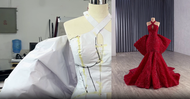
Inside a Custom Red Wedding Dress With a Detachable Butterfly Train
6th Sep 2026
Behind the Seams
Building a Red Wedding Gown With a Detachable Butterfly Train
Hand Beading
Hidden Attachment
Movement
01
Red is showing up in the workroom more often now.
Not the dark burgundy usually associated with evening gowns. A true, saturated red. The kind of color that changes the entire room when someone walks into a fitting wearing it.
Five years ago, a red bridal request was unusual. Now we see brides choosing color for ceremonies, receptions and destination celebrations because white is no longer the only definition of bridal.
The bride behind this project arrived with a pencil sketch and a very clear idea: bright red sequins, a fitted mermaid silhouette, and an enormous detachable butterfly train that would disappear after the ceremony.
The difficult part was never sewing a train onto the gown. The difficult part was creating something dramatic enough for ceremony photographs while making sure the dress underneath still looked completely finished after the train came off.
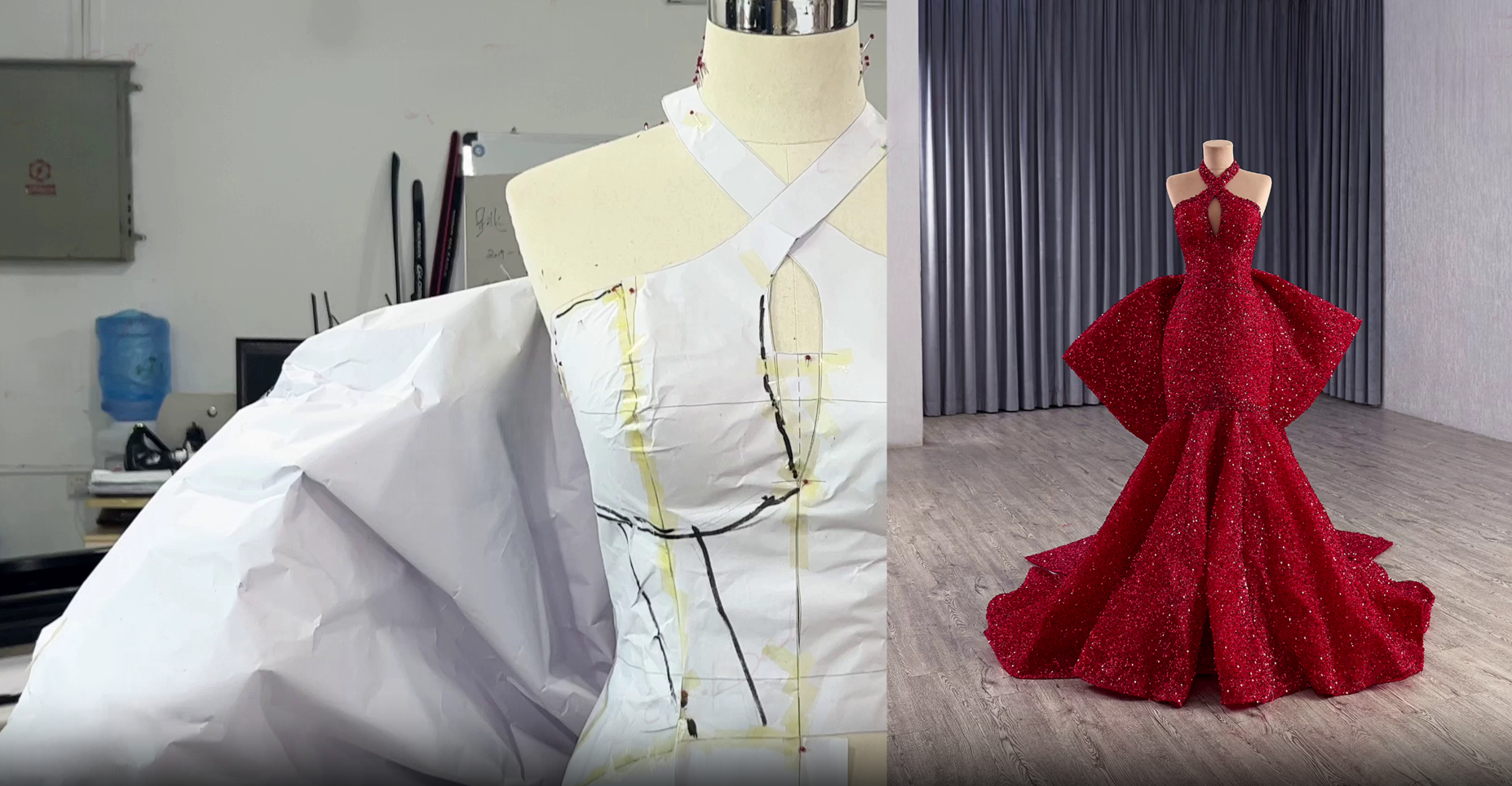
Before sequins, there was only calico.
The first version was built in plain white toile fabric. No sparkle, no lining, no drama. Just proportions.
Neckline depth, waist placement and strap angle were adjusted before the final fabric was ever touched. One centimeter on a flat sketch can become a completely different fit once it sits on an actual body.
Four toile rounds later, the pattern was approved. That stage is slow, but it prevents expensive fabric from becoming an expensive mistake.
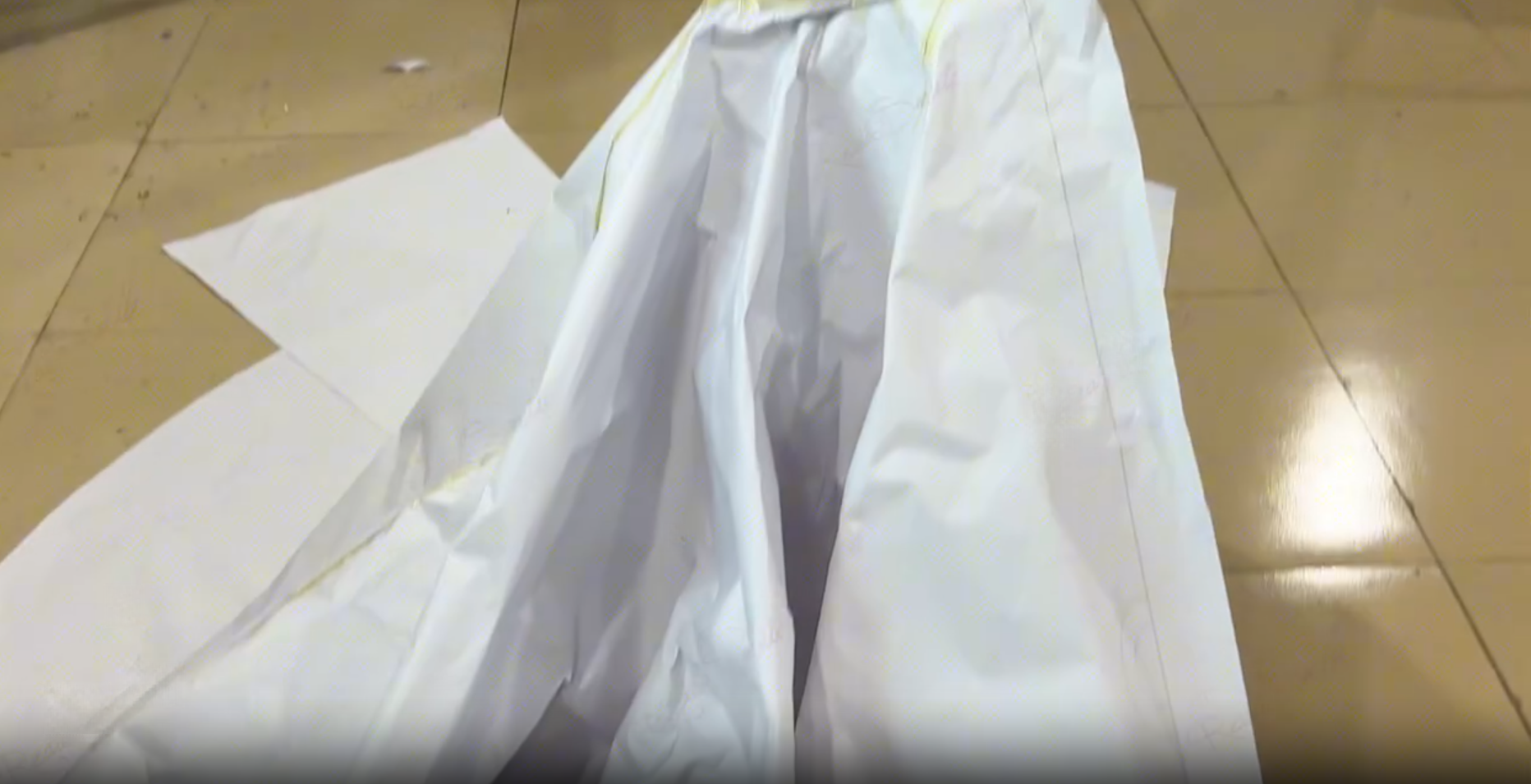
A fitted gown remembers every measurement.
Red had to look expensive under light.
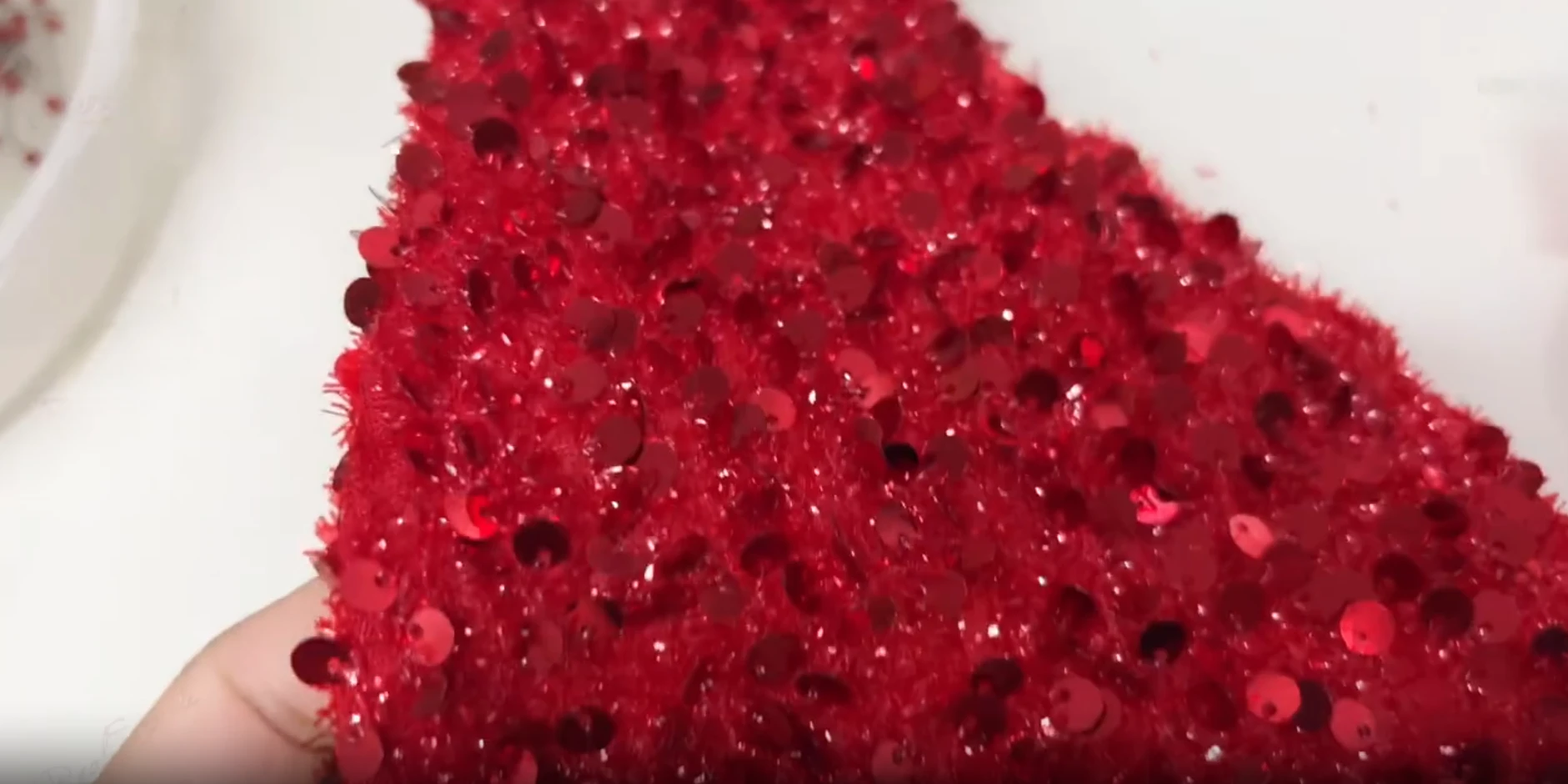
Three suppliers' swatches were tested before choosing the final fabric. The bride didn't want orange red, blue red or the kind of shine that immediately reads costume.
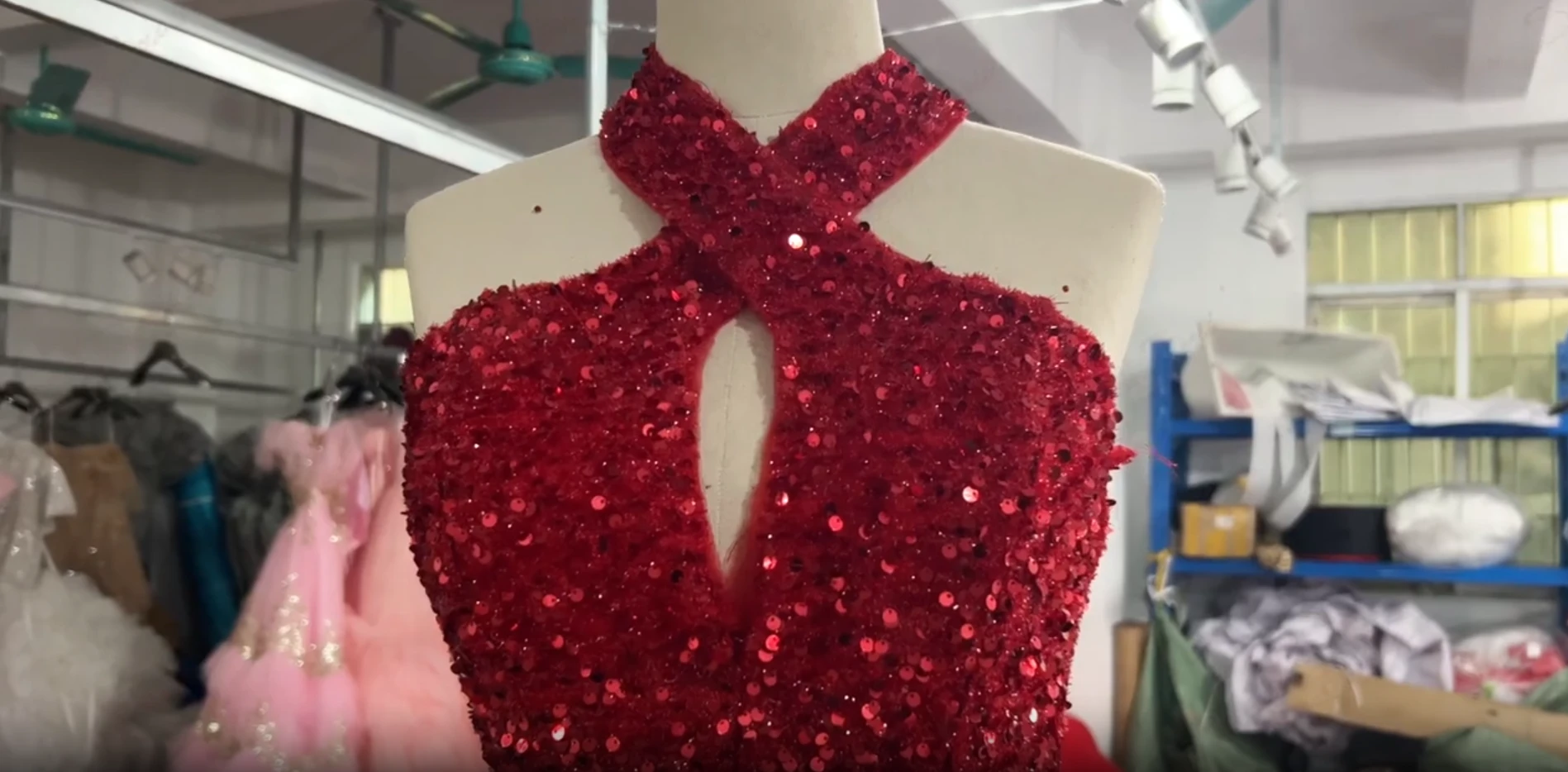
The final choice was a densely sequined mesh with overlapping rows that create a liquid surface under warm light. Beneath it sits red satin for comfort and stiff tulle for structure.
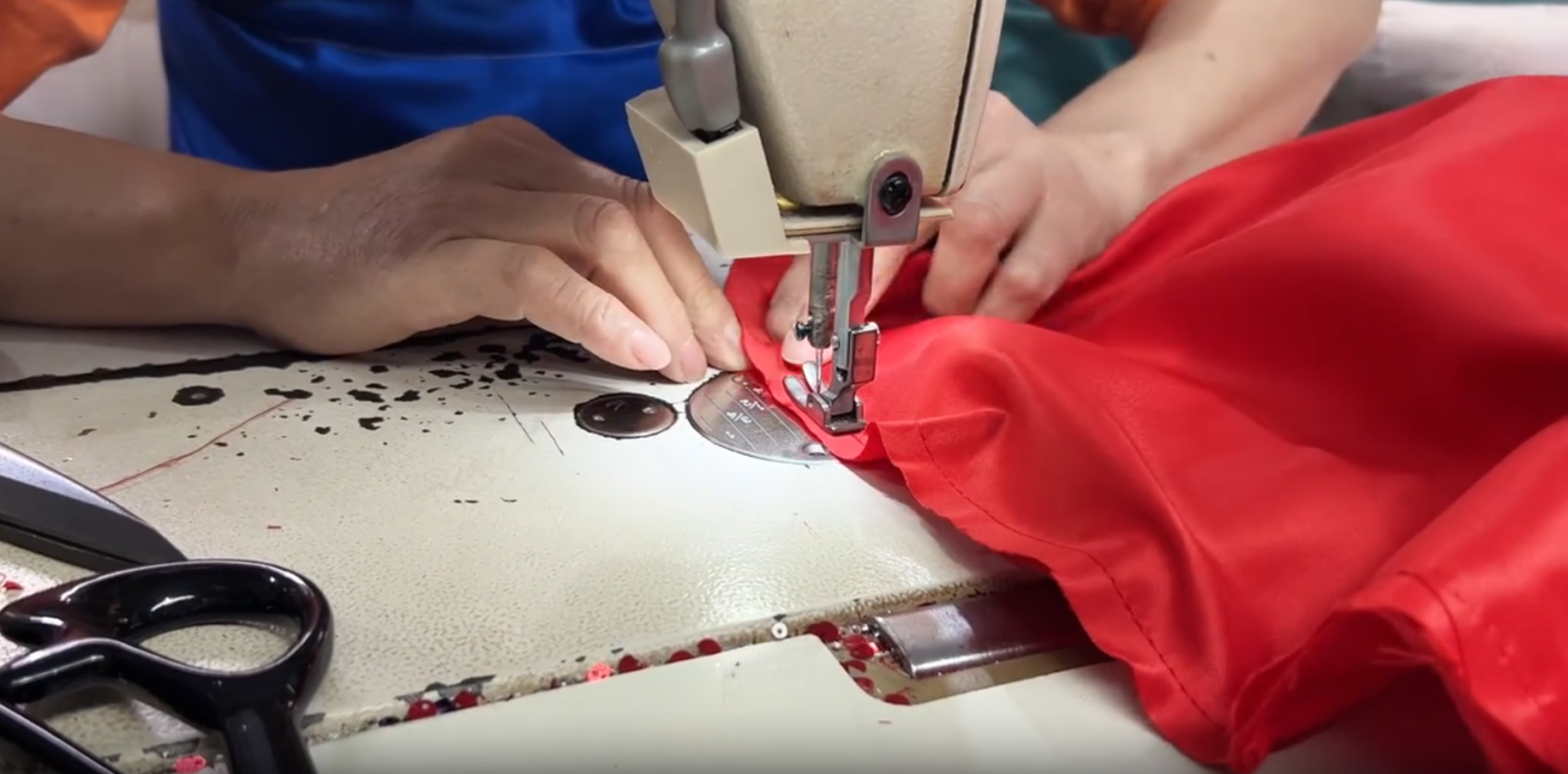
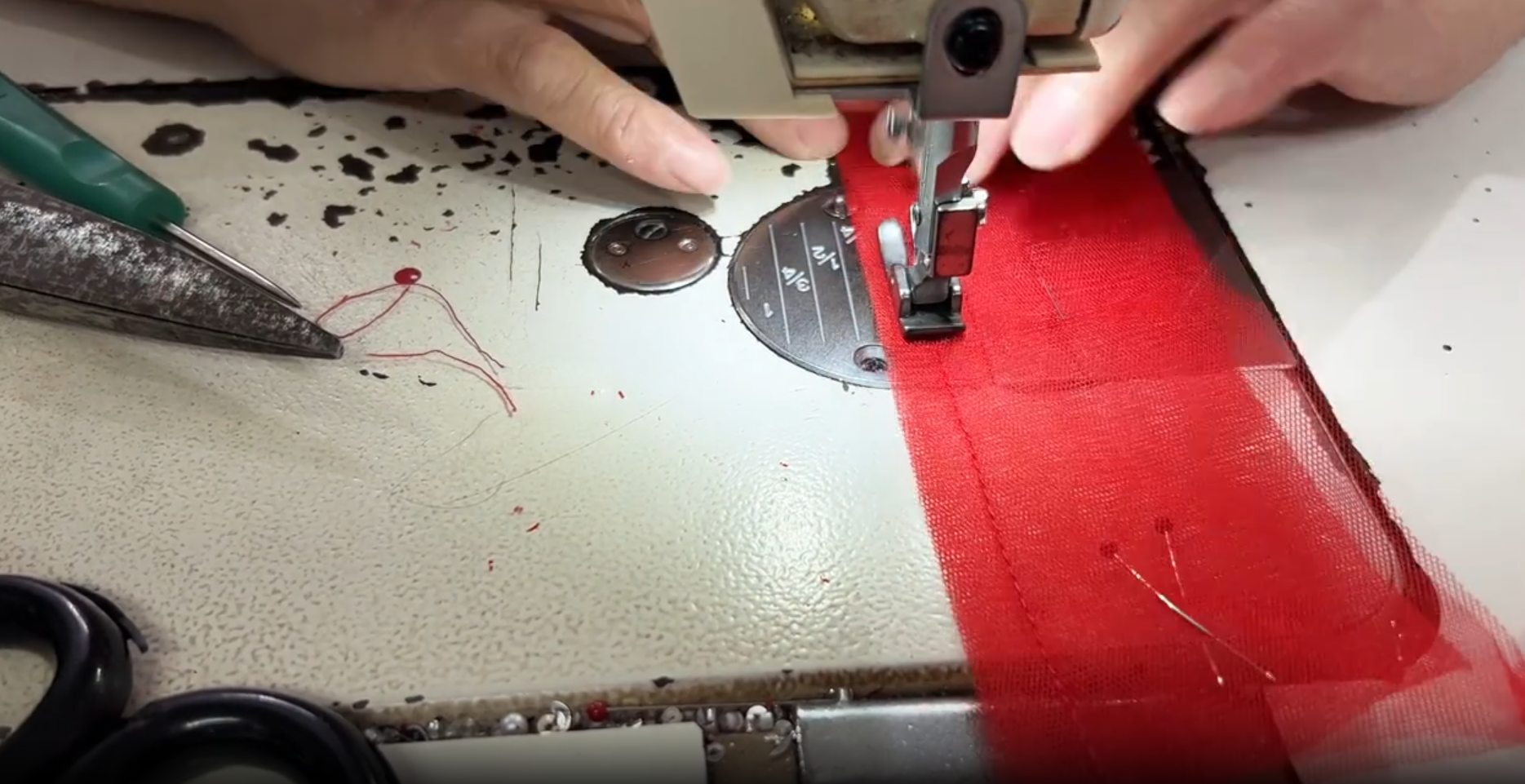
The mermaid shape begins long before the hem.
The bodice came first. Princess seams shaped the sequin layer while the satin lining was assembled separately and joined from the inside.
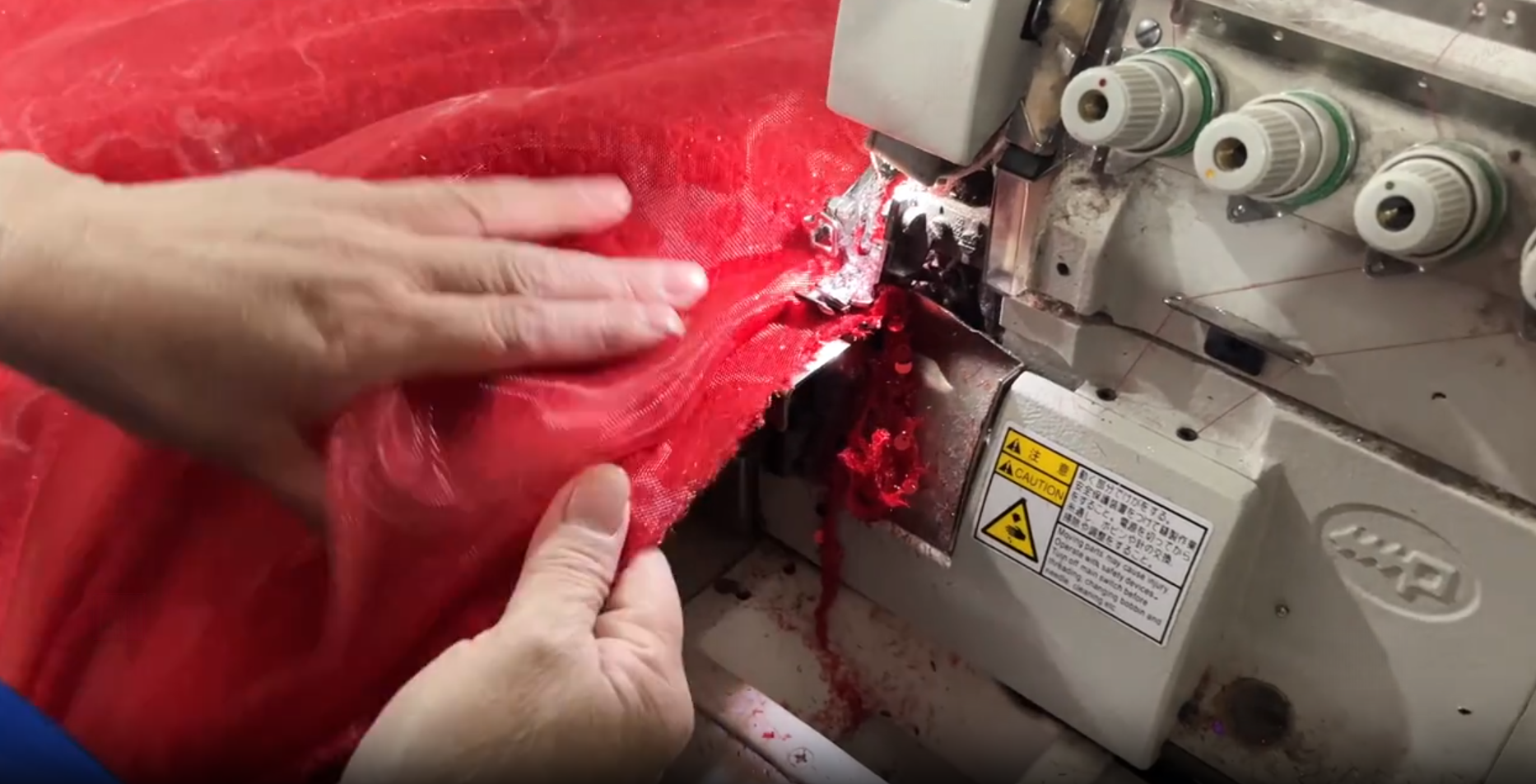
Heat is dangerous around sequins, so every seam required careful handling. Too much heat can melt the surface. Too little leaves the seam bulky.
The skirt stayed close through the upper thigh, then opened through four bias-cut godets. That transition creates the flare without making the gown feel like a separate skirt attached to a fitted body.
Final hem was intentionally left until fitting. Shoes change everything.
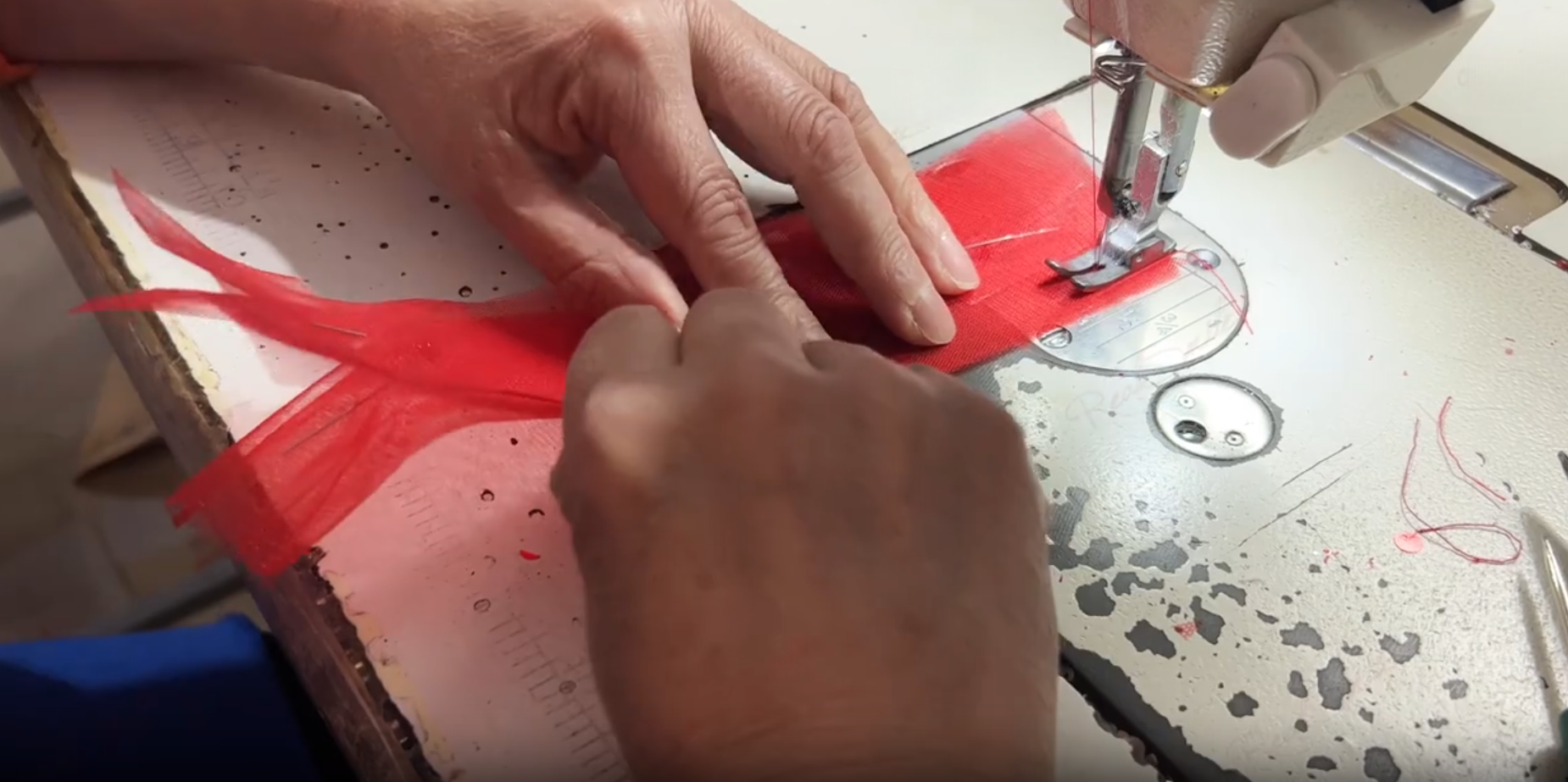
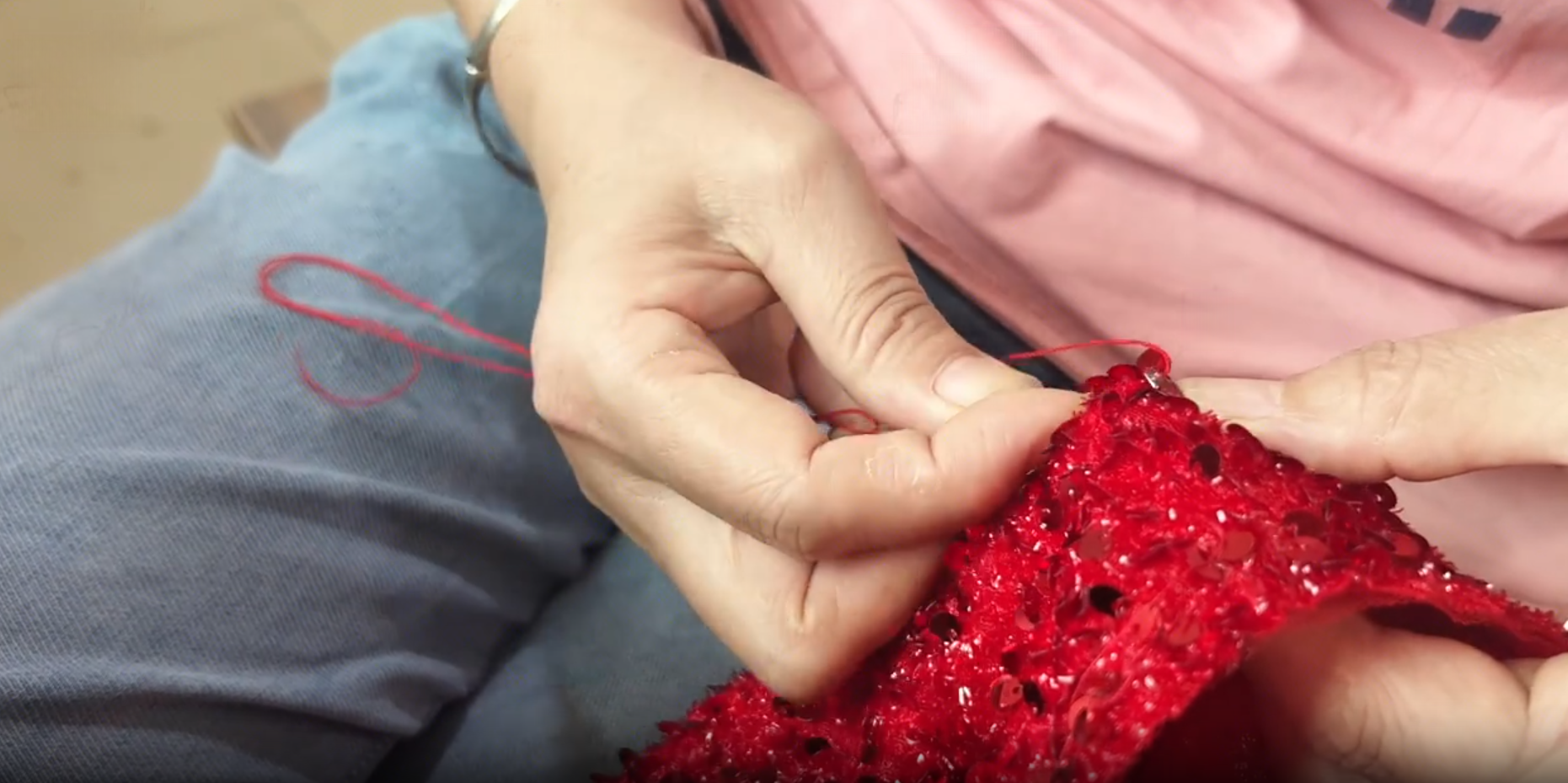
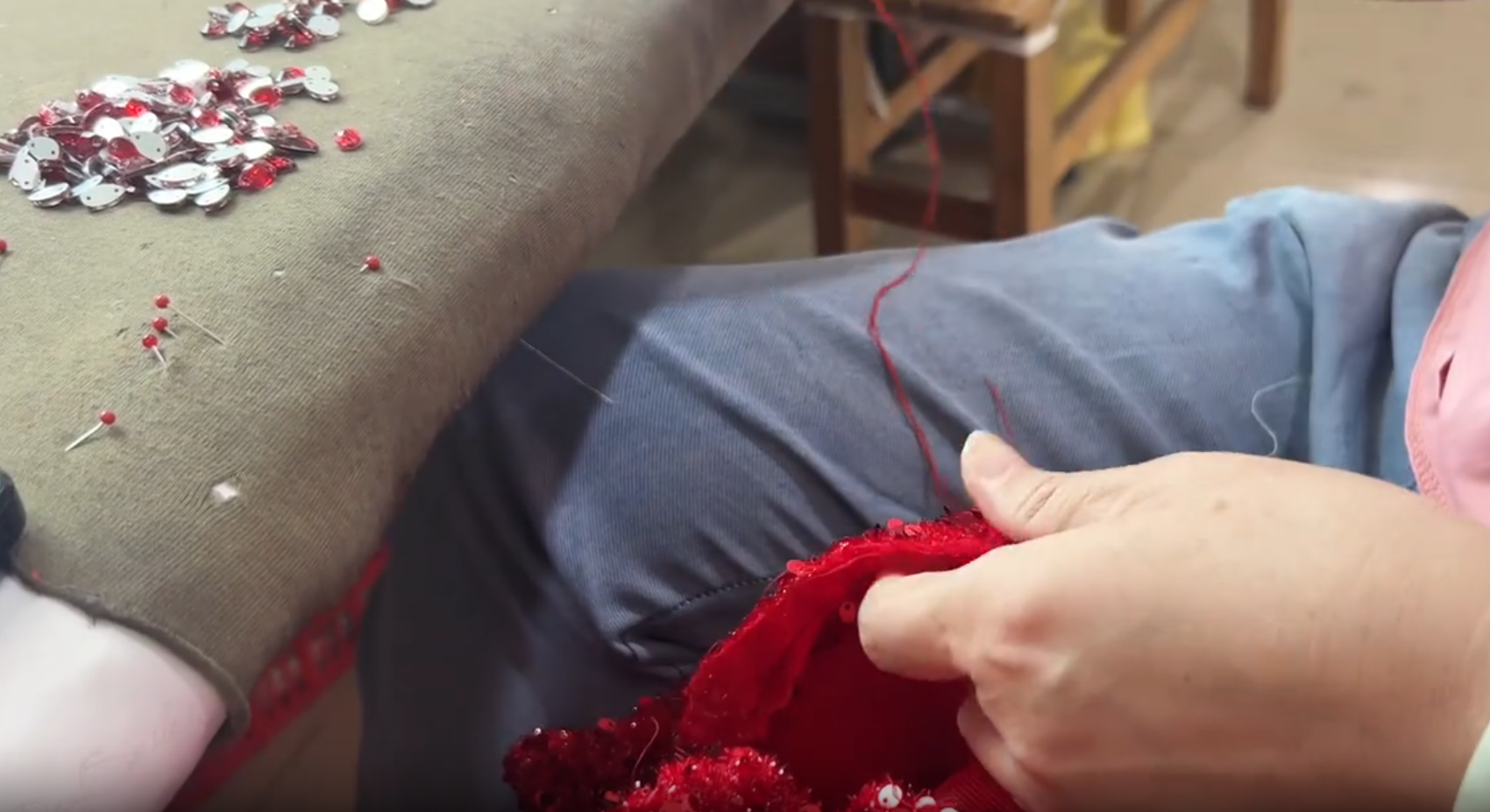
Six days of hand beading.
Sequin alone gave the bodice shine, but not depth. The bride wanted something that changed when direct light moved across the surface.
Red glass beads, crystals and seed beads were layered in an organic pattern radiating outward from the center bust.
Perfect symmetry was deliberately avoided. Handwork should still look like a human hand made it.
The Detachable Butterfly Train
Beautiful when attached.
Invisible when removed.
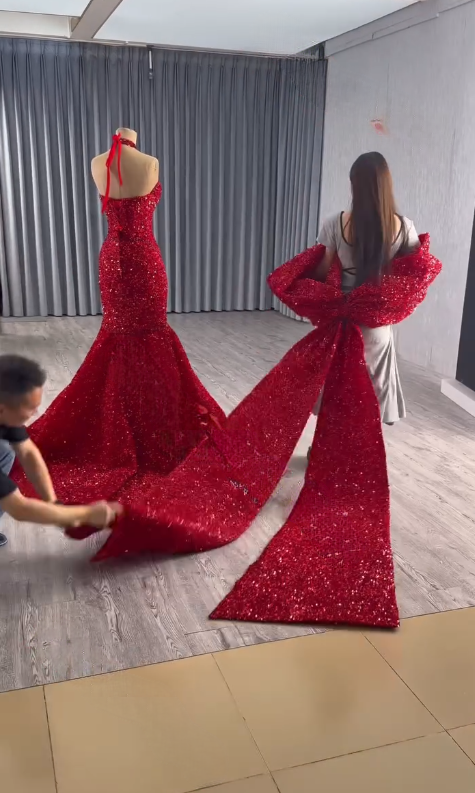
Anyone can permanently sew a train onto a gown. Creating one that holds its shape, distributes its weight correctly and disappears without leaving visible hardware is a different problem entirely.
Too visible. Too much stress on a single attachment point.
Strong, but impractical for a bride to attach alone.
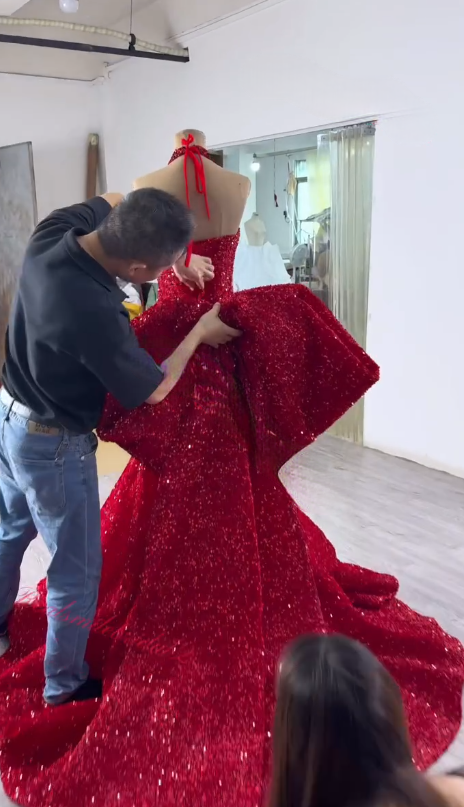
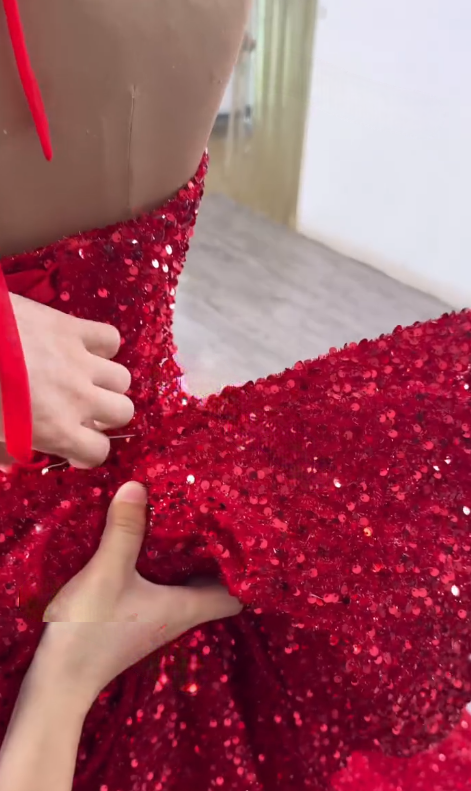
Three concealed attachment points distribute weight across the waist.
The final solution used a wide internal satin belt anchored at the side seams and center back. Three covered attachment points sit inside the gown where they cannot be seen from the exterior.
The train connects through three matching straps, allowing the bride to remove it in seconds while leaving the exterior of the dress completely clean.
Five adjustments.
Half-centimeter increments.
Attachment points cannot simply sit at center back. Too much weight pulls the gown backward. Side points positioned incorrectly pull the wings inward. We tested walking, turning, sitting and bending until the train stayed level without changing the fit of the bodice.
Finishing is where a dress stops looking unfinished.
Sequin hems were finished by hand so no visible machine line interrupted the surface. Raw interior edges were bound to reduce friction and protect the fabric.
The entire gown was cleaned carefully with a soft brush and lint roller before final steaming.
Packing required almost as much thought as finishing. The gown was rolled rather than sharply folded, with acid-free tissue placed between layers.
The detachable train received its own protective wrap so the shape and beading would not be crushed during transport.
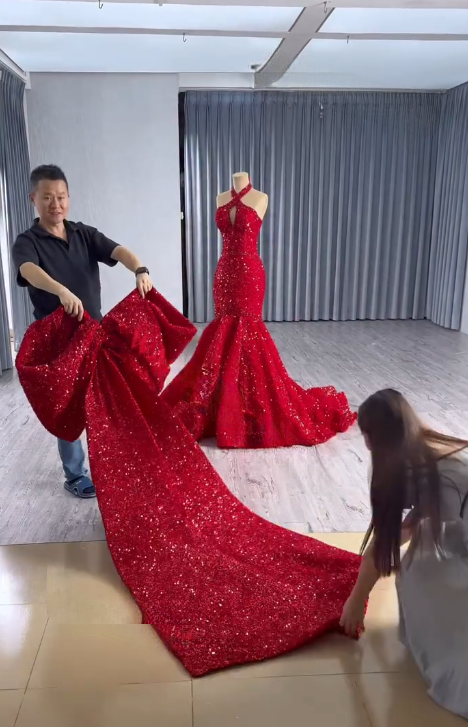
The most important part was the part no one saw.
The butterfly train received the attention. It should have. It changed the entire silhouette when attached.
But what made it successful was hidden underneath: the internal belt, the weight distribution, the covered attachment points and the tiny adjustments that stopped the gown from shifting.
At the reception she removed the train and kept dancing. The mermaid skirt moved exactly as intended. The back of the gown remained clean. Nothing suggested that a nearly two-meter train had been attached there only minutes before.
Color, silhouette and construction can completely change what a wedding dress becomes.
The train was the spectacle.
The engineering made it disappear.
That's what stayed with us after this gown left the workroom. Not simply that it looked dramatic with the butterfly train attached, but that once the train came off, the dress underneath still looked exactly as though it had always been designed that way.
More Stories From Our Dressmaking Workshop
Explore more behind-the-scenes stories from our workshop, including hand beading, custom construction, detachable trains, and couture finishing.