
Tracing the Beadwork of a Pink Ball Gown Prom Dress
15th Sep 2026
About That Pink Ball Gown: Notes From the Workroom
A closer look at how a heavily hand-beaded pink ball gown comes together, from cutting fine mesh and mapping flowing bead lines to hand stitching, structured construction, color matching and final finishing.
September 15, 2026
Updated September 15, 2026
People keep asking about the pink ball gown from the last post, so here is the part you cannot see from the finished photographs: how the work actually moves through the room.
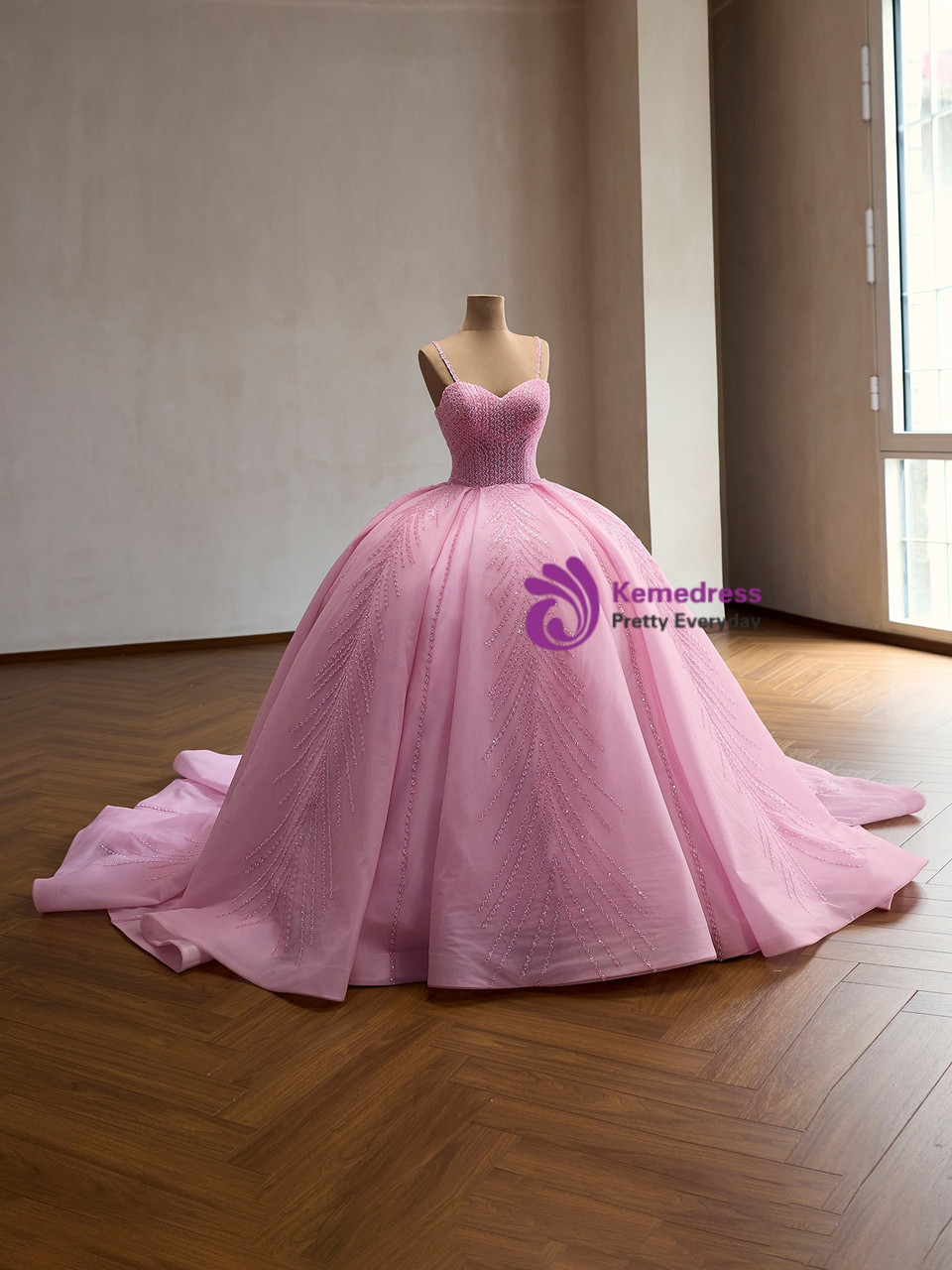
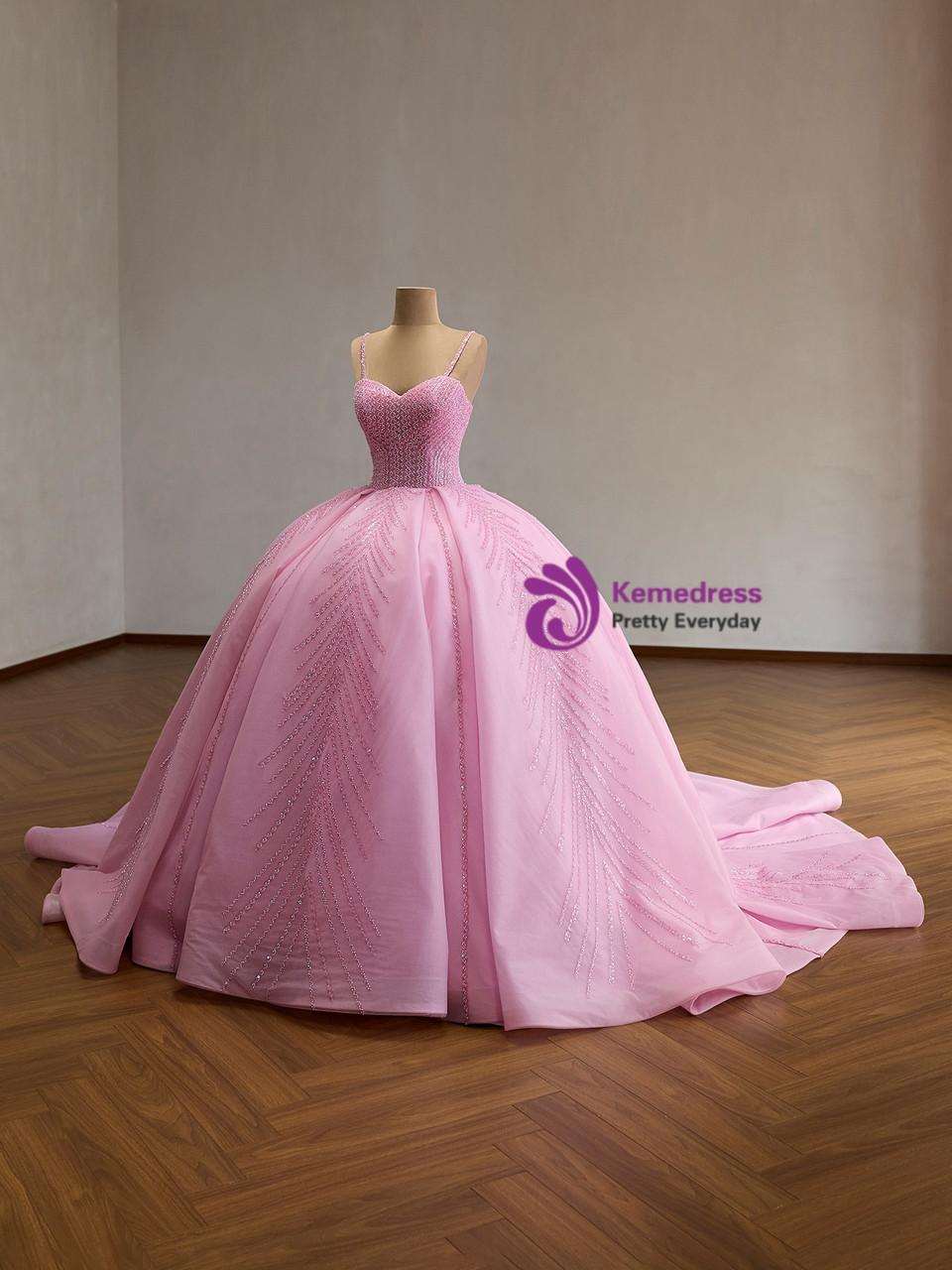
The silhouette itself is familiar to us. The time is in everything layered over it. Fine pink mesh, a sweetheart bodice, narrow straps, a structured full skirt and a short train are combined with thousands of individually sewn beads and small sequins.
The Shape Was the Easy Part
The pattern is familiar. Sweetheart bodice, spaghetti straps, a full skirt and a short train. We have cut this general shape many times, so there was no complicated draping problem to solve before construction began.
For this piece, the pattern was marked directly onto the final fabric rather than making a separate muslin. The machine work moved through without a recut. That sounds uneventful, and it was. The real labor started once the fabric was ready for embellishment.
Cutting Fine Pink Mesh
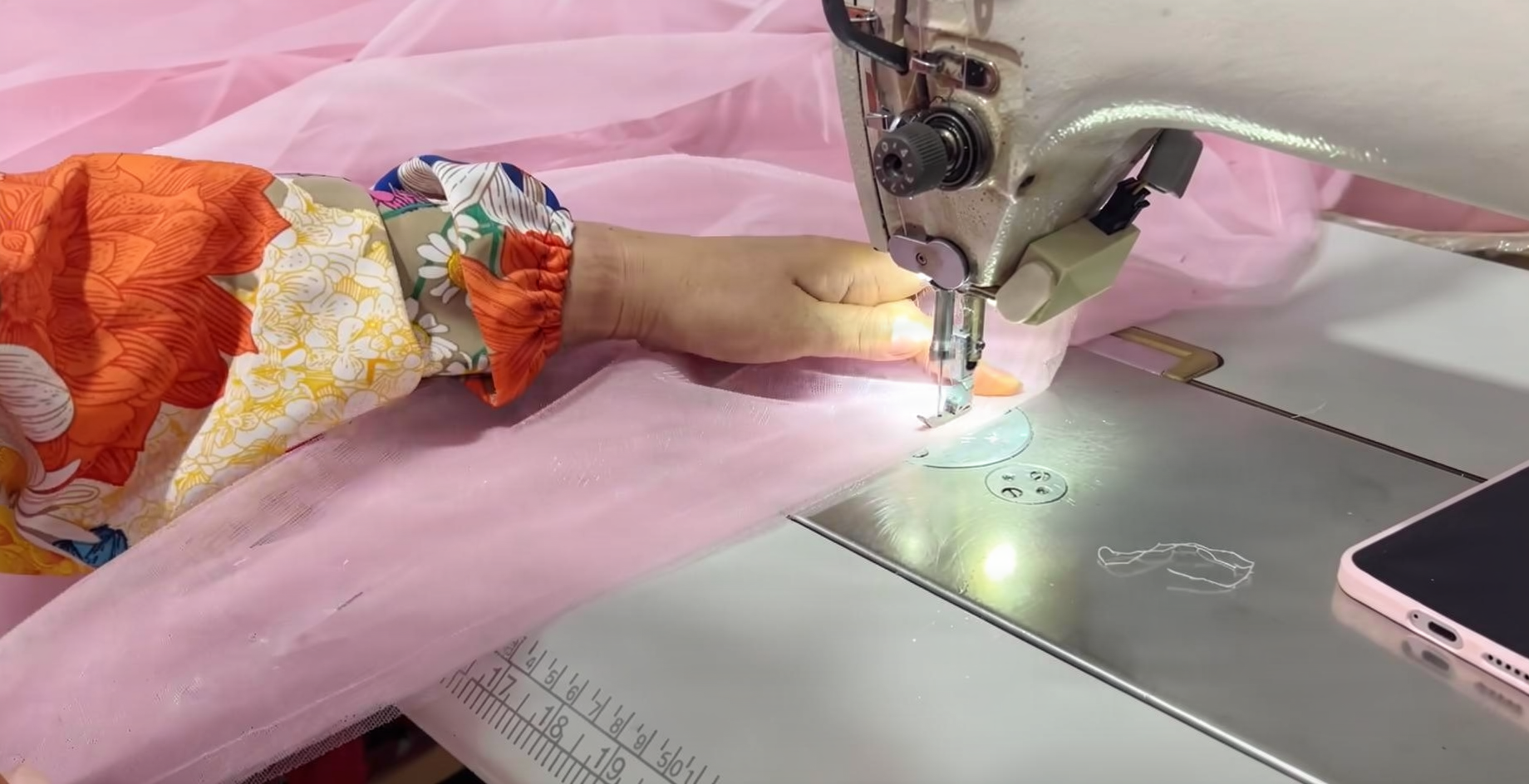
The outer layer is a fine pink mesh, and mesh has a habit of moving when it is handled. We pin the paper pattern securely, mark with chalk and cut in smaller sections while checking the grain.
The blue pattern markings visible in the workroom photographs are part of that process. Chalk gets smudged by hands and repeated handling, so some areas have to be marked again before the next stage can begin.
Where the Time Really Goes
The beadwork is where the weeks disappear. There are thousands of individual seed beads and small round sequins across the gown, with the final quantity estimated from the materials used rather than counted piece by piece.
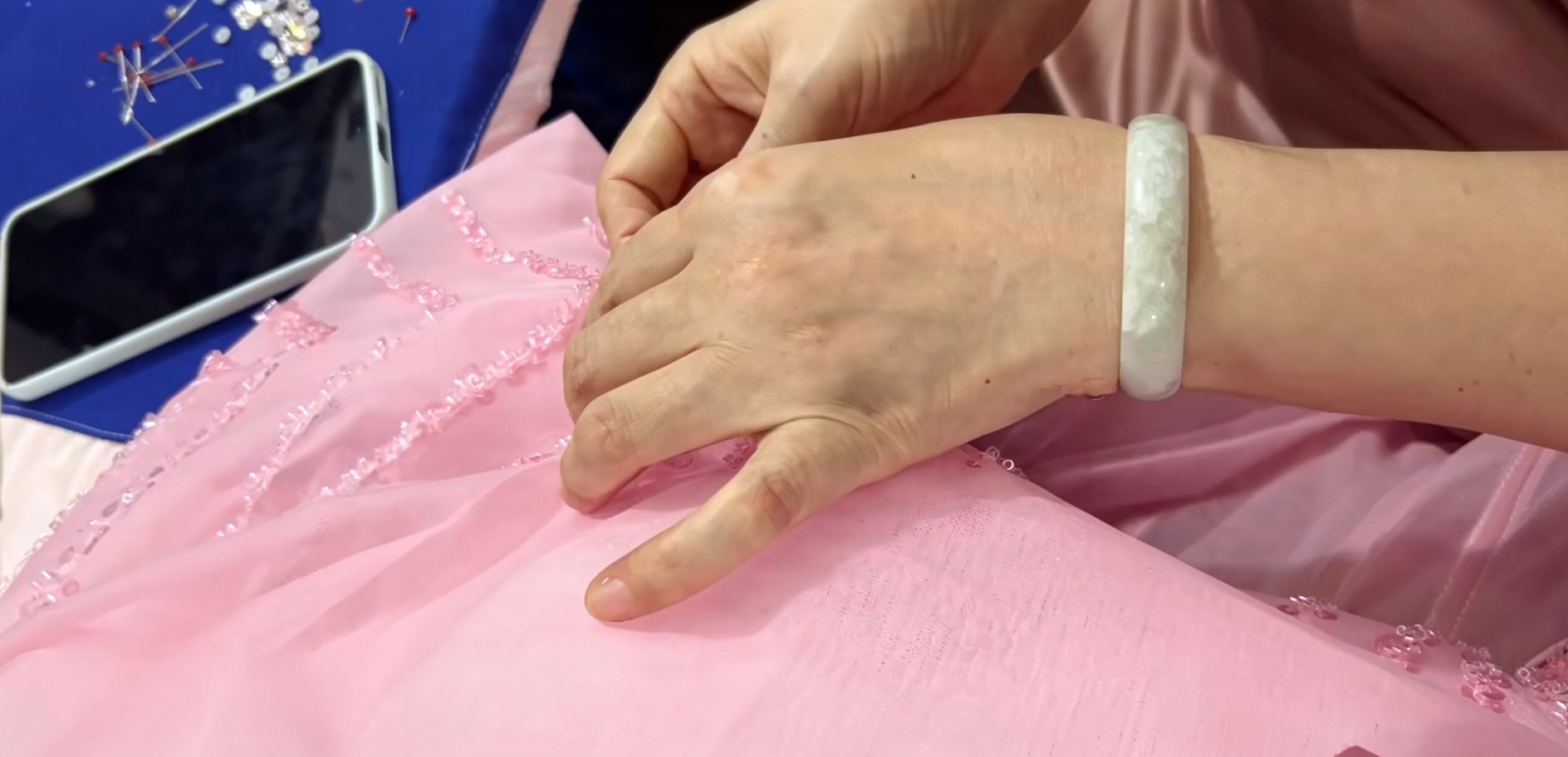
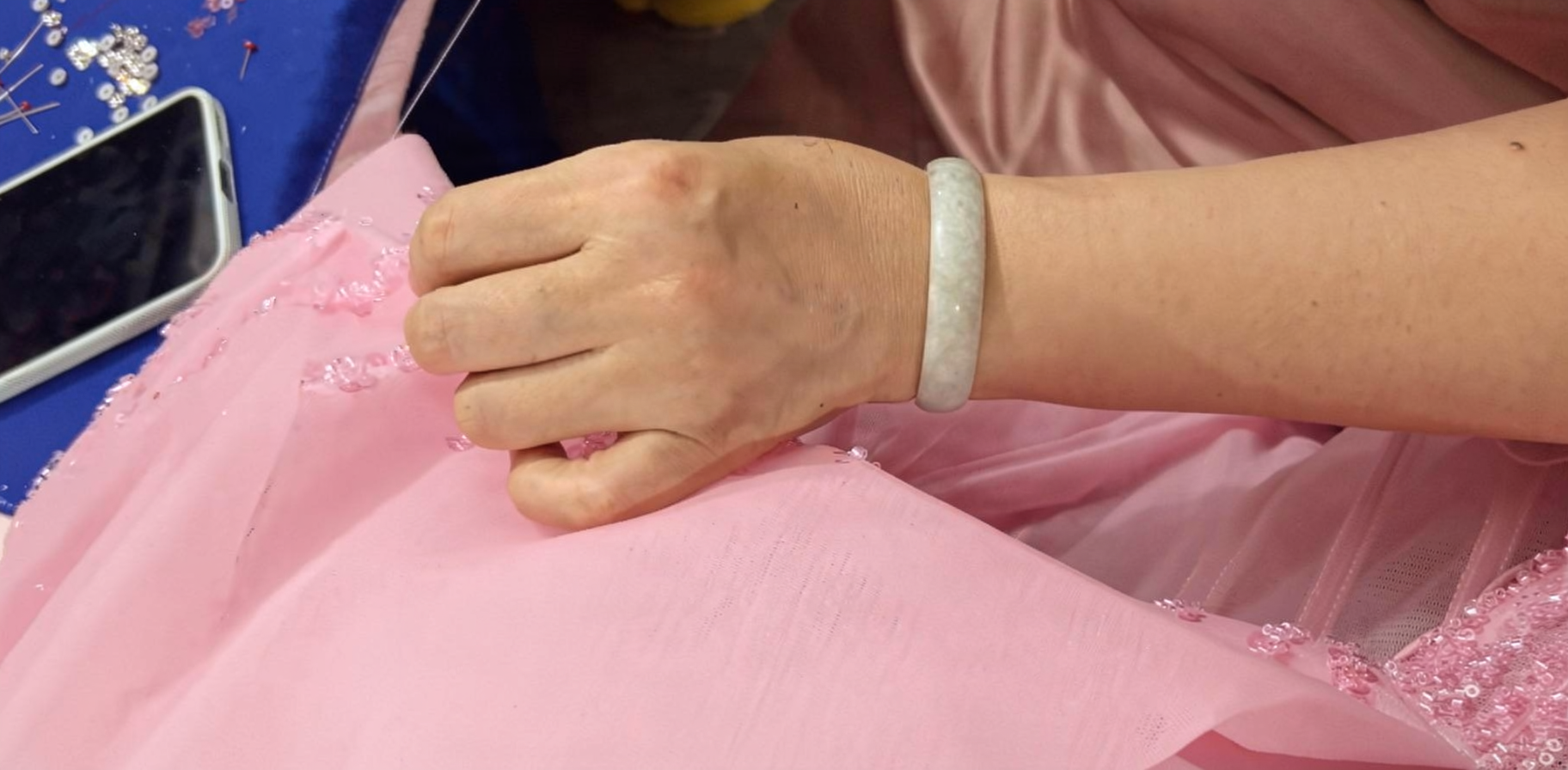
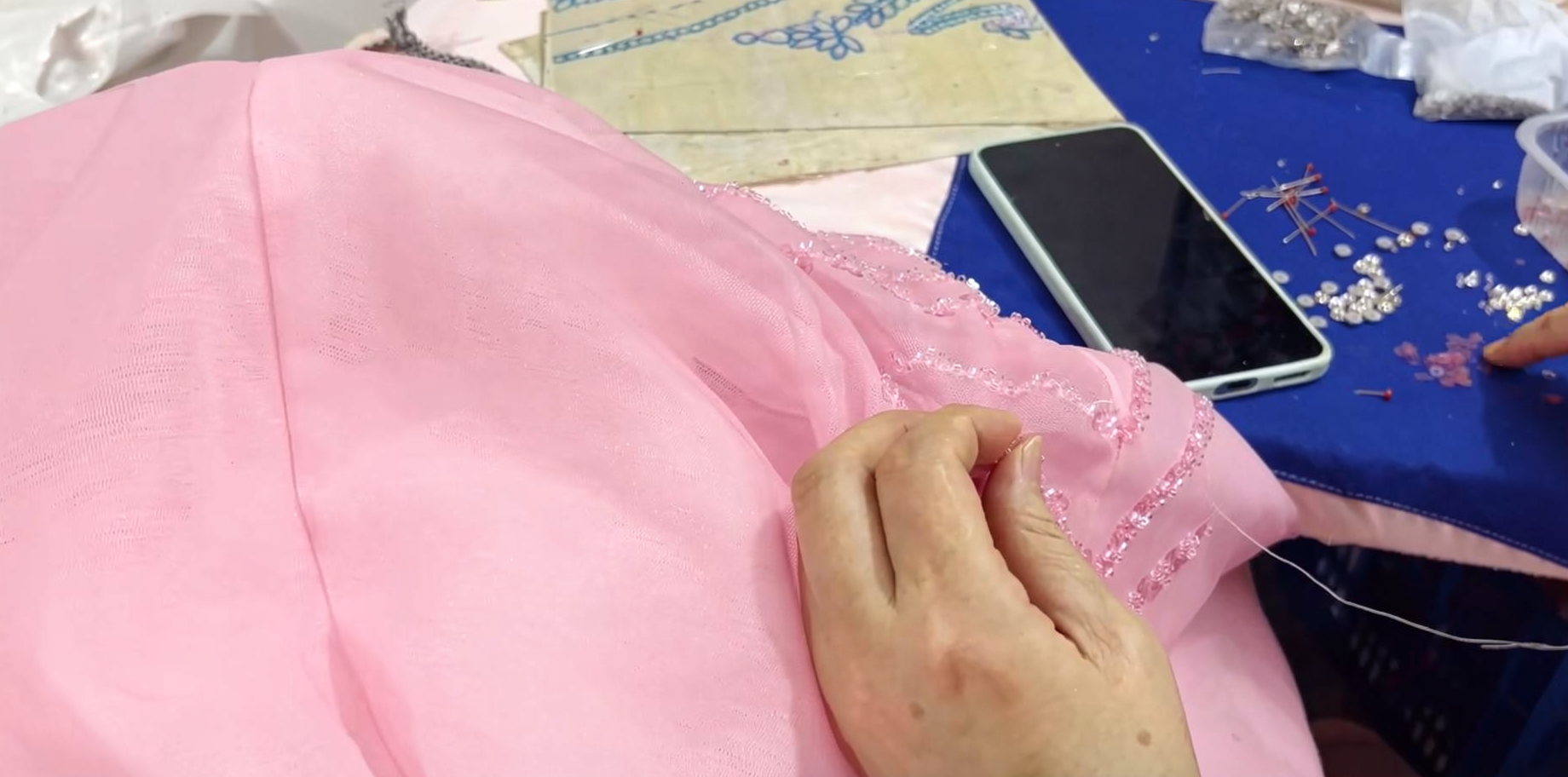
Every embellishment is attached by hand with needle and thread. There is no machine that can reproduce the same control over spacing, direction and density across a moving layer of fine mesh.
Two or three people can work on the gown at different stages, repeating the same small movement for hours: pick up, stitch, pull, snip. When a thread breaks, the work stops long enough to rethread the needle. When a line is wrong, the section has to be removed and rebuilt.
This level of surface work is also characteristic of heavily beaded haute couture prom dresses, where embellishment becomes part of the construction process rather than a final decorative step.
Why Fine Beads Work Better Across the Skirt
Large stones create isolated points of reflection. Dense small beads behave differently. Light reaches many tiny surfaces at once, so the fabric develops a softer, more continuous shimmer.
That matters on a full skirt. Under ballroom lighting, stage lighting or daylight, the surface changes as the wearer moves instead of producing only a few hard flashes.
The Bead Pattern Follows the Skirt
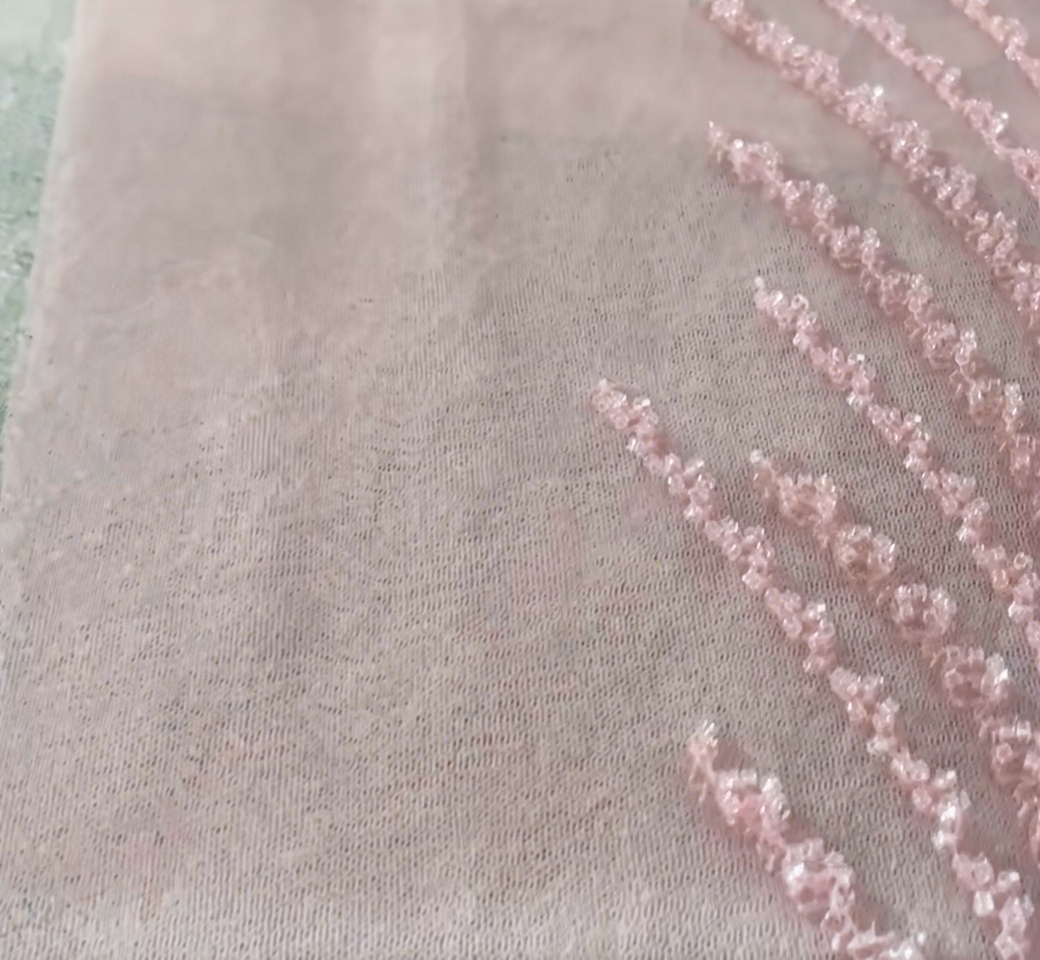
The ornament is designed to suggest willow branches or feather veins. Lines begin close together near the waist, then gradually separate as they travel downward toward the hem and train.
The reason is simple: the beadwork follows the movement of the fabric. The skirt expands from the waist, so the lines expand with it. A scattered arrangement would lose that connection and make the surface look more random.
The layout is marked before stitching begins. On fine mesh, even a small change in tension can move a line, which is why the pattern has to be checked continuously as the work progresses.
The Workroom Details Behind the Photographs
The hands in the workroom photographs belong to our senior beader. The progress photographs are taken during production so customers can see how a gown changes from loose fabric into a finished piece.
There is plenty that never appears in the photographs: the radio playing in the background, tea on the work table, conversations between the machinist and beader, and the sudden quiet when someone has to remove a section that is not sitting correctly.
Those small interruptions are part of the process too. Fine handwork is repetitive, and careful production depends on people noticing small problems before they become large ones.
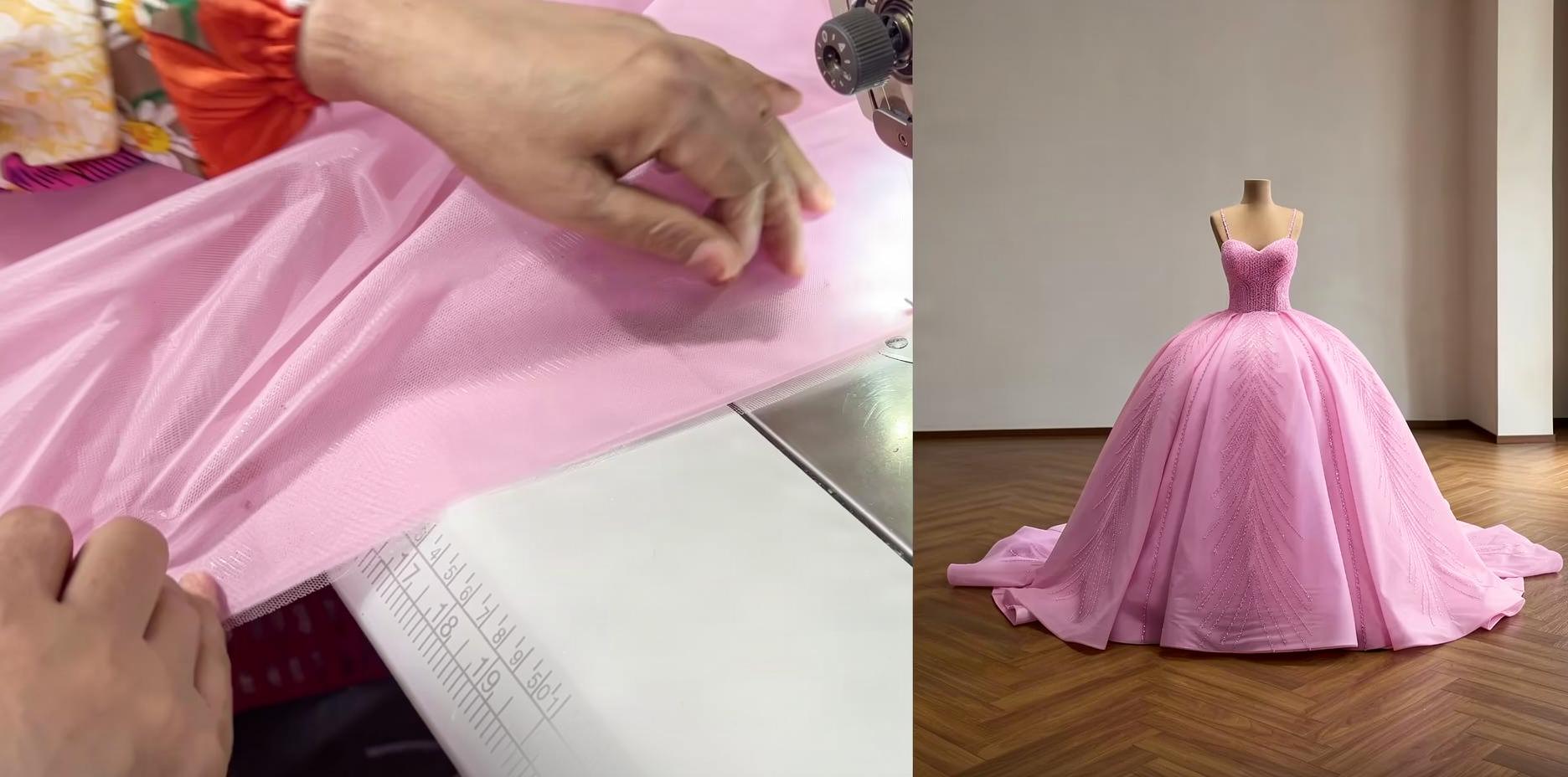
The transition from loose fabric to finished clothing happens gradually. Each production stage changes what the next person can see, handle and correct.
Inside the Beaded Bodice
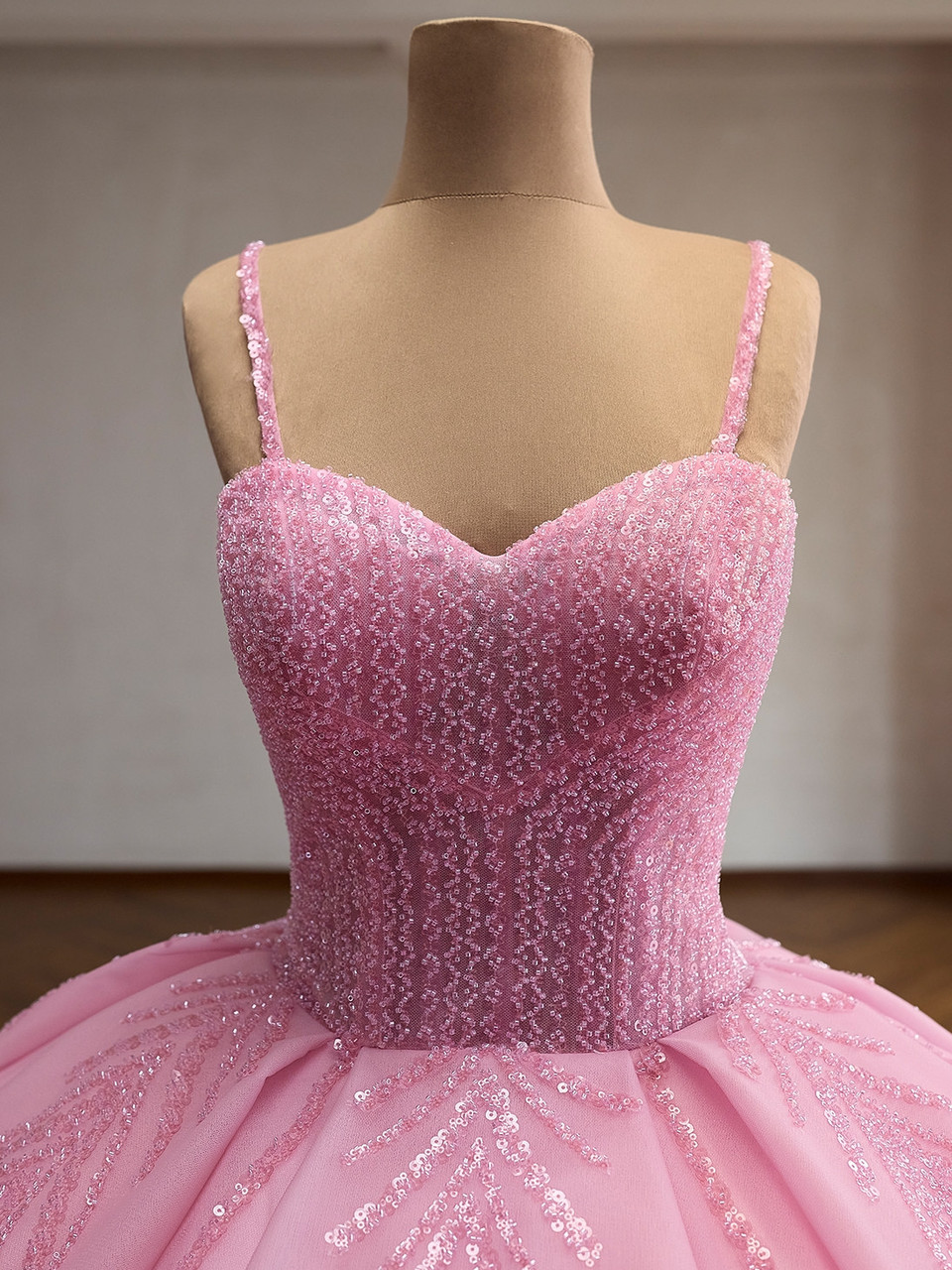
The bodice carries dense embellishment across the sweetheart cups, waist and narrow straps. The straps are worked separately and attached after the main beadwork because the curved surface requires a different working position.
Inside, boning follows the main seams to help support the bodice. The beadwork adds considerable weight, so the internal construction needs to provide stability rather than relying on the embellishment itself.
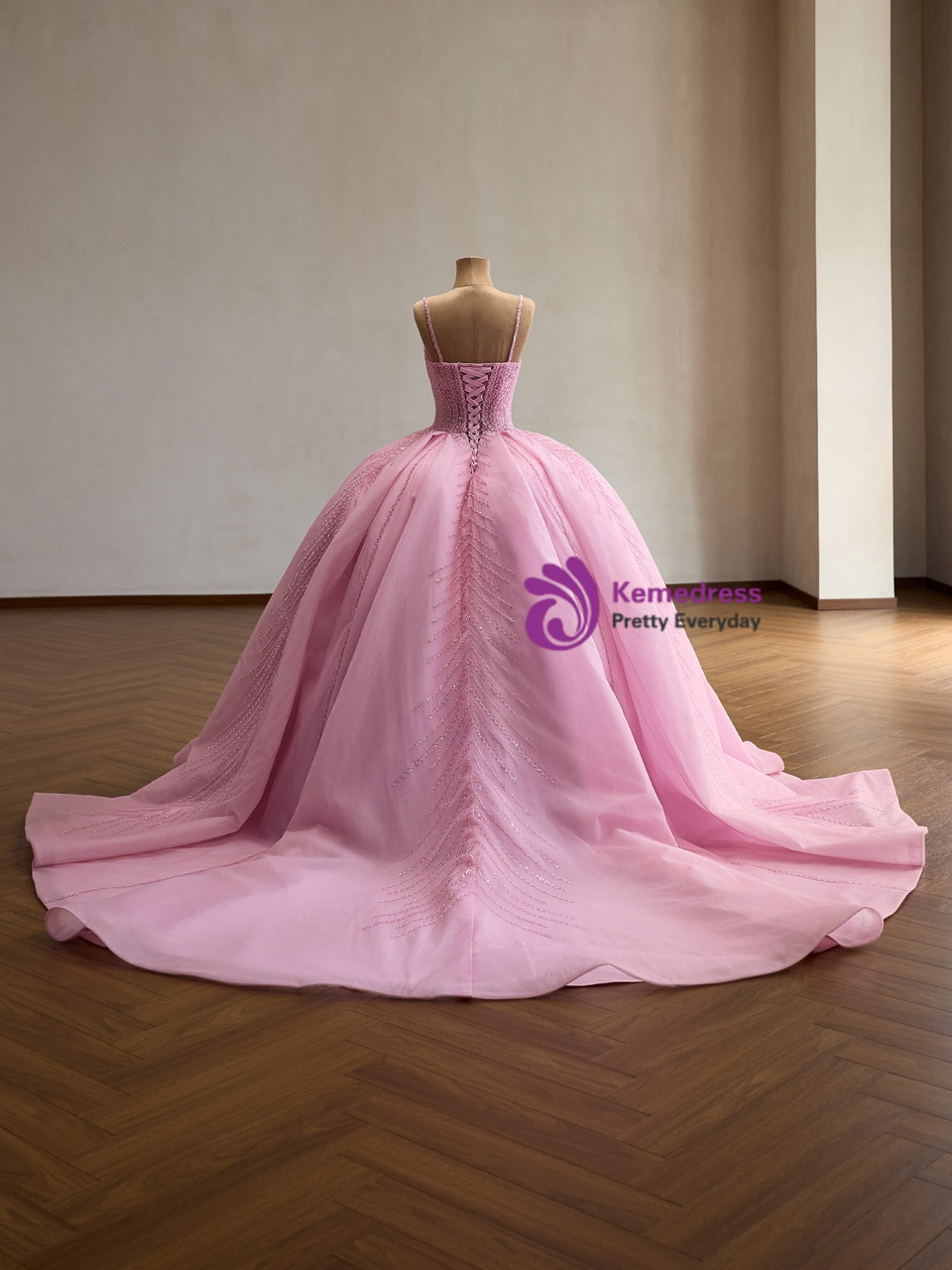
The corset-style lace-up back also gives the wearer some flexibility when fine measurements need to be adjusted during fitting.
For shoppers exploring a different back treatment, open back beaded prom dresses offer another direction, although the gown shown here uses a different back construction.
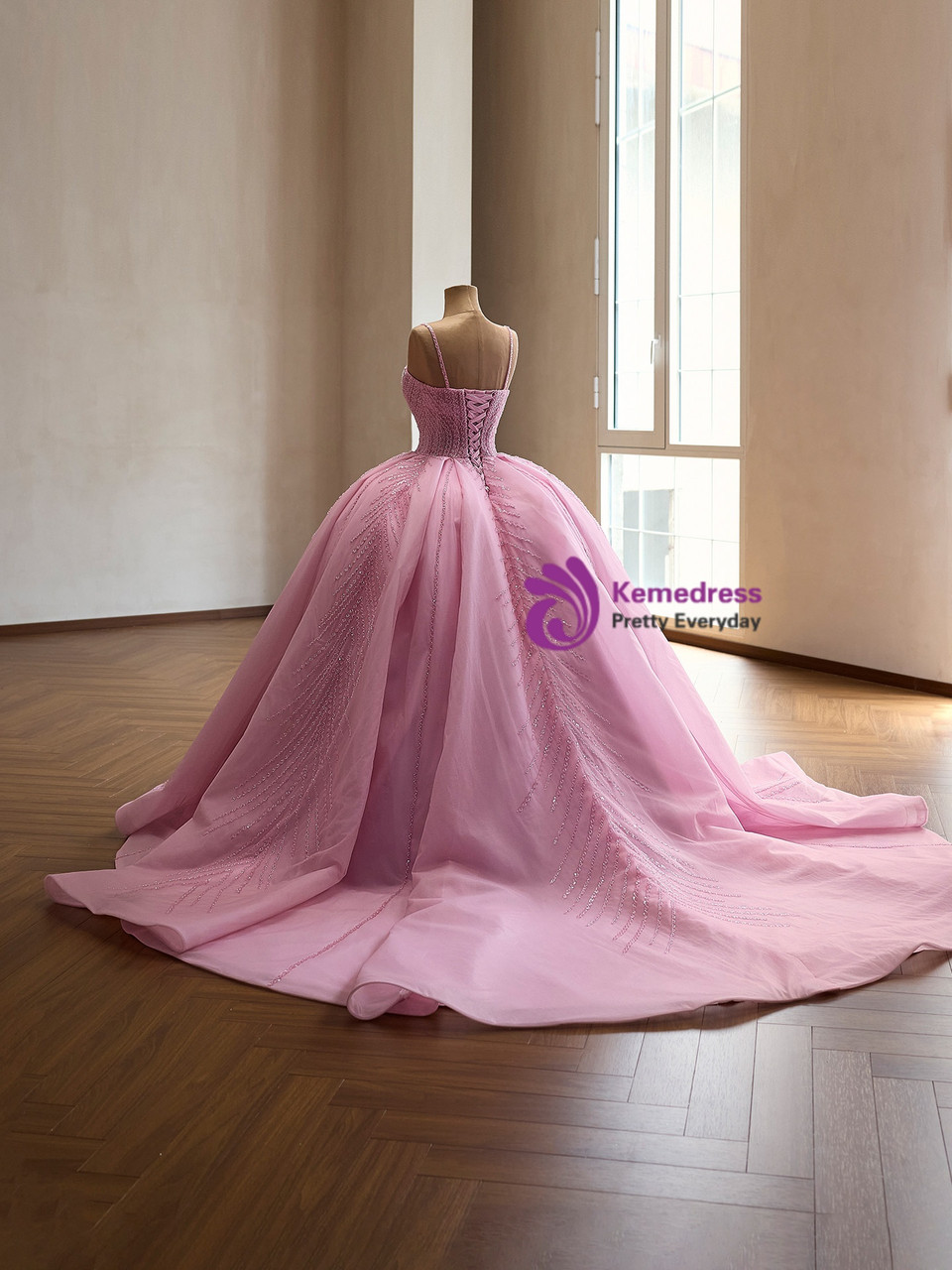
Building the Full Skirt and Train
Under the beaded mesh are multiple tulle layers over a structured underskirt. That internal volume is what gives the gown its full bell-shaped profile while allowing the wearer to walk, sit and move.
The bead lines continue across the outer skirt and into the train. From the front, much of that work can disappear into the overall silhouette. When the wearer turns, the train reveals how far the pattern actually travels.
For shoppers drawn to this combination of volume and embellishment, pink ball gown prom dresses bring together the dramatic skirt shape and formal occasion styling discussed here.
Why Machine Work and Handwork Stay Separate
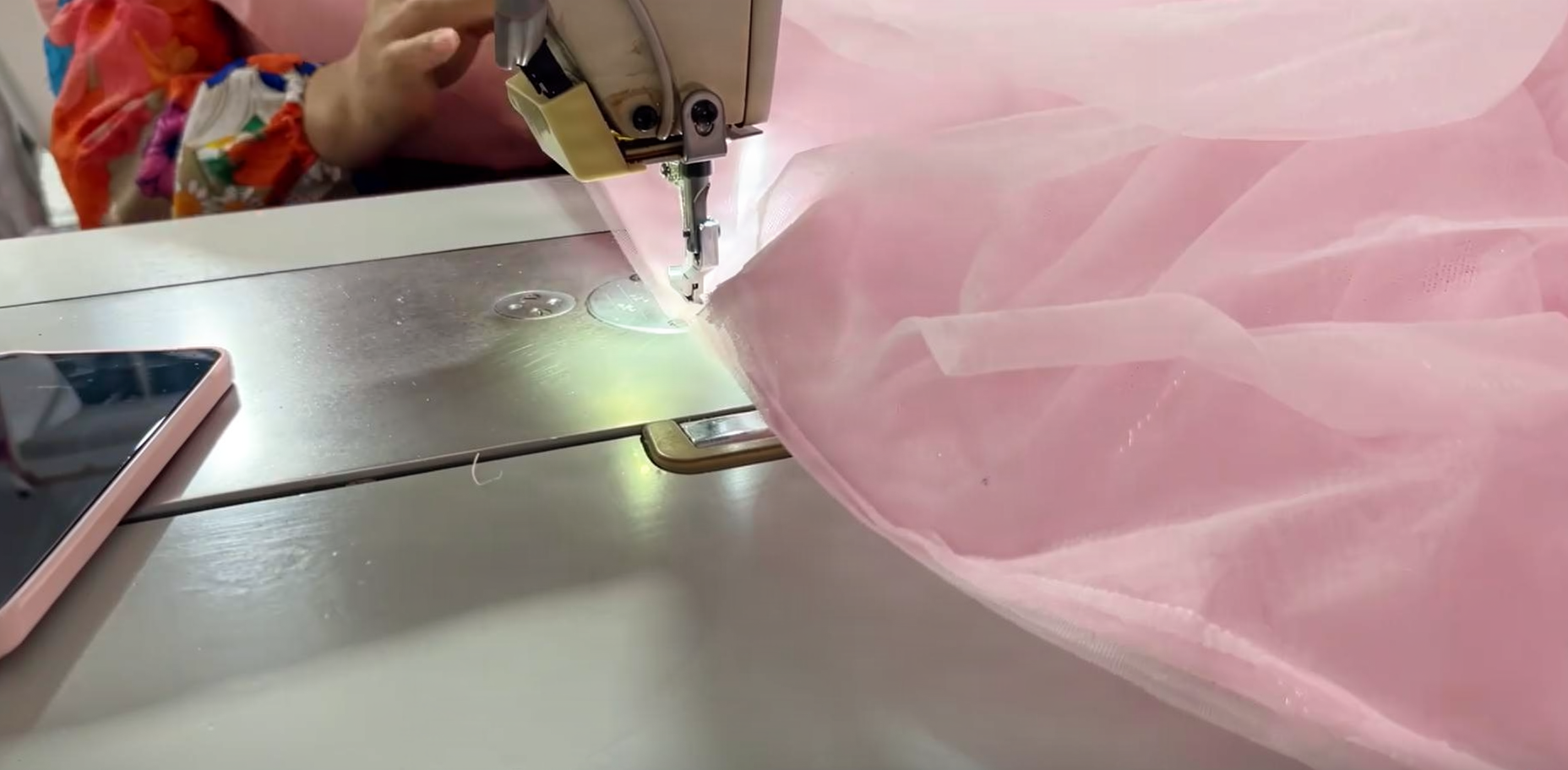
The machine room handles the structural joining, skirt assembly and other construction work. The handwork team focuses on the bead placement and delicate embellishment.
That separation is intentional. Fine mesh and heavy beadwork require different handling, and keeping the two processes distinct helps protect both the fabric and the finished pattern.
Why a Fully Beaded Gown Needs More Time
Hand beading is slow because every embellishment has to be positioned, stitched and checked. There is no practical way to compress detailed beadwork into the same schedule as a simpler gown without changing the amount of work involved.
The timeline depends on the coverage, materials, construction and complexity of the pattern. For a heavily embellished ball gown, allowing enough production time is part of protecting the final appearance.
The Finished Weight Matters Too
Thousands of small embellishments add up. The finished gown has noticeable weight when lifted onto a mannequin, which is one reason the internal structure matters as much as the visible beadwork.
Support, skirt volume and embellishment have to work together. A beautiful surface is only one part of making a gown that can actually be worn.
Choosing a Custom Color for Heavy Beading
The pink colorway shown here is one of the available options, while the same design can also be produced in white. Custom color requests create another layer of work because the base fabric and embellishment need to read as one coordinated surface.
For customers drawn to this particular color direction, elegant pink beaded prom dresses offer a softer alternative to darker formalwear.
For a custom color, the mesh, lining, beads and sequins should be considered together. A bead that looks perfect on its own may appear different once it sits against a particular mesh or lining.
If you are planning a custom shade, it is worth checking the available fabric color chart before choosing the final color. A physical swatch is especially useful when the shade needs to coordinate with shoes, accessories, a wedding palette or another garment.
Different material batches can also vary slightly, which is why matching the components early is important for a gown with dense surface coverage.
Planning a Custom Version?
Color, measurements and construction details can be discussed before production begins.
Custom Made Service
Personalized measurements, design changes and specific production requests can be discussed through the custom service.
Custom Made Prom Dresses from Kemedress
Browse the wider collection when you want to compare silhouettes, colors, embellishment and formal dress construction.
More Workroom Stories
Why Our Mermaid Wedding Dress Doesn't Feel Shackled
Explore another Kemedress workshop story focused on structure, movement and mermaid wedding dress construction.
Mermaid Wedding Dress Manufacturing Process
Follow another production record from bodice construction through embellishment, ruffles and train finishing.
Inside Our Workshop: Creating a Custom Beaded Wedding Dress
Take a closer look at custom bridal production, detailed embellishment and hands-on workshop techniques.
Cape Tulle Wedding Dress With Beading
Compare another detailed production story involving delicate fabric, hand embellishment and custom ordering time.