Kemedress Workroom Journal
Inside the Making of a Black Velvet Ball Gown
A black velvet ball gown is shaped from the inside out. The silhouette depends on a flexible woven foundation, the depth of the velvet and carefully controlled crystal work.
The most important part of a strapless gown is often the part you cannot see.
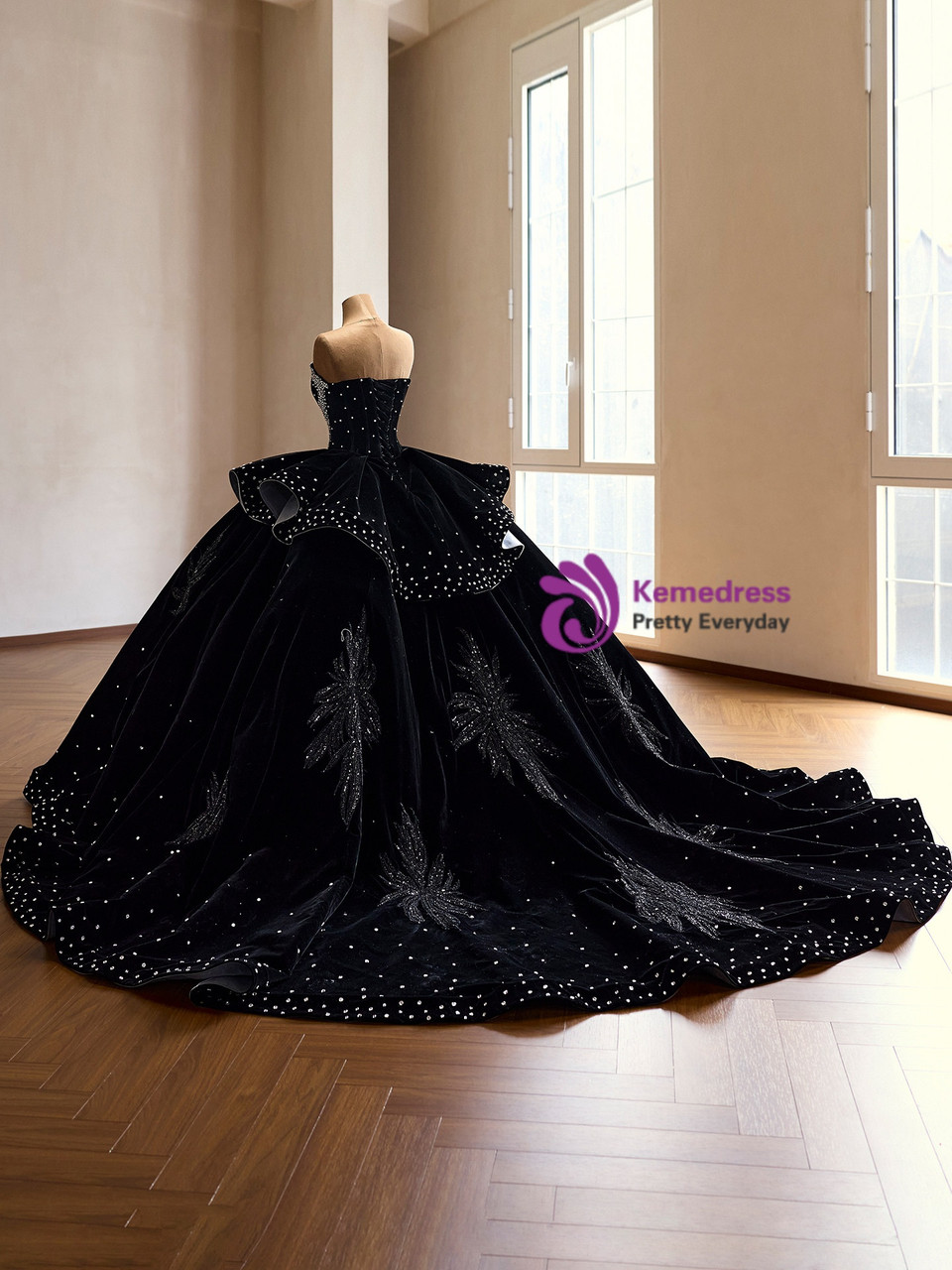
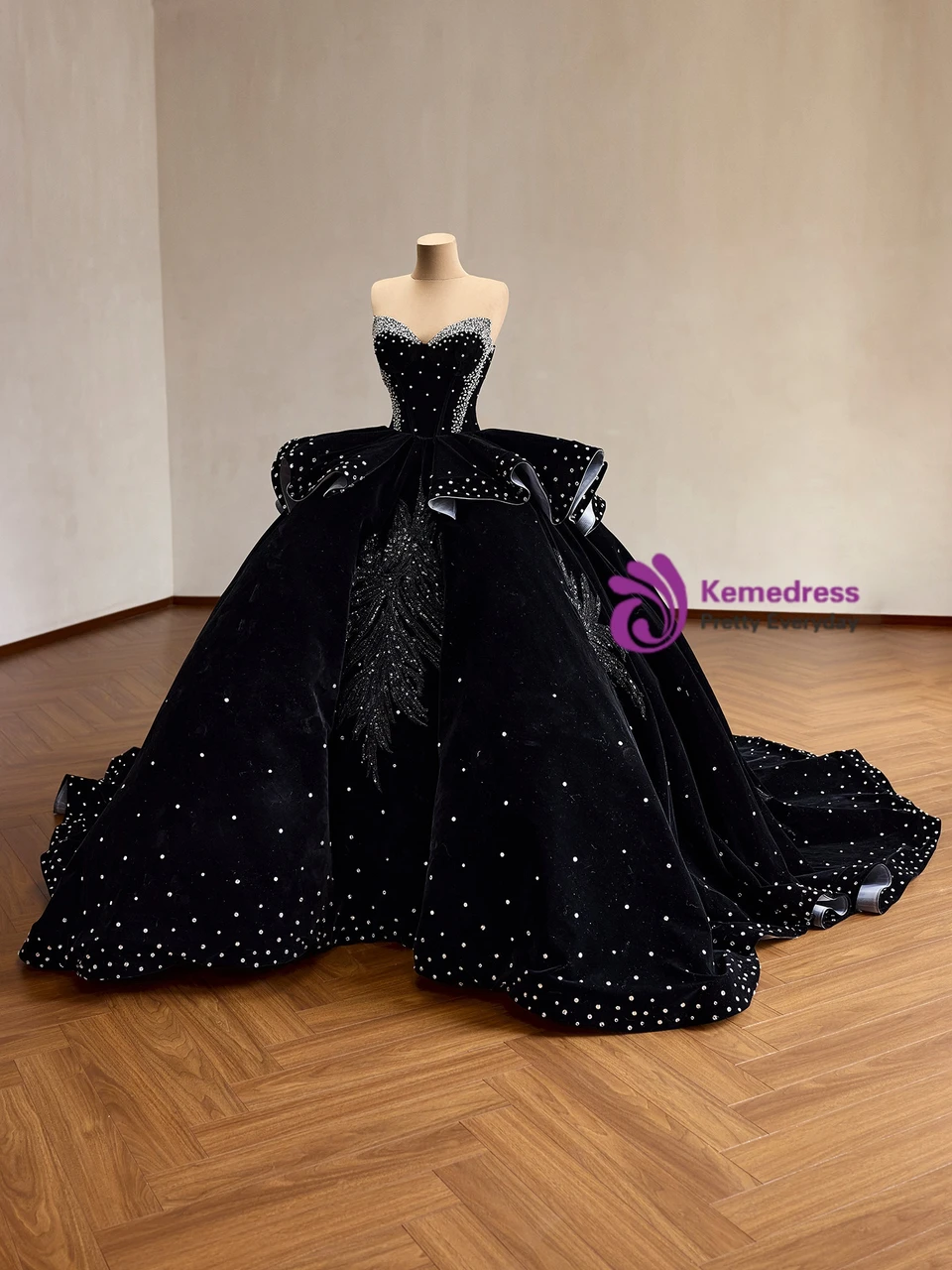
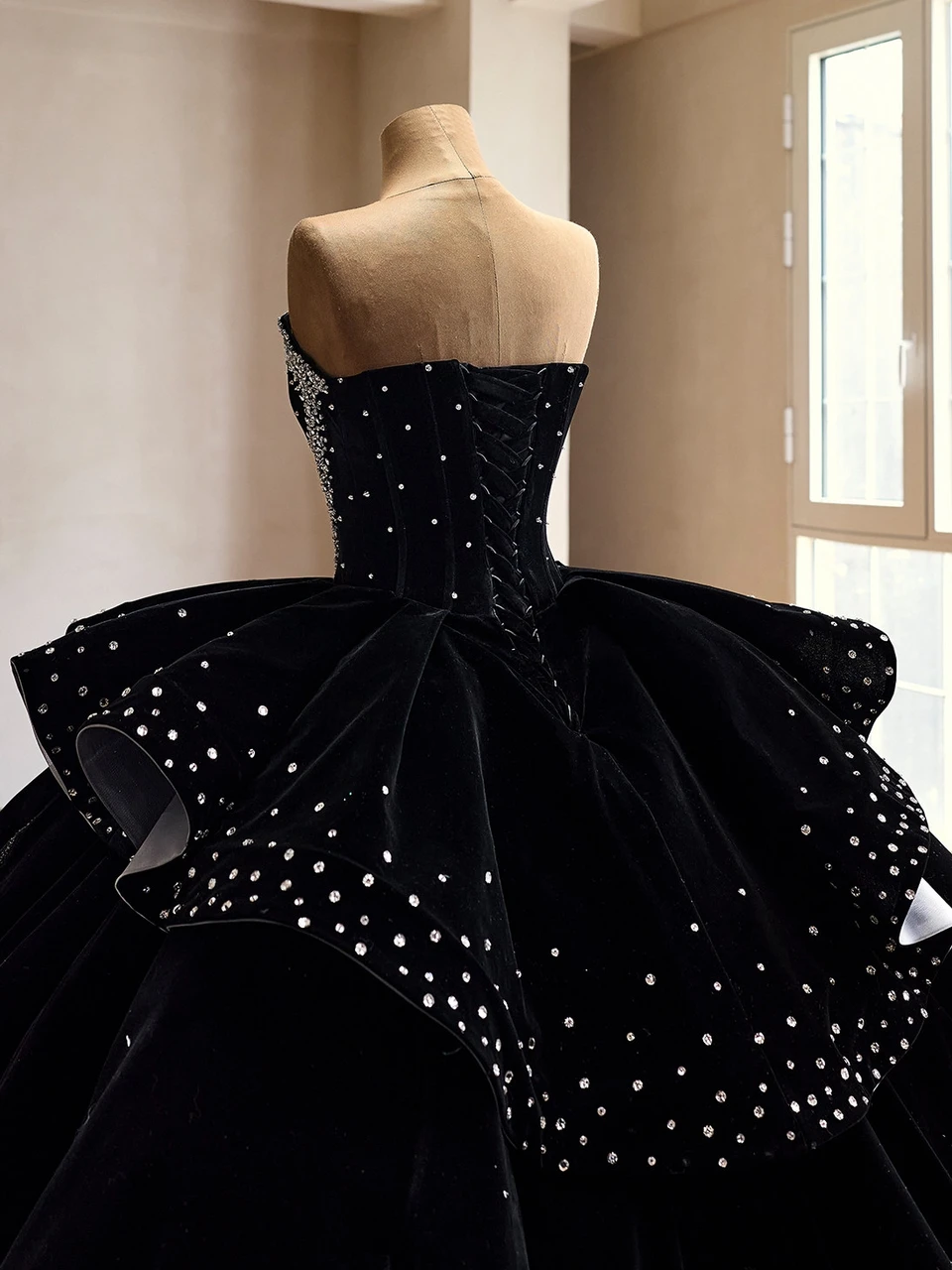
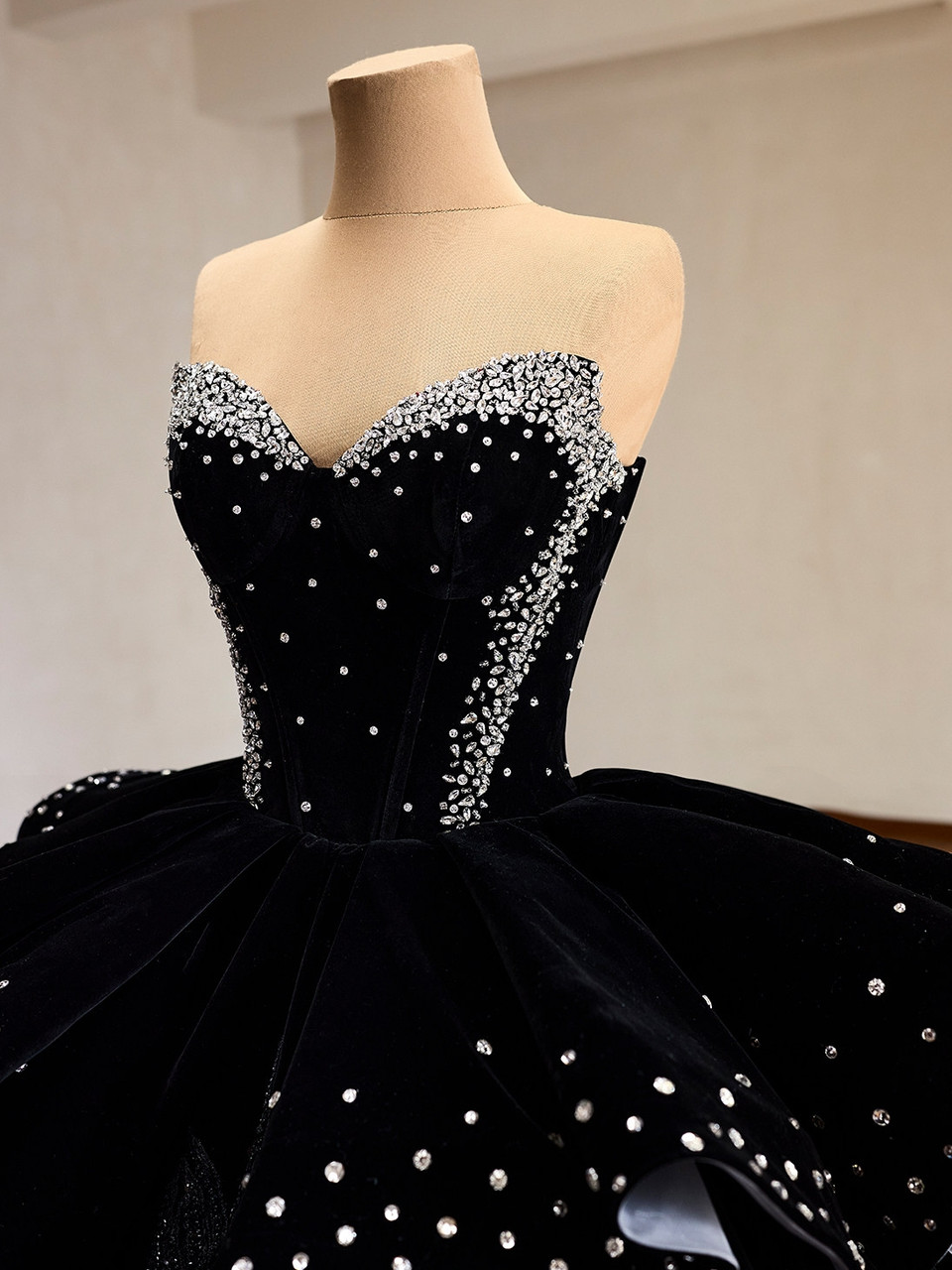
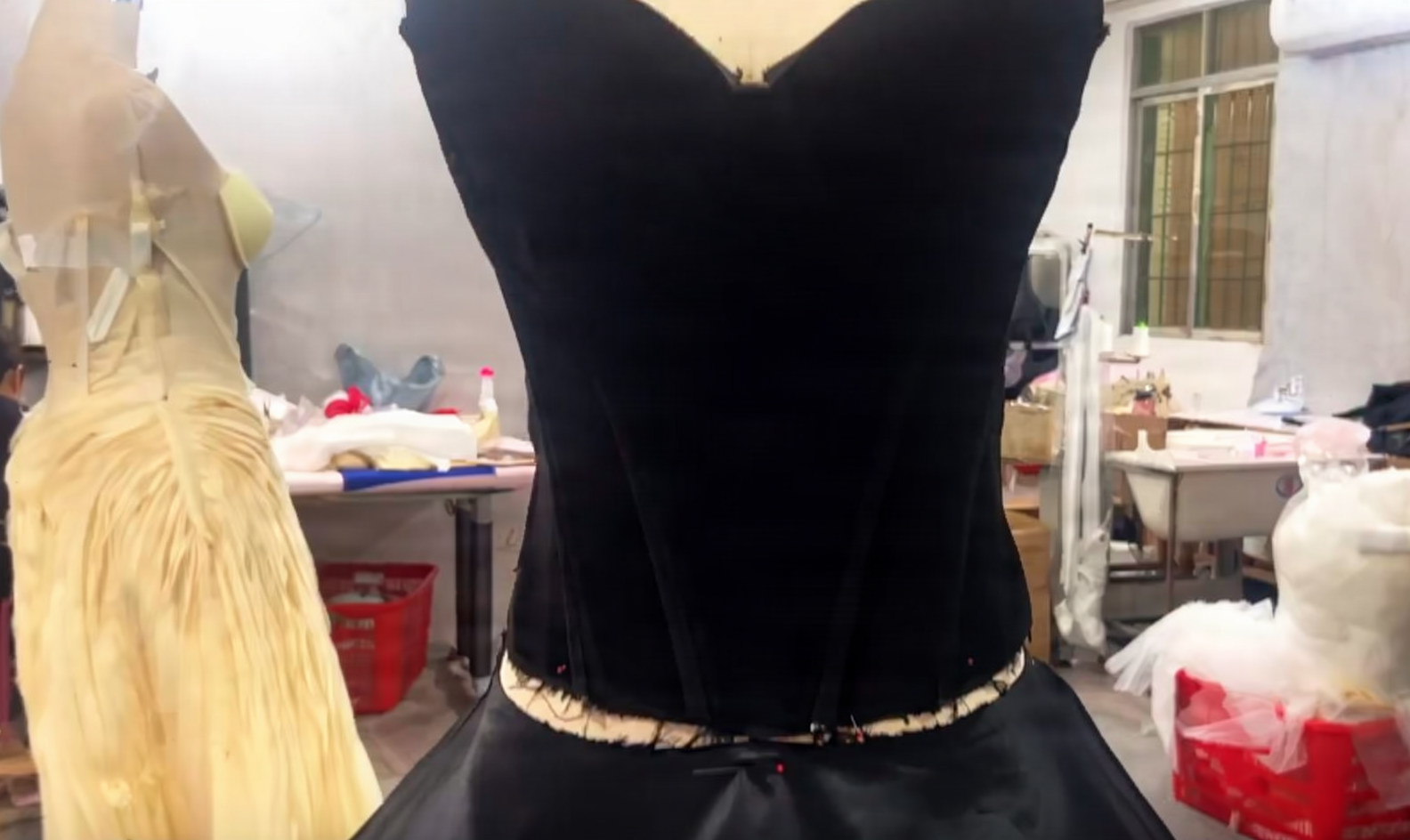
For this black velvet design, the visible drama comes from the full ball gown skirt, soft velvet surface, scattered crystal work and oversized bow. Beneath all of it sits a carefully engineered bodice foundation built around flexible woven polyester boning.
|
The Finished Piece
Black Velvet Strapless Beading Gown
The gown shown throughout this story is available as a finished Kemedress design. Explore the complete dress, customization information and ordering details on the product page.
|
View the Finished Gown |
|
|
01 / Foundation
Before the Velvet
|
A gown like this does not begin with the final fabric. Before the black velvet is touched, the silhouette is tested in muslin and paper.
The workroom adjusts the panel lines, neckline, waist and skirt connection while the fabric is still inexpensive enough to cut, pin and rebuild. The goal is to understand how the shape behaves on the body before the finished gown exists.
Nearly a week was spent refining the toile, including the sweetheart neckline and the transition from fitted bodice to full skirt.
|
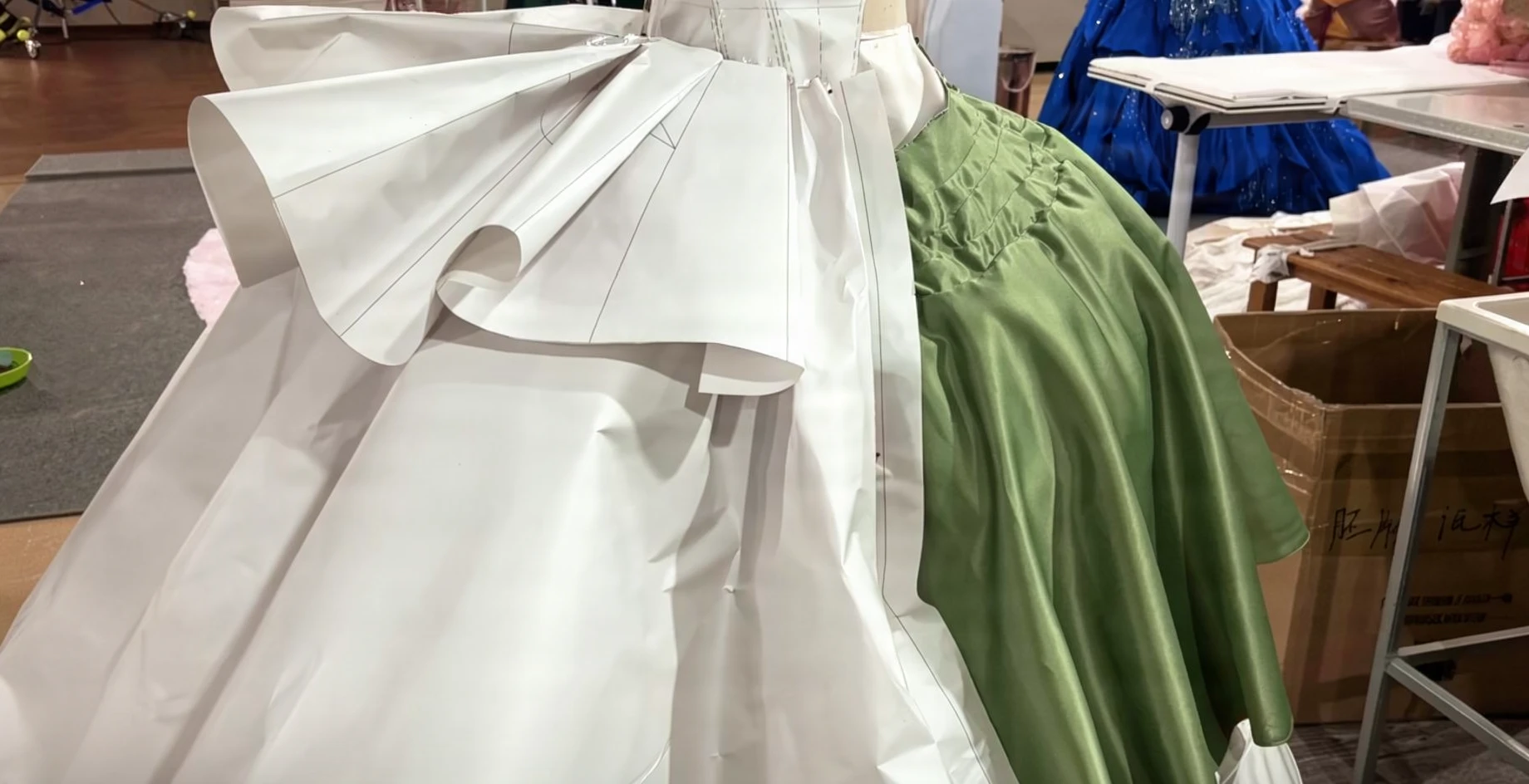
The muslin stage allows proportion, fit and volume to be resolved before the final velvet enters the workroom.
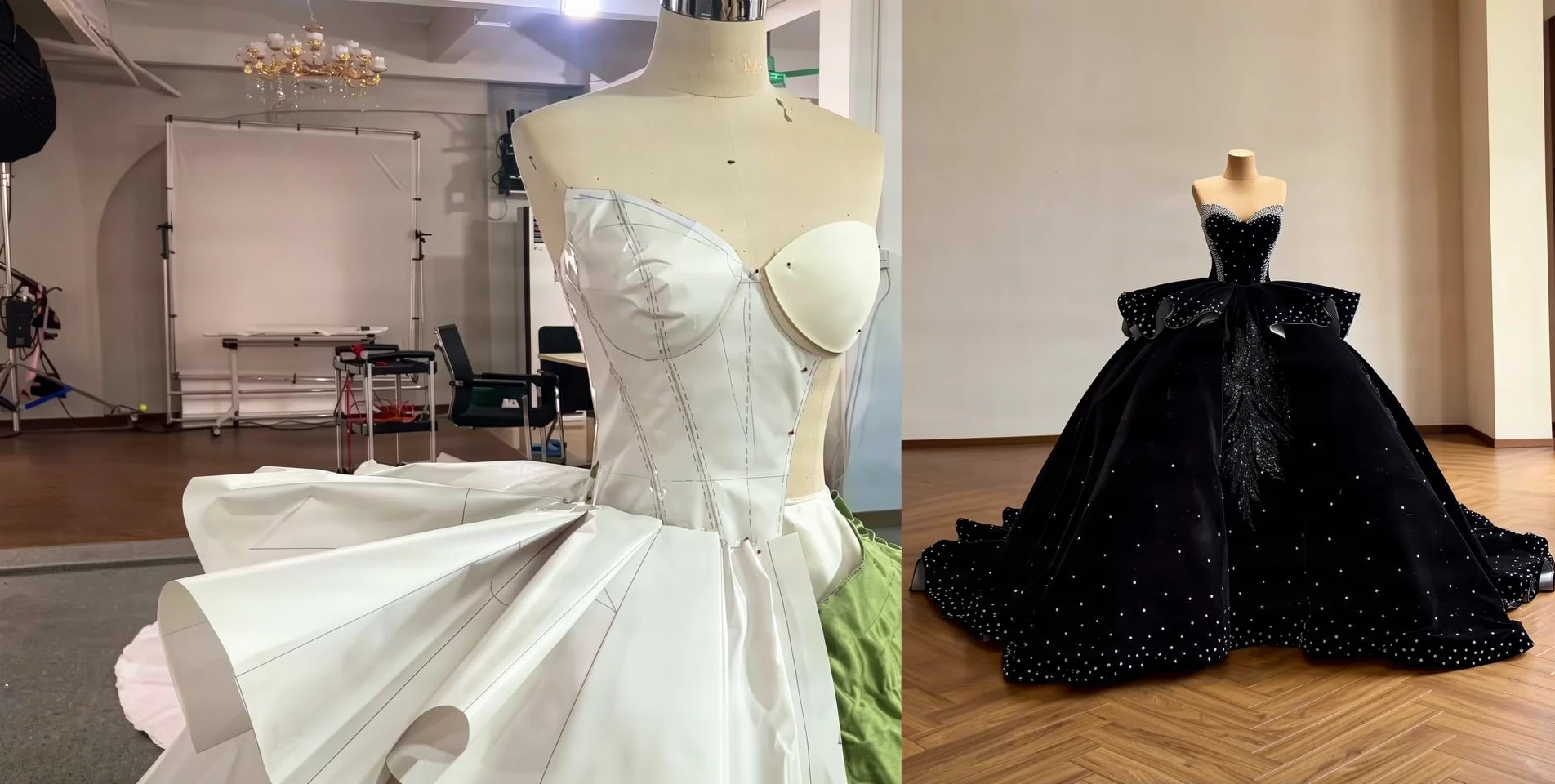 |
From Mock-Up to Gown
The finished silhouette depends on decisions made long before the velvet becomes visible.
|
02 / Internal Foundation
The Structure You Do Not See
For a strapless ball gown, the internal foundation is what allows the bodice to hold its line without turning the dress into a rigid shell.
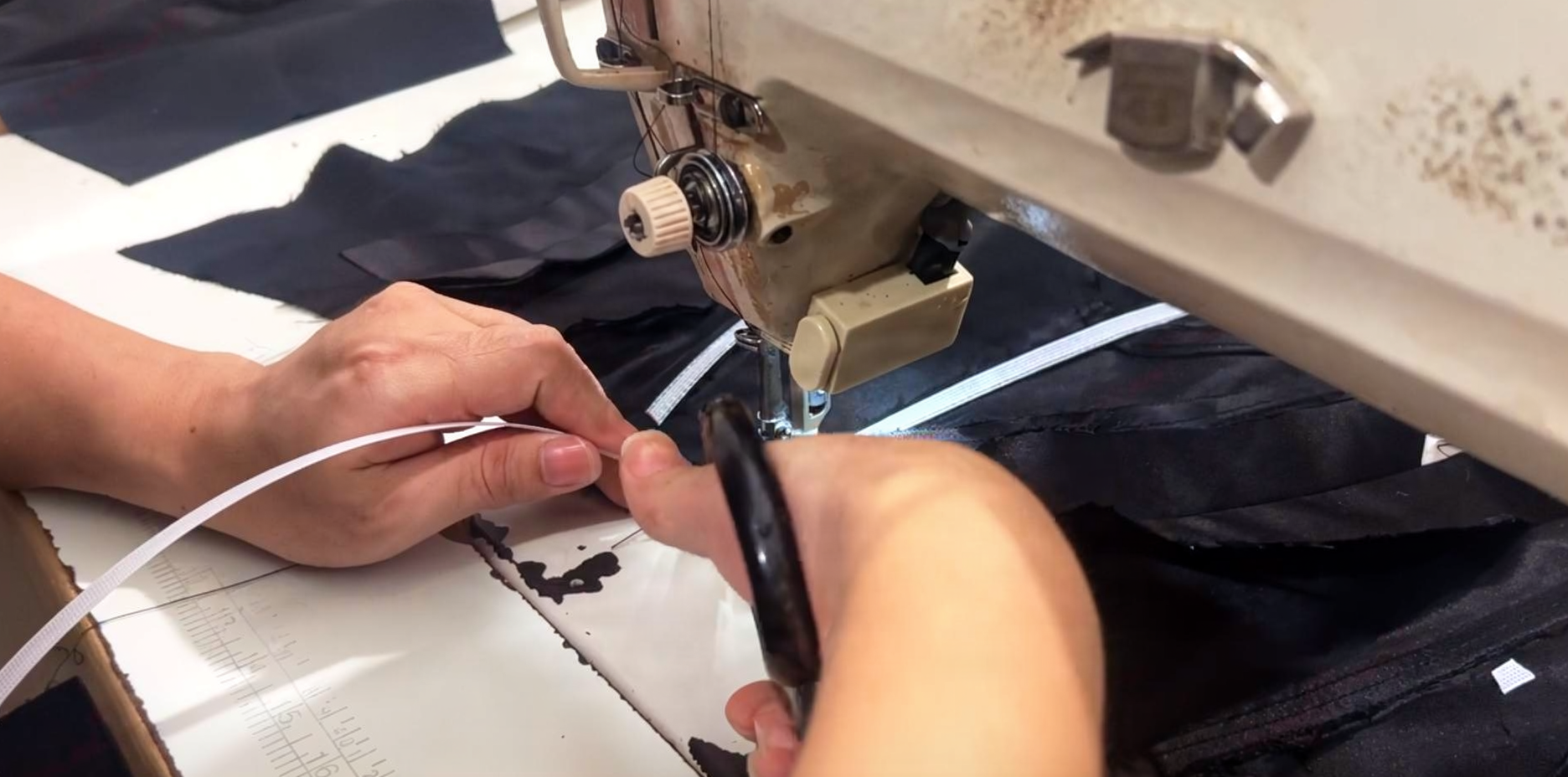
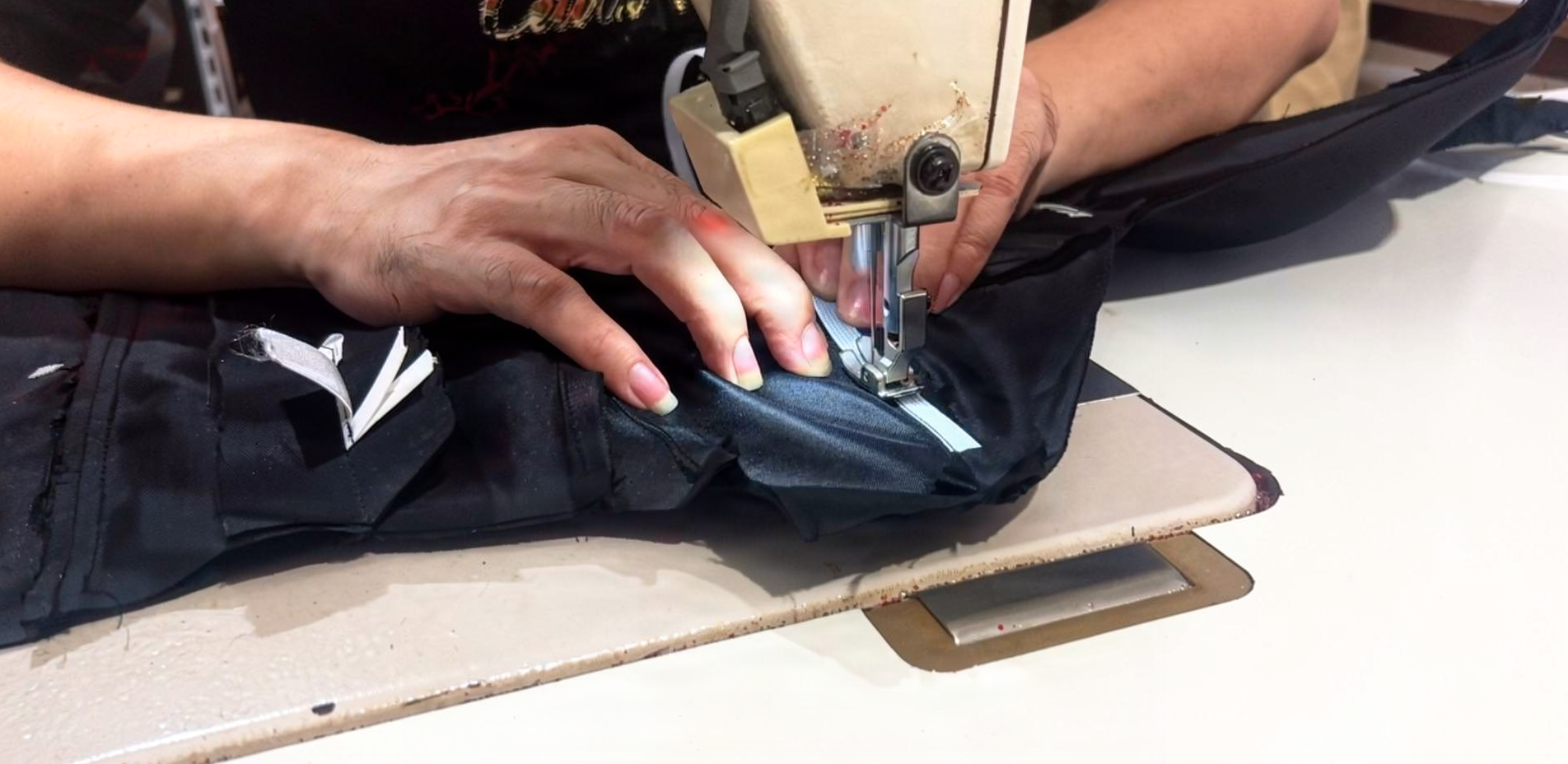
The shaping core used here is a 10mm woven polyester flat tape with internal reinforcing strands. Its flexible construction allows the foundation to support the bodice while following the movement of the garment.
|
The Boning
Woven Polyester
Bodice Support
10mm flexible woven flat tape
|
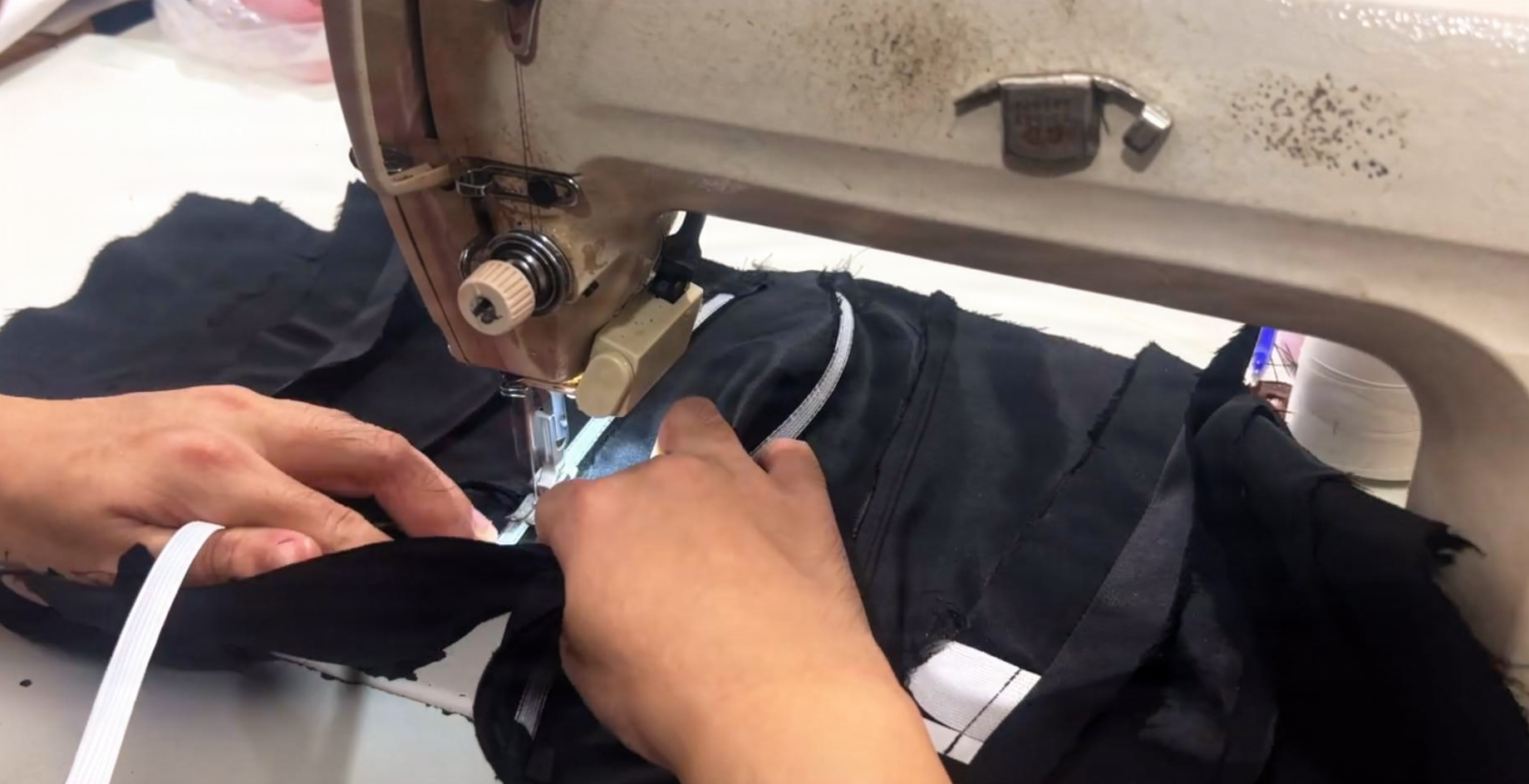
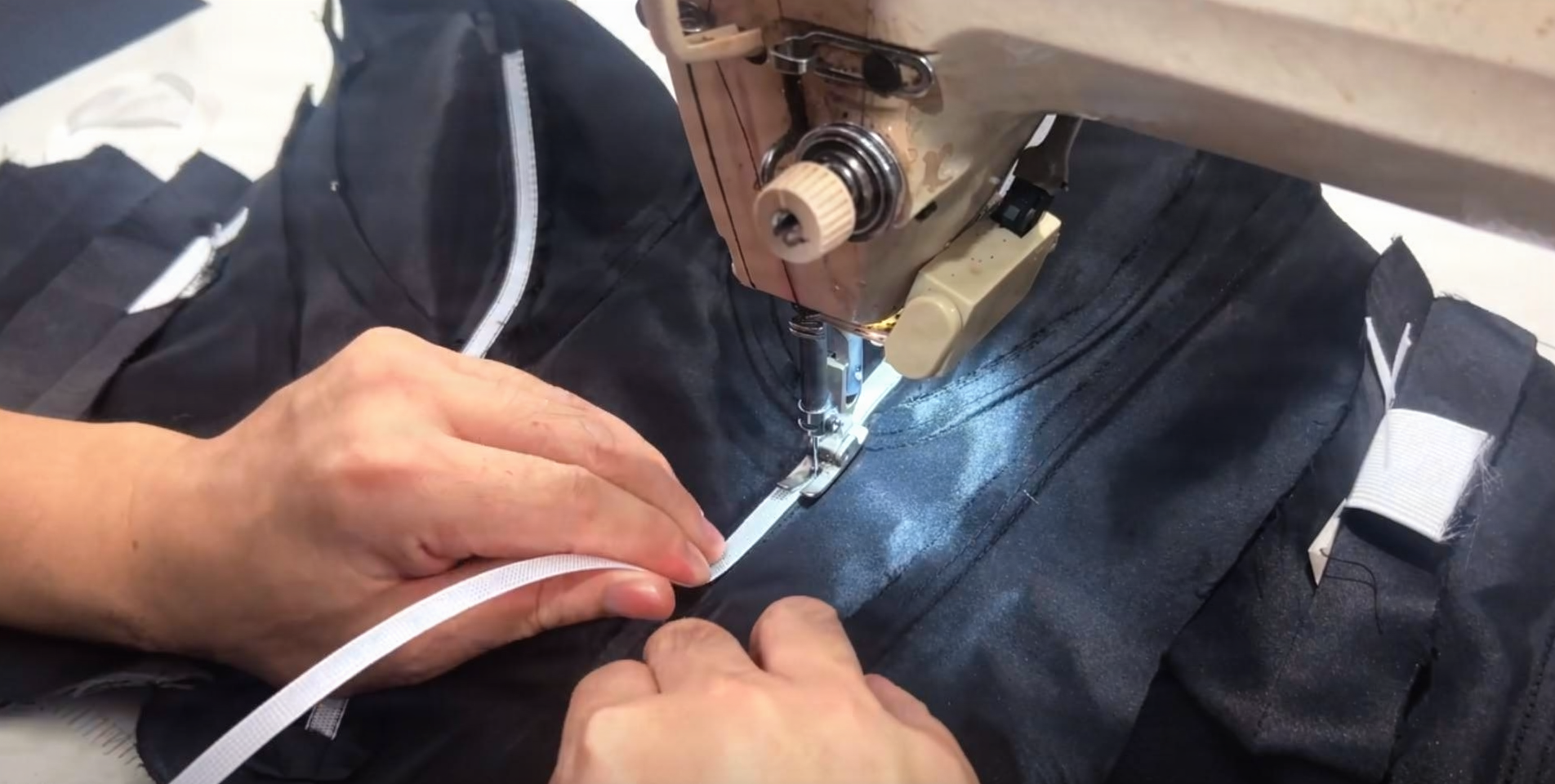
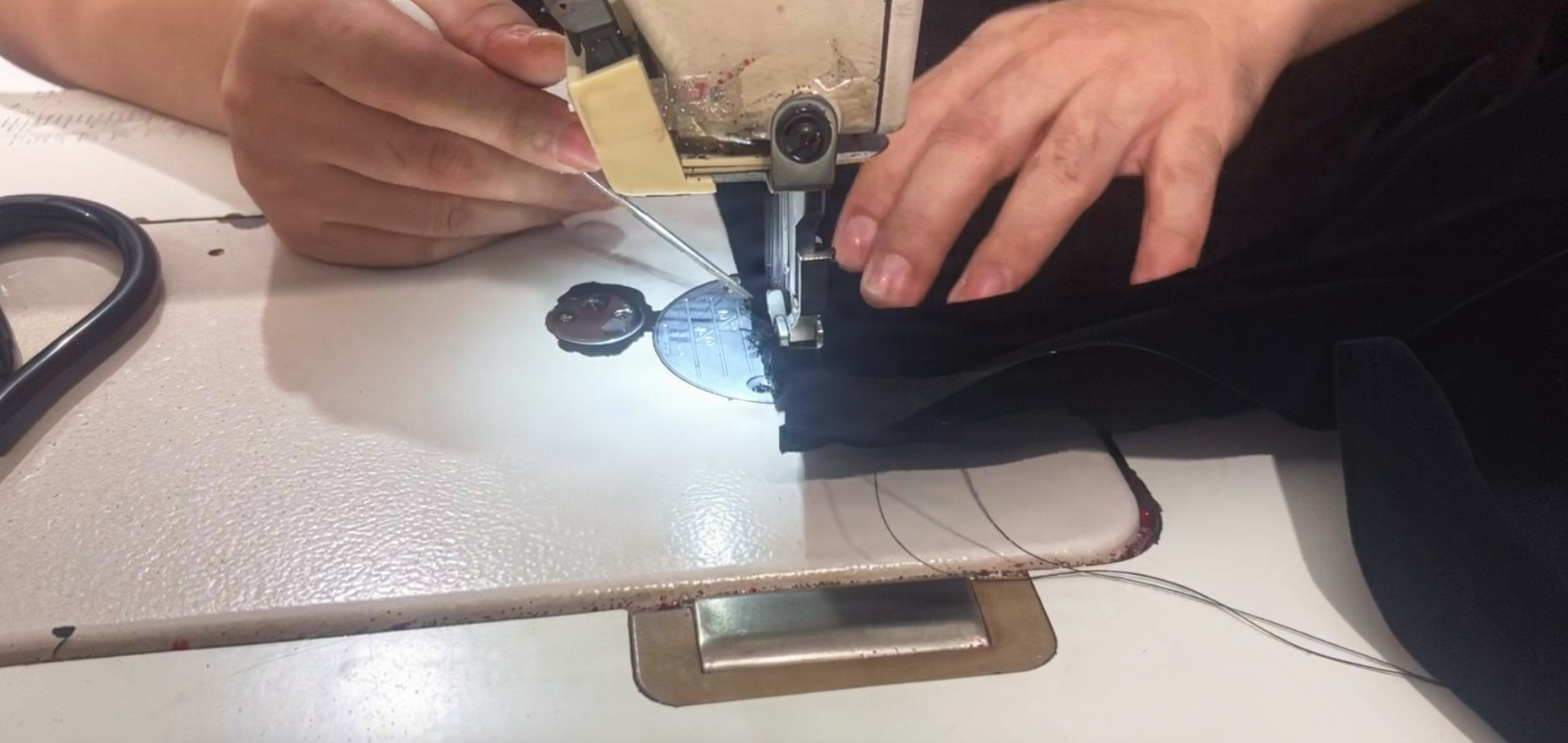
In the construction photographs, the white tape has a fine woven surface rather than the smooth face of a transparent plastic strip. The sewing machine needle passes directly through the tape as it is secured with the bodice fabric, making the internal support part of the garment construction itself.
|
|
|
A Different Construction
Woven Support Beneath the Velvet
|
The white strip visible during construction has the appearance of a dense woven tape, with fine surface texture rather than a smooth plastic face. In this gown, that construction is used as woven polyester boning rather than transparent PP plastic boning.
The construction photographs also show the sewing machine needle passing directly through the white tape while it is secured with the bodice fabric. This sewn-in approach keeps the support aligned with the bodice instead of leaving it loose inside a separate channel.
Its lighter, springier character allows the foundation to flex with the body while still providing resistance where the strapless bodice needs support around the bust and waist.
|
|
01
Flexible Support
The woven foundation bends with the garment instead of behaving like a rigid plastic strip.
|
02
Stable Placement
Because the tape is sewn into the bodice construction, it forms part of the internal foundation rather than floating loosely inside it.
|
03
A Softer Feel
Its flexible character helps the structured bodice retain movement and avoids the especially hard feel associated with rigid plastic support.
|
|
03 / Material
Black Velvet Changes the Light
Once the foundation was established, the final velvet could take over the silhouette.
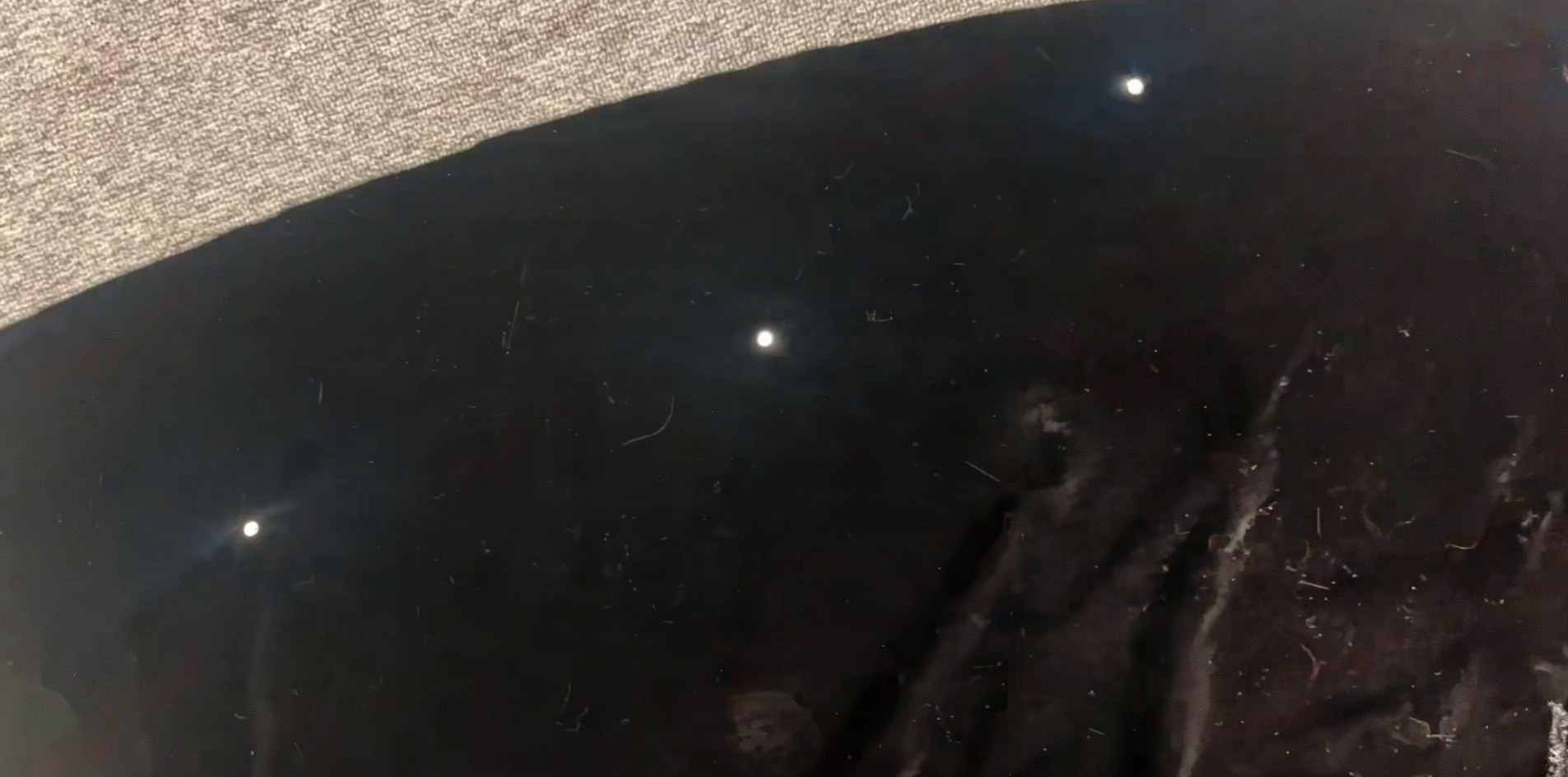
A dense, short-pile black velvet gives the gown its depth. The surface remains predominantly matte, but its nap shifts subtly as the light moves across the skirt and bodice.
Because the velvet already carries visual weight, the crystal work was kept controlled rather than covering the entire surface with uniform sparkle.
|
 |
04 / Light
A Quiet Scatter of Crystal
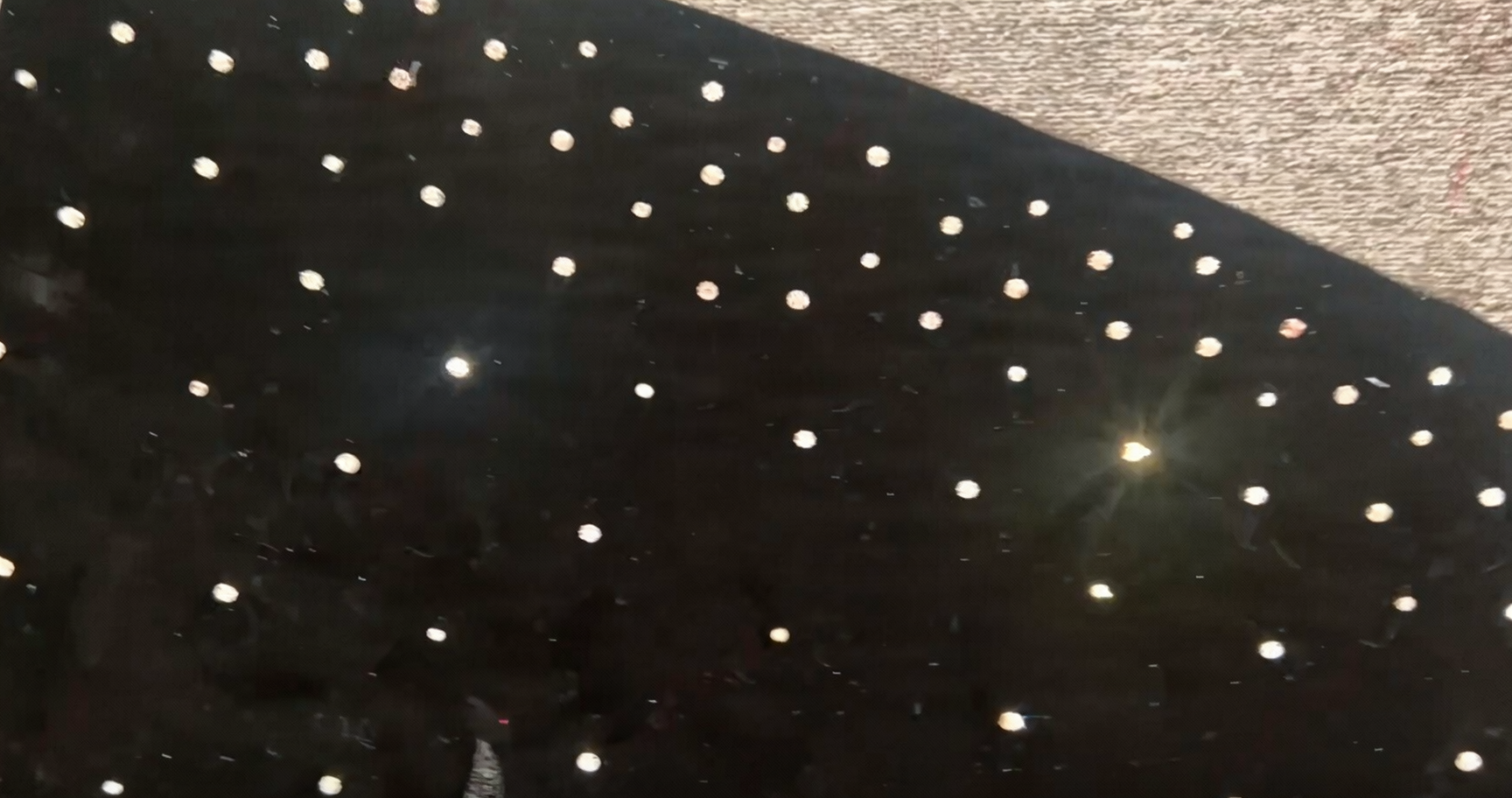
Black velvet did not need heavy ornamentation. The crystal work was designed to introduce controlled flashes of light against the dark surface.
Individual crystals were positioned across the gown, with greater concentration around the neckline and hips and a lighter distribution toward the hem.
 |
The Effect
Up close, the crystals remain individual. From a distance, they become a restrained constellation across the velvet.
|
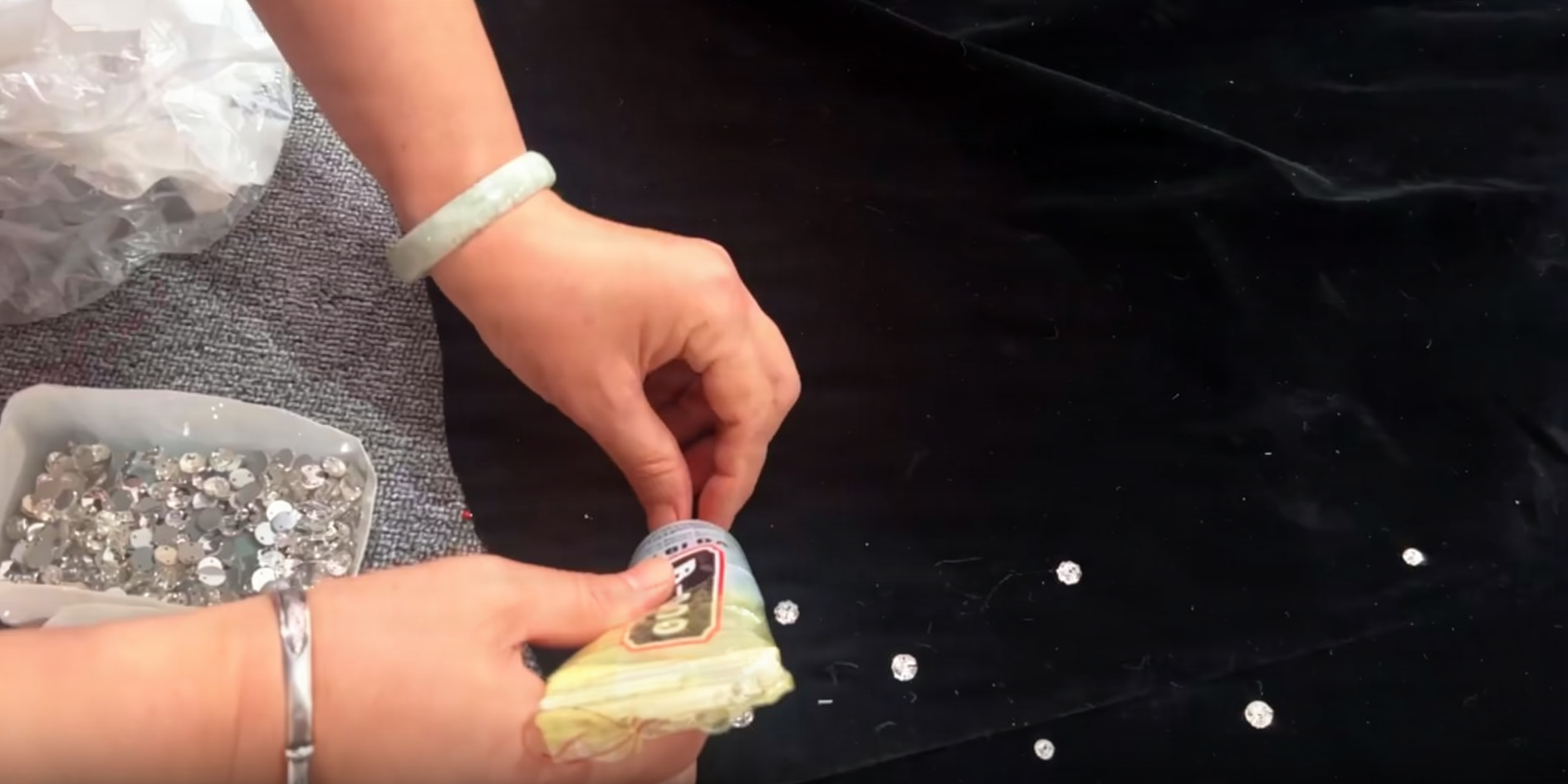
The crystals are individually positioned with a high-strength adhesive selected for formalwear construction. Each embellished area is allowed to cure and stabilize before the next finishing stage, helping the decoration remain secure while preserving the soft surface of the velvet.
With the foundation, velvet and crystal work resolved, the remaining construction became a matter of proportion, joining and finishing.
|
05 / Signature
The Detail That Changes Everything
|
The oversized velvet bow at the hip gives the finished gown its most recognizable gesture.
The velvet was cut on the bias so the bow could hold its shape, with interfacing added for support and carefully finished edges.
A modest train, smooth black satin lining and hook-and-eye closures complete the interior and finishing work.
|
The Finished Gown
Black Velvet, Fully Realized
The finished views bring the internal foundation, velvet surface, crystal placement and full ball gown volume together.
The Shape Begins Beneath the Velvet
The character of this gown comes from the relationship between what can be seen and what cannot.
The woven polyester foundation gives the strapless bodice its internal support. The velvet creates depth and softness. The crystals bring controlled light to the dark surface, while the oversized bow gives the silhouette its final gesture. Every visible detail begins with a decision made underneath.
|
The Finished Design
See the Black Velvet Gown
Explore the complete design and available customization details on the Kemedress product page.
Explore the Finished Gown |
More From the Workroom
Other Dressmaking Stories
Workshop Notes
Questions About the Gown
What type of boning is used in this black velvet gown?
The bodice uses 10mm woven polyester boning integrated into the lining. Its woven flat-tape construction provides flexible internal support for the bust and waist.
Is the white boning transparent PP plastic?
No. The material shown during construction has a fine woven surface and is used as woven polyester boning. The photographs also show the tape being stitched directly into the bodice construction rather than treated as a loose plastic strip.
Why use woven boning in a strapless ball gown?
It provides internal support while retaining flexibility. The woven structure can follow the movement of the bodice, helping the gown maintain its intended bust and waist shape without relying entirely on a rigid support.
How are the crystals secured to the velvet?
The crystals are individually positioned with a high-strength adhesive selected for formalwear construction. The embellished areas are allowed to cure and stabilize before the gown moves to the next finishing stage.
Can the black velvet gown be worn for occasions other than a wedding?
Yes. The formal ball gown silhouette can also suit evening celebrations, galas, pageants and other occasions calling for a dramatic full-length gown.
How should the crystal velvet gown be cared for?
Avoid machine washing and aggressive pulling around the embellished areas. Gentle hand care is preferable for protecting both the velvet surface and the crystal attachment. Follow the garment's specific care instructions when available.
Explore more custom and couture-inspired designs at Kemedress .
|
|