
The Atelier Diary of a Pink Satin Wedding Dress
29th Jul 2026
A couture gown is never created by fabric alone. Behind every finished dress are countless decisions, from precise measurements and pattern adjustments to hand placed embellishments and final fitting details. For this pink ball gown, our design team followed a complete custom dressmaking process to transform an idea into a structured, elegant gown featuring layers of glitter tulle, delicate flowers, and carefully applied hand sewn beadwork.
Unlike mass produced dresses made from standard size charts, this gown began with the client's personal measurements. Every curve, proportion, and fitting detail was considered before the first piece of fabric was cut. Below, we reveal the real craftsmanship behind creating this hand beaded pink ball gown, from the first pattern draft to the final quality inspection.
The Complete Custom Pink Ball Gown Making Process: From Pattern Drafting to Final Details
Creating a luxury couture gown requires more than beautiful materials. It requires experience, precision, and a deep understanding of how fabric, structure, and body shape work together. This detailed look into our custom ball gown production process shows how every stage contributes to the final silhouette.
Step 1: Custom Measurements and Pattern Drafting for a Perfect Fit
We started by taking measurements directly from the client. No standard size chart, no grading rules, and no adjustments based only on average proportions. Every number came from the person who would eventually wear the gown.
After recording the measurements, we drafted the initial pattern, created the muslin sample, and pinned the mockup onto the dress form. These steps are part of our daily workflow when creating a custom pink ball gown with hand beaded details .
For brides, prom clients, and anyone interested in learning how couture dresses are created, understanding the pattern drafting stage is the first step toward appreciating the craftsmanship behind a custom gown.
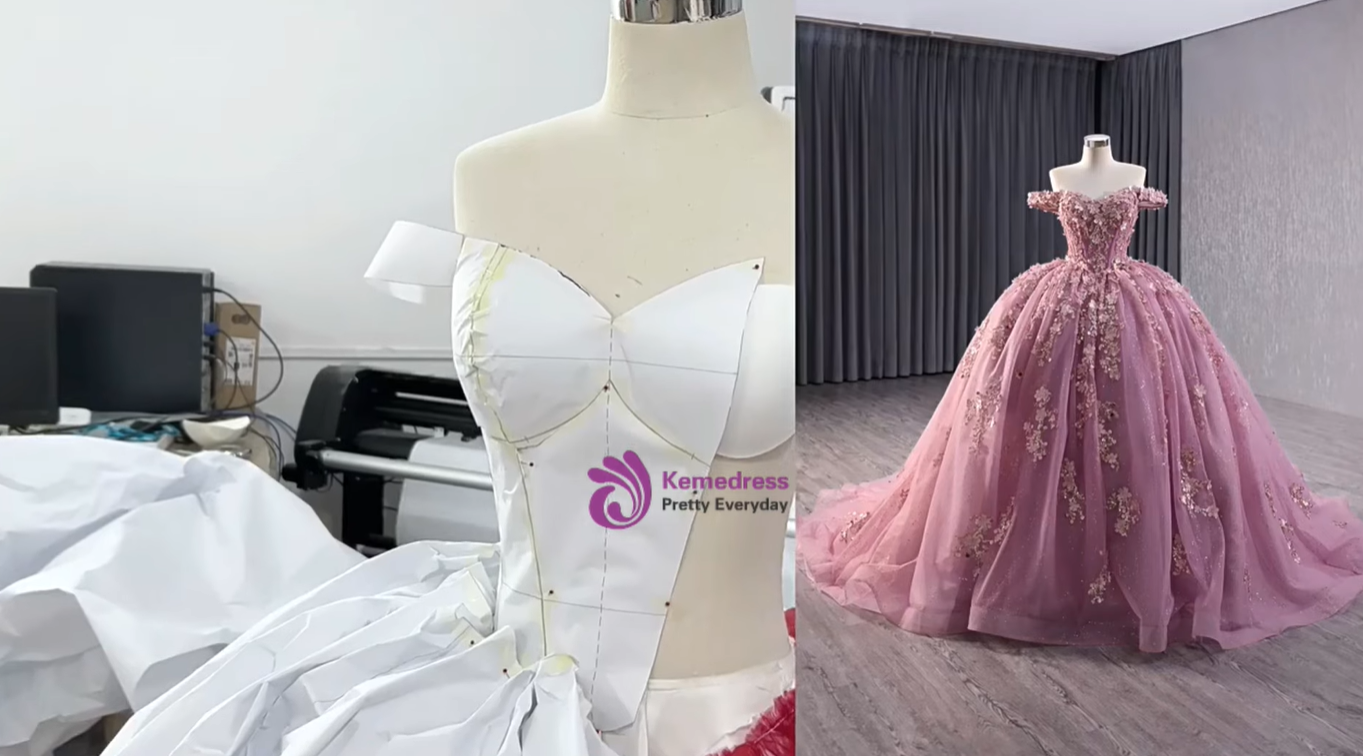
Step 2: First Fitting and Adjusting the Couture Gown Silhouette
The first fitting is always a conversation between the designer and the fabric. Sometimes the original idea looks perfect on paper but reveals unexpected challenges once the garment is shaped on the body.
During the first fitting, the neckline sat higher than we wanted, almost like a traditional high collar. We lowered it by one inch. Then we noticed slight looseness at the back, so we pinned and adjusted the area again.
There is always a moment during a first fitting when you look at the gown and wonder if the adjustment made it better or worse. That moment is normal. Creating a custom gown is a process of observing, correcting, and improving until every detail feels right.
For a new design style, unexpected situations often appear. Those small challenges are exactly where experience matters because solving them requires knowledge of fabric behavior, body movement, and garment construction.
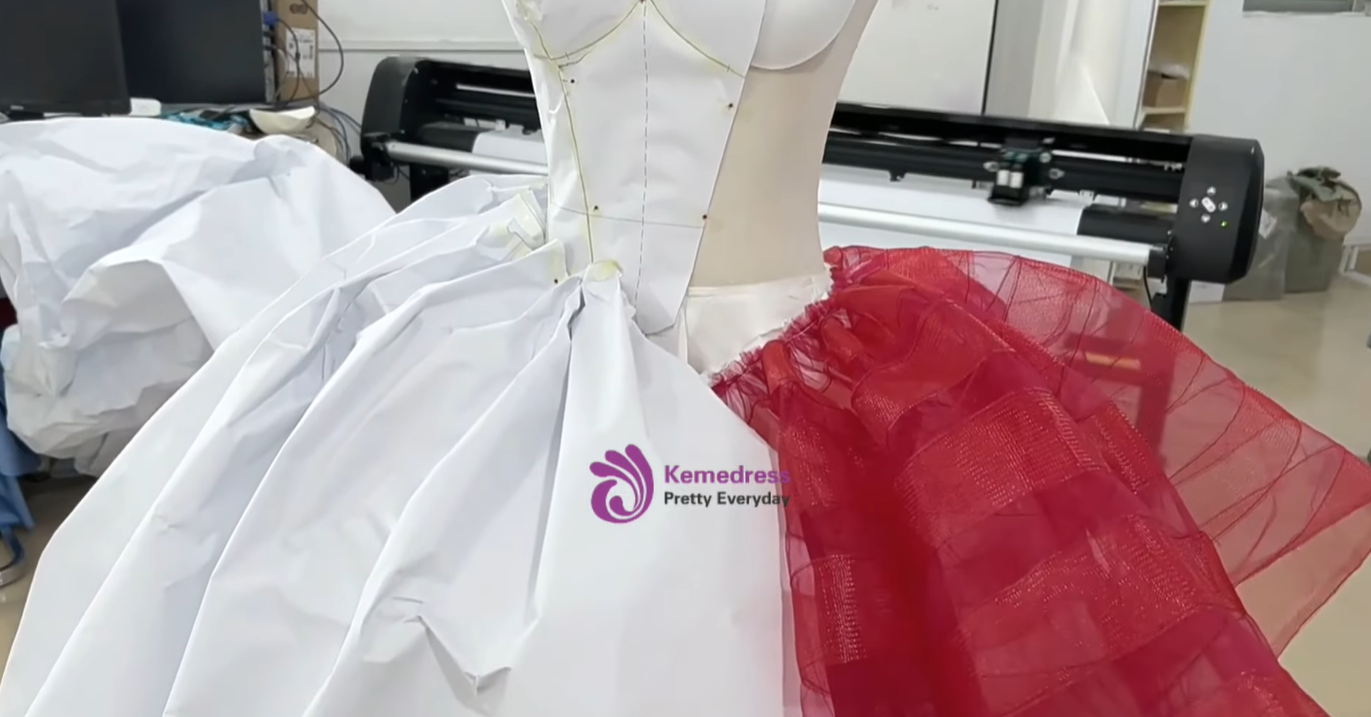
Step 3: Refining the Fit Through Multiple Couture Adjustments
The second fitting showed improvement, but the shoulders still needed refinement. Instead of cutting immediately, we carefully studied the shape of the gown.
We adjusted the side seam, examined the curve from different angles, and redrew sections by hand. The goal was not simply to make the dress fit, but to create a balanced silhouette that moves naturally with the wearer.
During the third fitting, the problems disappeared. No unwanted drag lines around the armholes. No twisting at the waist. The bodice finally followed the body exactly as intended.
Multiple fitting rounds are a normal part of our couture gown creation process. Each adjustment helps create a gown that feels comfortable, balanced, and personalized.
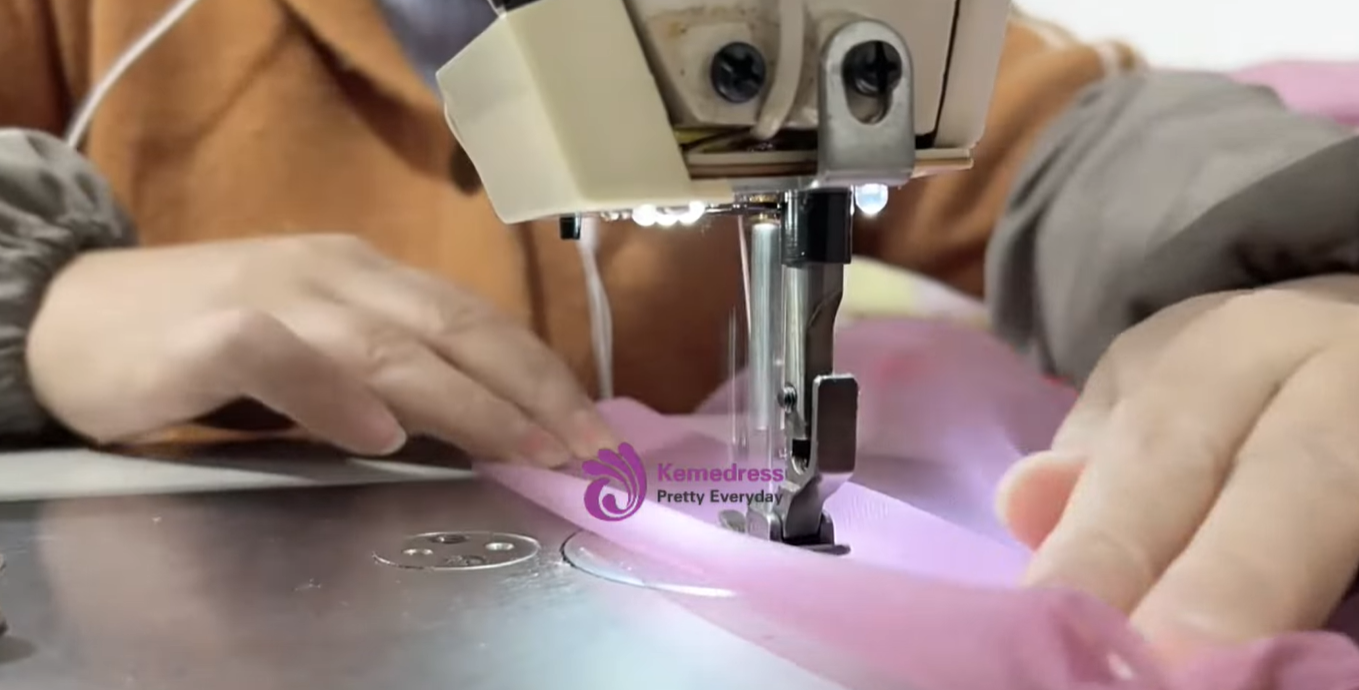
Step 4: Selecting Luxury Fabrics for a Glitter Tulle Ball Gown
Before construction began, two main fabrics were placed on the worktable: matte pink satin and glitter tulle.
The satin provided the smooth foundation and elegant structure, while the glitter tulle created the soft volume and sparkling movement that defined the final luxury ball gown silhouette.
Every fabric choice matters in couture design. A fabric is not only selected for appearance but also for how it behaves during sewing, fitting, pressing, and wearing.
Step 5: Precision Fabric Cutting for a Structured Couture Gown
Once the fabric selection was confirmed, we moved into the cutting stage. Both fabrics were cut flat in a single layer rather than folded. This was not only a matter of technique, but also a matter of accuracy.
When delicate fabrics such as satin and glitter tulle are folded, even a tiny movement can affect the grain direction. A small shift may change how the front and back panels fall, creating an uneven silhouette after sewing.
Each pattern piece was cut individually and immediately prepared for construction. Every section received a clear label including front bodice, side back, waistband, skirt panels, and lining pieces. The plain tulle was organized separately from the glitter tulle because loose glitter particles can easily transfer between fabrics.
In couture sewing and custom dressmaking, organization is part of craftsmanship. A beautifully designed gown begins with careful preparation long before the first stitch is placed.
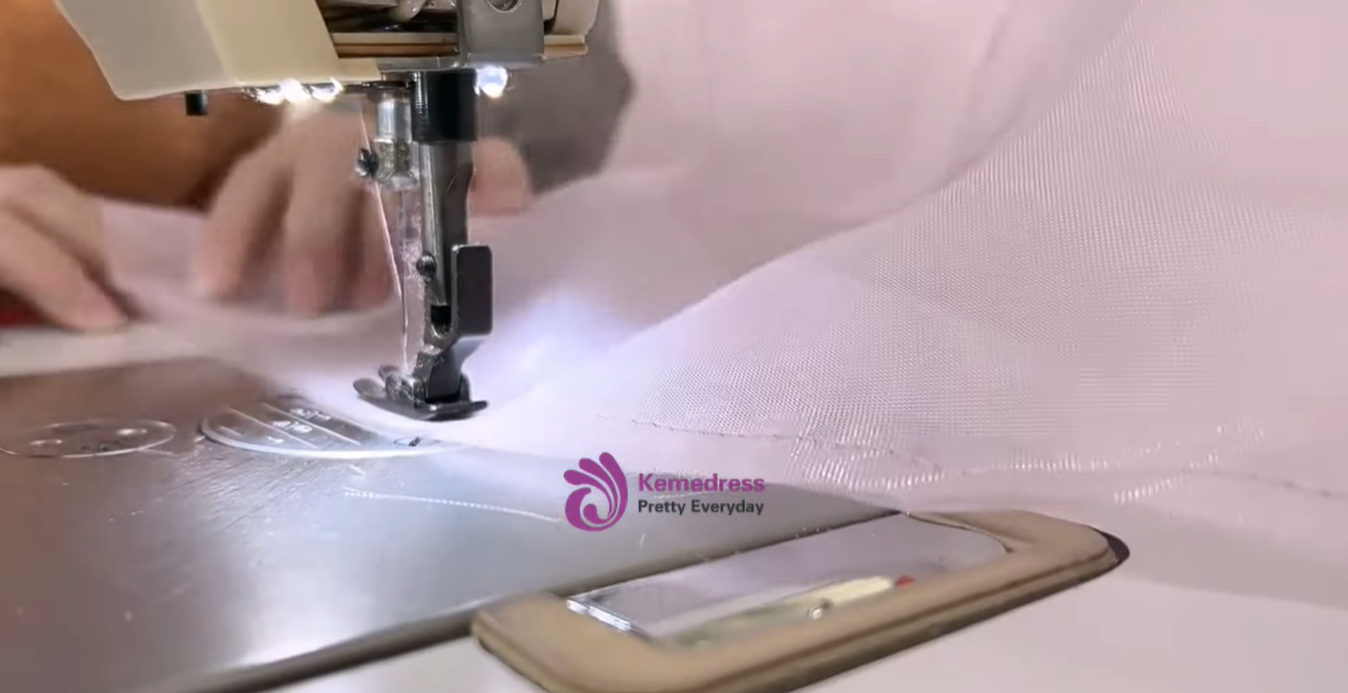
Step 6: Building the Inner Corset Structure With Flexible Boning
The internal structure of a ball gown determines how the final dress maintains its shape. For this gown, the boning process required careful attention because the bodice needed to support the weight of the beadwork and layered skirt.
We began with the inner layer, creating precise boning channels before inserting flexible steel boning. Unlike plastic alternatives, steel provides stronger support and helps maintain the shape of the bust and waist area after hours of wearing.
Every bone was secured with reinforced stitching at both ends to prevent movement. Additional interfacing was added around the shoulders and underbust because these areas experience the greatest tension once embroidery and appliqué details are attached.
After joining the inner and outer layers, we turned the bodice right side out and checked the structure. Seeing the waist maintain its shape without the support of the dress form was an important moment in the custom couture gown construction process.
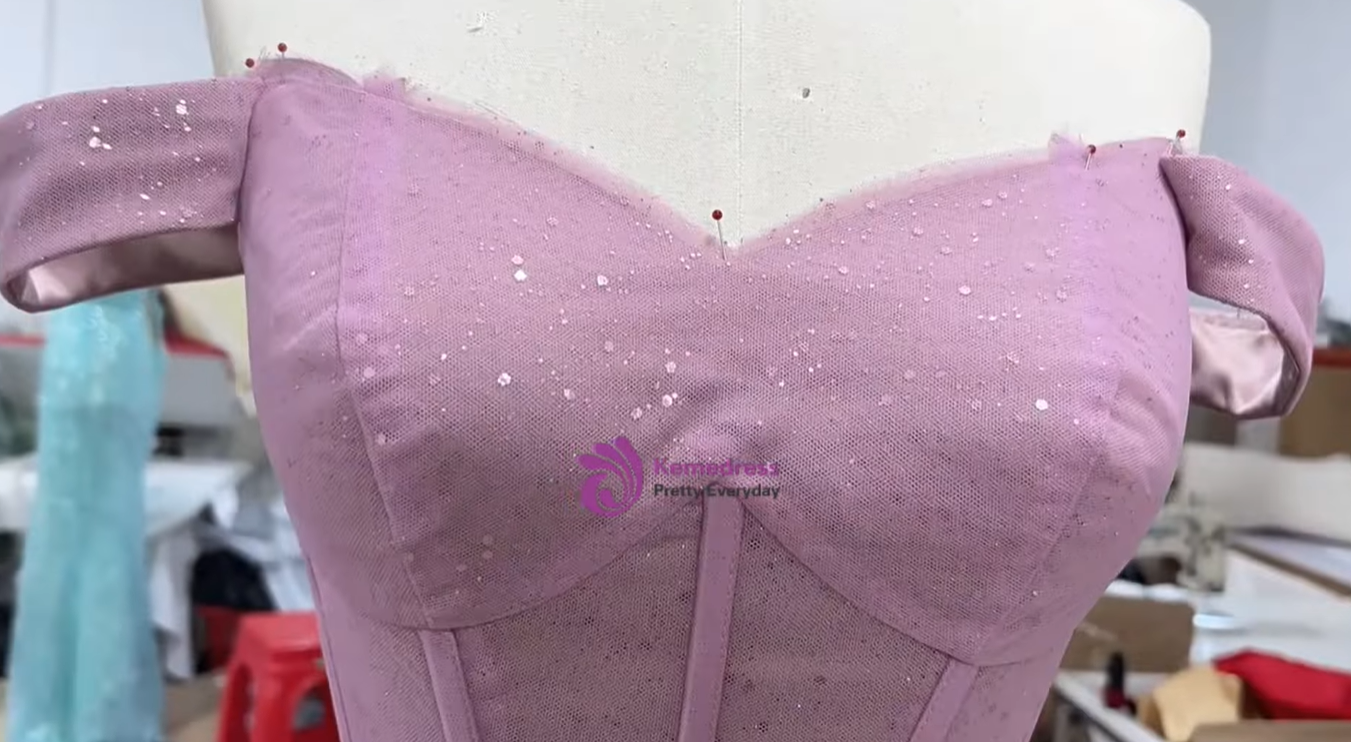
Step 7: Creating the Off Shoulder Neckline Shape With Precision
The off shoulder neckline was one of the most challenging details of this gown. Satin has a naturally elegant surface, but it does not easily follow curved shapes without careful preparation.
The fabric needed to be encouraged into the correct position. We used controlled steam pressing to shape the curve, allowing the satin to cool completely before continuing with assembly.
After stitching the neckline seam, the allowance was carefully trimmed and pressed with precision. When the complete bodice was assembled, the neckline rested naturally on the shoulders without unwanted wrinkles or pulling.
In couture dressmaking, small details often create the biggest difference. A perfectly shaped neckline can completely change the elegance of the final silhouette.
Step 8: Creating the Three Layer Tulle Ball Gown Skirt
The skirt was created in three carefully designed layers:
- A soft lining layer for comfort
- A plain tulle layer for body and volume
- A glitter tulle top layer for sparkle and movement
Each layer was gathered separately using strong gathering threads before being attached to the waist. The goal was to create volume while maintaining a natural flow.
A ball gown skirt should never feel stiff or heavy. Too much gathering makes movement uncomfortable, while too little gathering creates a flat silhouette without the dramatic shape expected from a couture gown.

Step 9: Balancing Volume and Movement Through Hand Adjustment
The final shape of a tulle skirt cannot always be achieved by measurements alone. Experienced designers learn to understand the fabric through touch and movement.
We checked the gathers by hand, adjusted the fullness around the hips, steamed the layers, and gently shaped the tulle until every fold fell evenly.
The waist seam received additional reinforcement stitching to secure all layers together. After hanging the gown, we carefully adjusted the folds so the skirt would move naturally when the wearer walked.
Step 10: Preparing Glitter Tulle Before Hand Beading
During inspection, one section of glitter tulle showed a thin area caused during manufacturing. Instead of continuing and risking future damage, we reinforced the area from behind with plain tulle before any decoration was added.
This preparation step protects the fabric from tearing under the weight of hand sewn flowers, beads, and embroidery details.
The entire glitter tulle section was also checked through a heat setting process. Although this helped stabilize the fabric, glitter always has a personality of its own. Even after careful preparation, small particles can still appear days later.
Step 11: Selecting and Preparing Hand Beaded Details
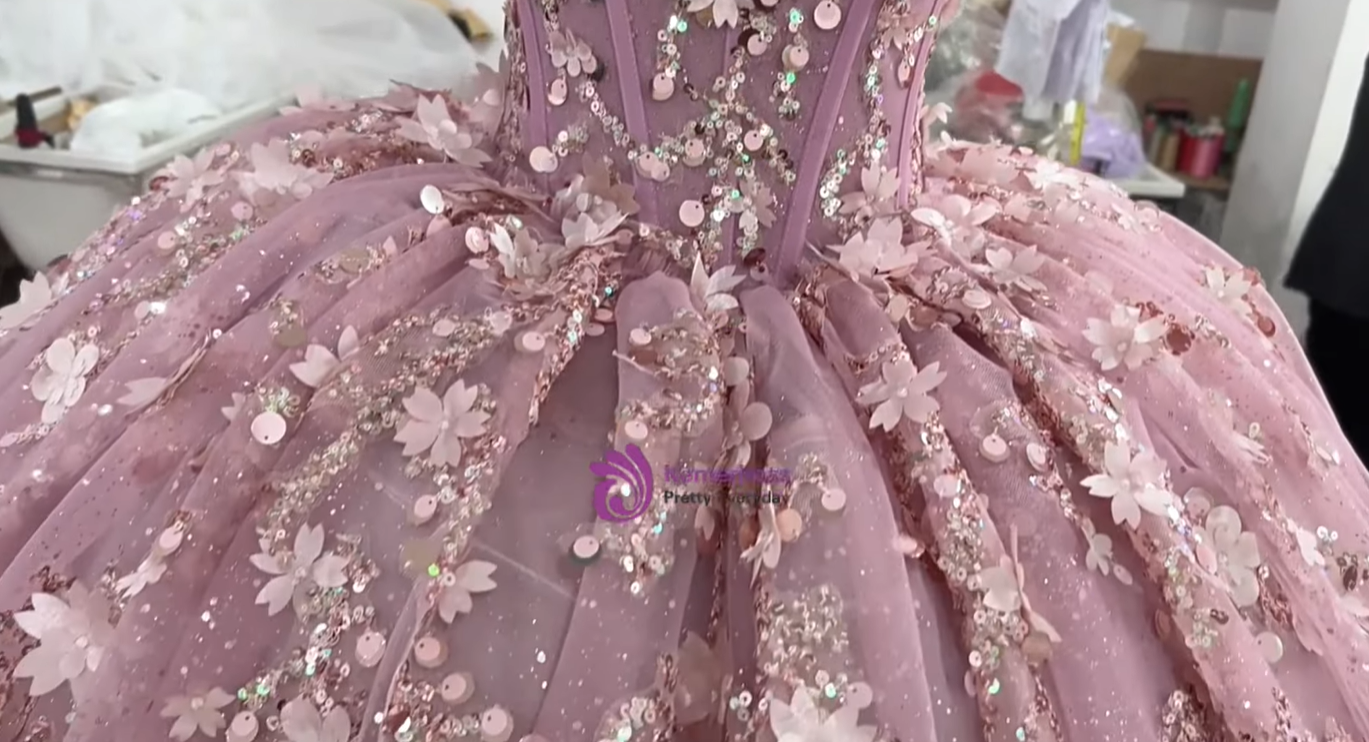
The beadwork stage is where the gown begins to develop its final personality. Hundreds of small details work together to create depth, sparkle, and dimension.
The beads arrived in separate packets and were carefully sorted by size, shape, and finish. We organized clear iridescent beads, frosted beads, metallic accents, teardrop shapes, bugle beads, and other decorative pieces before sewing began.
Each bead was inspected individually. Any pieces with chipped surfaces, uneven coating, or damaged finishes were removed. This preparation may seem like a small step, but every detail becomes visible once placed on a finished hand beaded couture gown.
Step 12: Planning the Embroidery Placement for a Balanced Design
Before sewing the beads and flowers, the embroidery team created placement guidelines directly on the satin using temporary chalk markings.
The design focused on a concentrated pattern at the center front of the gown, gradually becoming lighter toward the sides and flowing downward across the skirt.
This planning stage prevents random placement and ensures that every decorative element supports the overall silhouette. Hand embellishment is not simply about adding more sparkle. It is about creating balance, proportion, and visual harmony.
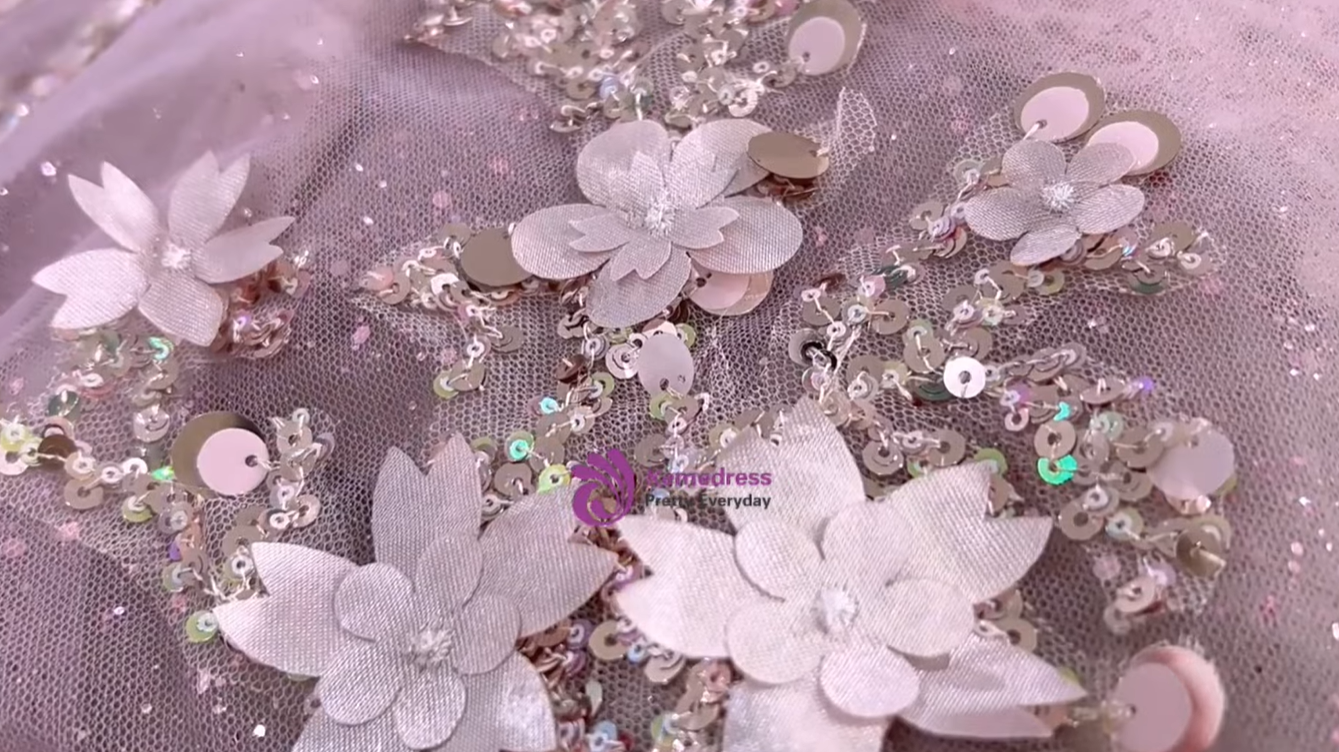
Step 13: Creating Handmade Fabric Flowers for a Unique Couture Look
The three dimensional flowers were created from fabric leftovers, including chiffon and satin scraps collected during production.
Instead of cutting simple circular shapes, we created individual petal forms with different curves and movement. Basic circles often look flat, while shaped petals create a more natural floral appearance.
Each petal was carefully shaped with controlled steam until it developed a soft curve. Several petals were combined into one flower, stitched securely at the center, and finished with subtle color variation.
Some flowers received a light application of iridescent powder to enhance their dimension. The final flowers were intentionally not perfectly identical. Natural variation gives handmade couture details their unique character.
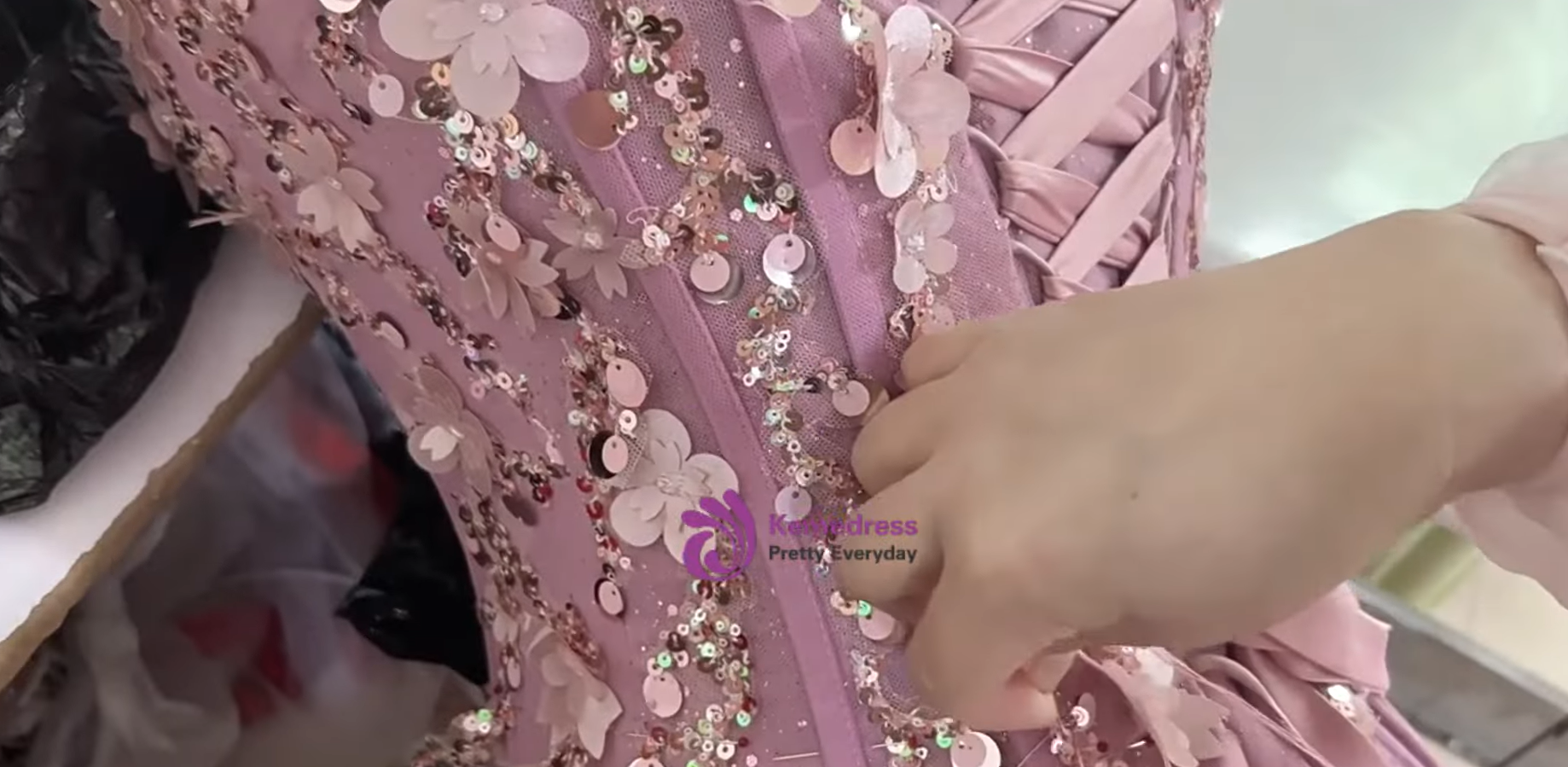
Step 14: Hand Sewing Flowers and Beads Onto the Custom Ball Gown
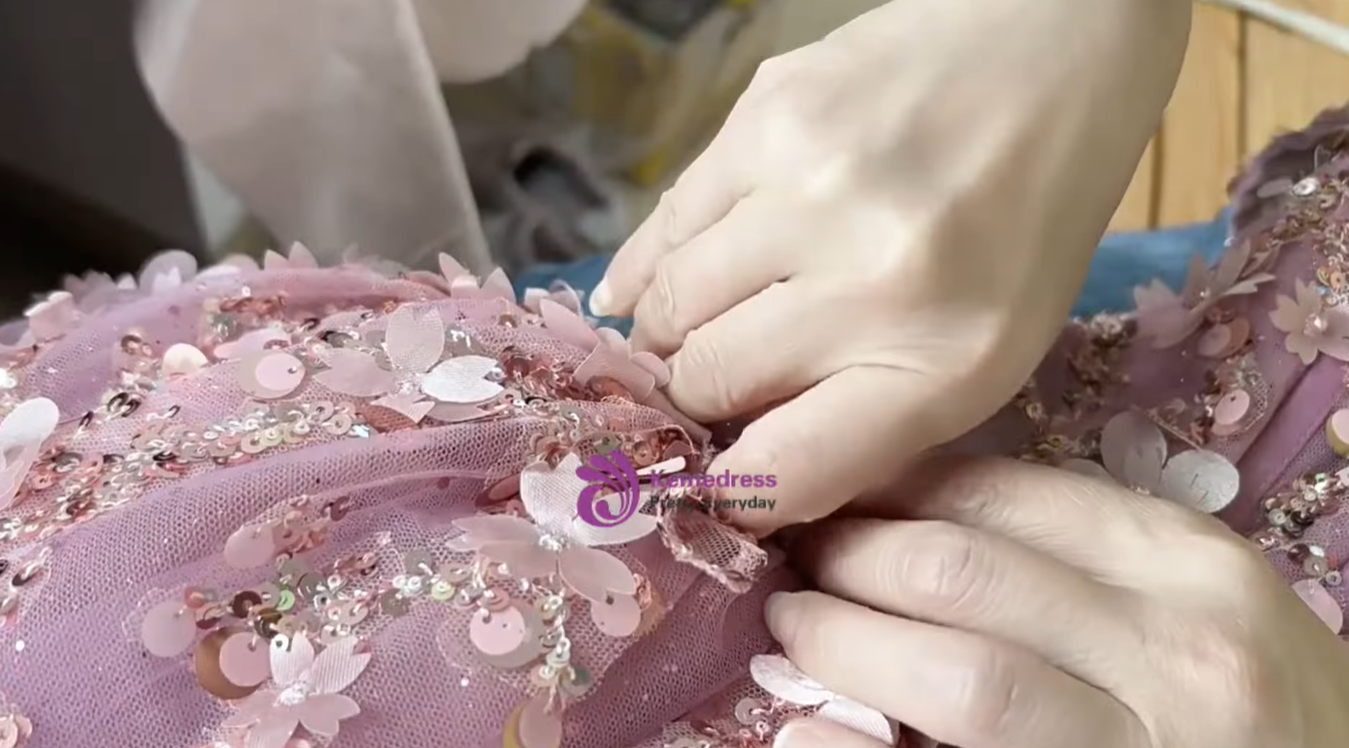
Hand sewing was the longest stage of the entire process. There is no shortcut when every flower and bead must be placed individually.
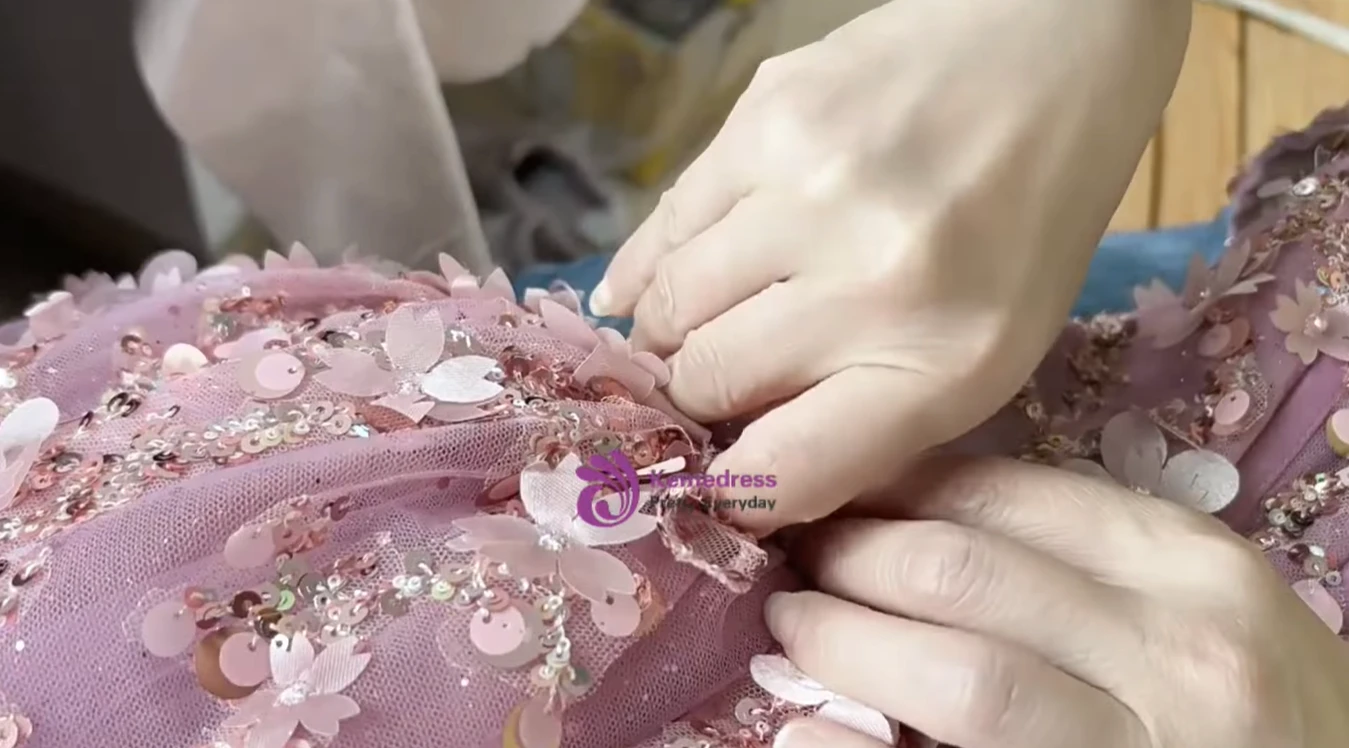
We started from the center of the bodice and worked outward. Each flower was positioned, adjusted, and secured by hand. The thread was carefully hidden inside the layers so the finished surface remained smooth and comfortable against the skin.
After the flowers were attached, the beads followed the planned embroidery pattern. The density gradually changed from heavier decoration around the waist to lighter details toward the hem, creating a natural visual flow.

Every knot was secured tightly and placed between the fabric layers. This prevents loose threads, protects the wearer from irritation, and keeps the outside of the gown clean and elegant.
By the time the final flower was completed, it was already evening. The entire team was focused on the last details, carefully checking every section before moving to finishing work.
Step 15: Final Inspection and Couture Quality Control
The gown was turned inside out for a complete inspection. Every loose thread was trimmed carefully back to the knot, and every decorative element was checked for security.

We gently shook the gown over a clean white surface to test the bead attachment. A few loose beads were discovered and secured again before the final pressing stage.
The satin received careful pressing with controlled heat to avoid damaging the surface, while the tulle layers were steamed to restore their volume and softness.

The final inspection was completed completely by hand. We checked every seam, tested the attachment of each flower, reviewed the waist and bust measurements, and examined the overall silhouette from multiple angles.
A small adjustment at the hem, a final steam treatment, and careful shaping completed the gown.
The Craftsmanship Behind Every Custom Hand Beaded Ball Gown
Creating a hand beaded ball gown is not simply a process of joining fabric pieces together. It requires patience, technical knowledge, and an understanding of how materials respond throughout construction.
From the first measurement to the final inspection, every step contributes to the comfort, beauty, and individuality of the finished dress.
If you are searching for a custom pink ball gown, hand beaded prom dress, or couture wedding gown, our design team can create a personalized style based on your measurements, preferred fabrics, and vision.
Explore more of our craftsmanship process: hand beaded gown production details .
Ready to Create Your Dream Custom Gown?
Send us your inspiration pictures or measurements, and our couture team will craft a customized quote for your unique gown design.
Get a Custom QuoteFree design consultation • No obligation
Frequently Asked Questions About Custom Ball Gown Making
How long does it take to make a hand beaded ball gown?
The timeline depends on the complexity of the design, fitting adjustments, fabric preparation, and amount of hand embroidery. Couture gowns with detailed beadwork require multiple stages of craftsmanship and careful quality control.
Why does a custom gown require several fittings?
Multiple fittings allow designers to adjust the pattern according to the wearer's body shape and movement. Each fitting improves comfort, balance, and the final silhouette of the gown.
What fabrics are commonly used for luxury ball gowns?
Popular couture fabrics include satin, tulle, chiffon, lace, and embroidered materials. The best choice depends on the desired structure, movement, and overall style.
Can a ball gown be customized according to personal measurements?
Yes. A custom gown can be created based on individual measurements, preferred colors, neckline styles, fabrics, and decorative details.
More Dressmaking Diaries
Step inside the workshop through more stories focused on fabric, structure and hand finishing.
Explore a different fabric combination and detailed finishing process.
See how embellishment and construction come together.
Learn how fabric weight influences skirt construction.
Return to the complete journey from fabric to finished dress.