
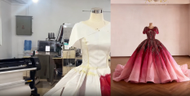
Wine-to-Blush Ombre Gown – Layered Tulle & Hand-Beaded Bodice
24th Jul 2026
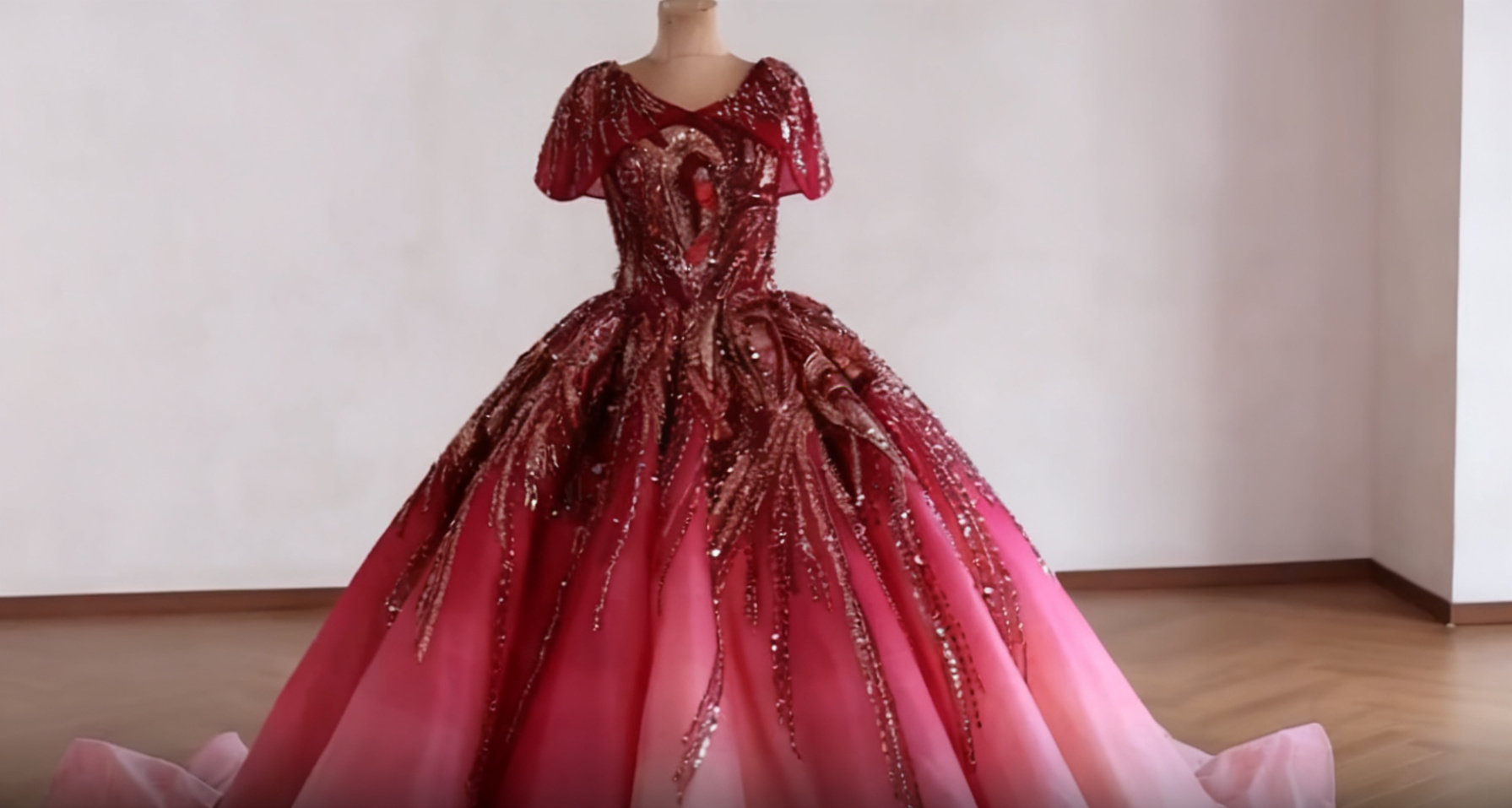
We’re excited to introduce our 2026 ombre ball gown—a gown designed around color, movement, and a little bit of transformation. The detachable mini cape adds a dramatic finish for a formal entrance, while removing it reveals a cleaner silhouette for a cocktail reception or evening celebration. One gown, two distinct moods, without changing the foundation of the dress.
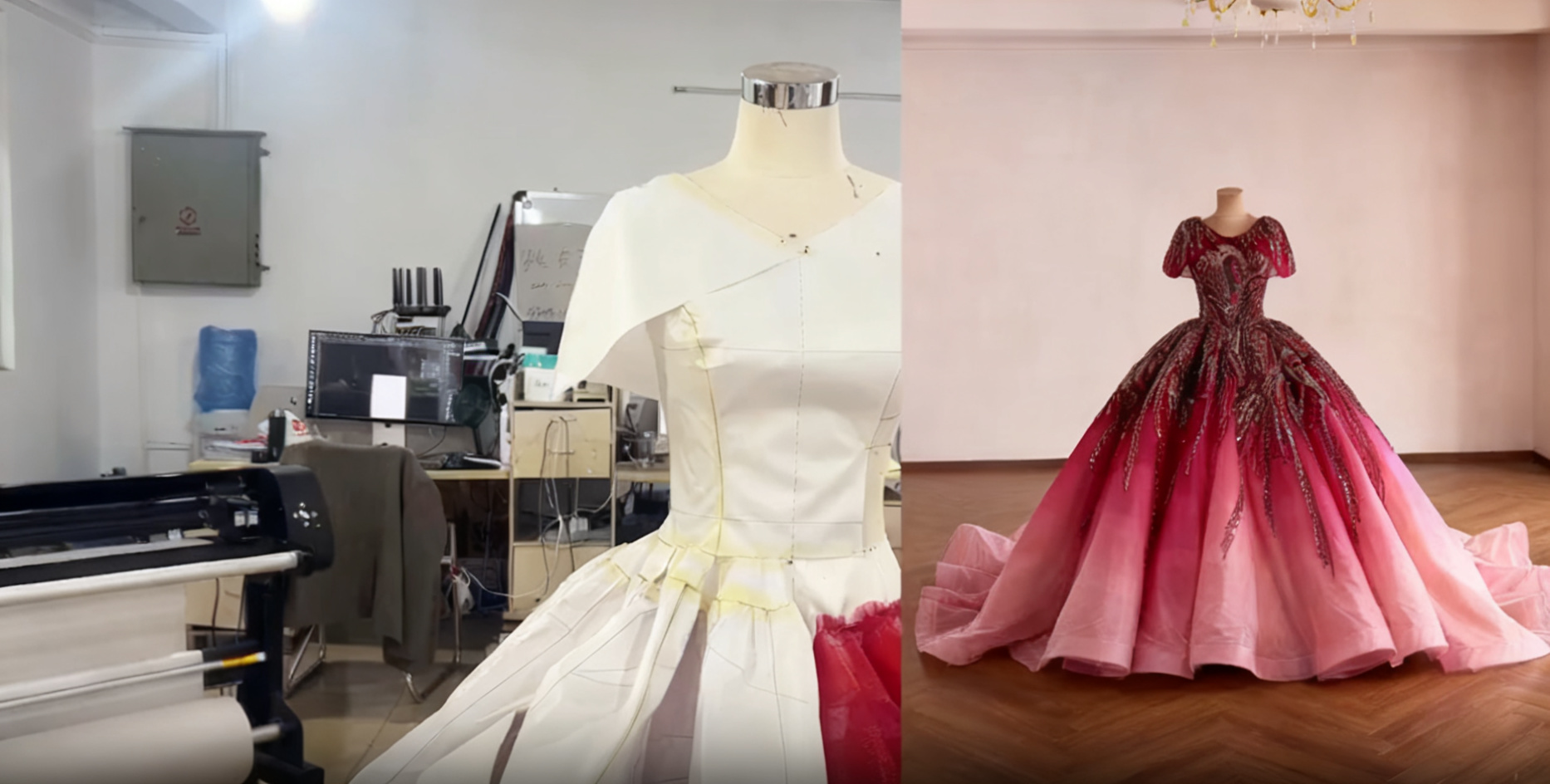
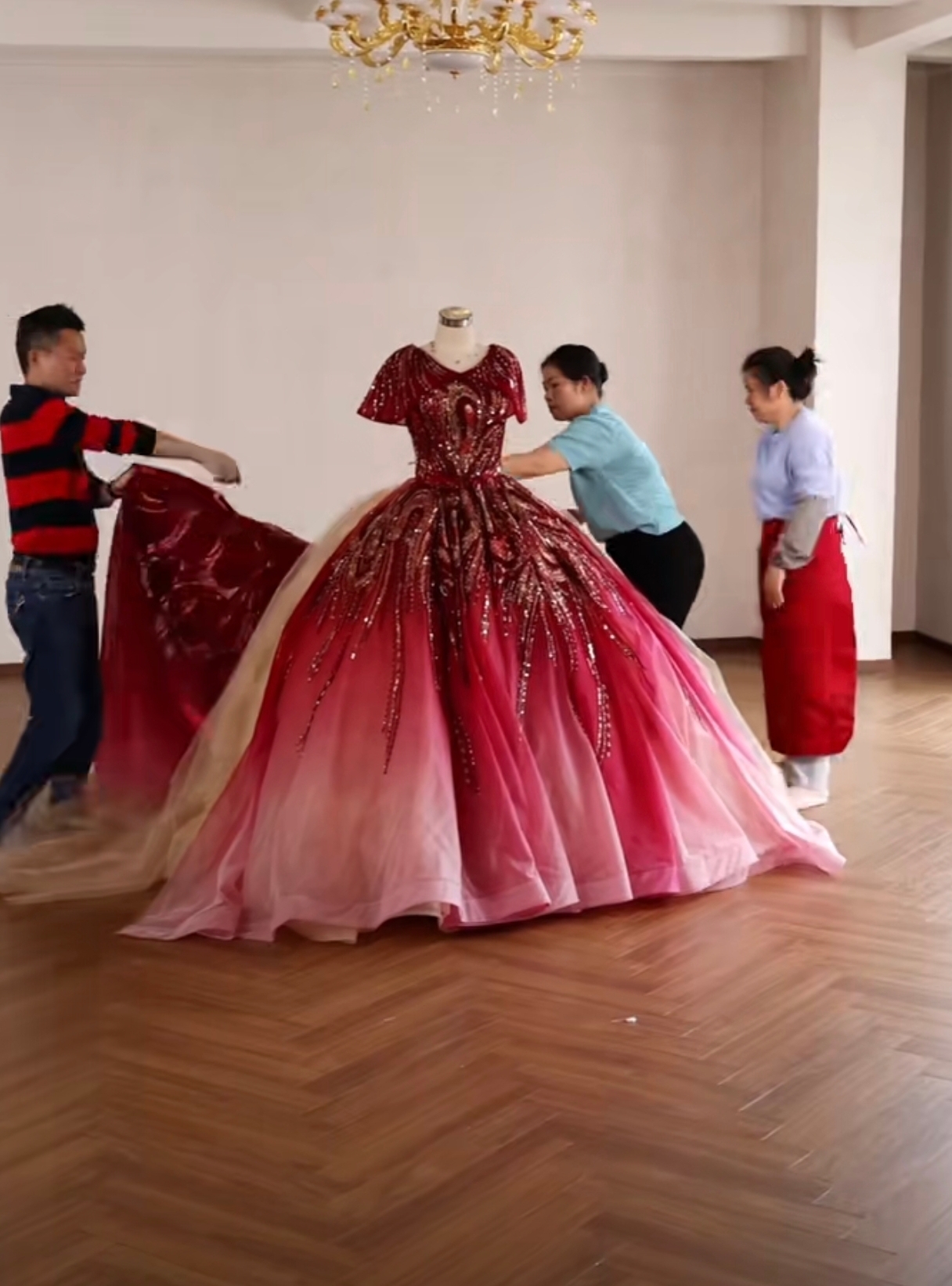
The first thing you notice is the wine-to-blush color fade. It looks almost like a single piece of ombré fabric, with the deeper wine tone gradually becoming softer as it moves toward the hem. That effect, however, does not come from printing a gradient onto the fabric.
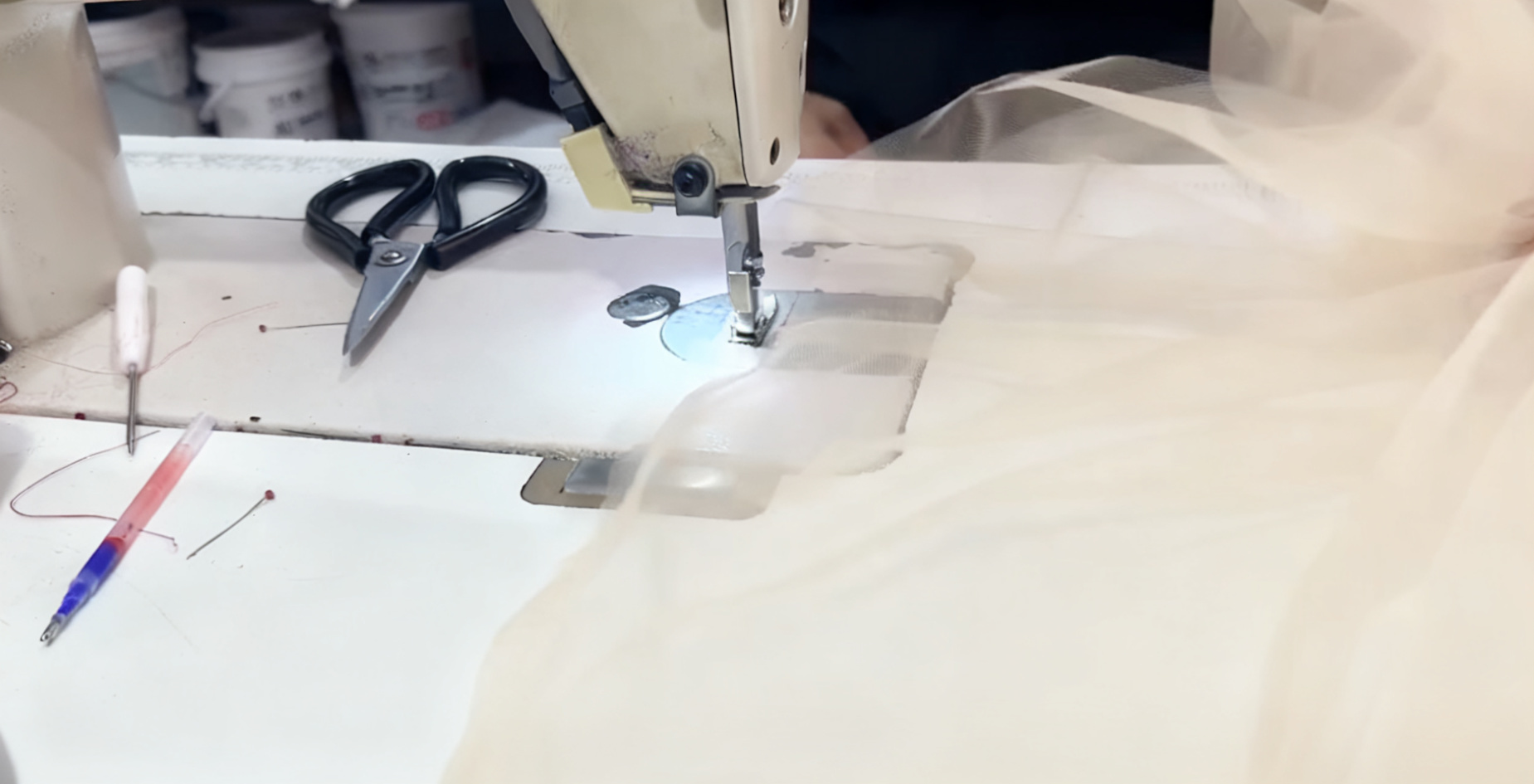
The color is built by layering tinted tulle, one layer over another. Because tulle is transparent, the shades interact as they overlap. Instead of creating a hard line between colors, each layer softens the one beneath it. The result is a more dimensional ombré effect that changes slightly as the skirt moves.
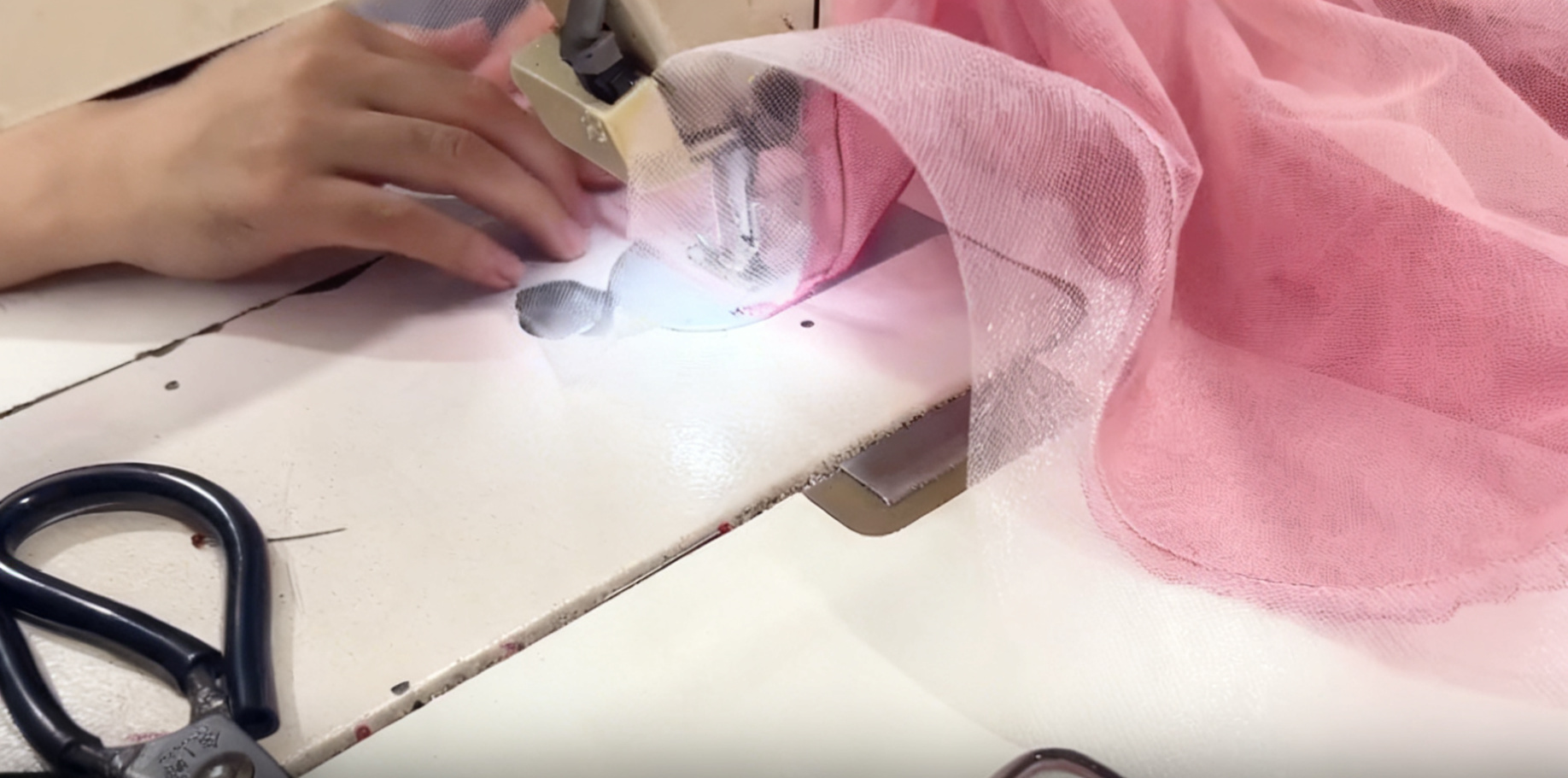
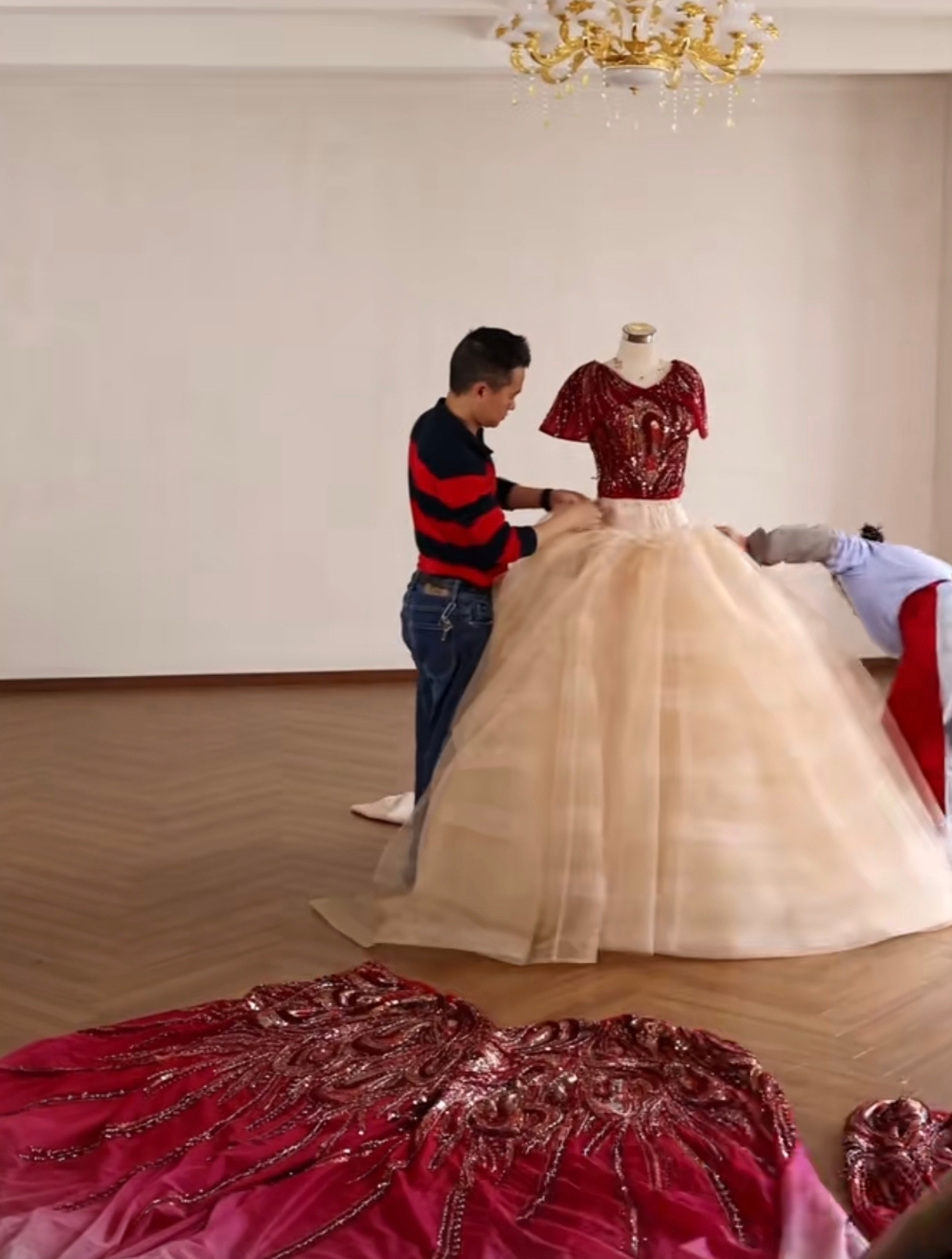
For the skirt, we work with four tulle layers in different shades and weights. The outer layer uses a sheer pale champagne tulle, keeping the surface light and airy. Beneath it is the fuchsia layer, intentionally cut shorter so the stronger color begins to fade above the knee. A blush pink layer follows, while a full champagne tulle base lining gives the skirt its foundation.
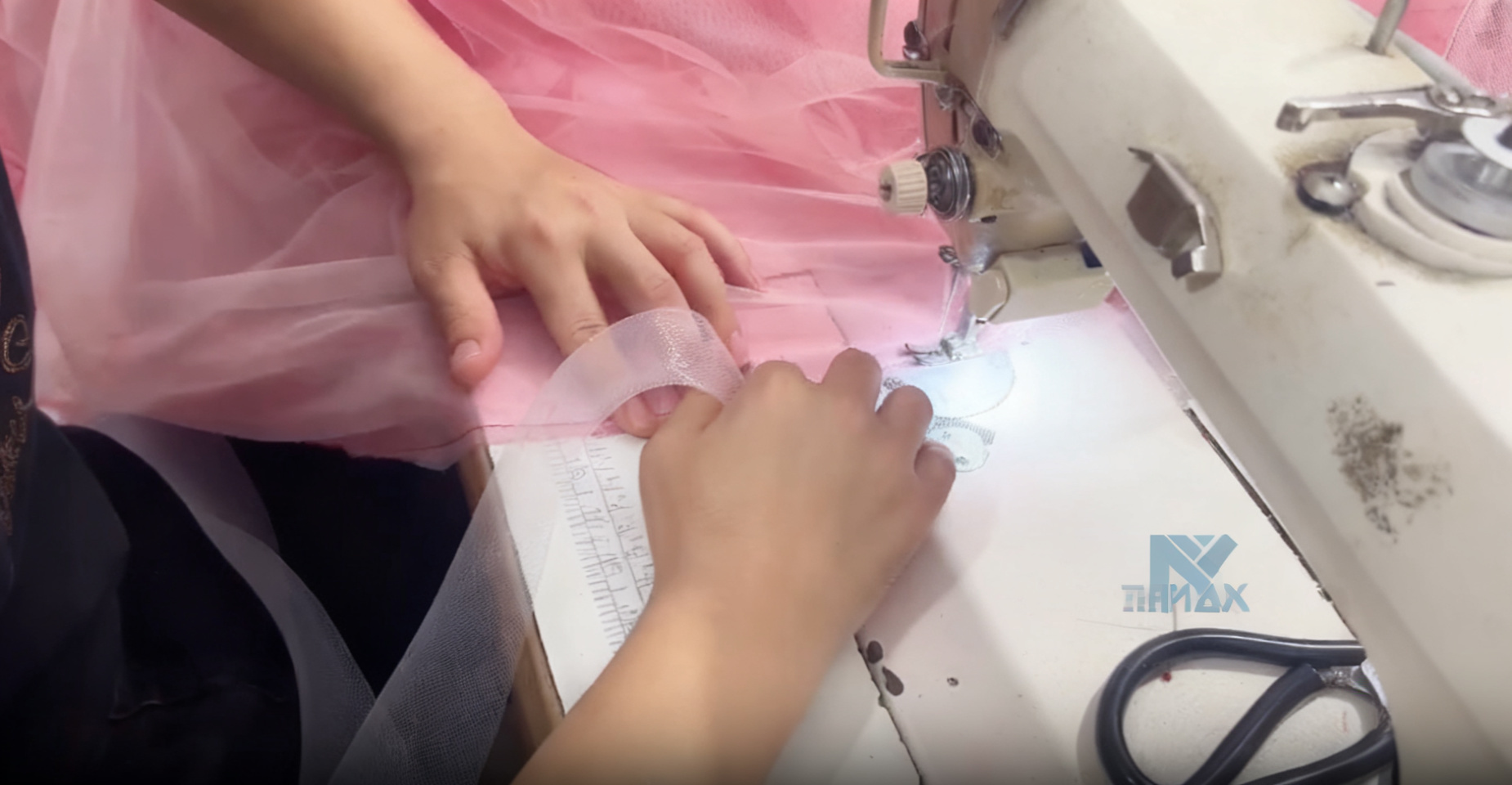
The lengths are not chosen at random. Each layer is cut according to the pattern and the intended position of the color. When deep burgundy, fuchsia, blush, and champagne overlap, the eye sees a gradual transition rather than separate blocks of fabric. That is what gives the finished skirt its soft, almost watercolor-like depth.
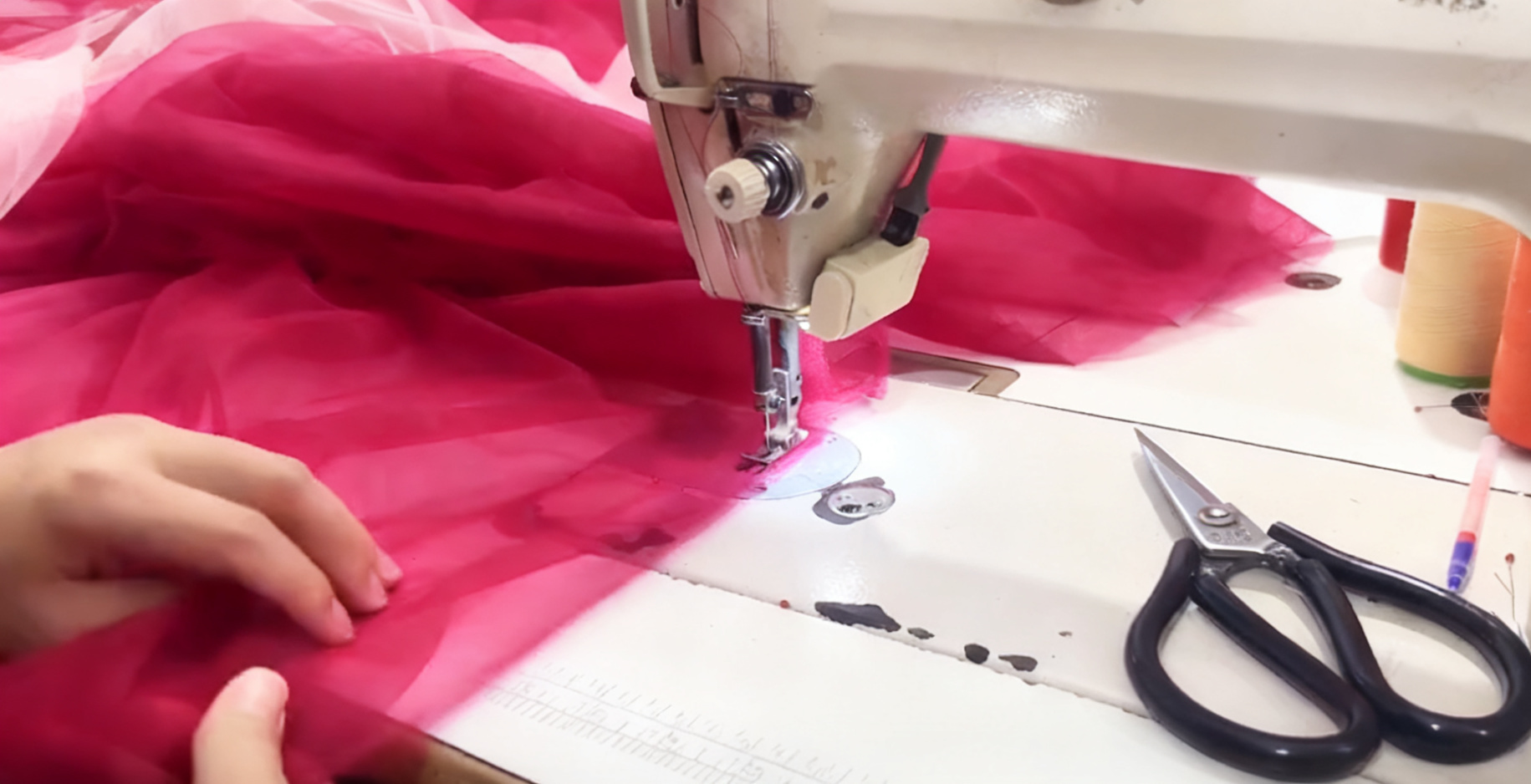
There is also a structural reason for the way each layer is finished. Every panel is cut to custom measurements, and the raw edges are secured with rigid net interlining. This helps maintain the intended shape along the skirt while reducing the risk of the delicate tulle losing its edge definition during wear.
The bodice requires a completely different kind of patience. Rather than relying on a printed embellishment, the surface is covered with hand-sewn crystals and sequins, giving the upper part of the gown a more intricate finish than the airy skirt below.
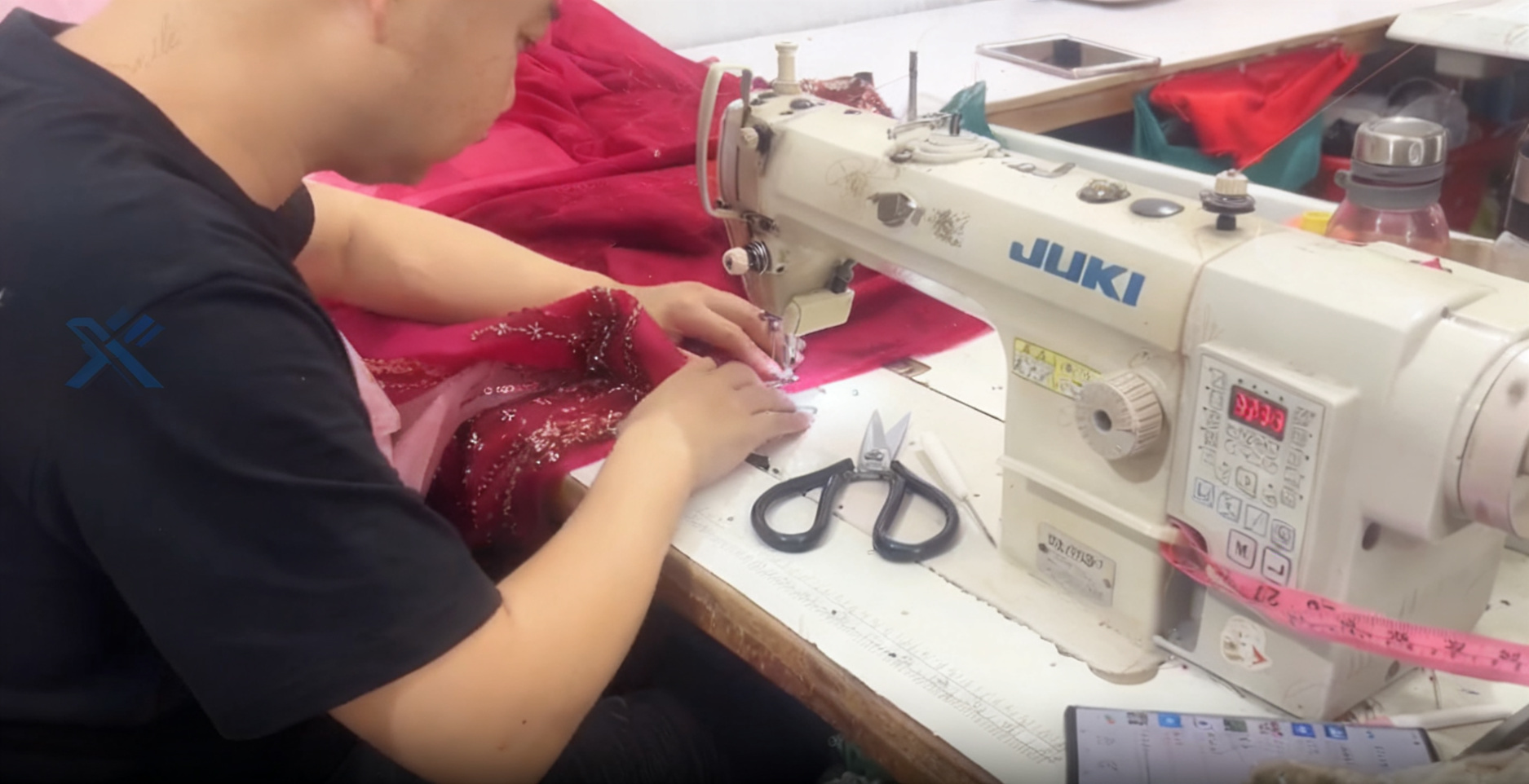
This particular video focuses on the skirt and the construction of its color transition, so the full beading process is not shown here. Hand embellishment is a much longer process of its own, from planning the motif to placing and securing hundreds of individual details.
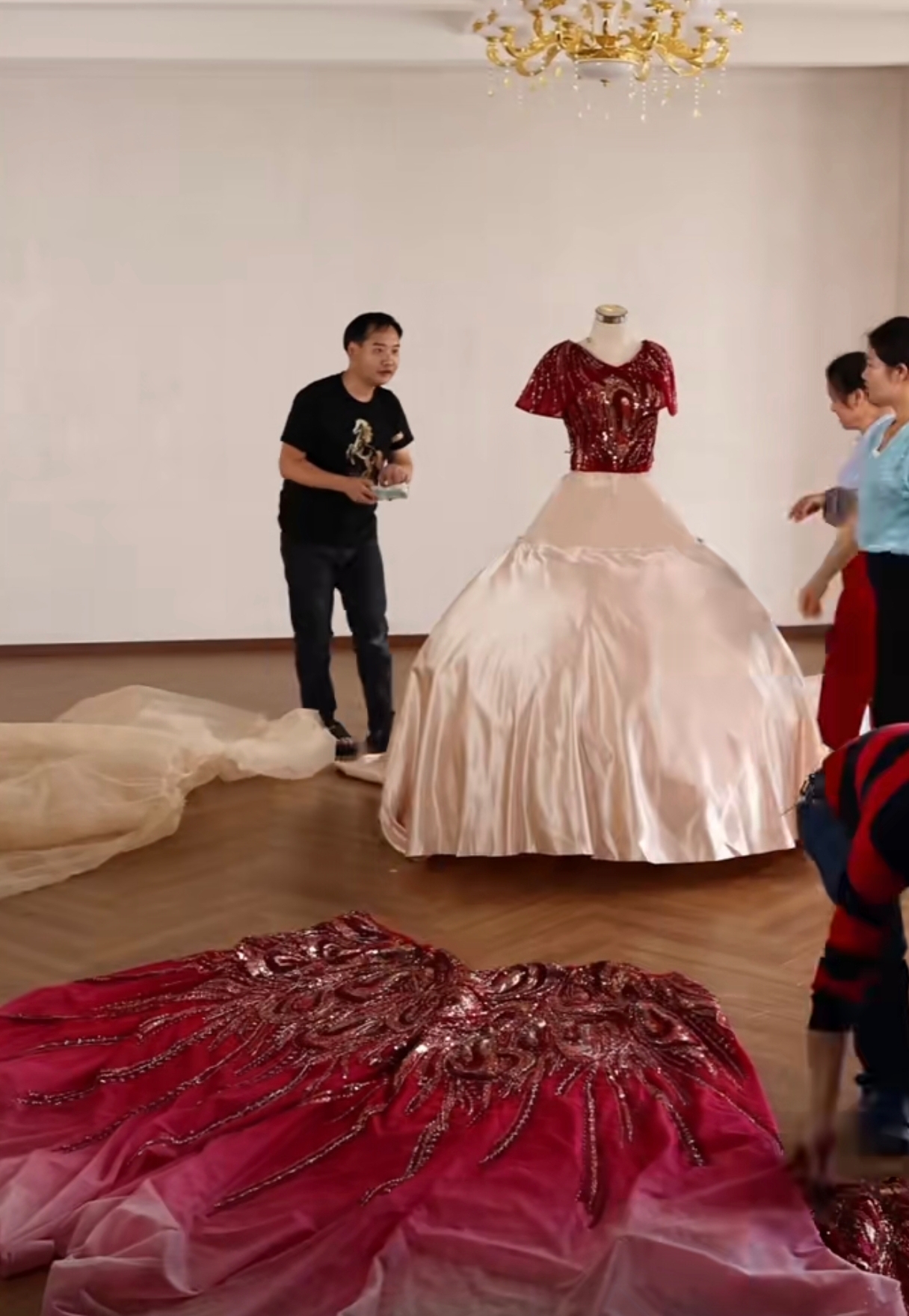
The same careful approach is used for the embellishment on our couture wedding gowns. The techniques may be applied to different silhouettes, but the principle remains the same: placement matters, and every detail needs to work with the structure of the garment rather than simply sit on top of it.
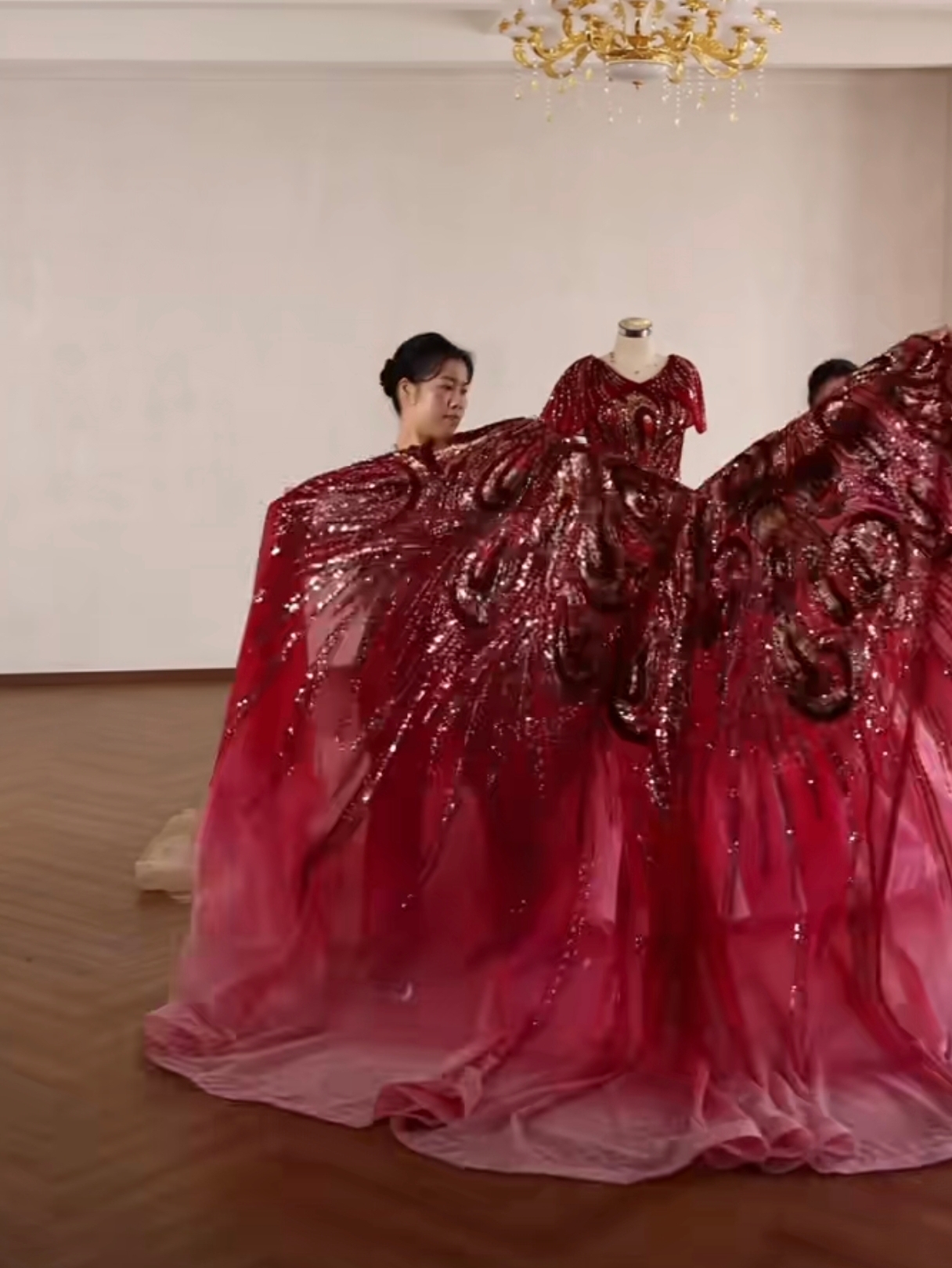
Before any crystal or sequin is sewn onto the bodice, our designers map the placement on paper templates. The pattern guides the motif, helping keep the design balanced from one section to the next. Each embellishment is then attached individually by hand before the finished panels are secured to the bodice base.
That combination of layered tulle and hand-applied embellishment is what gives the gown its character. The skirt creates movement through transparency and shifting color, while the bodice adds texture and light. From a distance, the effect is soft and fluid. Up close, the construction reveals the amount of work behind it.
Explore More Layered Gown Stories
Discover how color transitions, layered tulle and hand applied details shape custom gowns.
Explore another ombre design with delicate hand sewn details.
Compare different fabric combinations and surface details.
Explore detailed beadwork on another tulle formal gown.
See another artistic gown built around layered visual texture.