
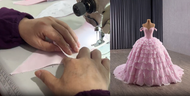
How We Made The Pink Sea: Inside a Handcrafted Ocean Inspired Couture Ball Gown
3rd Sep 2026
The Pink Sea
How an unexpected piece of fabric changed our idea of what an ocean inspired couture gown could be.
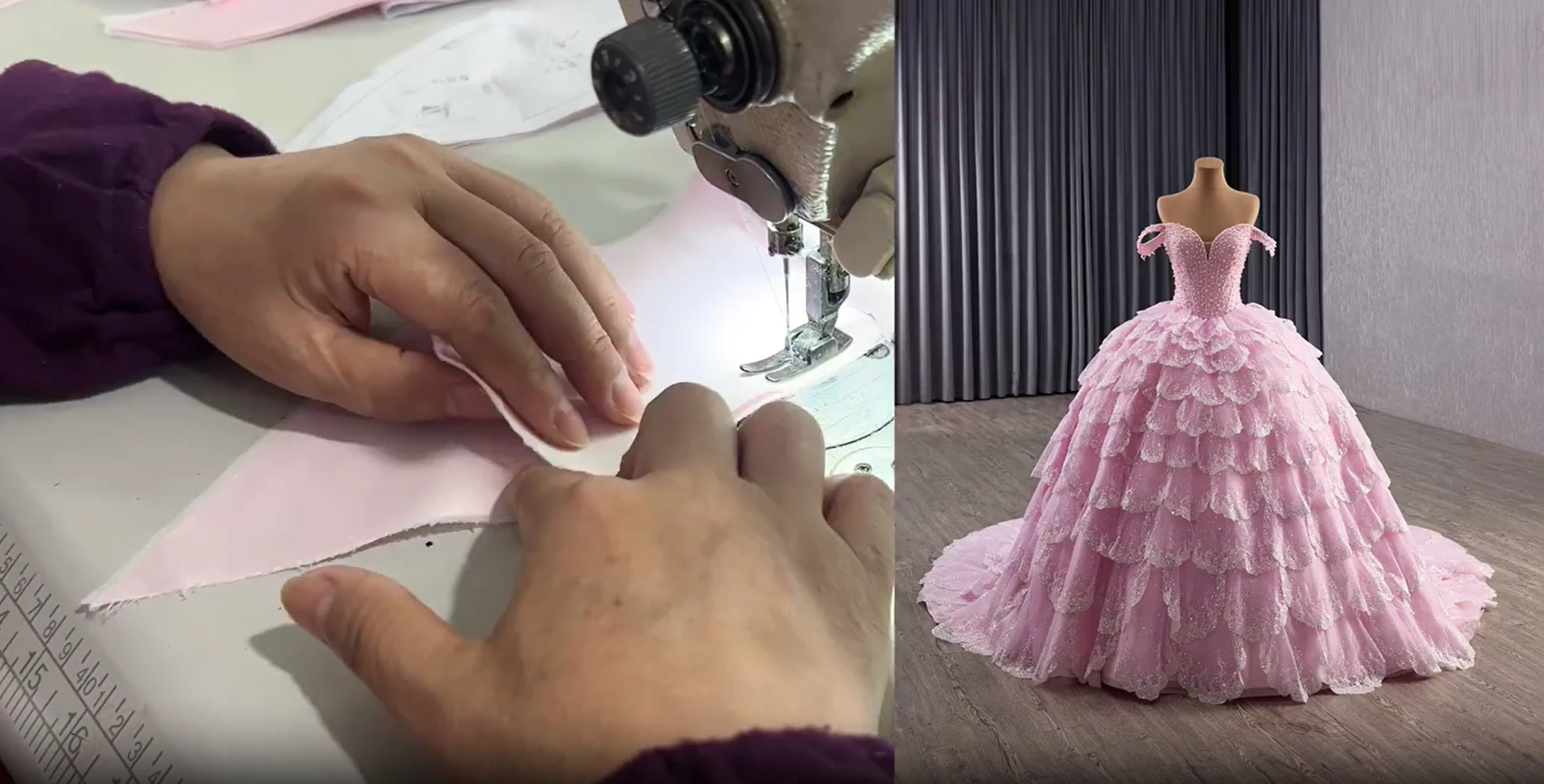
Ocean inspired gowns usually begin with blue. There are familiar choices: sapphire, turquoise, seafoam, and silver. For years, those colors have been the natural starting point whenever a design turns toward waves, water, or the movement of the tide.
This gown started with something completely different. A bolt of blush pink tulle arrived at our atelier covered in raised, irregular bands of iridescent sequins. The surface did not look flat. It moved across the fabric in scalloped lines, catching light at different angles and creating the kind of texture that makes you stop before deciding what it should become.
For a moment, we considered clouds. But when the first pieces were cut and layered across pink tulle, the answer became difficult to ignore. The sequin edges looked less like clouds and more like foam gathering along the crest of a wave.
The fabric had given us the beginning of the idea.
The Fabric Chose the Direction
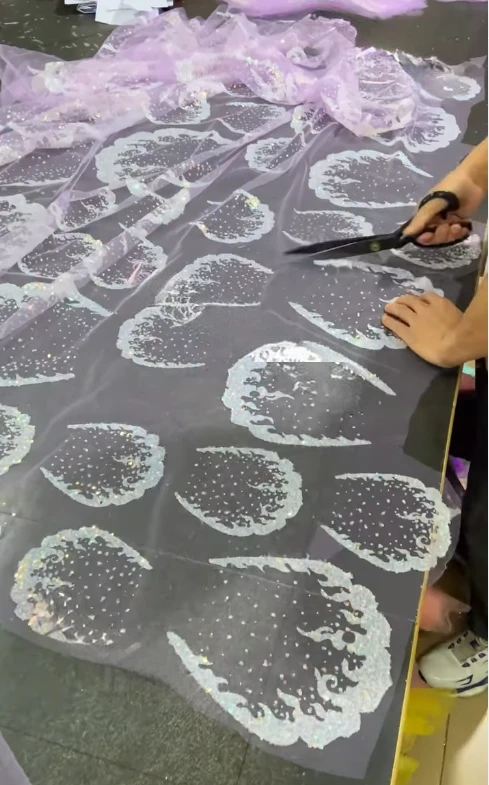
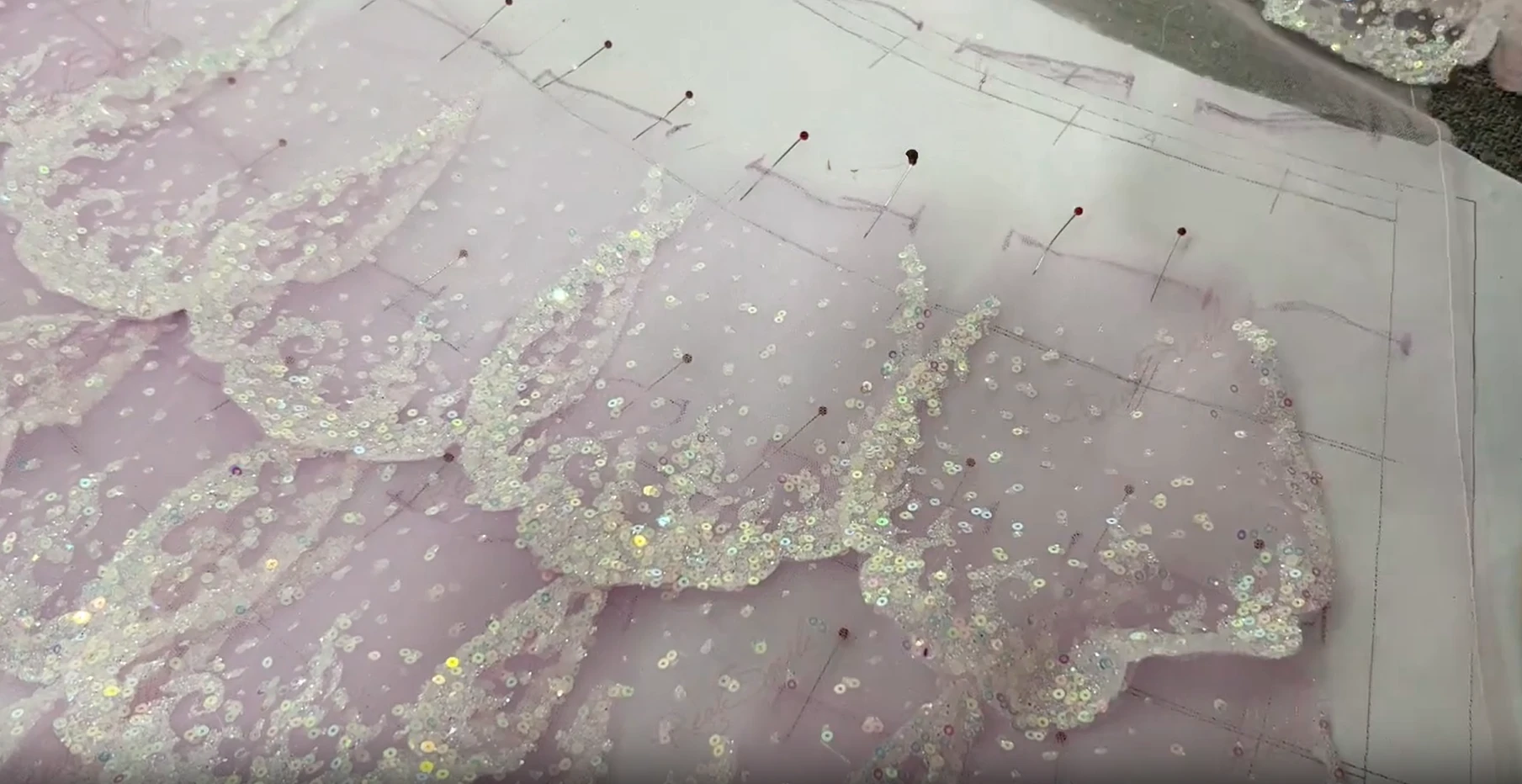
Rather than beginning with a finished sketch and searching for materials afterward, the process worked in reverse. The fabric came first.
Its irregular sequin pattern already contained movement, so the challenge was finding a silhouette large enough to let that movement continue. A full ball gown gave the pattern room to breathe. Once the skirt began taking shape, the concept changed from a conventional prom dress into something we started calling The Pink Sea.
Cutting the Waves One by One
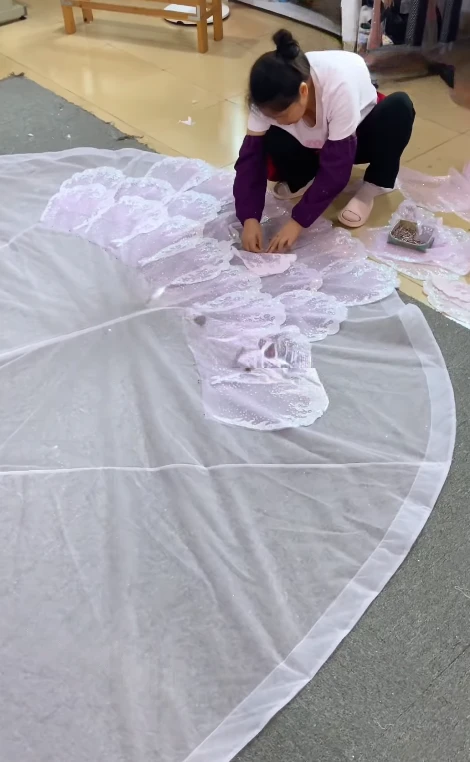
The wave pattern is not printed onto the skirt. Each scalloped section is cut individually from the iridescent sequin fabric before being placed on the tulle foundation. That means following the natural direction of every raised sequin band rather than cutting identical shapes from a flat pattern.
Some waves are wide. Others are deliberately smaller. Keeping them slightly different prevents the finished skirt from falling into a rigid pattern.
The goal was movement rather than repetition.
Building a Skirt That Feels Like a Tide
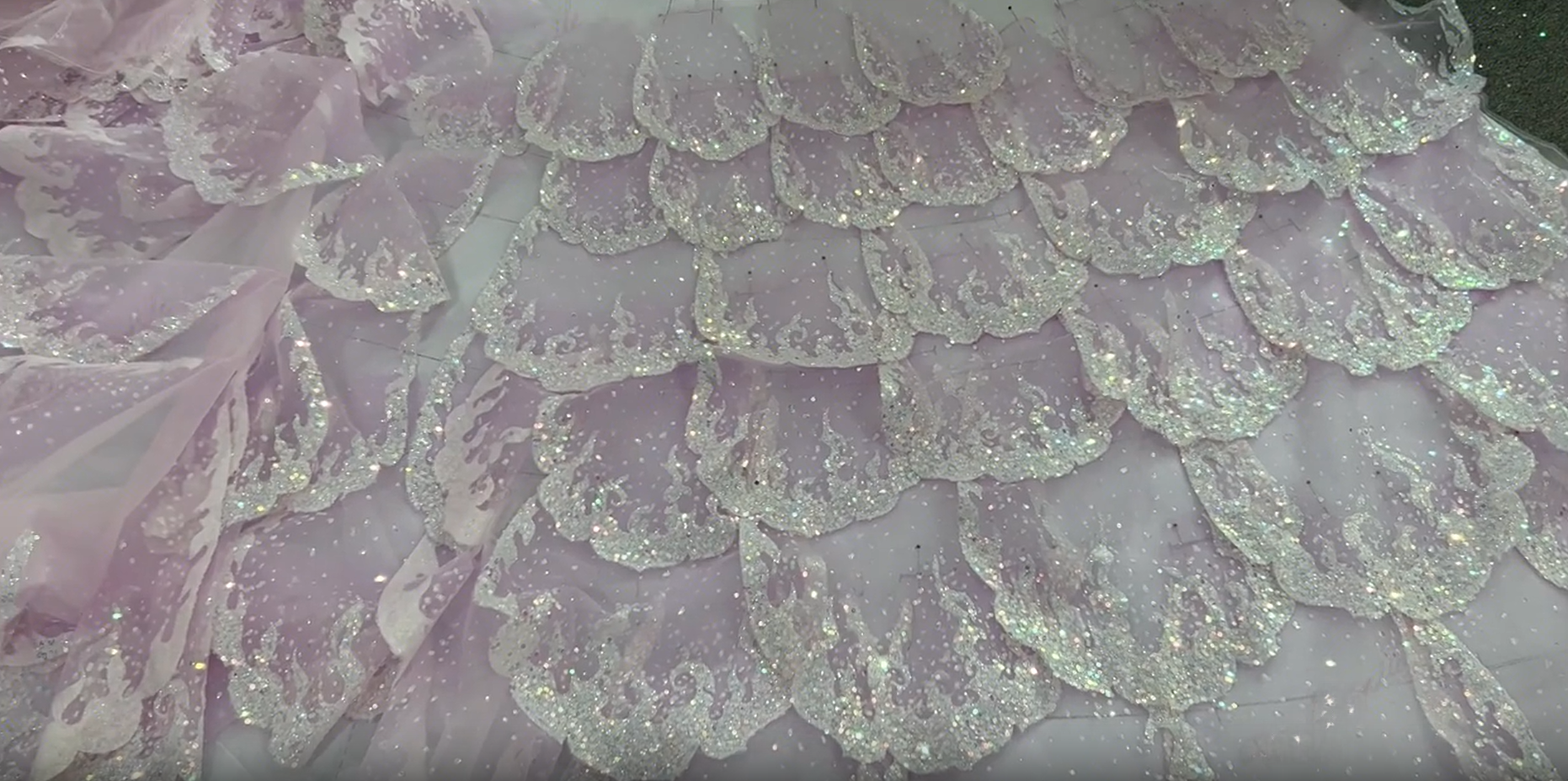
After cutting, the work becomes slower. The skirt foundation is spread across the worktable while individual appliqués are placed, moved, pinned, and adjusted. Rows overlap, but not mechanically. Each one has to reveal enough of the layer beneath it while continuing the downward movement of the pattern.
A difference of only a few centimeters can change how an entire tier reads. Once layered together, the separate pieces begin to lose their individuality. From a distance, the skirt reads as one surface of moving water.
Before the Sparkle Comes the Structure
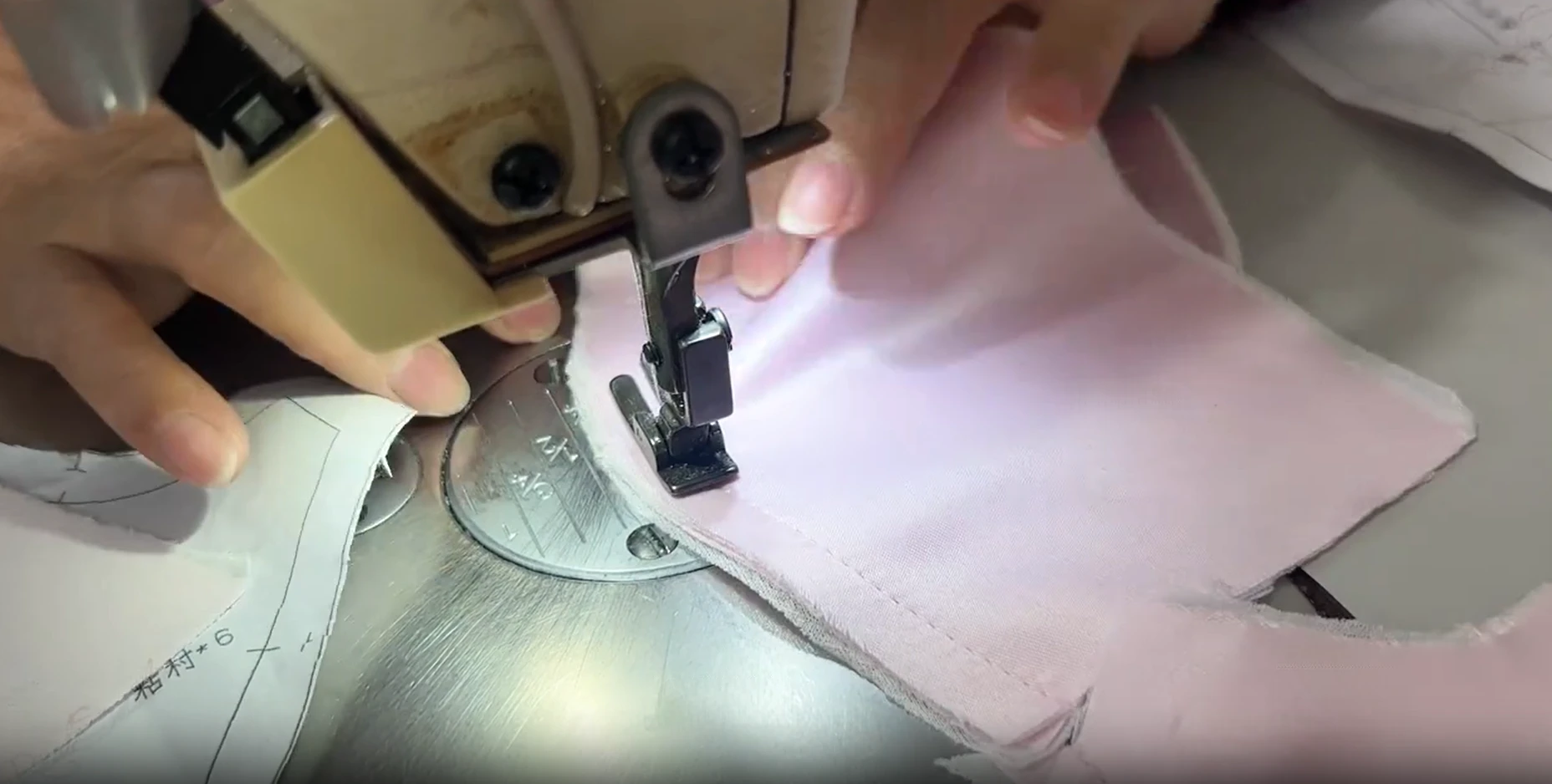
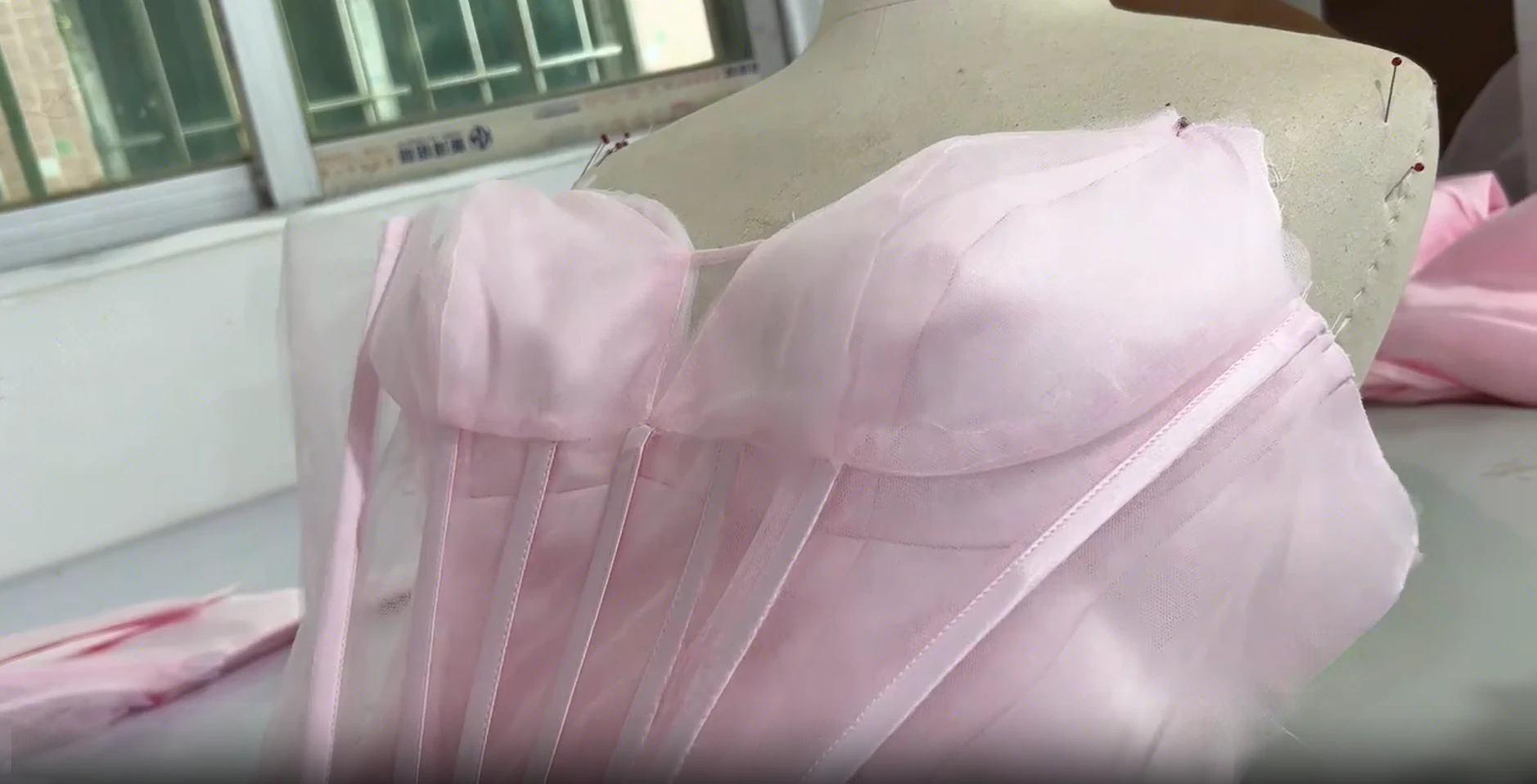
The skirt carries the visual drama, but the bodice is responsible for making the gown wearable. Before pearls, sequins, or straps are added, the internal corset has to be constructed. The lining is cut into separate panels and reinforced so the finished bodice can support the outer layers without depending on decoration for structure.
Once the structure is joined, boning follows the vertical lines of the bodice to shape the waist and support the sweetheart neckline.
Checking the bodice on a dress form is essential at this stage. The structure beneath determines how every outer layer will eventually sit.
The Parts of the Dress Nobody Sees
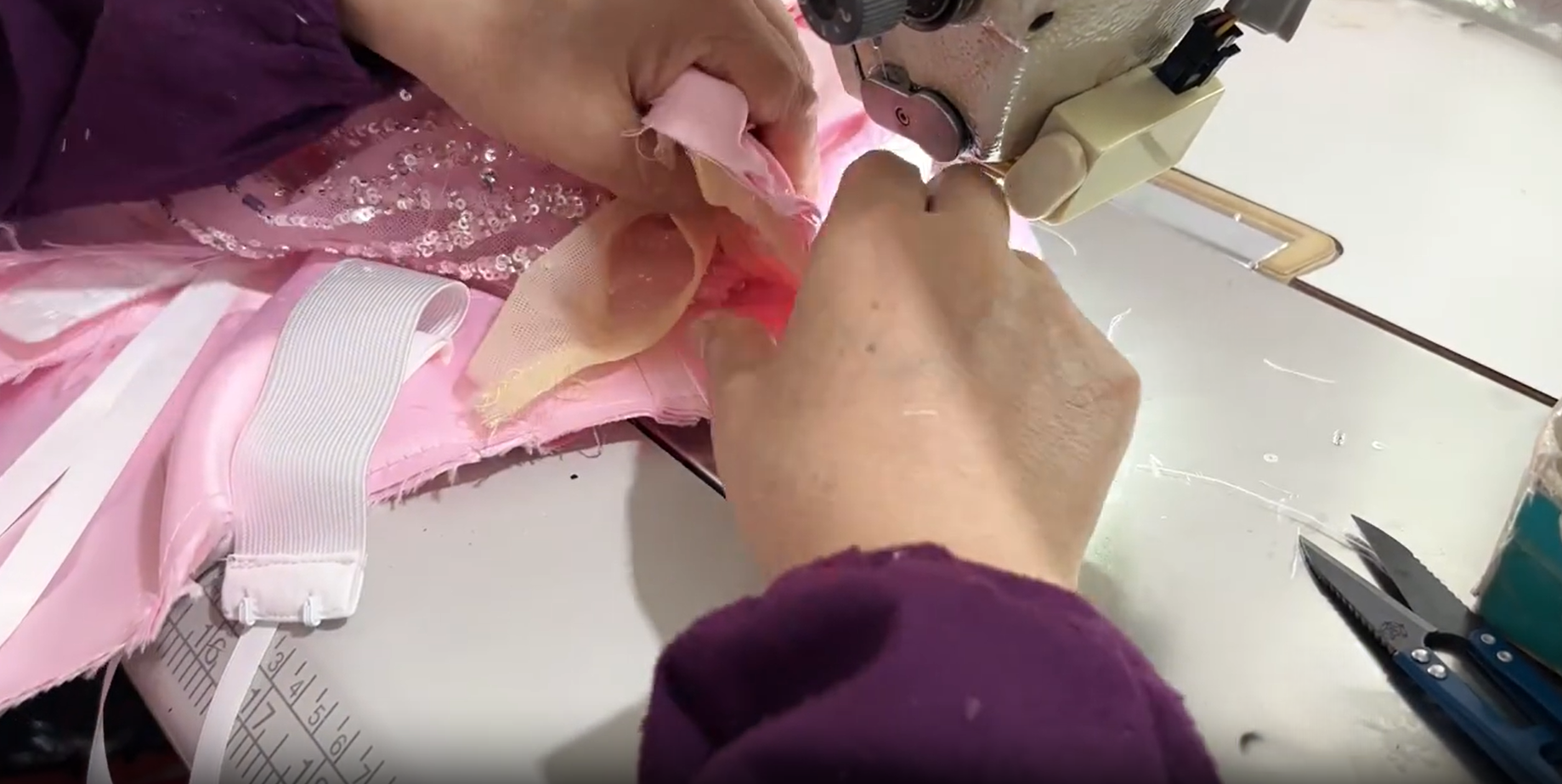
Inside the bodice, the bra cups are sewn directly into the lining so they work together with the corset structure.
These details disappear completely once the gown is finished, but they influence how it feels when worn. A structured ball gown needs more than a dramatic exterior. It also has to stay balanced when someone walks, turns, sits, and dances.
Finishing the Off the Shoulder Straps
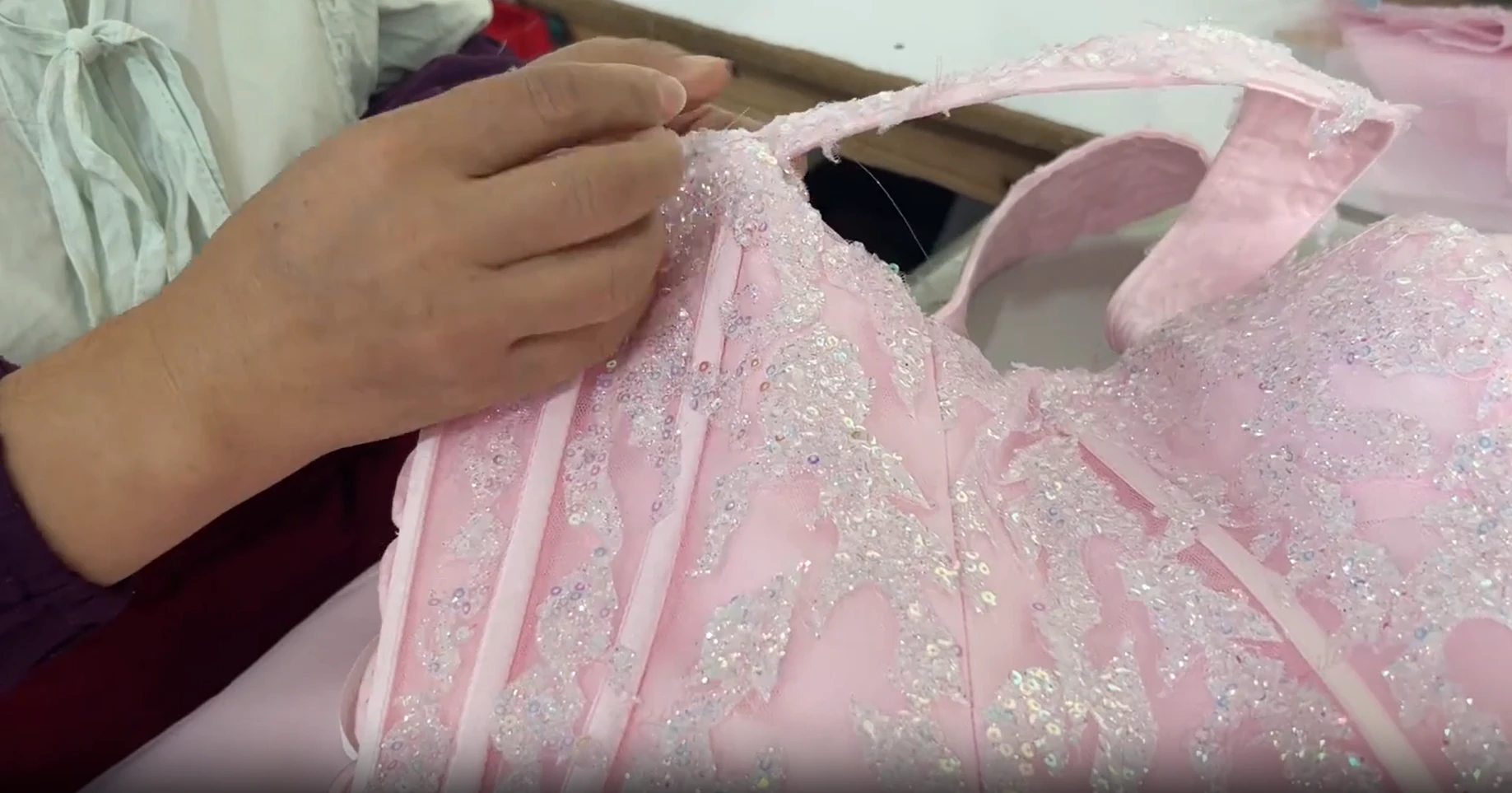
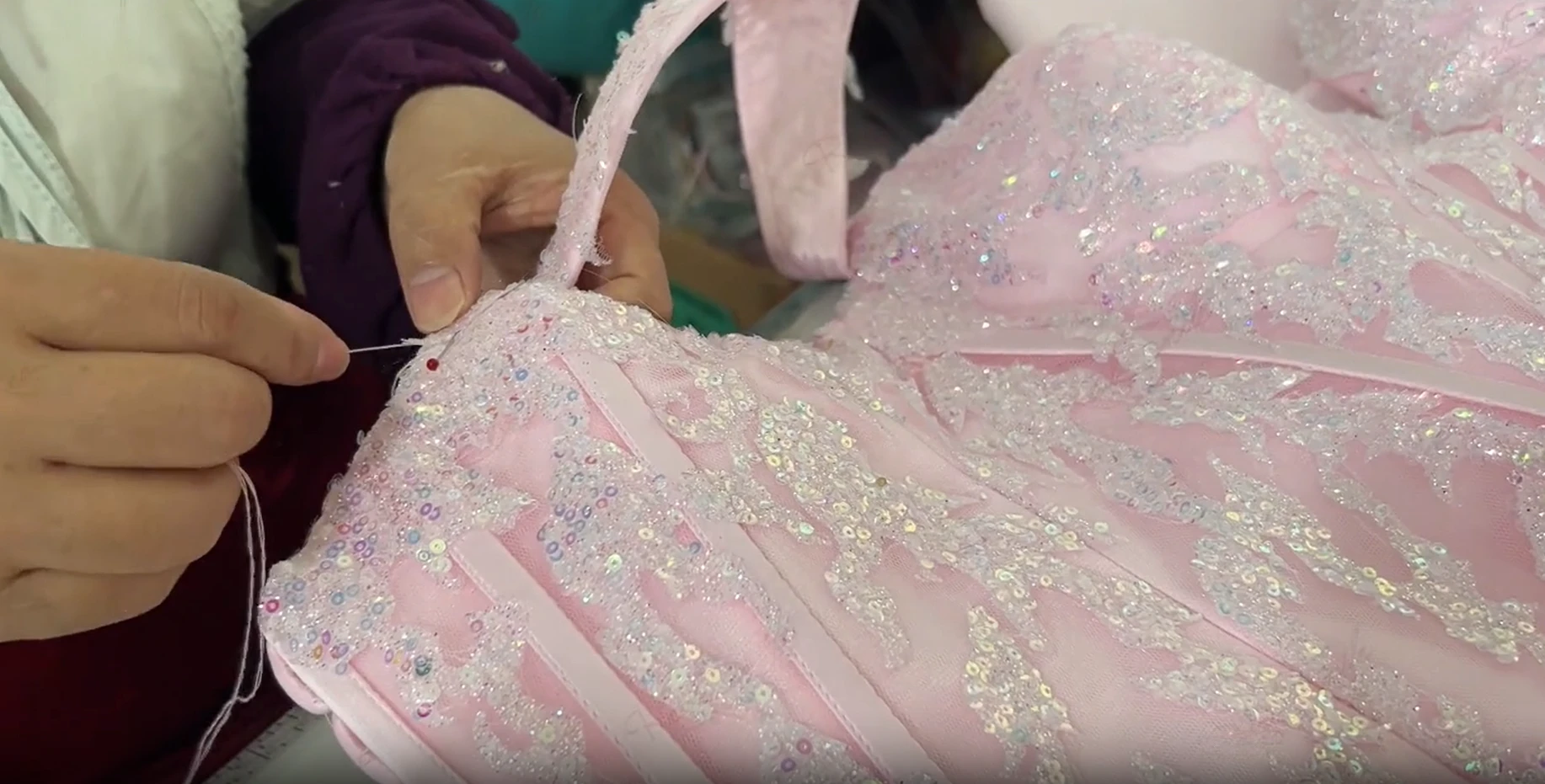
The off the shoulder straps are decorative, but their attachment points carry movement and tension. They need to remain secure without making the bodice feel rigid.
The final connection is reinforced by hand so the structural and decorative layers meet cleanly.
A Line of Pearls Along the Water's Edge
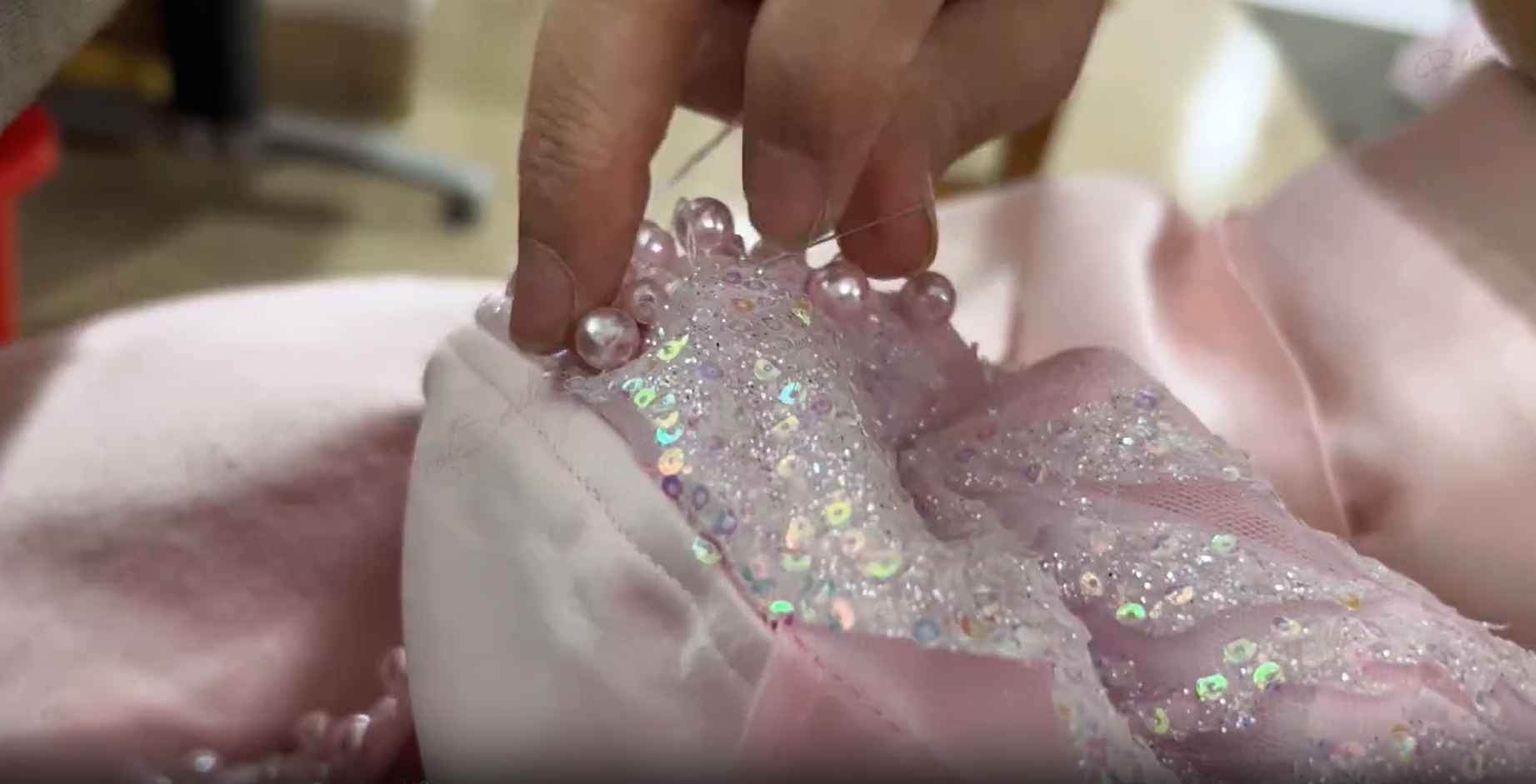
The pearl detail was added late in the process, when the shape of the bodice was already established.
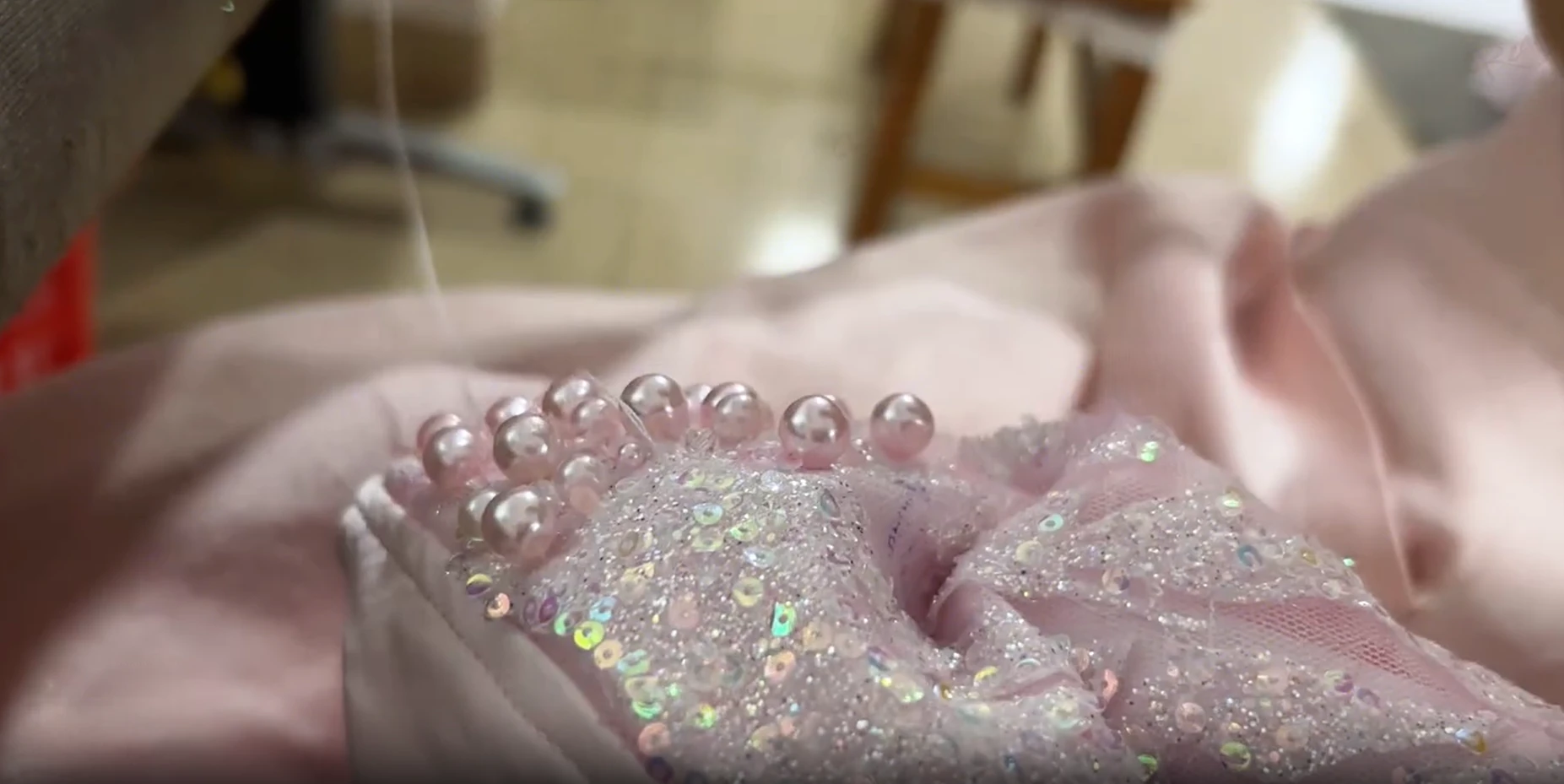
Rather than using a continuous uniform trim, the pearls vary in size along the sweetheart neckline. Larger pearls create emphasis around the curve while smaller ones soften the transition between sections. Each pearl is attached individually, allowing the spacing to follow the shape of the bodice.
Pink Sea or Blue Sea?
Before this gown became The Pink Sea, we kept returning to one question. Should an ocean inspired gown stay within the familiar language of blue?
The movement of the waves can remain the same while color completely changes the story. Blue feels closer to the sea we know. Pink creates something softer, stranger, and more imaginary.
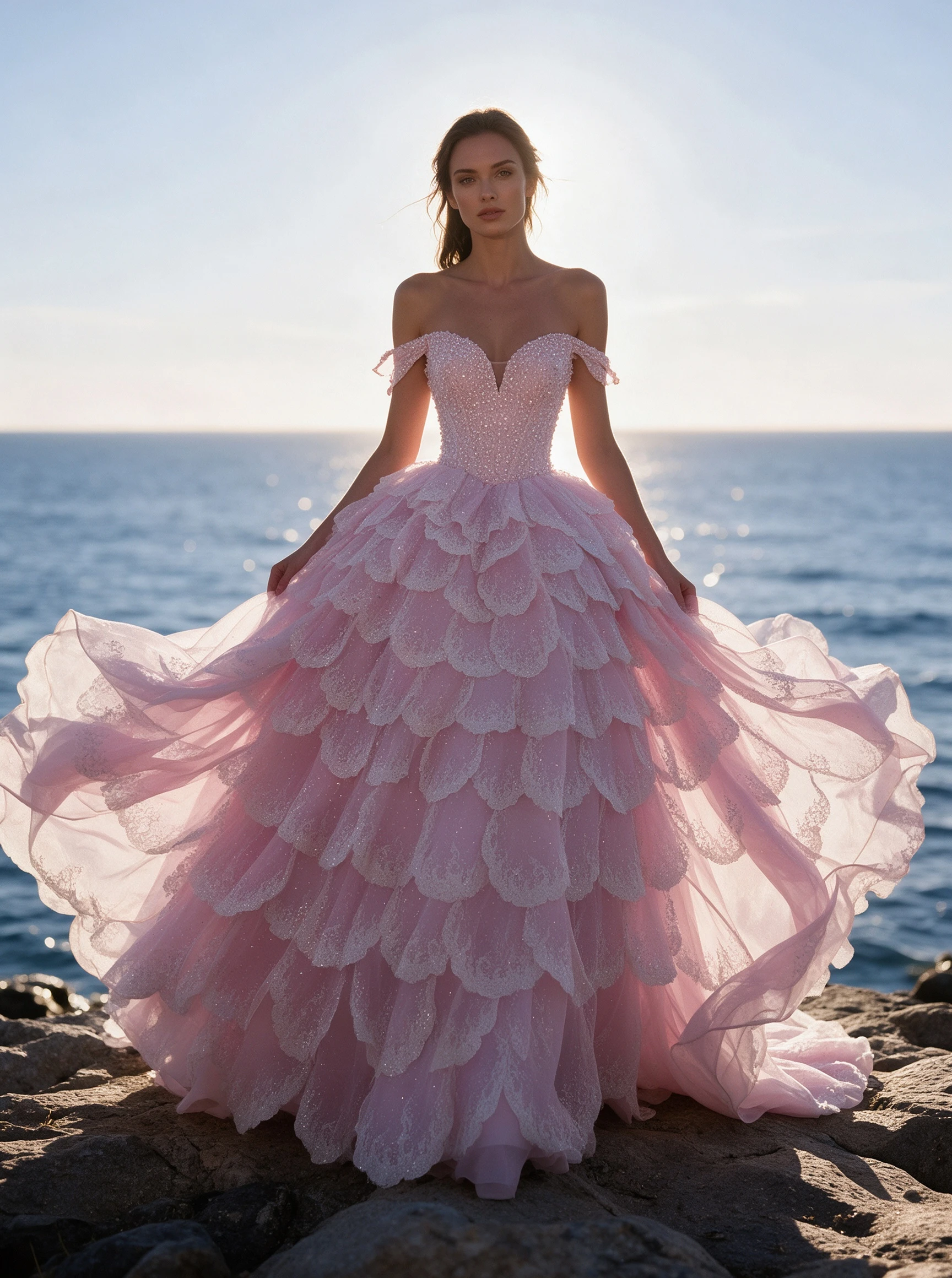
The Pink Sea
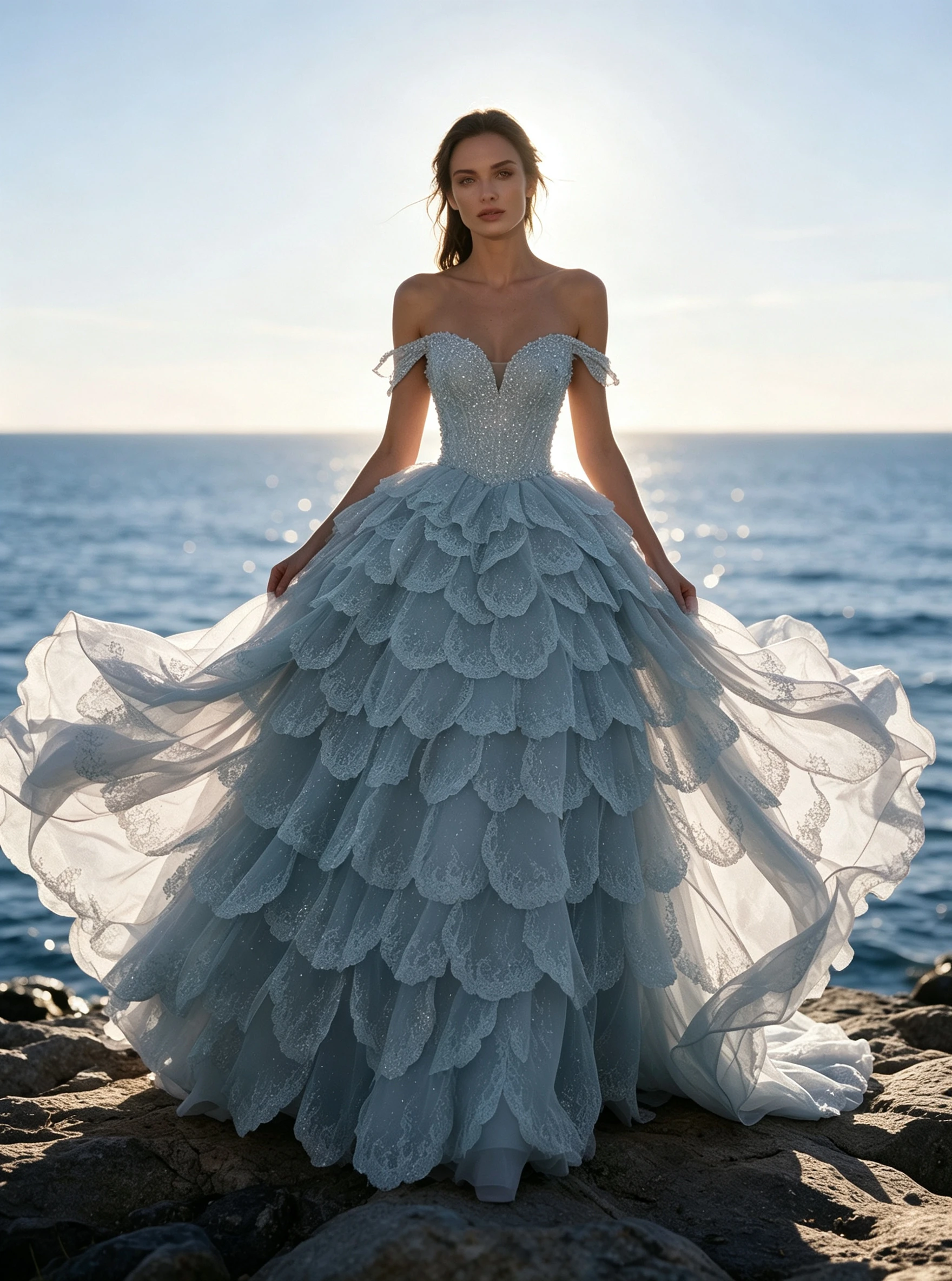
The Classic Blue Sea
Which one would you choose?
Would you follow the traditional blue palette, or choose an ocean imagined in pink? We would love to know which version feels more like your sea.
When the Separate Pieces Finally Became One Gown


There is always a point near the end of a complicated project when separate elements begin to stop looking separate.
The corset becomes part of the silhouette. The wave appliqués begin to move as one surface. Pearls connect the neckline to the colors of the skirt. The idea that started with an unfamiliar piece of fabric finally becomes visible.
That was the moment this gown became The Pink Sea.
Pink Tulle Sequin Wave Ball Gown
Layers of pink tulle, cascading wave inspired sequin appliqués, a structured corset bodice, off the shoulder details, and hand finished pearls come together in the final design.
Explore the Finished GownQuestions About The Pink Sea Gown
A closer look at the materials, techniques, structure, and custom design possibilities behind this handcrafted couture gown.
How is the Pink Sea gown made?
The Pink Sea gown is built through a combination of layered construction and detailed hand finishing. The process began with blush pink tulle covered in irregular bands of iridescent sequins. Individual wave shaped sections were cut from the fabric and arranged across the skirt foundation to create the movement of water. Beneath the decorative layers, the bodice was constructed with an internal corset, reinforced lining, boning, and sewn in bra cups. The off the shoulder straps were reinforced by hand, while pearls of different sizes were individually attached along the sweetheart neckline.
Are the wave appliqués sewn individually?
Yes. The wave pattern is not printed directly onto the skirt. Each scalloped wave section is cut individually from the iridescent sequin fabric before being placed onto the tulle foundation. During the construction process, the pieces are arranged, moved, pinned, and adjusted so the layers overlap naturally instead of forming a rigid repeating pattern. Slight differences in the size and placement of the waves help the finished skirt feel more like moving water.
What fabric is used for the wave effect?
The wave effect began with blush pink tulle featuring raised, irregular bands of iridescent sequins. The unusual texture of the fabric created scalloped lines that caught the light from different angles. Once sections were cut and layered over the pink tulle foundation, the sequin edges began to resemble foam gathering along the crest of a wave. Instead of adding an ocean pattern onto the gown, the design uses the natural movement of the fabric itself to create the water inspired effect.
Can Kemedress create a custom couture gown based on my idea?
Yes. A custom design can begin with many different starting points, including a sketch, photograph, color combination, silhouette, or personal idea. Through the Kemedress custom made dress service, customers can explore details such as color, silhouette, sleeves, neckline, embellishments, and proportions with the production team. Just as The Pink Sea began with an unexpected piece of fabric and gradually developed into a finished gown, a custom project can grow from an individual idea into a design with its own character.
How long does it take to make a handmade couture dress?
The production time for a handmade couture gown can vary depending on the complexity of the design, the amount of hand finishing involved, the materials used, and the level of customization required. Designs with individually placed appliqués, structured corsetry, hand sewn details, and intricate embellishments naturally require more production work than simpler styles. For a custom gown, the design process and production schedule should be discussed with the Kemedress team based on the specific details of the project.
Can I customize the color of the gown?
Color can be part of the custom design process. The Pink Sea itself was created around blush pink fabric rather than the traditional blues usually associated with ocean inspired gowns, showing how a change in color can completely transform the character of a design. Depending on the available materials and the requirements of the project, customers can discuss different color directions as part of a custom gown. Silhouette, embellishments, proportions, and other design elements can also be considered together with the overall color concept.
Have a Dress Idea of Your Own?
What began as a bolt of unusual pink fabric became a gown built wave by wave, seam by seam, until the idea finally had a name: The Pink Sea.Your own idea might begin with a sketch, a photograph, a color combination, or simply a silhouette you have imagined for years.
Through our custom made dress service, you can work with the Kemedress production team to explore a design built around your own ideas. Colors, silhouettes, sleeves, necklines, embellishments, and proportions can all become part of the process.
Bring us an idea. Our team can help explore what it could become.
More From the Kemedress Haute Couture Atelier
Some gowns reveal more when they move. Layers catch the light differently, beading changes from one angle to another, and a train follows the body in ways a single photograph cannot fully show.
That is why our Haute Couture Prom Dress collection and Haute Couture Wedding Dress collection include videos that allow each design to be seen beyond a still image.
For custom and made to order gowns, we can also provide a video of the completed dress before shipment so you can see the finished details before your gown leaves our atelier.
The Pink Sea started with fabric. Everything that followed came from learning how to listen to what that fabric wanted to become.
Documented inside the Kemedress atelier, from the first bolt of tulle to the finished gown and every wave, pearl, and seam in between.
Explore More Couture Dressmaking Stories
Take a closer look at the fabrics, embellishment, layering and hand finishing behind custom Kemedress gowns.
Explore floral embellishment and layered ball gown construction from inside the atelier.
Follow the visual stages of constructing a romantic blush pink ball gown.
See how layered tulle and hand beading create depth across an ombre gown.
Discover the broader journey from fabric selection to a finished custom dress.