
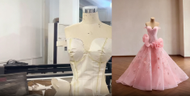
Every Couture Prom Dress Is a Story Written in Stitches
21st Aug 2026
Behind the Seams | Couture Dressmaking
Every Couture Prom Dress Is a Story Written in Stitches
Behind a couture prom dress lies far more than fabric and thread. Discover the craftsmanship, fitting, hand embellishment, and careful assembly behind a luxurious pink floral gown.
A truly memorable pink prom dress begins long before the finished gown reaches the dance floor. It starts with a design idea, develops through careful fitting and fabric preparation, and eventually becomes a complete look through hundreds of small decisions.
When the design for this luxurious pink floral gown first reached our worktable, we knew immediately that it was not a dress to be rushed. Soft tulle, structured satin, shimmering lace, dimensional flowers, and an oversized waist bow all demanded patience. Every element needed to work together without competing for attention.
As dressmakers, we want to take you behind the seams and show how a couture prom gown moves from an early concept to a finished piece of formalwear.
What makes couture different? Couture craftsmanship depends on precision, controlled fitting, hand-applied details, thoughtful construction, and repeated inspection. A beautiful silhouette is only the beginning. The quality is often hidden inside the seams, under the embellishments, and within the structure of the bodice.
The Toile and First Fitting: Where Precision Begins
Traditionally, dressmakers begin with a toile fitting on a dress form. Modern luxury ateliers, however, increasingly combine physical craftsmanship with digital development. For this gown, virtual prototyping allows the team to study how the tulle may drape and how the internal boning can distribute weight before expensive final fabrics are cut.
This digital-first approach can reduce unnecessary sample rounds. It also creates an opportunity to examine underwire placement, canvas construction, bodice proportions, and embellishment weight before committing delicate materials.
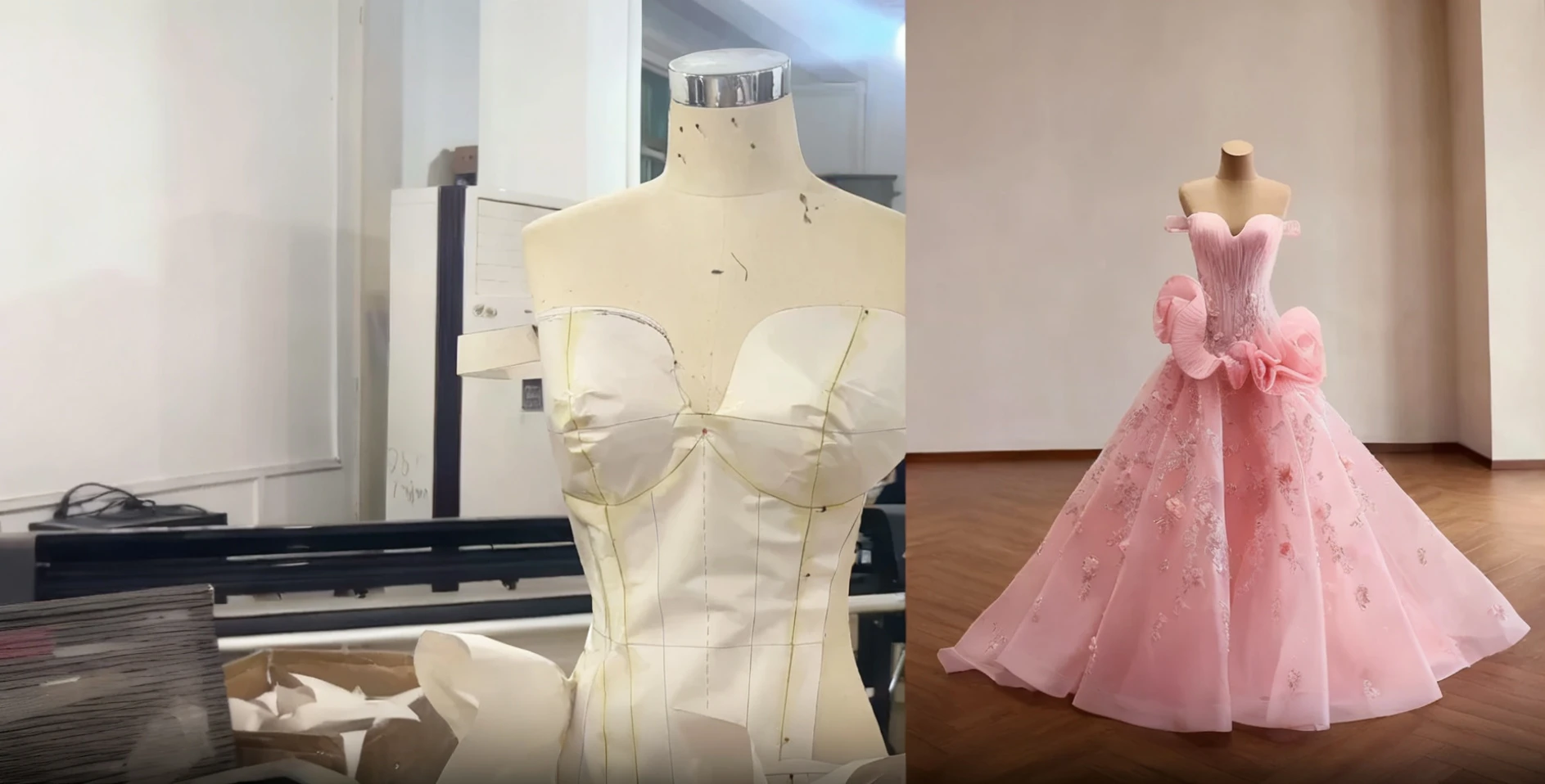
Once the virtual fit passes inspection, the physical prototype takes shape. Crisp muslin is used to develop the bodice, sweetheart neckline, and short off-the-shoulder sleeve detail. Seam lines are marked directly onto the toile so the bust contour and waist-cinching silhouette can be refined before the final fashion fabric is touched.
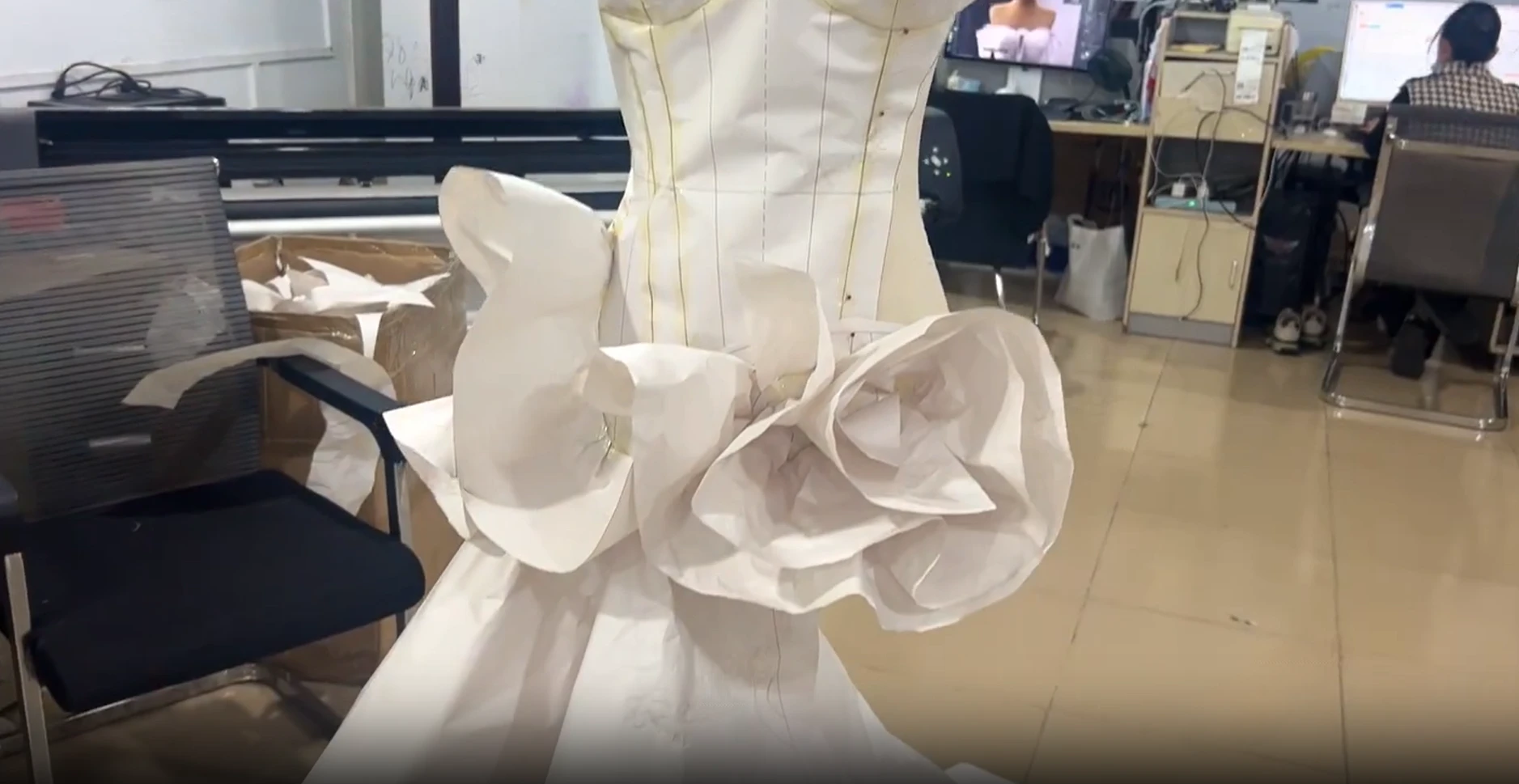
The oversized waist bow receives its own paper mock-up as well. Paper layers are folded and arranged to test the bow's volume, proportions, and position at the natural waist. This small planning stage prevents a dramatic design feature from overwhelming the wearer.
Preparing the Fabric: Working With Delicate Tulle
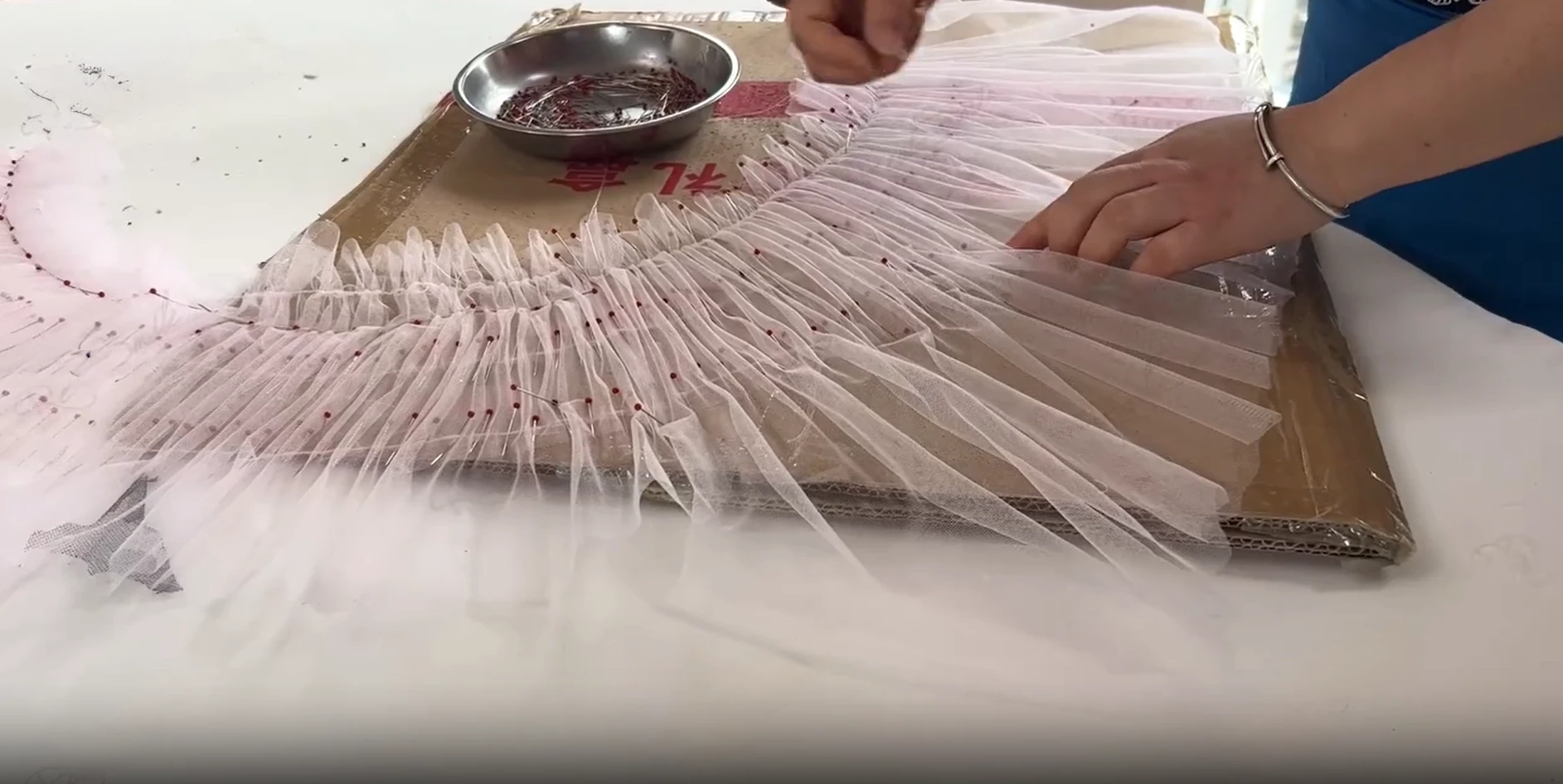
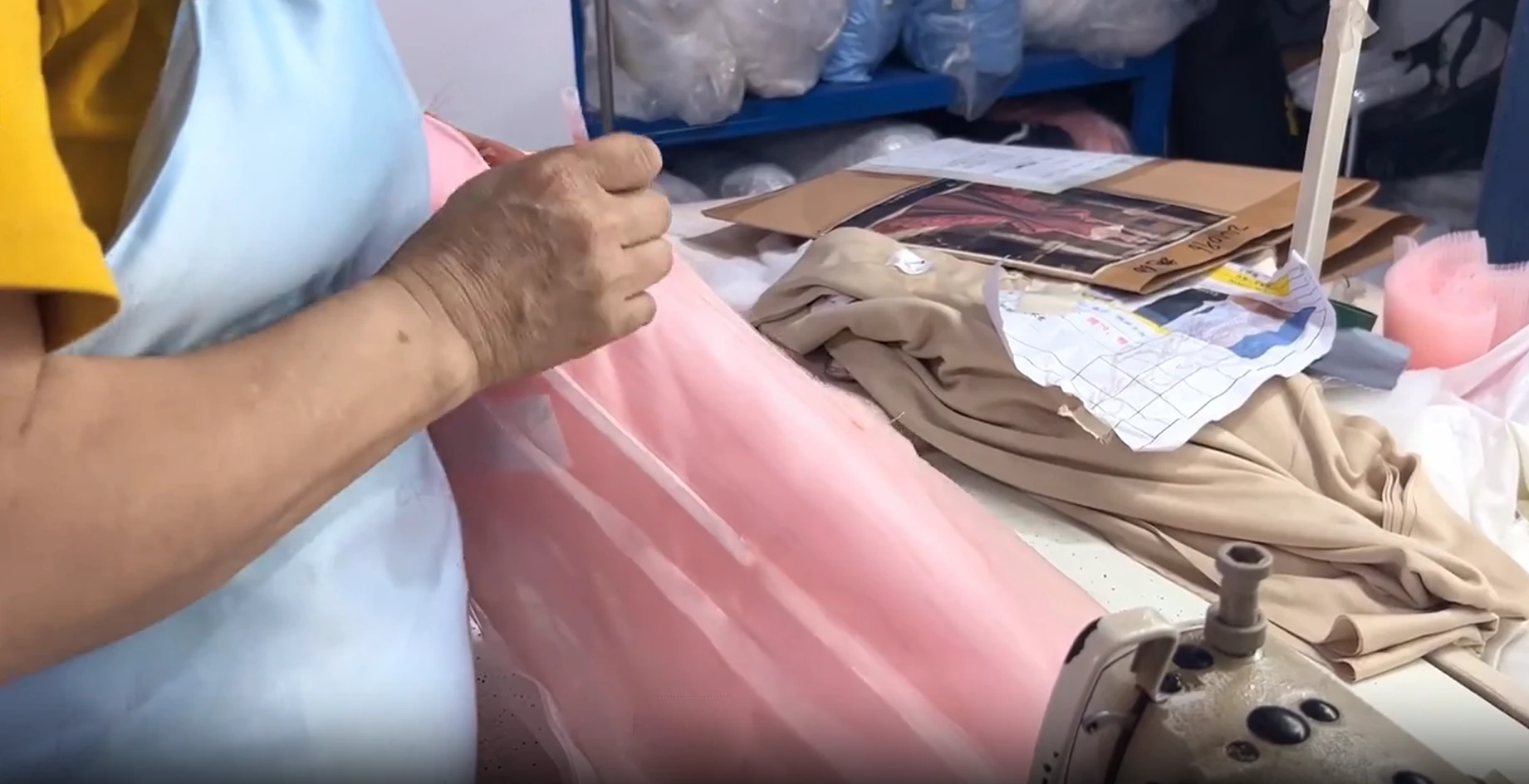
Fabric preparation is where an abstract design begins becoming something tangible. Multiple layers of soft pink base fabric and airy tulle are prepared before cutting. Every layer needs to be handled carefully because small inconsistencies can affect the drape of a voluminous skirt.
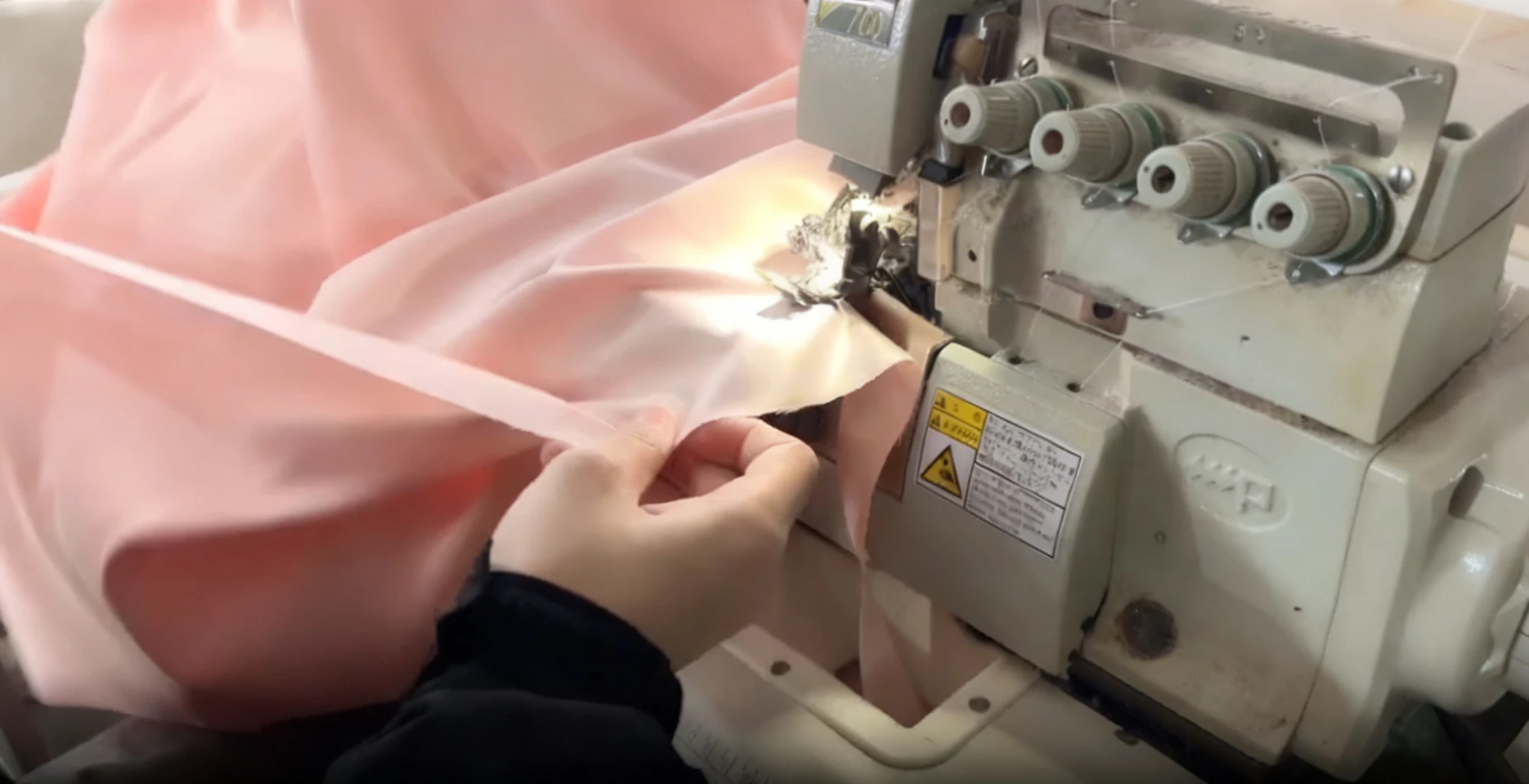
Raw edges also need protection. Overlock stitching can help prevent fraying across numerous cut-out tulle layers. For particularly delicate lining-tulle combinations, a regular zigzag stitch may sometimes provide a softer alternative. Construction methods are selected according to the behavior of each fabric rather than following one method blindly.
The next stage is cutting the large circular skirt panel. A full-circle tulle skirt creates the dramatic floor-skimming volume associated with a grand ball gown. The center waist opening must be cut precisely because it will eventually meet the structured bodice.
Practical details matter at this point too. Pocket placement, walking ease, skirt weight, and movement all influence the final construction. A prom dress should look spectacular, but it also needs to move naturally when the wearer walks, sits, dances, and celebrates.
Hand-Crafting the Embellishments: The Hallmark of Couture
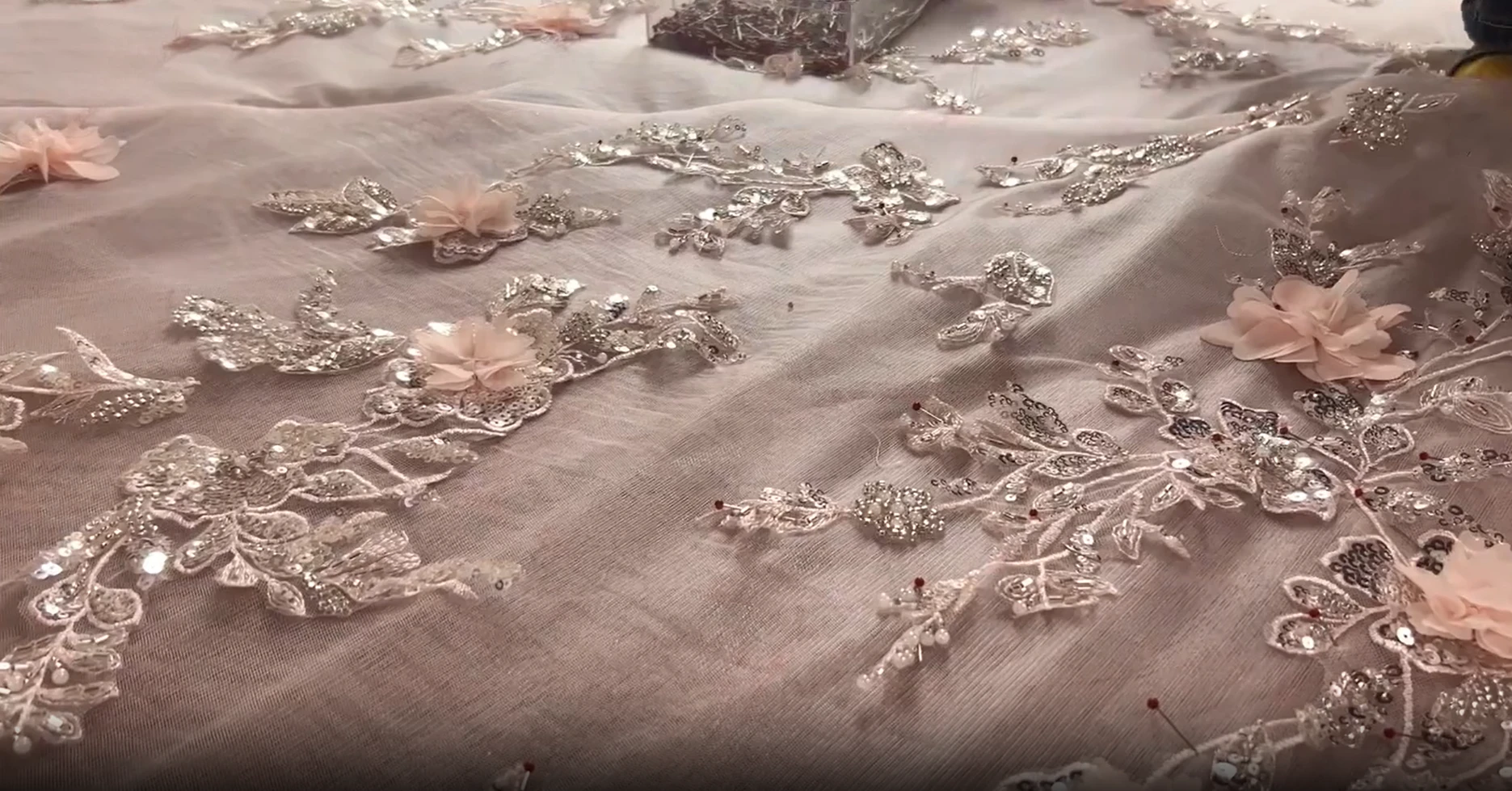
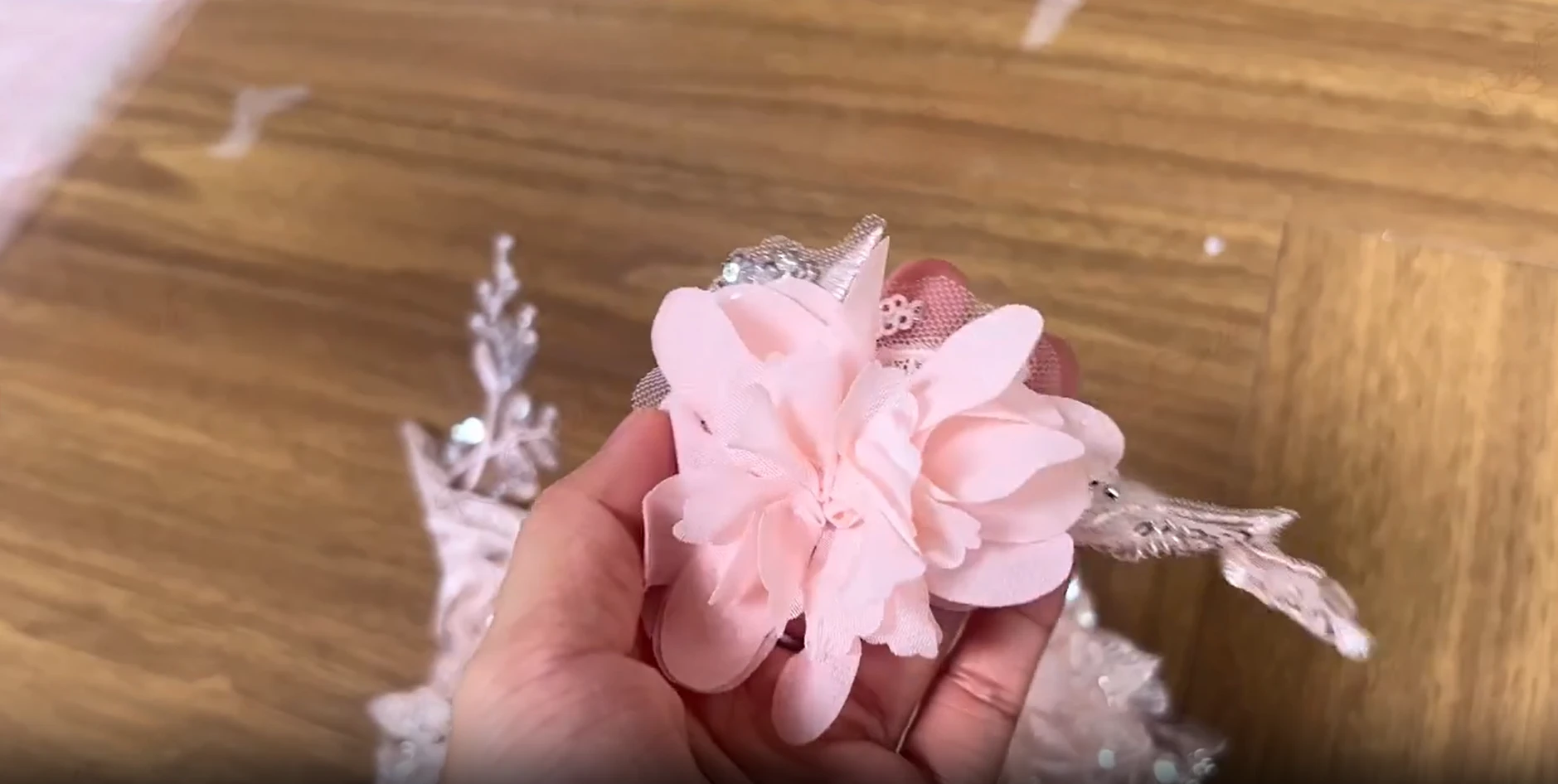
Now the most artistic stage begins. Sequined lace appliqués and three-dimensional fabric flowers are prepared individually. Lace motifs are trimmed by hand, while silver sequins, delicate beadwork, and tiny pink fabric blossoms add layers of texture.
Each flower is assembled from individual petals. Layers are built gradually until the floral piece gains its intended dimension. Because every flower is constructed by hand, subtle differences naturally appear. Those differences are part of the character of handmade couture work.
In haute couture prom dresses, handwork can become one of the defining characteristics of the design. Embellishments are not simply added for sparkle. They are positioned to guide the eye, emphasize the silhouette, and create visual movement across the garment.
The floral components are designed to feel organic rather than mechanically repeated. Petals, beads, sequins, and lace work together to create a layered surface that changes as light moves across the gown.
Layout and Pinning: Composing the Floral Story
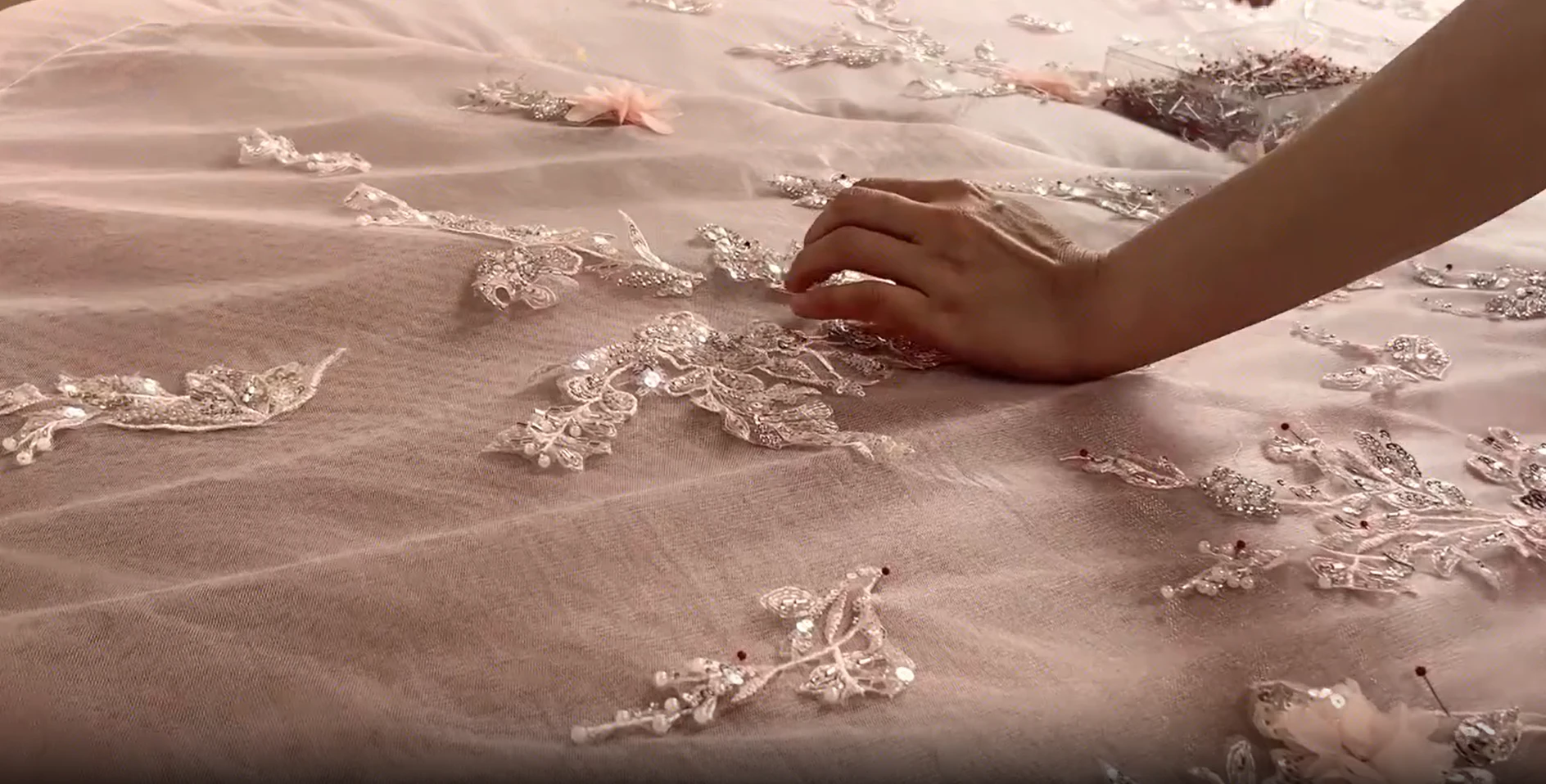
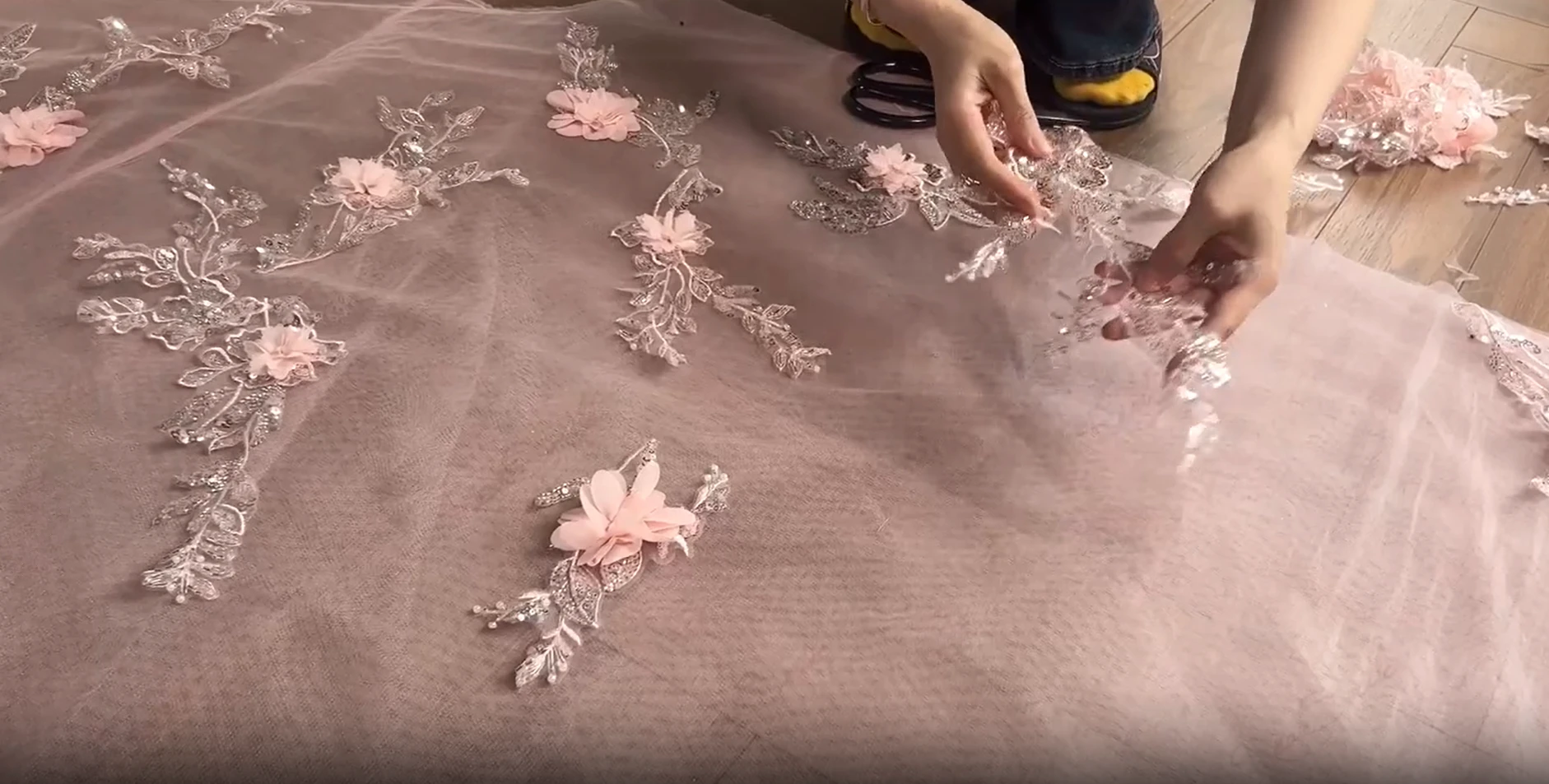
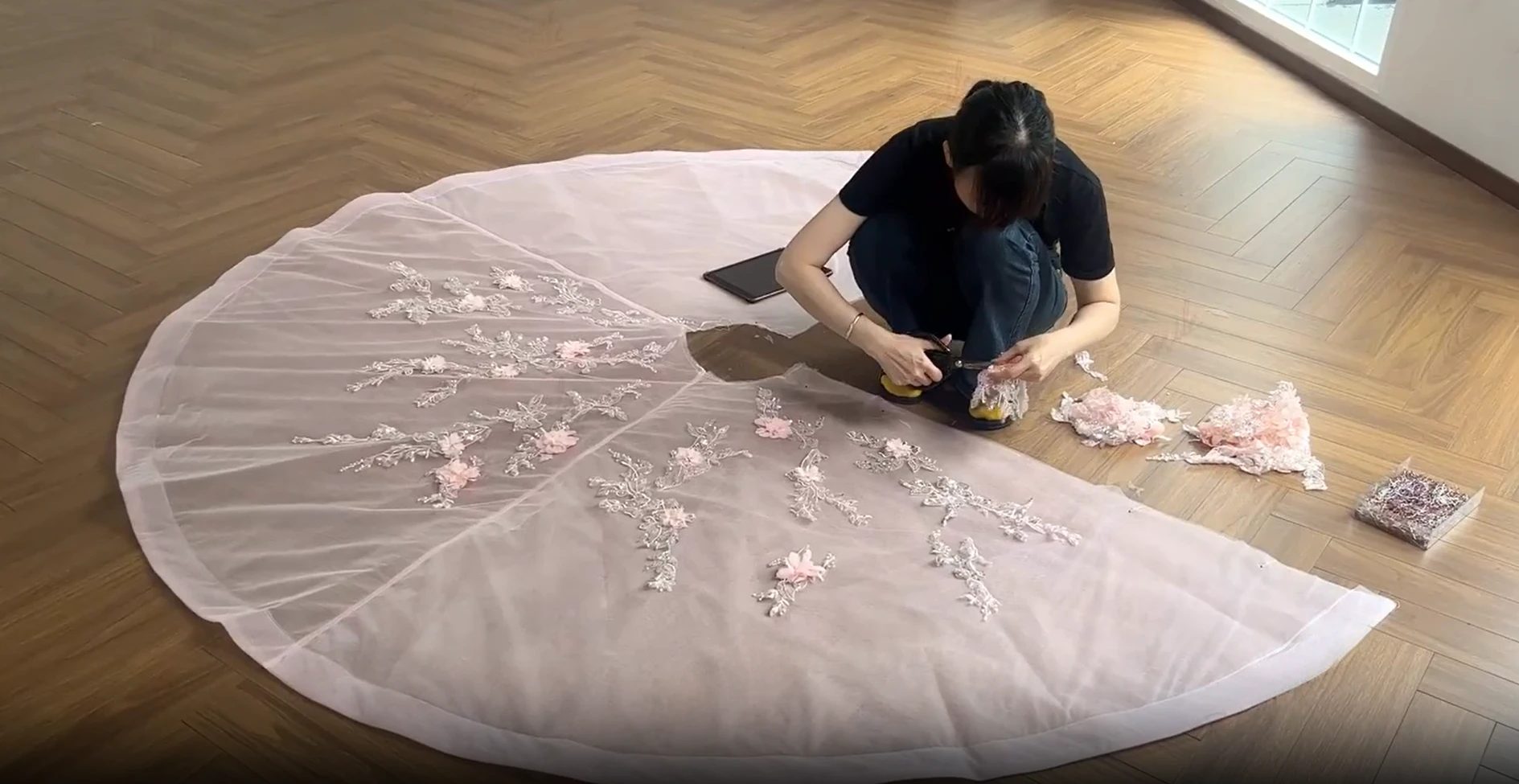
One of the most time-consuming parts of the process is deciding exactly where every embellishment belongs. The enormous circular skirt is spread flat across the workshop floor, creating a large canvas for the floral composition.
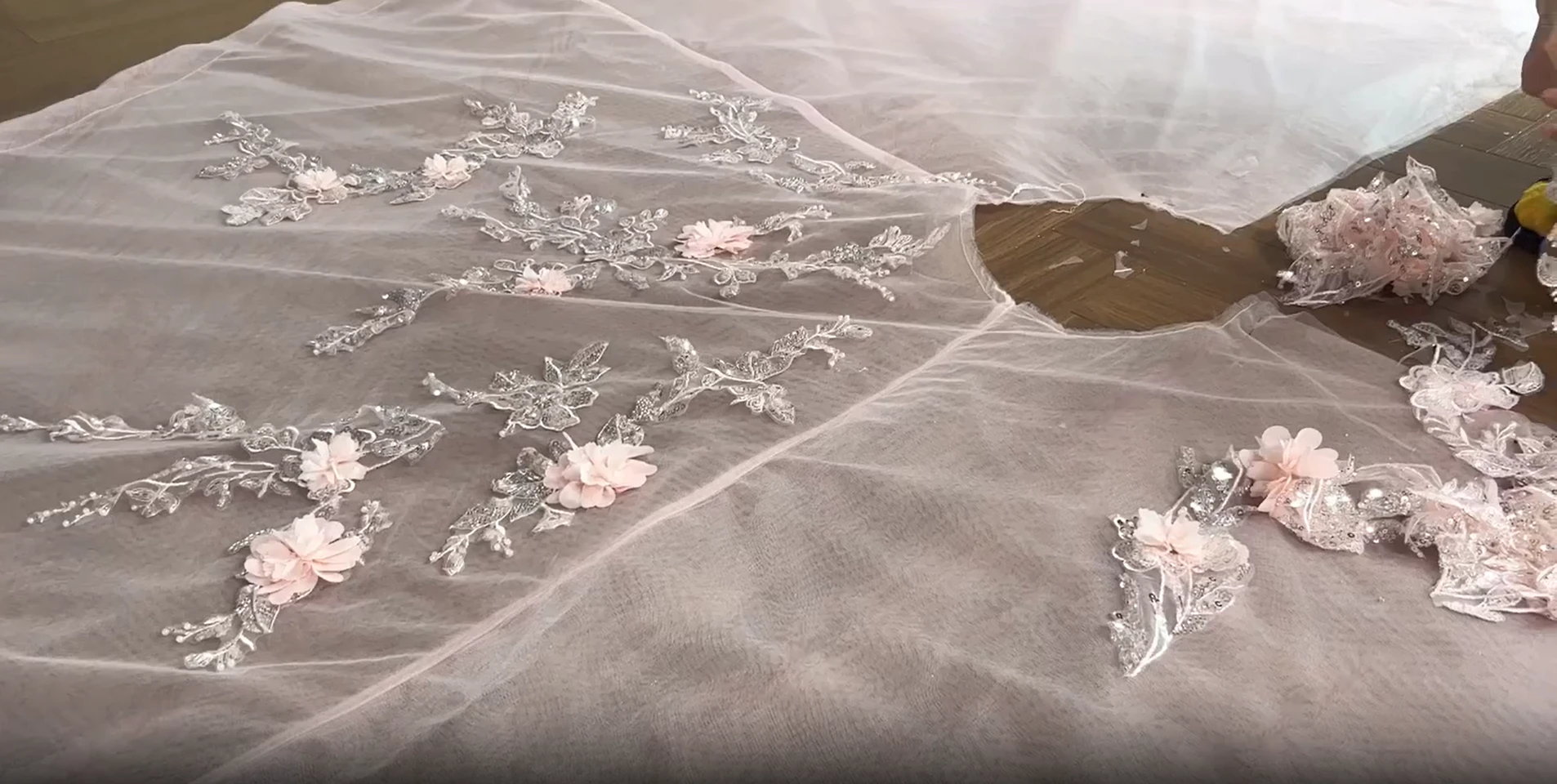
Every sequin lace sprig and fabric flower is moved, evaluated, and repositioned until the distribution feels natural. Dressmaker's pins temporarily hold the pieces in place. Only after the overall arrangement is approved are the appliqués permanently sewn to the tulle.
This is one reason handmade embellishment cannot be reduced to simply attaching decorative pieces. Placement determines visual rhythm. Too many flowers in one area can make the skirt feel heavy, while too few can leave the design disconnected. The goal is balance.
Constructing the Bodice: Structure Behind the Silhouette
While the skirt receives its embellishment, the structured bodice is developed separately. Fine vertical pleats add soft texture across the sweetheart bodice while reinforcing the visual direction of the design.
Boning channels are then incorporated into the internal construction. The goal is a secure corset-inspired shape that supports the gown without making the wearer feel restricted. Built-in cups, carefully positioned seams, and stable internal structure all contribute to a confident fit.
A well-constructed bodice becomes especially important when a gown includes a heavy embellished skirt. The upper structure must support the weight below while maintaining the intended waistline and neckline.
The short off-the-shoulder sleeves are attached after the main bodice structure has been established. Their position must complement the neckline without interfering with movement or the secure fit of the bodice.
The Oversized Waist Bow: A Sculptural Statement
The dramatic waist bow is treated almost like a separate piece of sculpture. Multiple layers of stiffened pink organza are folded, pressed, and shaped into large crisp petals.
Organza provides the necessary body to hold the dramatic shape, but pressing and folding are equally important. Without careful shaping, the bow would lose its volume and become visually flat.
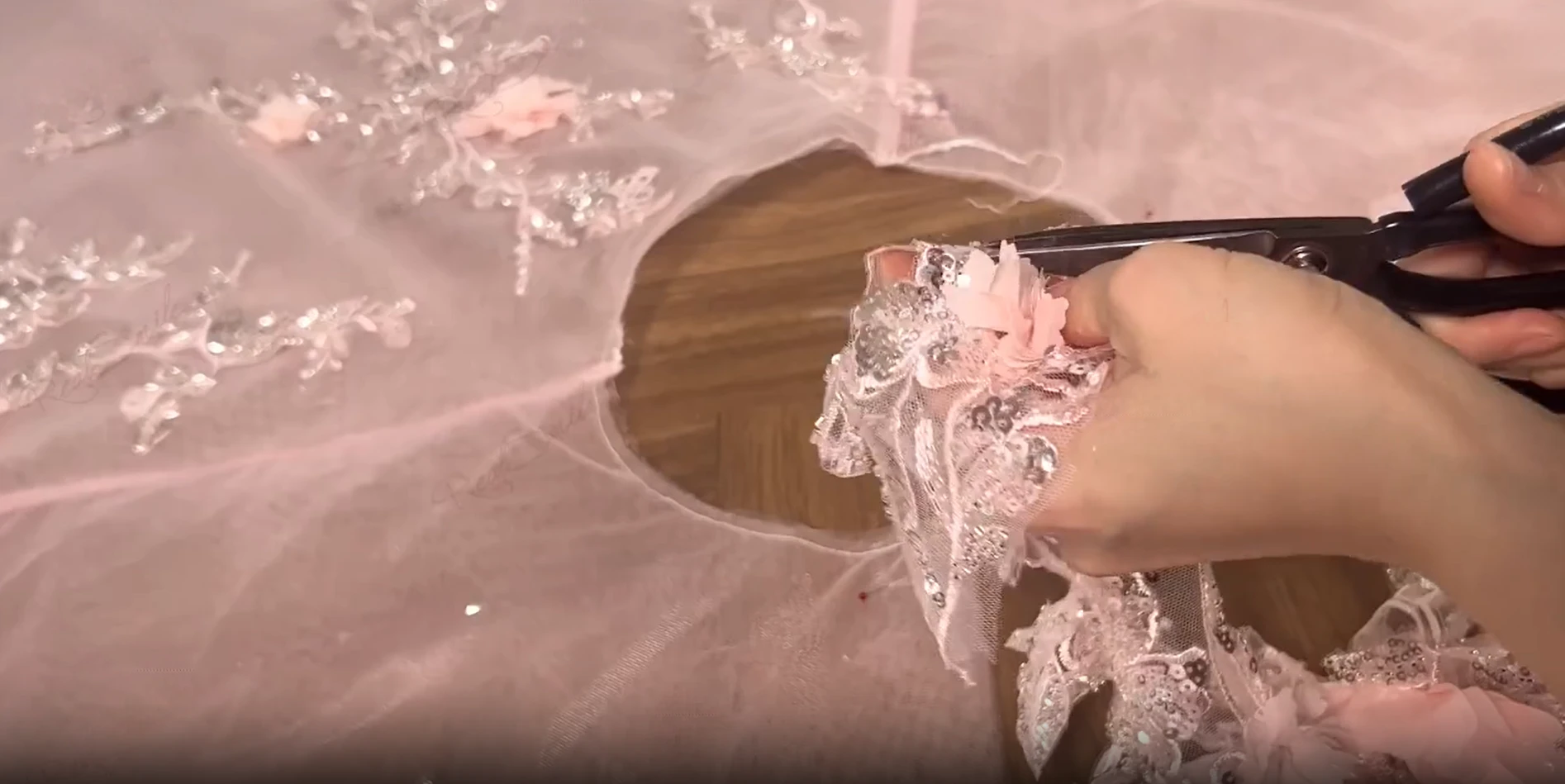
Once shaped, the oversized bow is positioned high at the natural waist. Its proportions are checked against the bodice and full skirt so the statement detail remains dramatic without overpowering the wearer.
Assembly and Fitting: Bringing the Couture Gown Together
After the individual components are prepared, the gown finally enters its assembly stage. This is where the previously separate bodice, embellished skirt, sleeves, and oversized bow become one complete garment.
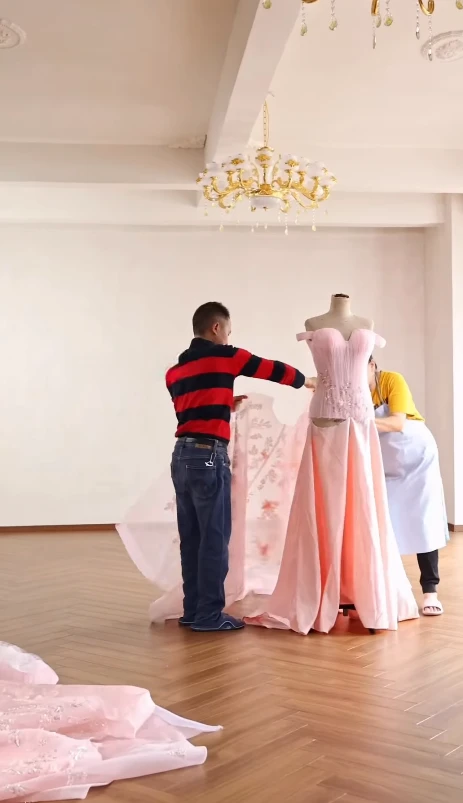
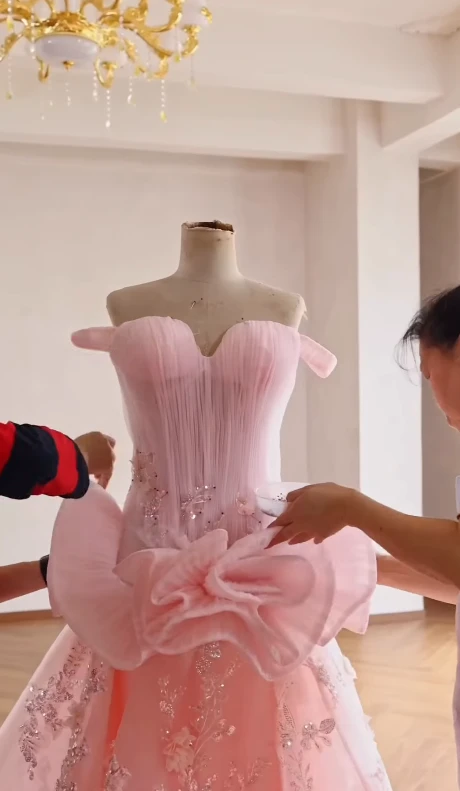
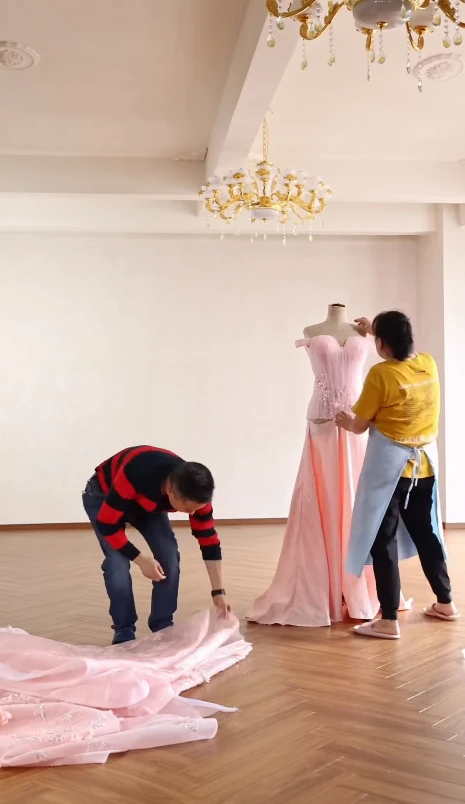
The completed boned bodice is mounted on the dress form first. The large decorated tulle skirt is then brought over and aligned with the bodice waist seam. The team checks the waist opening, skirt volume, drape, and overall length before permanent stitching begins.
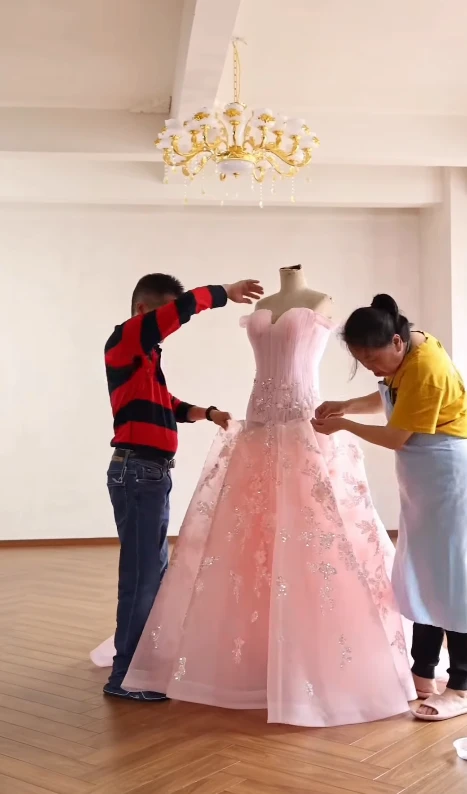
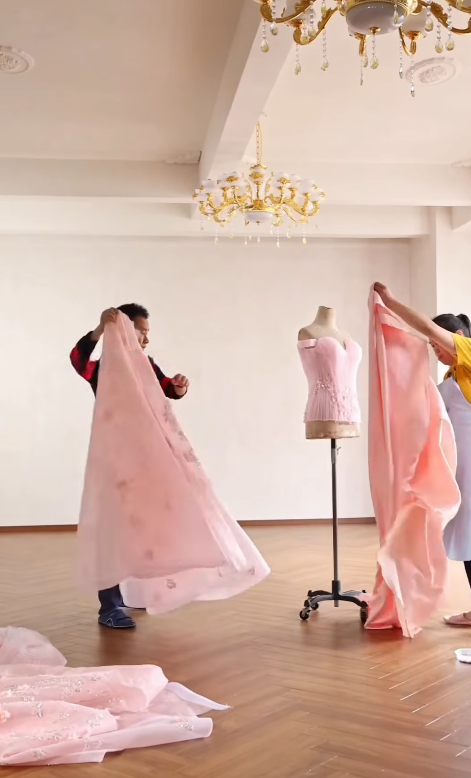
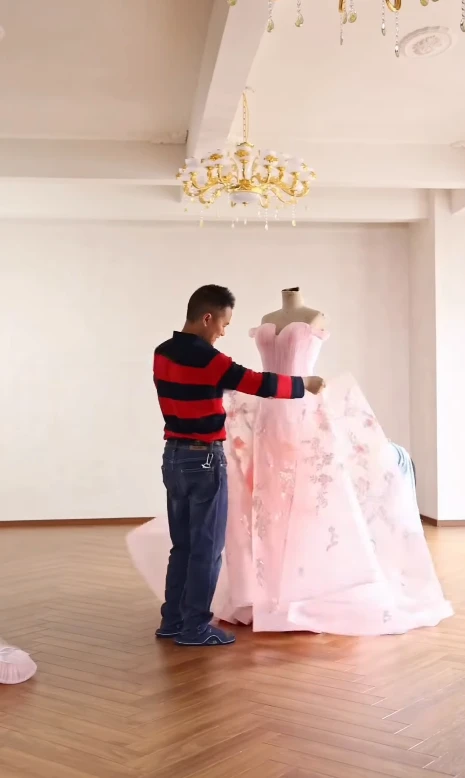
Several fitting rounds follow. The team steps back and examines the gown from different angles, then re-pins selected sections, adjusts flower placement, modifies bow folds, and observes how the sequined lace catches the light.
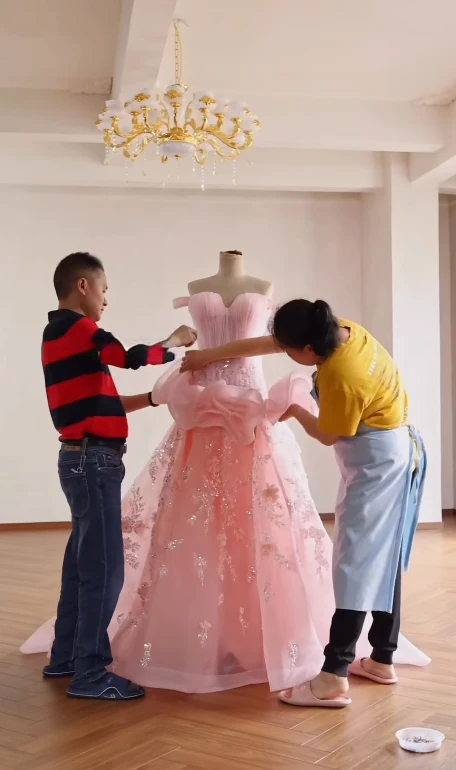
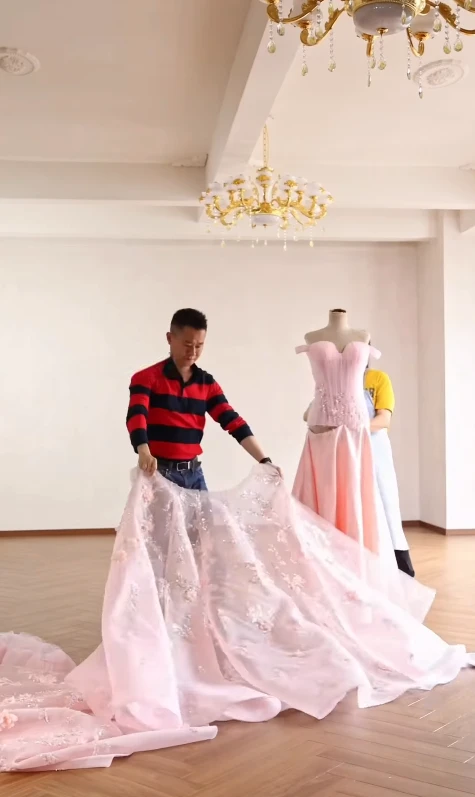
When the pin fitting is approved, the gown is removed from the form and the bodice and skirt are permanently sewn together along the waist seam. At this point, the design has finally become a single complete garment.
Finishing: The Small Details That Define Luxury
The final production days focus on details that may be almost invisible from a distance but matter enormously up close. Loose threads are trimmed, the multi-layer skirt is hemmed, and every bead, sequin, lace motif, and three-dimensional flower is checked.
Raw edges receive their final treatment. Interior construction is inspected just as carefully as the outside of the gown. Depending on the design, luxury finishing can include carefully covered closures, hand-picked zippers, and concealed seam finishes.
These details are easy to overlook when viewing a gown on a photograph. Yet they influence how the dress feels in the hands, how it moves, and how confidently it can be worn.
The same philosophy extends across other categories of luxury formalwear. For brides searching for similarly meticulous craftsmanship, our super luxury wedding dresses collection reflects the importance of structure, embellishment, and refined finishing.
The Final Gown: When Every Stitch Comes Together
At last, the completed pink floral prom gown stands fully assembled on the dress form. Soft pink tulle flows into a grand full-circle skirt covered with shimmering silver lace and delicate handmade blossoms.
The pleated structured off-the-shoulder bodice creates a fitted upper silhouette, while the oversized ruffled waist bow introduces a bold romantic focal point. Every major design element has a purpose: the tulle creates movement, the lace adds sparkle, the flowers add dimension, and the structured bodice provides support.
For shoppers exploring long prom dresses, a gown like this demonstrates why silhouette and construction matter as much as surface decoration. A long skirt is not simply a larger piece of fabric. Its weight, volume, seam placement, and movement must all be considered during construction.
The craftsmanship behind a couture gown is measured in many small moments. It is found in the careful placement of one appliqué, the shaping of one flower petal, the adjustment of one seam, and the final trimming of one loose thread.
That philosophy is especially relevant when considering the evolving world of prom dresses 2026. Trends may change from season to season, but thoughtful construction, flattering proportions, and memorable craftsmanship remain timeless.
Why Handmade Craftsmanship Still Matters
Mass-produced formalwear can offer speed and consistency, but couture craftsmanship approaches the garment differently. Individual components are developed, examined, repositioned, and refined throughout the process.
For a highly embellished gown, that attention becomes particularly important. Three-dimensional flowers need to sit naturally. Sequined lace needs to follow the silhouette. Tulle needs to retain its lightness while supporting dramatic volume. The bow needs enough structure to maintain its shape. The bodice needs enough internal support to keep everything balanced.
None of these requirements can be solved by decoration alone. They depend on pattern development, fitting, fabric knowledge, handwork, construction, and finishing working together.
A Couture Dress Is More Than a Finished Look
From the first prototype to the final stitch, a couture prom gown is built through a sequence of careful decisions. The finished pink floral gown may appear effortless when worn, but its beauty comes from the craftsmanship hidden behind every layer.
Every couture prom dress has a story. This one is written in stitches.
Frequently Asked Questions About Couture Prom Dress Craftsmanship
What makes a prom dress couture?
A couture prom dress typically emphasizes precise fitting, detailed construction, carefully selected fabrics, hand-applied embellishments, and extensive finishing. The craftsmanship focuses on both the visible design and the internal structure of the gown.
How are three dimensional flowers made for a prom gown?
Three dimensional fabric flowers can be created by cutting individual petals, shaping them, layering them, and securing the finished floral component by hand. Small differences between flowers can give a handmade gown a distinctive character.
Why is the bodice structure important in a ball gown?
A structured bodice helps support the upper body of the gown and creates a stable foundation for a large skirt. Boning, internal support, cups, and carefully positioned seams can contribute to both fit and confidence.
Why does a couture gown require multiple fitting stages?
Multiple fittings allow dressmakers to evaluate proportions, movement, skirt volume, embellishment placement, neckline position, and overall balance before permanent construction is completed.
What fabrics are commonly used for a voluminous prom skirt?
Tulle is particularly useful for creating lightweight volume and layered movement. Different weights and finishes can be combined depending on the desired silhouette, structure, and drape.
How are lace appliqués attached to a couture prom dress?
Lace appliqués can be individually trimmed, positioned, pinned, and then sewn onto the base fabric. Hand placement allows the maker to control the visual flow and distribution of the embellishment.
What is the purpose of an oversized waist bow?
An oversized waist bow acts as a strong visual focal point while emphasizing the natural waist. Its shape depends on fabric selection, layering, pressing, folding, and careful positioning.
Is a long prom dress practical for dancing?
It can be. During construction, dressmakers can consider skirt weight, walking ease, hem placement, and movement so that a dramatic long silhouette remains wearable throughout a formal event.
Stories Written in Stitches
Continue exploring the handwork, embellishment and construction behind custom prom gowns.
A closer look at placement, balance and finishing.
Discover the construction behind a dramatic detachable train.
See how an ambitious custom prom design develops over time.
Explore another example of detailed prom dress craftsmanship.