
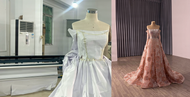
How We Make a Champagne Pink Prom Dress with a Detachable Train
25th Aug 2026
How We Make a Champagne Pink A Line Prom Dress with a Detachable Train
A closer look inside the atelier, from hand placed sequins and dimensional flowers to the final fitting of a dramatic detachable train.
If you have ever held a handmade gown in your hands and wondered how it got to be that way, how every sequin found its place and how every petal learned to curl, this is the story of one of our most requested pieces. This is the champagne A line flower prom dress with a detachable train, and it is the closest thing we make to a love letter written in fabric and thread.
I have been a dressmaker for more than two decades, and I still tell every client the same thing before she orders: this is not a dress that gets made in a week. It is not even made in a month. The entire garment is covered, literally from shoulder to hem, in individually placed sequins and hundreds of hand finished dimensional flowers.
Every single one of those details is made by a person. There is no shortcut, and there is no machine that can quite reproduce that hand finished look. That is what makes it a true haute couture prom dress with handcrafted details, even though it will never walk a Paris runway. It will walk into a gymnasium, a banquet hall or a spring garden, and it will turn heads in the room.
From Design Reference to Pattern
Long before the first flower is sewn onto the gown, the design has to make sense on paper, on the dress form and eventually on a moving body. We compare proportions, fabrics, colors and embellishment placement before the cutting begins.
For a gown with this much surface detail, every material has a job. The tulle needs enough body to support the embellishment. The chiffon needs enough movement to let the detachable train float. The sequins have to reflect light without making the flowers disappear.
That is why a couture gown is not simply a collection of beautiful materials. It is a series of decisions made in the right order.
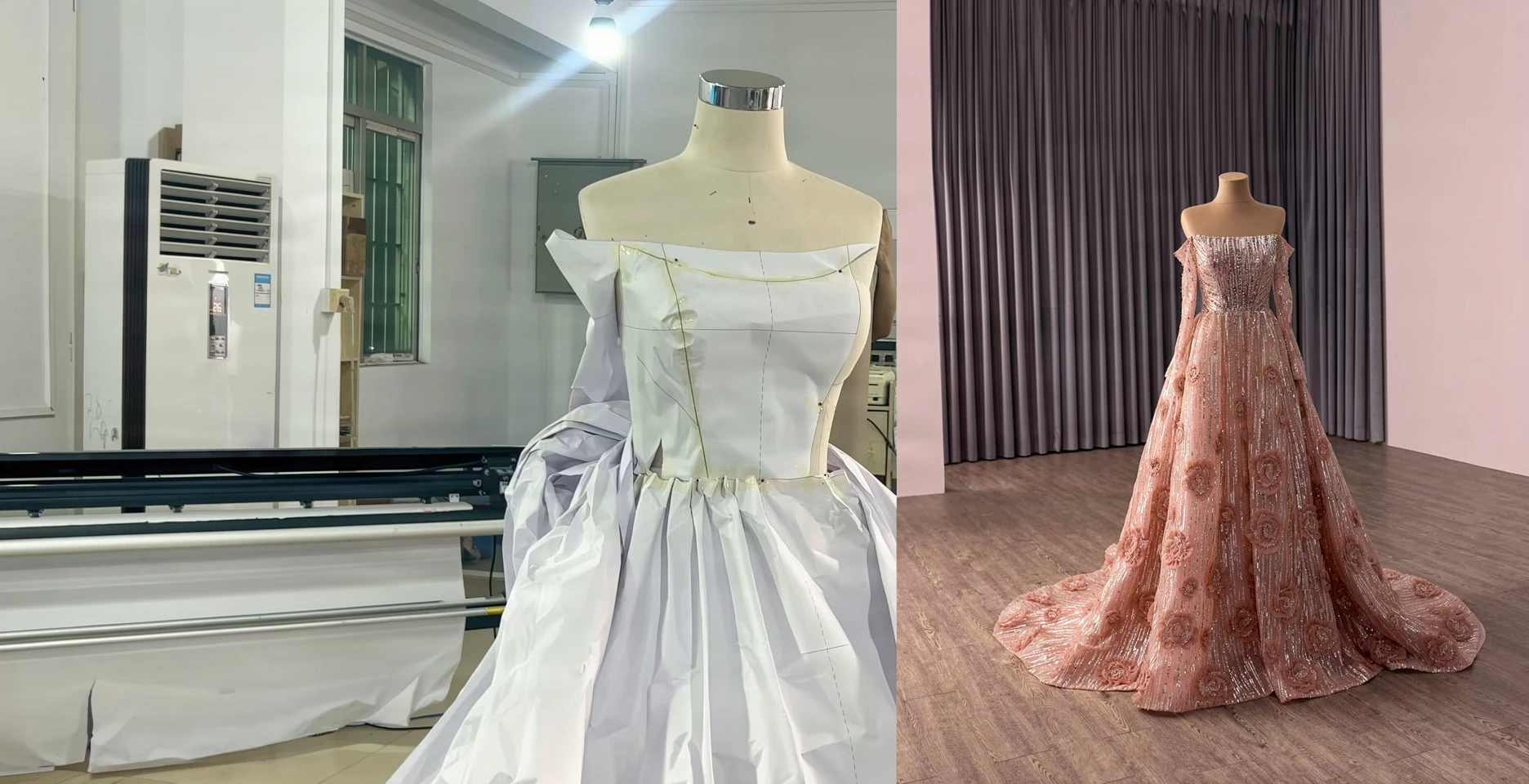
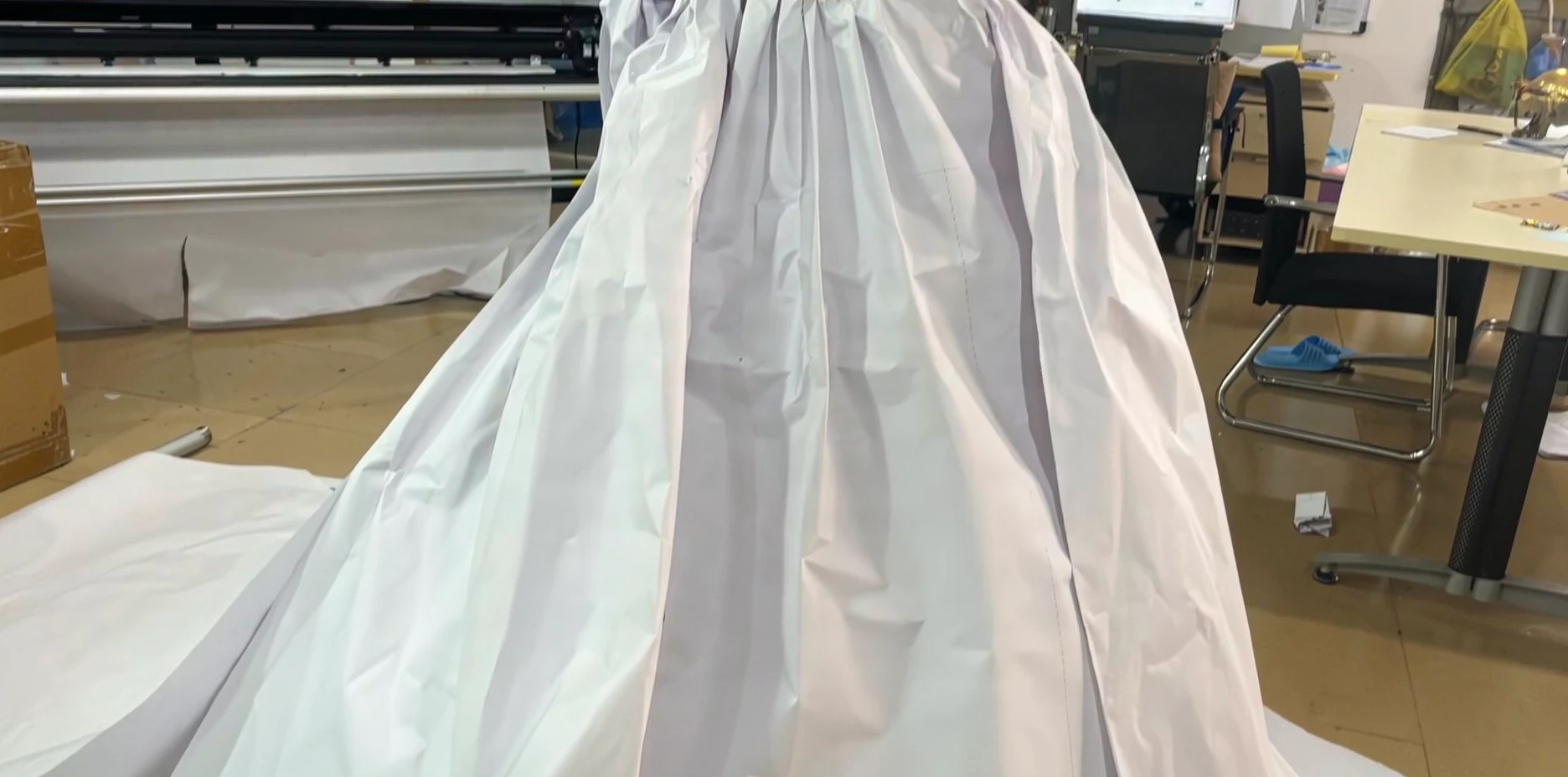
We begin the pattern work with a simple foundation. Muslin is shaped and tested before the final embellished fabric is touched. This lets us check the fall of the skirt, the waist placement and the proportions of the train without risking the finished materials.
A hand drafted motif is then transferred onto the pattern so the later embroidery and floral placement follow the shape of the gown rather than looking randomly scattered.
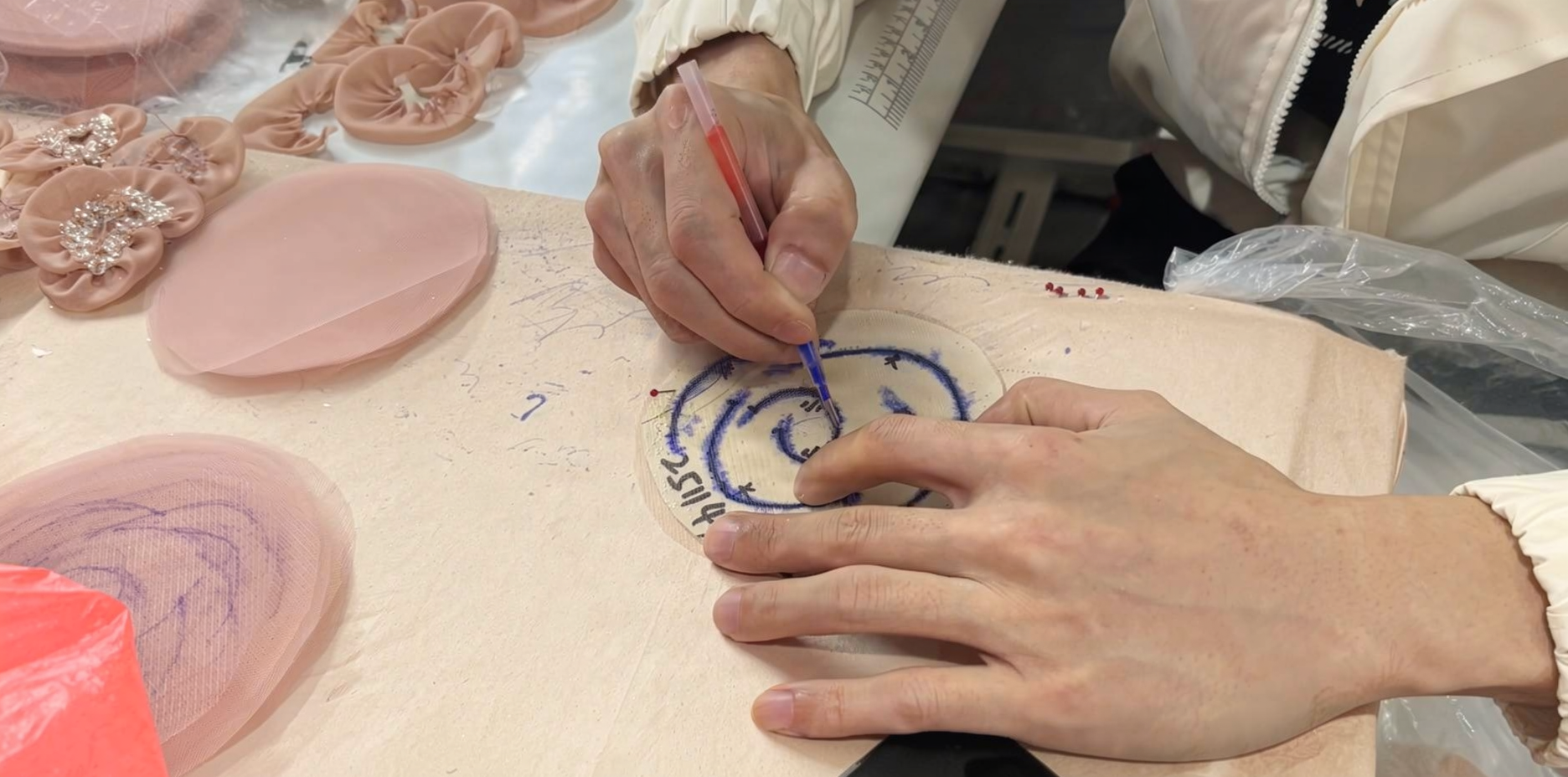
Preparing the Flowers
If the sequins are the heartbeat of this dress, the flowers are its soul. Hundreds of three dimensional flowers cover the gown. In the finished piece, the skirt alone carries anywhere from two to three hundred of them, and the exact number depends on the size of the dress.
Each flower begins as nothing more than a circle of fabric. We cut circular pieces in several sizes. A single bloom is usually built from three or four pieces, while the larger statement flowers use five or six, each one a different diameter.
These circles are gathered and shaped until the flat fabric becomes a soft dimensional flower. The machine starts the process, but the final shaping is done by hand, pinching and folding each piece until the petals have the depth we want.
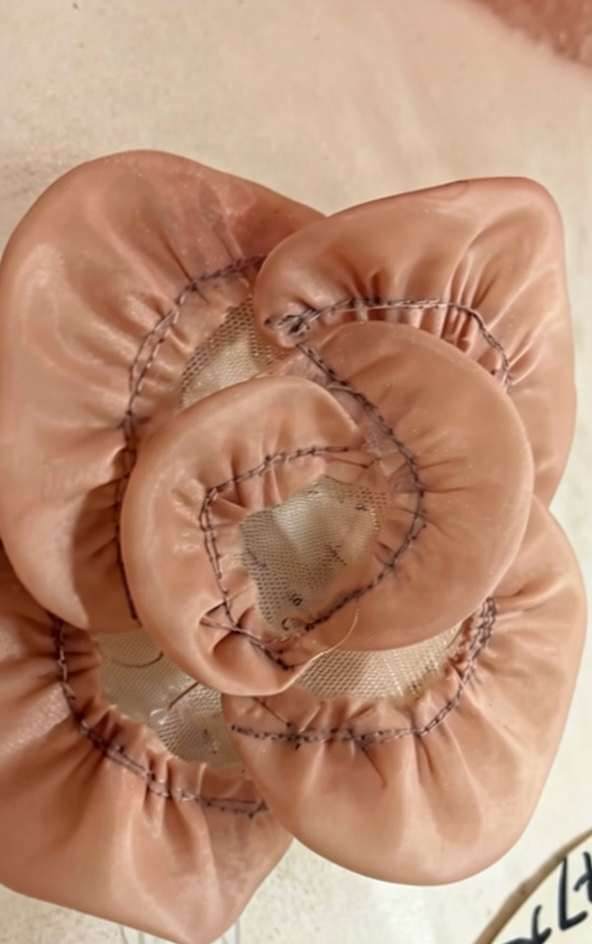
Once a flower has taken its shape, it is not finished. Every bloom gets a hand beaded center, a small cluster of beads sewn into the heart of the flower so that the center catches light from a different angle than the petals.
On a dress with two hundred and fifty flowers, that means two hundred and fifty tiny beaded centers, each one sewn by hand. It is the kind of detail that a photograph cannot fully capture, but that becomes obvious when the gown moves under real light.
The Sequin Work
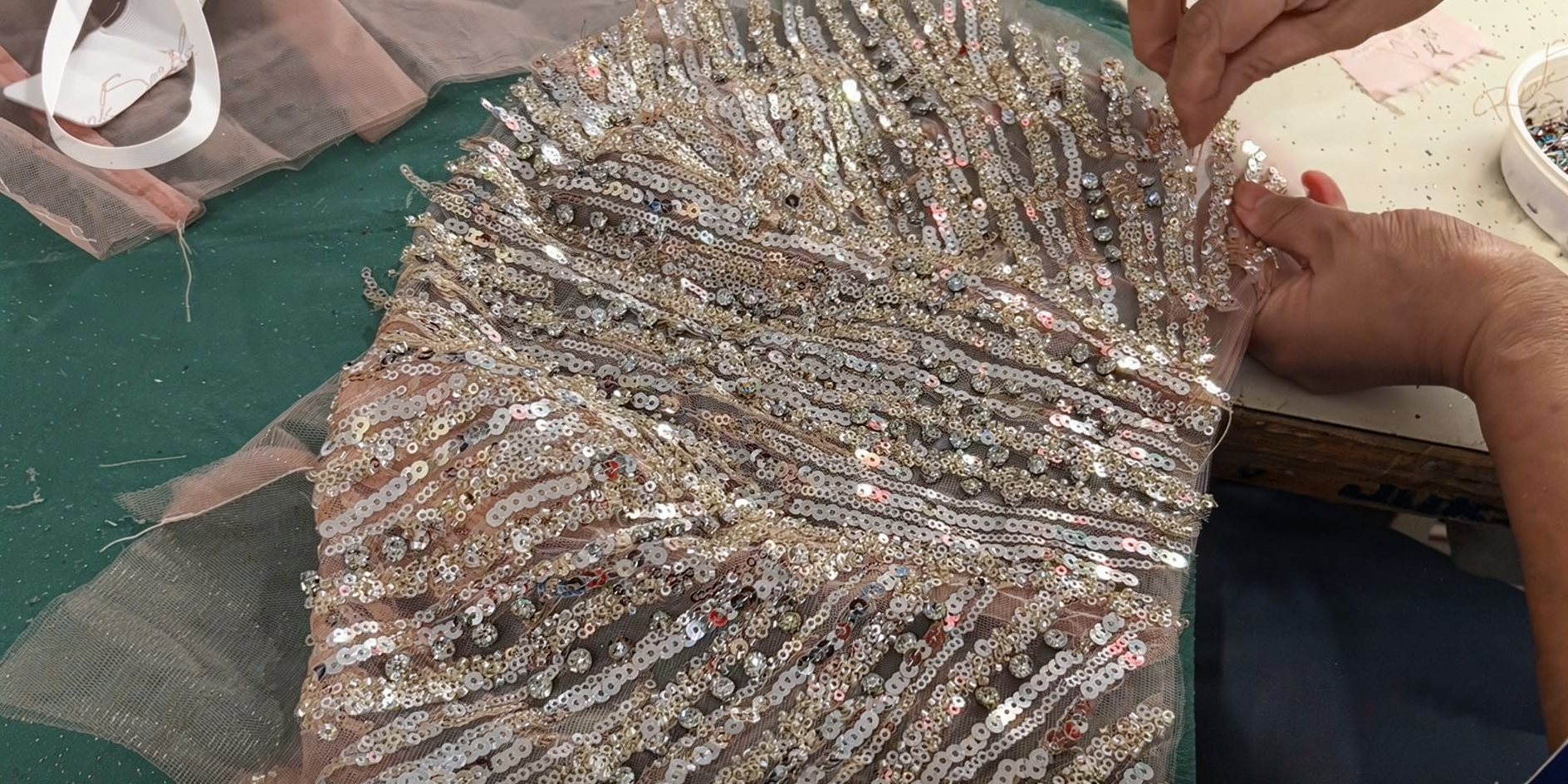
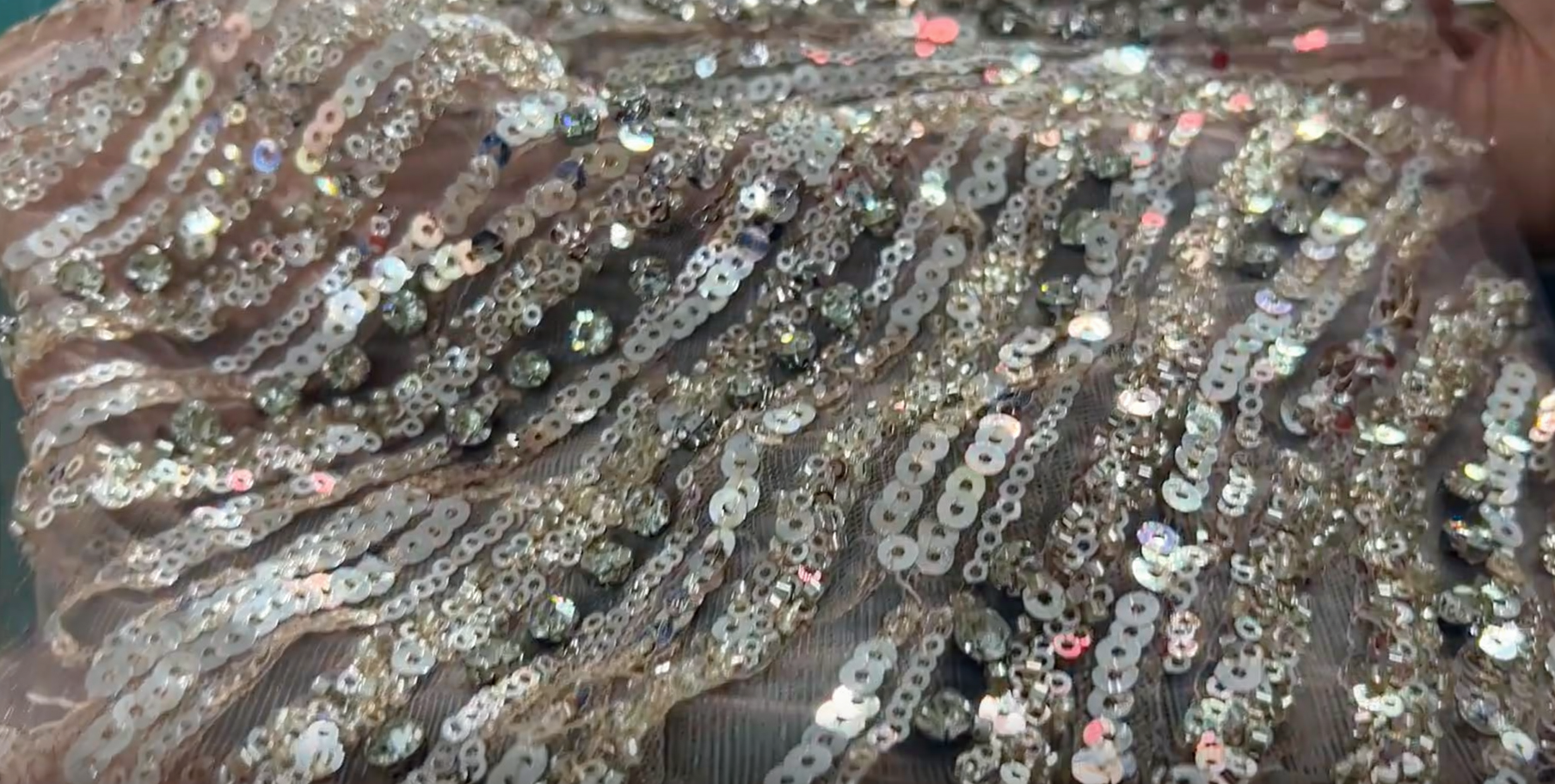
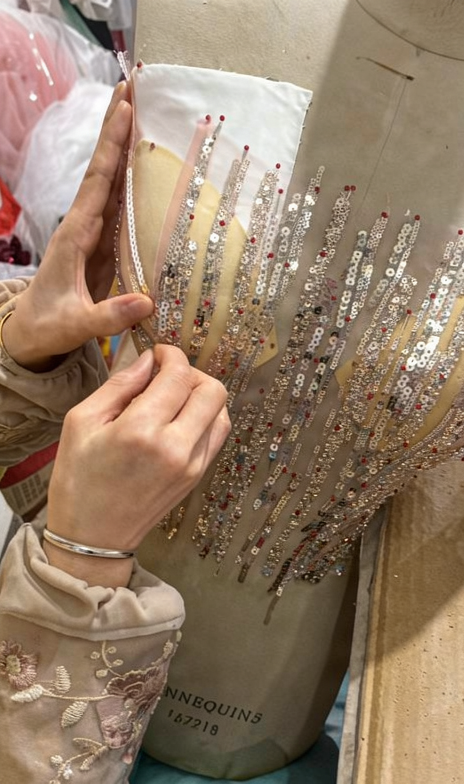
Let us begin with the sparkle, because that is what people notice first. Every sequin on this gown is cut individually and then applied by hand to the surface of a fine tulle.
We do not buy pre sequined fabric in bulk because pre embroidered panels cannot follow the curve of a body in quite the same way that individually applied sequins can. When you place the sequins yourself, you control exactly where each one lands.
A single skirt panel might carry several thousand of these small, shining discs. Our artisans work with trays of sequins beside them, checking the material in natural daylight because artificial light can change the way color and shine appear.
It is slow work, almost meditative, and it is one reason the best hand embellished sequin prom dresses require so much time in the atelier.
Building the Bodice and Sleeves
The bodice is where our structure work lives. This is a long sleeve style, and the sleeves alone require patient handling. The sequin fabric has to be eased around the arm without puckering, which takes a steady hand and a lot of experience.
It is the kind of fine work that keeps us busy with clients who specifically look for elegant long sleeve prom dresses for formal occasions, because a well made sleeve is harder to achieve than most people imagine.
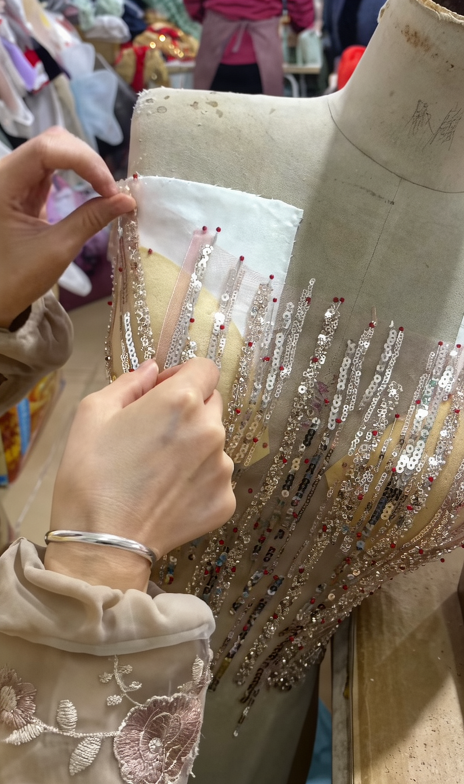
Each layer is laid over the dress form, and every sequin panel is pinned into position before a single stitch is sewn. The pins are our map. They tell us where the design will fall, how it will move and where it needs to breathe.
Only when the fitter is completely satisfied do we secure the layers with careful stitching, row by row. Dense trim strips of beaded sequins are then sewn along the seams to frame the silhouette and guide the eye from the shoulder down to the waist.
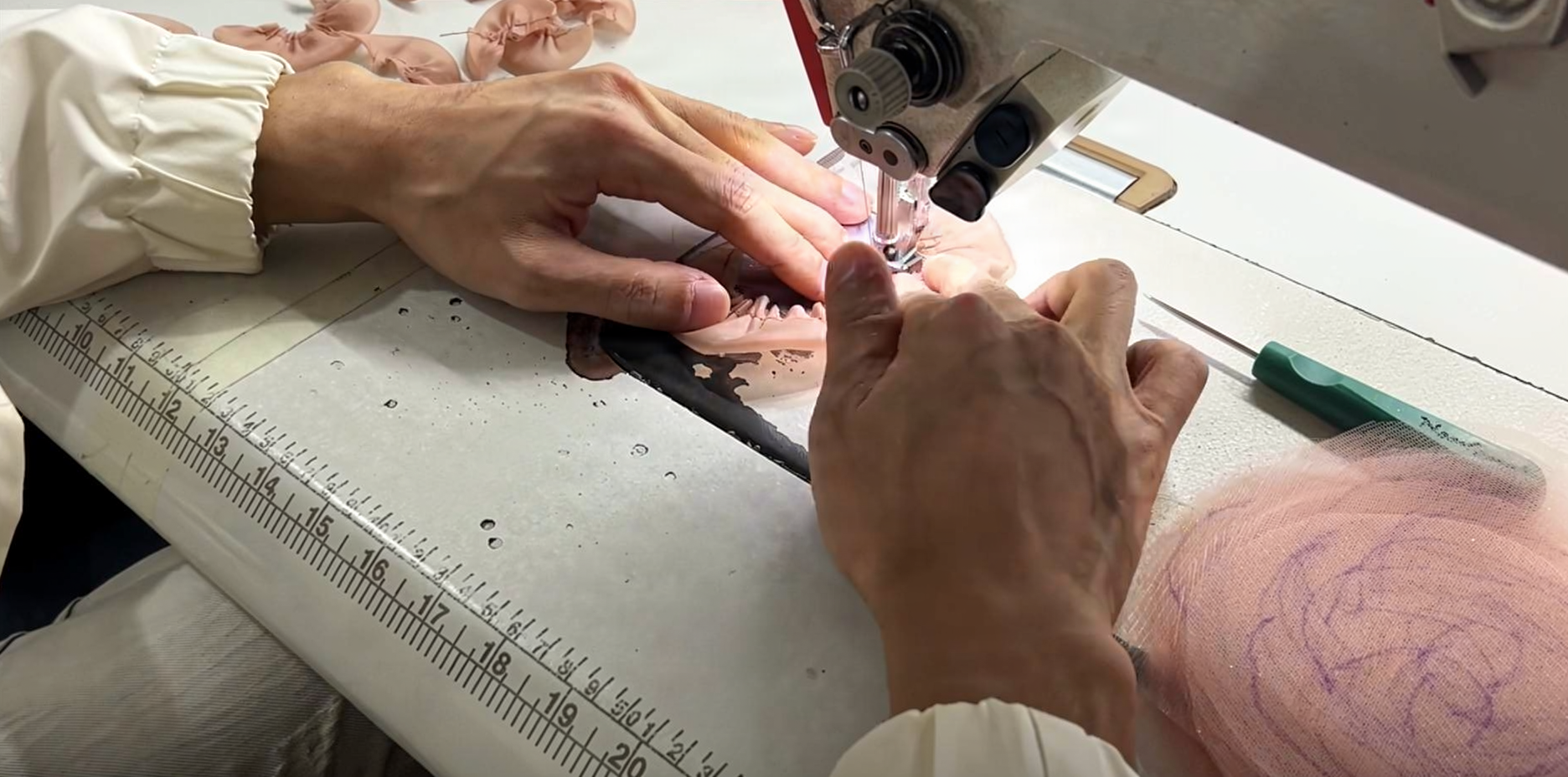
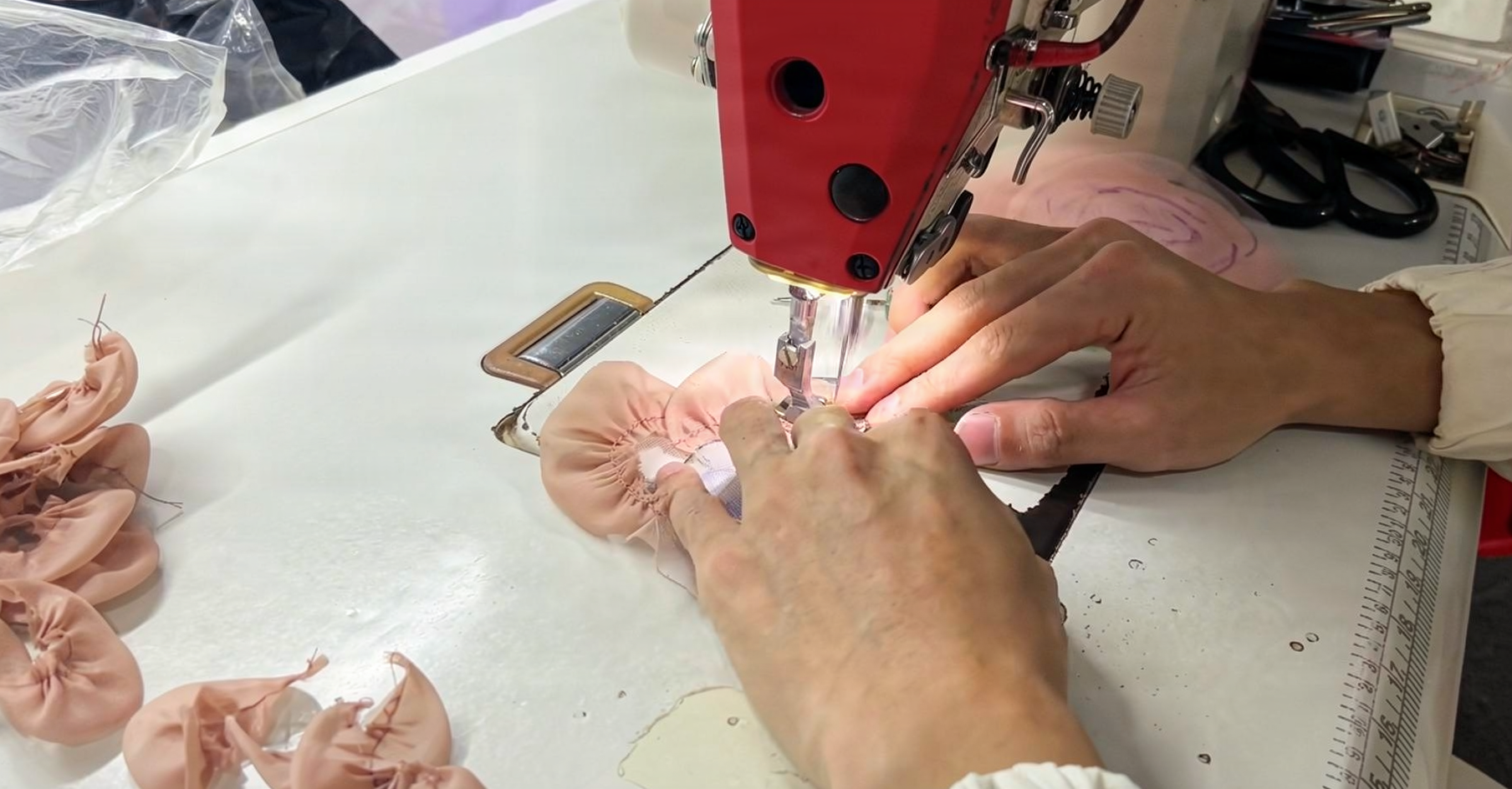
This is where the hand work and machine work have to meet. The machine gives the garment strength and consistency, while the fitter makes sure the embellished layers still sit correctly on the body.
The goal is not simply to make a beautiful surface. The finished bodice has to move, breathe and remain comfortable when the wearer is walking, sitting and dancing.
Arranging the Dimensional Skirt
The skirt of this gown is an A line, which means it falls from the waist in a gentle, unbroken line. It is flattering through the hip and easy to move in, which is why the silhouette remains such a favorite among our clients.
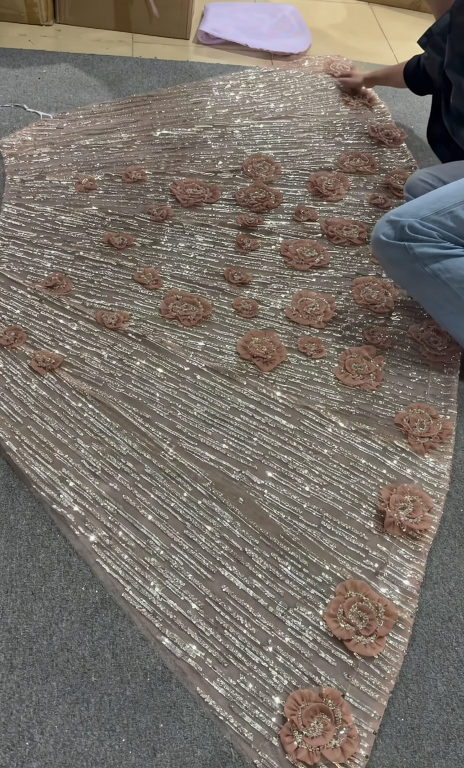
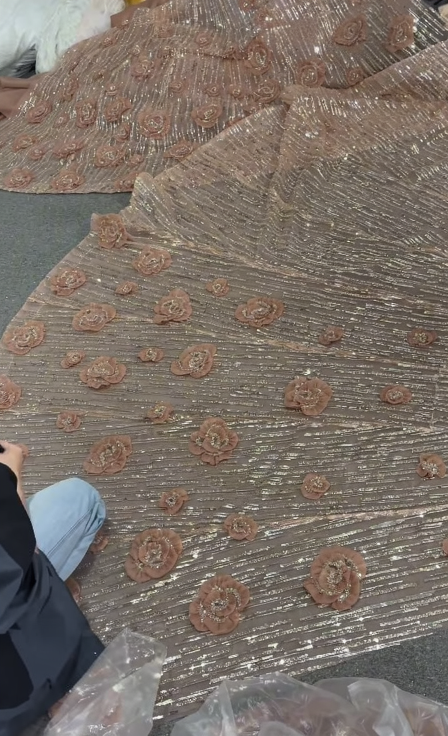
When the lower half of the skirt is ready, we begin the long work of arranging the flowers. The pre made blooms are laid out across the skirt in a design that we plan on paper first, then adjust in person.
We step back constantly to look at the gown as a whole. A flower that looks perfect on a worktable can look crowded or sparse on the body, so every bloom is distributed by hand until the coverage feels balanced and the movement remains beautiful.
Constructing the Detachable Train
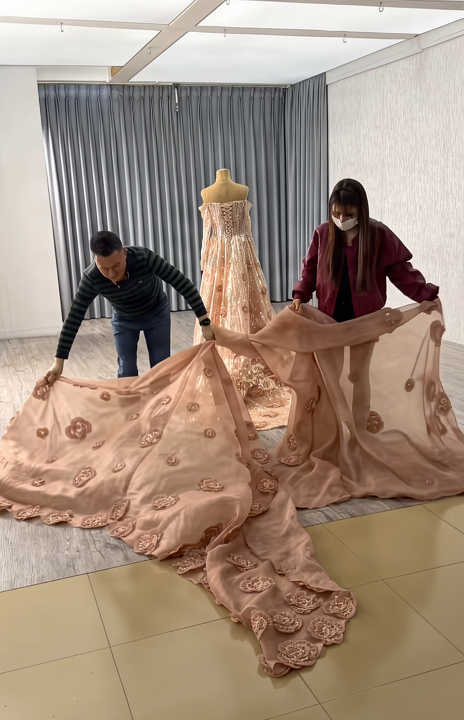
Now we come to the feature that makes this particular gown so special: the detachable train.
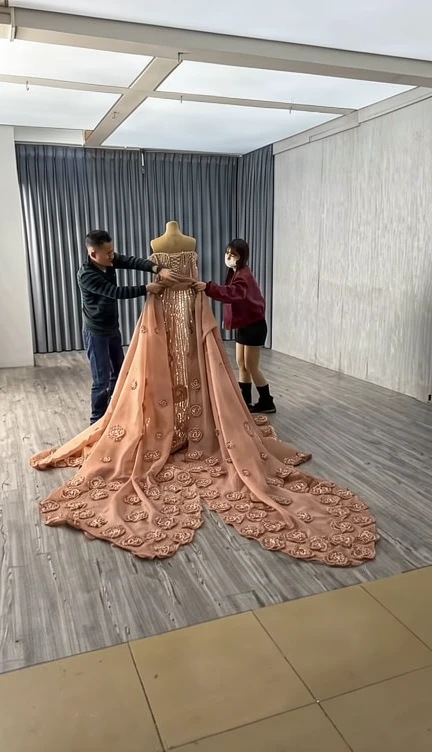
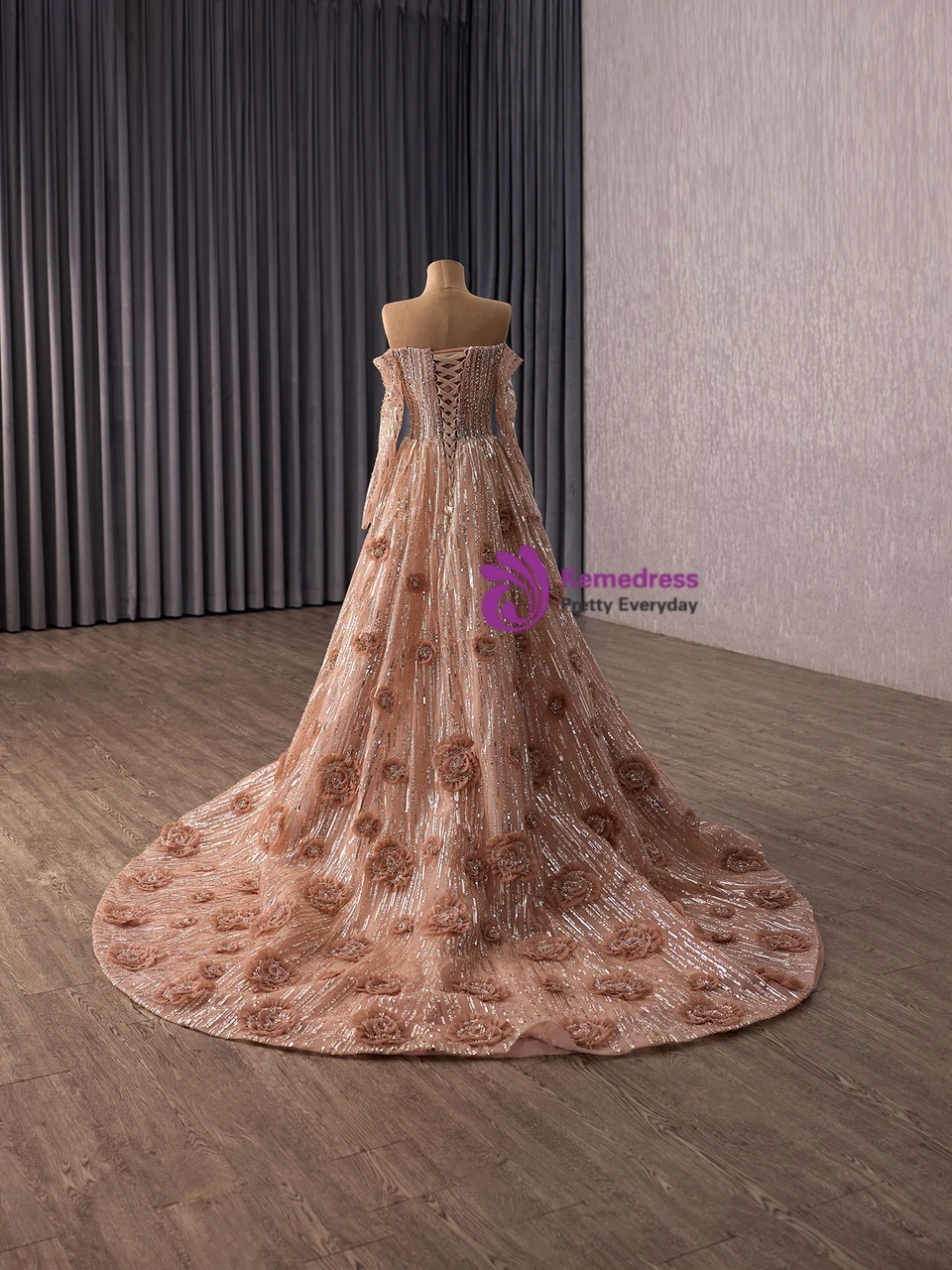
This is a two piece structure. The main body is the A line skirt you have read about above. The train is a separate piece, and it is just as heavily worked as the rest of the gown, covered in the same dense sequins and dimensional flowers, set onto a chiffon base with a lovely drape.
Chiffon was chosen on purpose. It moves. When the wearer walks, the train floats behind her like a wake of light, catching the air and lifting with every step, so she glides rather than shuffles.
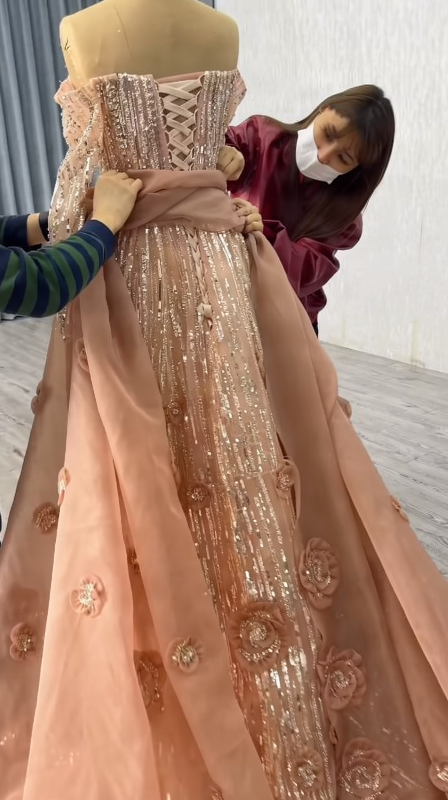
The train attaches with hidden snaps on either side of the waist. We position them carefully and invisibly, so when the train is detached, the A line skirt can be worn completely on its own with no visible trace of the fastenings.
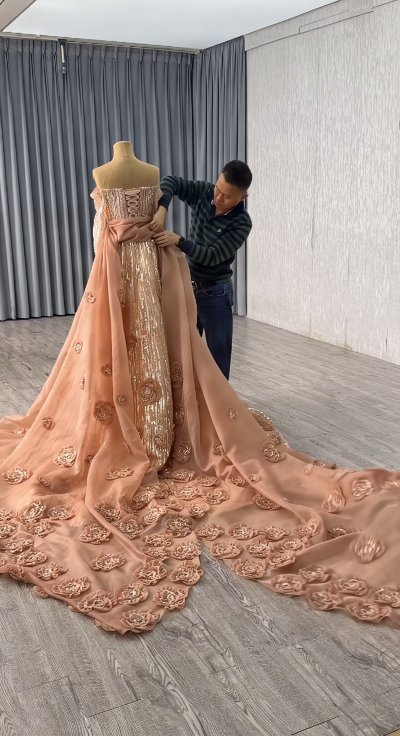
No bulges, no hooks, no clues. The wearer gets two completely different looks from a single gown: a full, dramatic entrance with the train and a clean, modern, easy to dance in A line dress without it.
For a prom night that starts with a grand reveal and ends with dancing, this is close to perfect. If you prefer a dramatic silhouette without a separate train, long prom dresses with elegant formal silhouettes offer another way to create that entrance.
The Final Fitting and Surface Check
The final fitting is not simply about whether the gown fits. We check how the embellishment behaves when the wearer moves, how the sleeves sit around the arms, how the skirt falls from the waist and whether the train follows naturally behind her.
Every seam is checked. The flowers are looked at individually. Loose threads are removed, beading is inspected and the placement of the train is tested again.
A gown with this much detail deserves that final pause before it leaves the workroom.
Why We Still Make It This Way
People sometimes ask me why we do not just speed this up. Why not print the flowers, glue the sequins or automate the beading?
The answer is simple: you can tell the difference. You can see it in the way the light moves across a hand arranged flower. You can feel it in the weight and drape of the fabric.
Years from now, when a daughter is trying on her old prom dress, she can hold it and know that somebody made this for a real person, with real hands, over a very long time.
Every gown that leaves our workshop carries those hours inside it. Every gown is built around one person: her height, her shoulders, her proportions and her favorite way to move and dance. That is the promise we make with every order, and it is why the hours never feel wasted.
The wait may be long, but when the light catches those hand set petals on the night she finally wears it, you understand exactly why.

For anyone comparing colors and silhouettes, champagne prom dresses for elegant evening celebrations offer the same soft, luminous color direction, while pink prom dresses with romantic feminine details create a brighter version of the same floral mood.
And for those who love the sparkle itself, the craftsmanship behind sequin prom dresses with intricate embellishment is where the smallest details can make the biggest difference.
One Gown, Two Distinct Looks
With the dramatic detachable train attached, the gown makes a grand entrance. Remove it, and the same A line silhouette becomes lighter, easier to move in and ready for the rest of the evening.
More Behind the Making
See how custom prom gowns are developed through embellishment, detachable details and hand finishing.
Discover how appliqués are positioned and finished on a formal gown.
Compare detailed handwork with faster production approaches.
Learn more about delicate decorative details and durability.
Explore the thinking and handwork behind couture prom construction.