
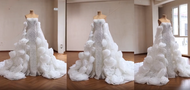
Are 2-in-1 Wedding Dresses Worth It? (Detachable Train Pros, Cons & Studio Testing)
Posted by Li on 24th Jun 2026
You’ve been asking about that haute couture wedding dress. The one with the detachable rose cape. So I figured I’d sit down and tell you how it actually came together—not the pretty marketing version, but the real, needle‑pricked, late‑night kind of story.
I’m Li. I’ve been sewing couture for over a decade. And this wedding dress? It nearly broke us. In a good way. Mostly.
Where it starts: the skeleton
Before any lace or beads touch the table, we have to get the fit right. That means draping a plain cotton toile on the mannequin—pinning, stepping back, repinning, arguing a little over whether the curve of the waist should drop by two millimeters. (Spoiler: it did.) The strapless neckline alone took three tries. Too loose, it slips. Too tight, the bride can’t breathe. We want her to breathe.
Once the base shape is locked, we move to the actual gown fabric. The inner dress is a fully lined, form‑fitting lace number. It has to stand on its own—light enough for dancing, but strong enough to hold a small universe of beads.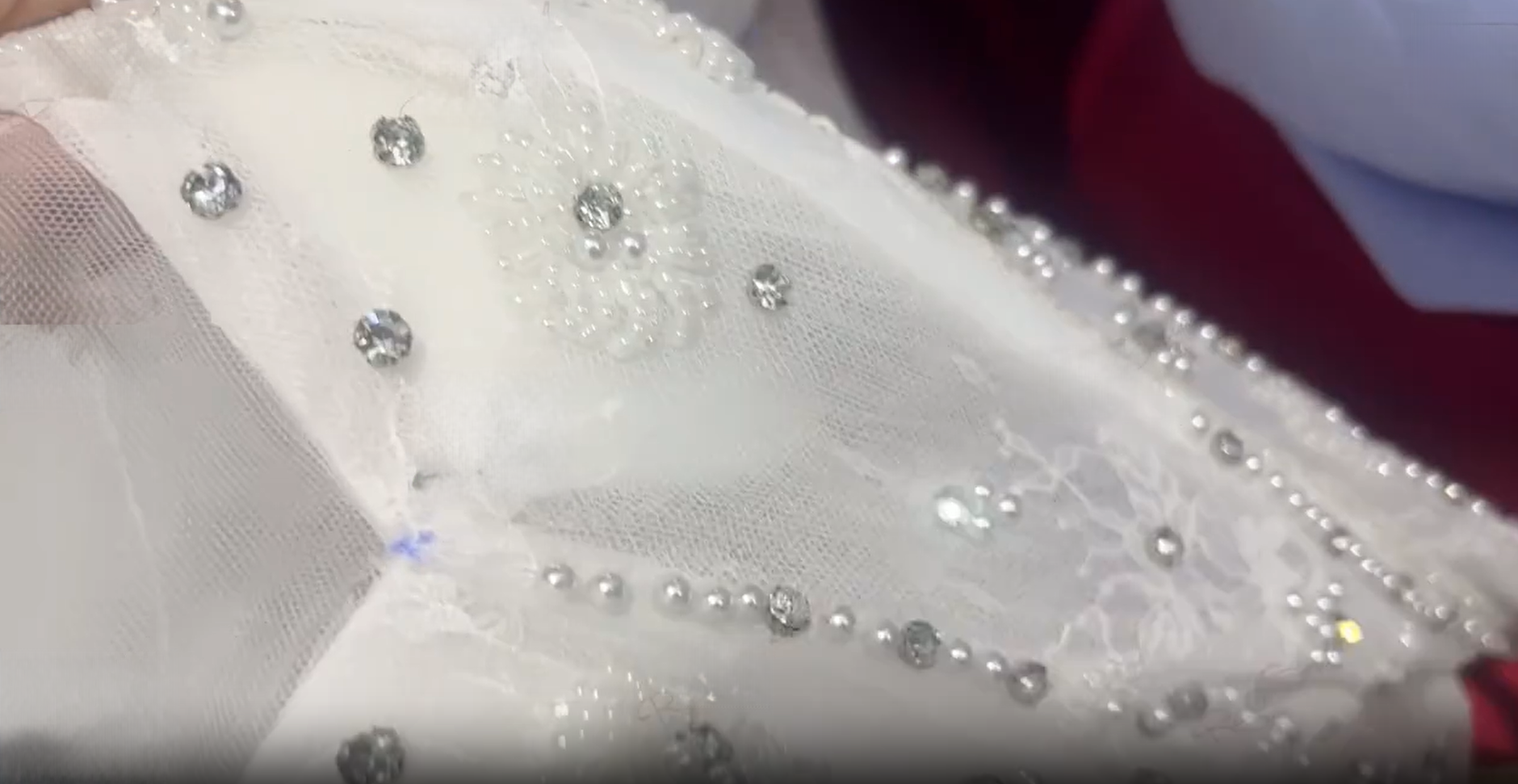
The roses: where things got painful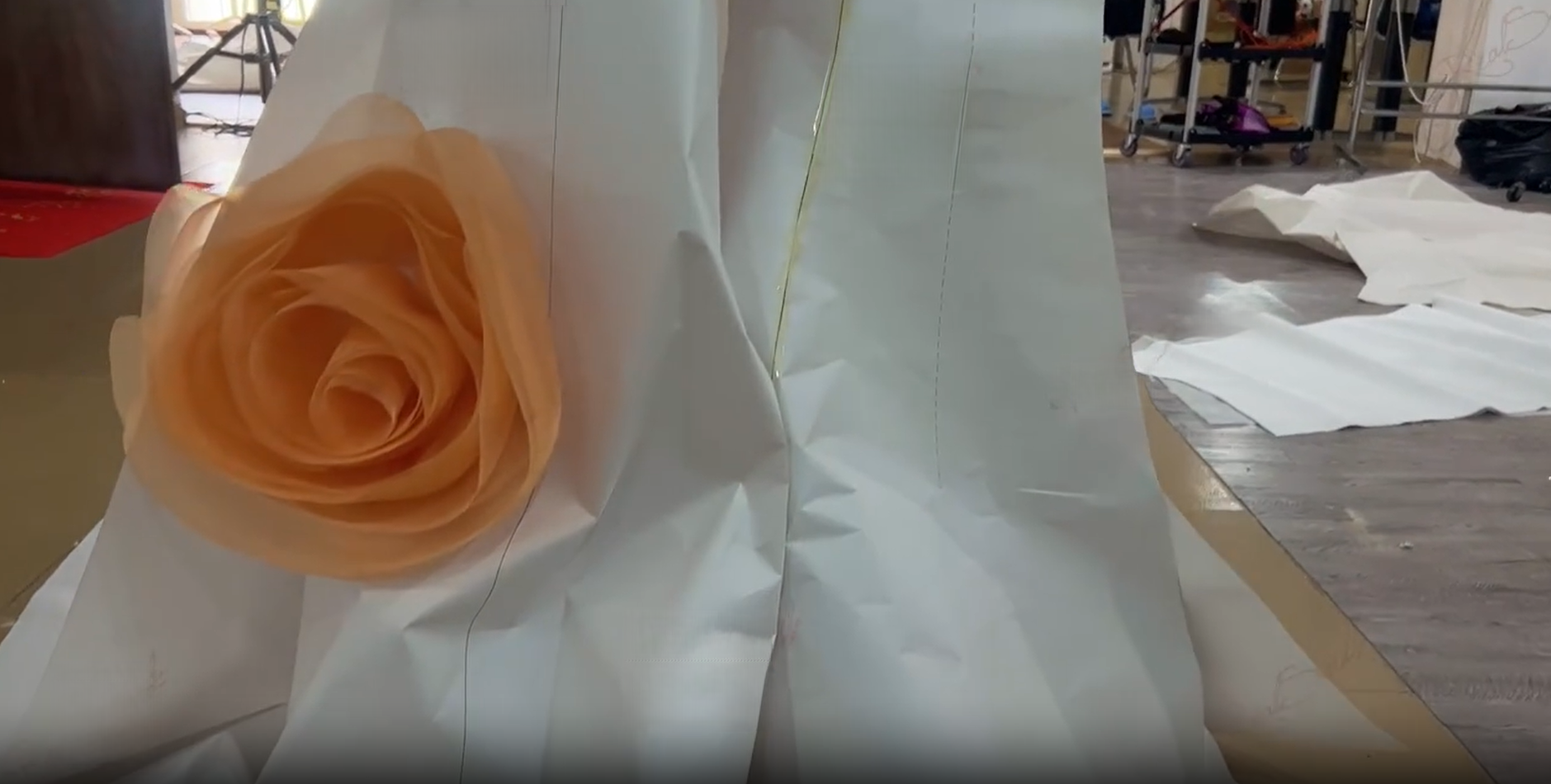
We knew the cape would be the star. What we didn’t fully anticipate was just how many hours those organza roses would eat up.
Each rose starts as a piece of stiffened tulle or organza. We cut petal shapes—by hand, because machines make them look too perfect and dead. Then we roll and stitch each one individually. There’s a template for size, but honestly, every rose comes out a little different. That’s the point. The first batch we made looked like clones. Too neat. Too fake. We scrapped them and started over, this time letting each petal curl naturally.
By the end, we had piles of roses all over the worktables. My fingers were permanently pricked. One of the younger seamstresses asked if we could just buy pre‑made flowers. I laughed. Then I cried a little inside.
Beading: the part no one talks about
Everyone loves the sparkle. No one loves sewing on four thousand beads.
Here’s the thing: every single bead on the gown and cape is stitched by hand. And not with one flimsy thread pass. Four stitches per bead. Yes, four. Because we’ve learned the hard way that beads fall off at the worst moments—like right before a bride walks down the aisle. So we overdo it. It’s tedious. It slows everything down. But we don’t cut that corner.
The cape gets the same scattered bead pattern—just enough to catch light without drowning out the roses. Getting that balance right took two tries. The first attempt was too heavy. The roses got lost. So we ripped out half the beads and redid them. My neck still hurts thinking about it.
Putting the cape together
The cape is made in three separate panels that eventually get sewn together. Before that happens, we lay out all the roses on each panel. Moving them around. Stepping back. Moving them again. You want more density at the bottom for drama, lighter near the shoulders so it doesn’t look like a rose bush exploded.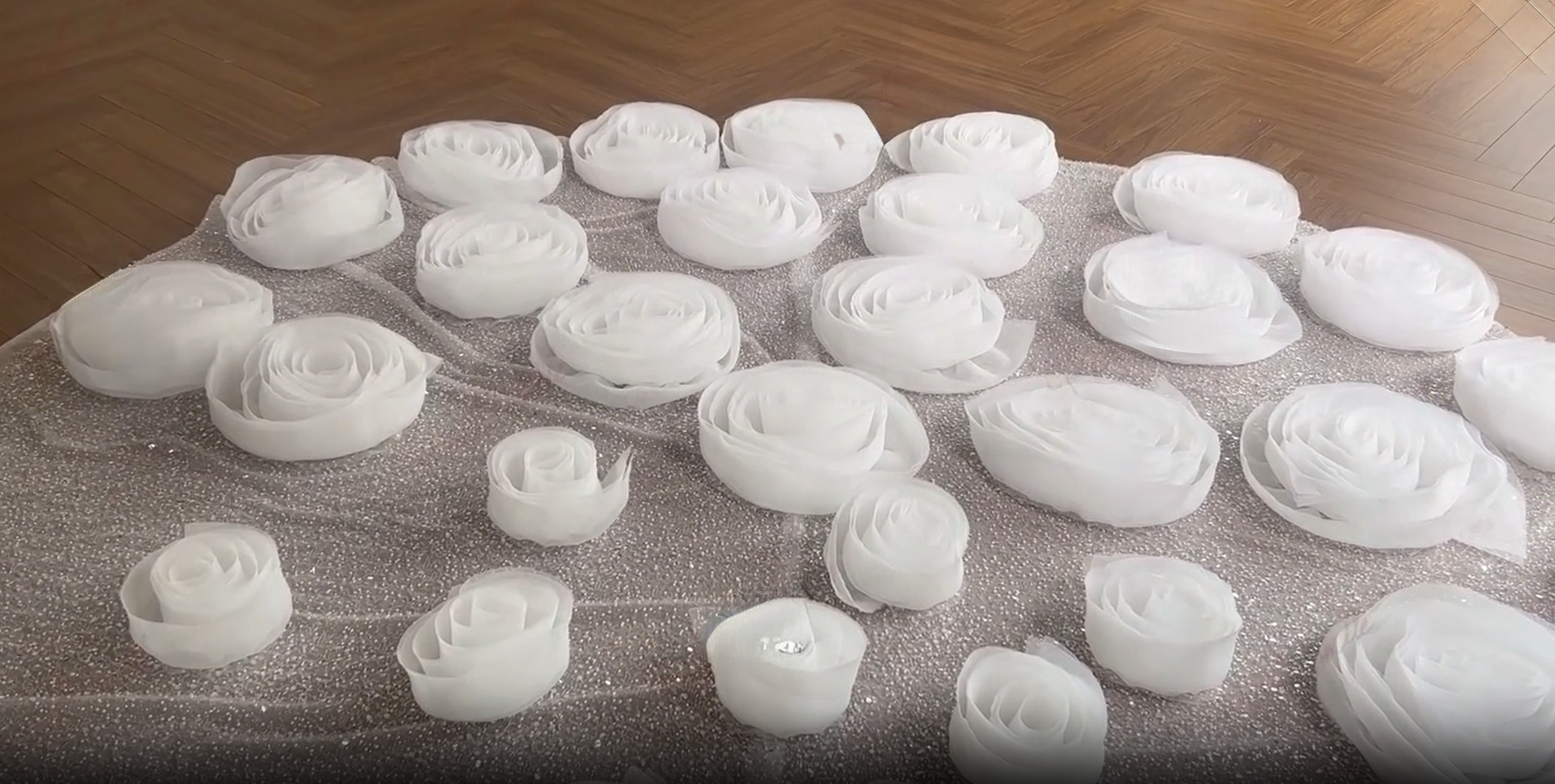
Then comes the slow part: stitching each rose individually onto the fabric. Each bloom gets several hidden stitches. We don’t glue anything. Ever. Glue is for crafts, not couture. With over a hundred roses, this step alone took more than a week. One seamstress worked on nothing but roses for eight days straight. She named a few of them. I’m not joking.
The attachment system between cape and gown? That was a headache. It has to be invisible, strong enough to hold the full train, and easy to remove for the reception. We tested it maybe thirty times. The first version was too stiff. The second version made a weird clicking sound. The third version finally worked. I held my breath the whole time.
The fitting that almost went wrong
Final fitting day. We put the gown on the mannequin, added the cape, stood back. One rose on the left side was slightly crooked. Not enough that a guest would notice, but enough that I noticed. So off came the cape. That one rose got restitched. Then everything went back on.
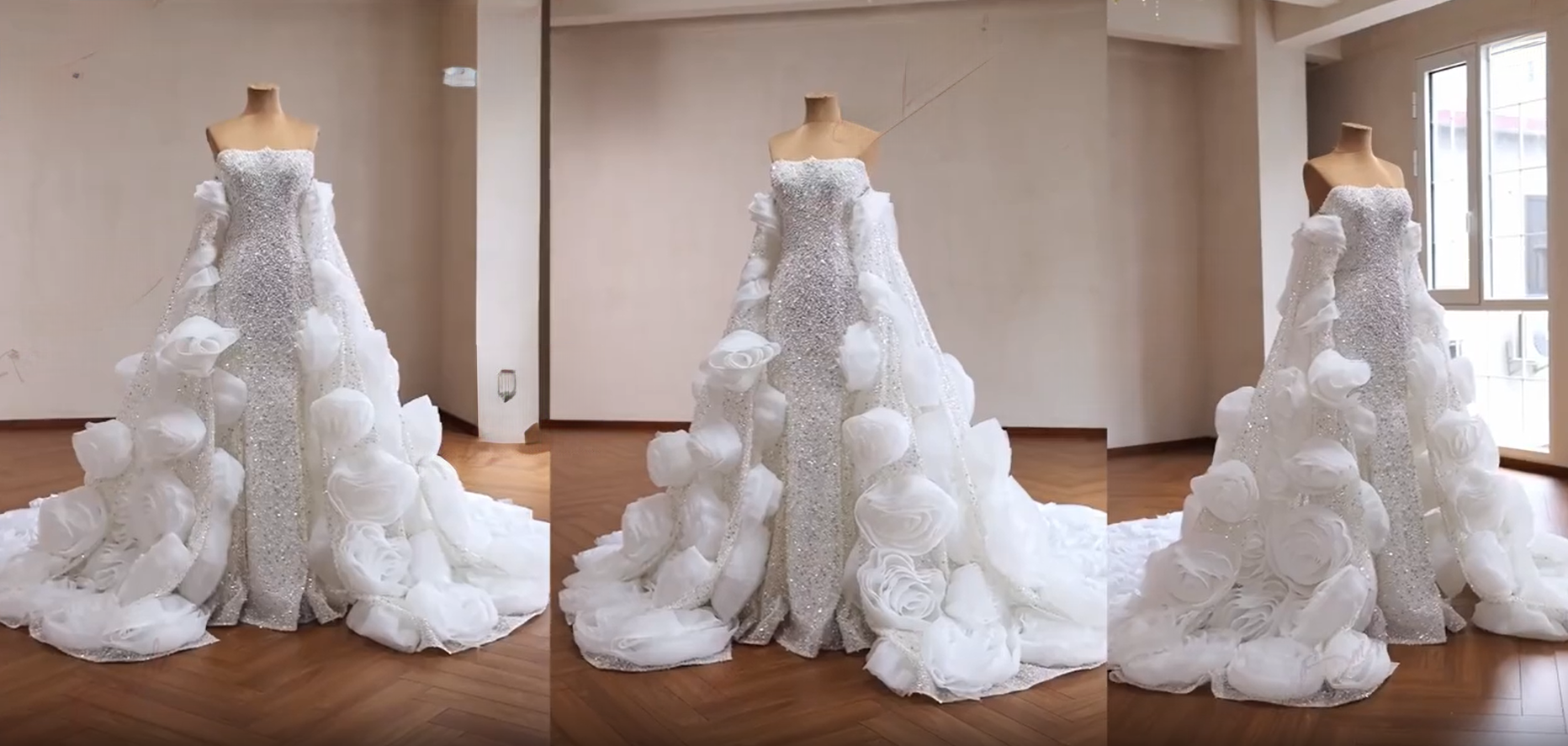
The inner gown by itself? Gorgeous. Sleek, beaded, mermaid silhouette. A bride could wear it alone and turn heads. Then you snap on the cape, and it becomes a completely different dress—dramatic, voluminous, unforgettable. That’s the whole point of a two‑in‑one. You get the ceremony look and the reception look without buying two dresses.
Why we do it
This dress took weeks. Not because we’re slow, but because rushing would ruin it. There were moments I wanted to throw a half‑finished rose across the room. There were nights I went home with aching hands and no energy to cook dinner. But when we finally saw it all together—the beads catching light, the roses cascading down that train—it made sense.
We’re not making clothes. We’re making the thing someone remembers for the rest of their life. That’s worth the sore fingers.
Thanks for reading the real version.
— Li
More Convertible Dressmaking Stories
See how detachable trains and convertible silhouettes are engineered for flexibility and movement.
Compare another convertible formal design and its transformation.
See how a detachable train is incorporated into another formal silhouette.
Explore a more dramatic detachable bridal detail.
See how fit and movement are considered in bridal construction.