
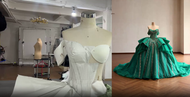
How Kemedress Makes an Emerald Green Ball Gown | Behind the Scenes
18th Aug 2026
How Kemedress Makes an Emerald Green Ball Gown: Behind the Scenes
Follow the making of an emerald green ball gown from pattern making and precision cutting to corset construction, layered skirt assembly, gold embellishment, final fitting, and quality inspection.
A dramatic ball gown may look effortless when it reaches the spotlight, but its silhouette begins long before the finished dress is photographed. It starts with measurements, pattern work, fabric selection, internal structure, and hundreds of small construction decisions.
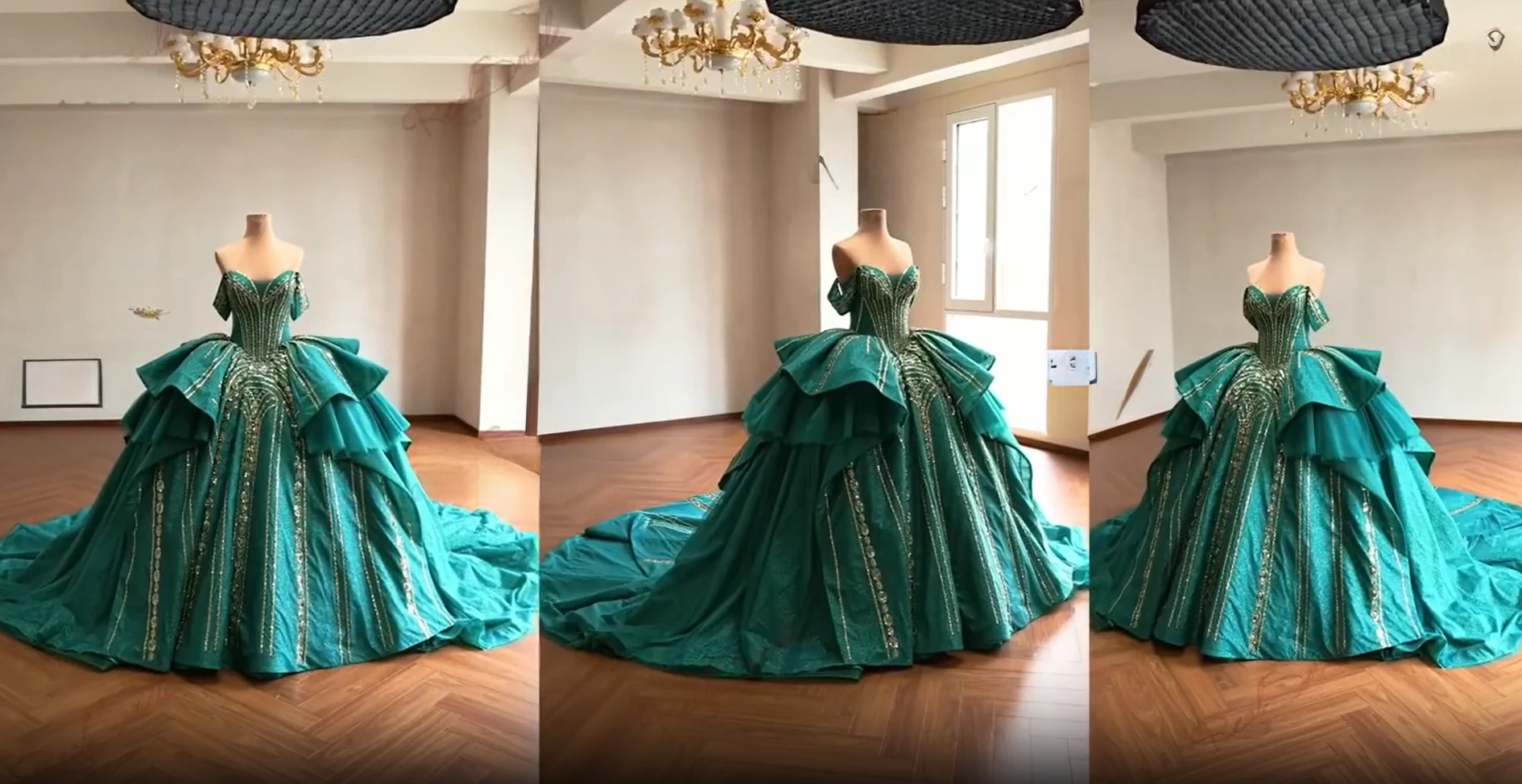
This emerald green ball gown brings several techniques together: shimmer taffeta, a structured corset bodice, layers of stiff tulle, satin lining, horsehair braid, and radiating gold sequin and bead details. Each component has a purpose, and every stage affects the final shape.
The workshop process offers a closer look at how a formal gown is constructed and why details that remain hidden inside the dress can be just as important as the embellishment visible from the outside.
1. Choosing the Materials for an Emerald Green Ball Gown
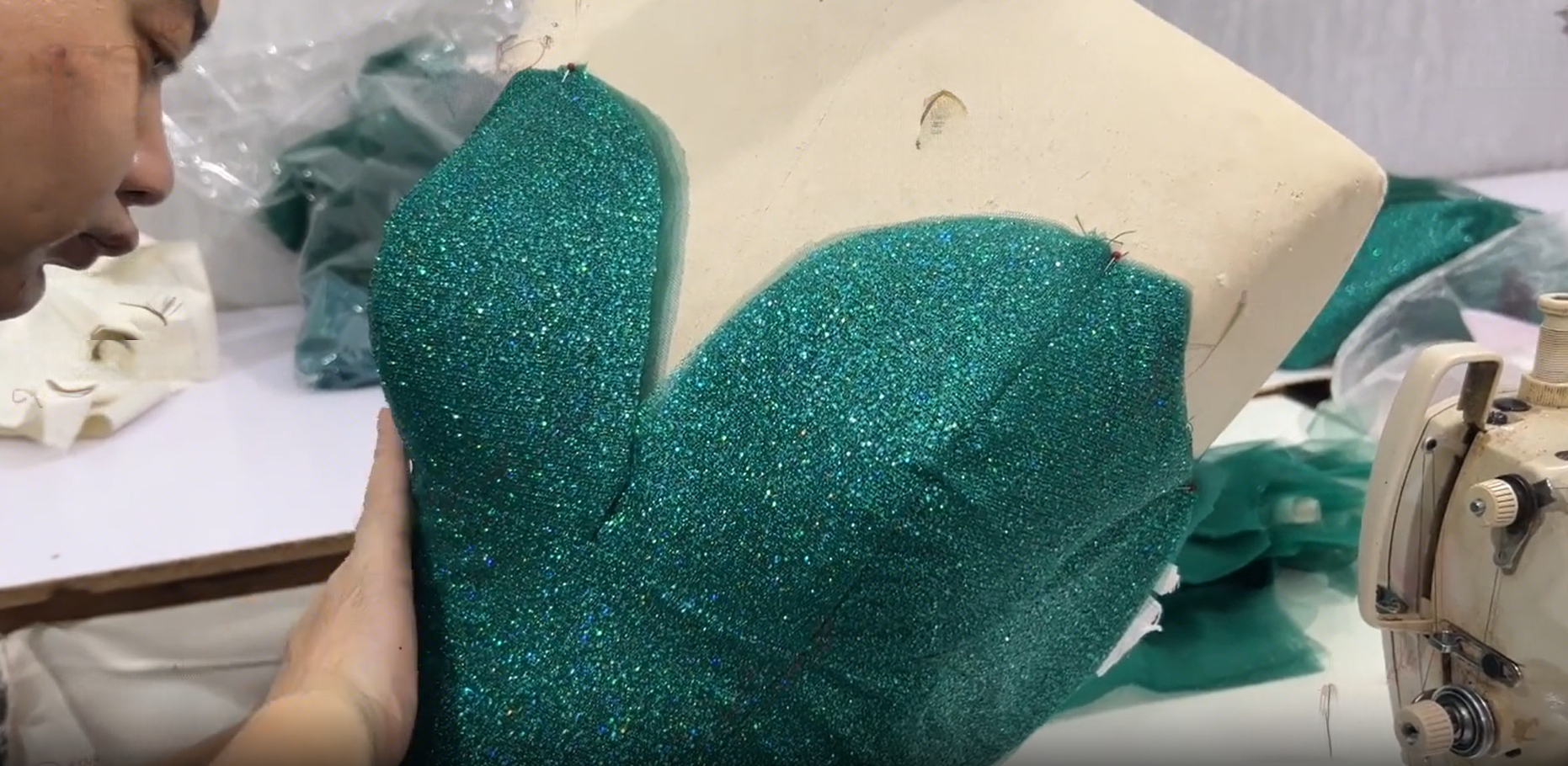
Fabric choice determines how a formal gown looks, feels, and moves. For this design, the outer fashion fabric is a mid-weight emerald shimmer taffeta with a fine glitter finish woven into its surface. Taffeta provides enough body to support a large skirt while maintaining a crisp, controlled silhouette.
The outer fabric is only one part of the construction. Stiff tulle contributes volume, satin lining creates a smoother interior, and horsehair braid helps the hem stay open. Heavyweight fusible interfacing reinforces the bodice, while reinforced plastic boning provides internal support.

2. Pattern Making & Muslin Fitting
A custom ball gown begins with measurements rather than the final fabric. The pattern maker works from the bust, underbust, waist, hips, shoulder width, shoulder-to-waist, nape-to-waist, and floor-length measurements.
Princess seams are drafted into the bodice so the shape can be distributed across the torso. A full muslin toile is then constructed as a fitting prototype. During fitting, the neckline, waist shaping, seam placement, and skirt fullness can be adjusted before the final fabric is cut.
Why the muslin toile matters
A prototype gives the pattern maker an opportunity to identify fit and proportion issues before the final emerald fabric is committed. It is an important preparation stage in custom dressmaking.
3. Precision Cutting: How a Ball Gown Gets Its Shape
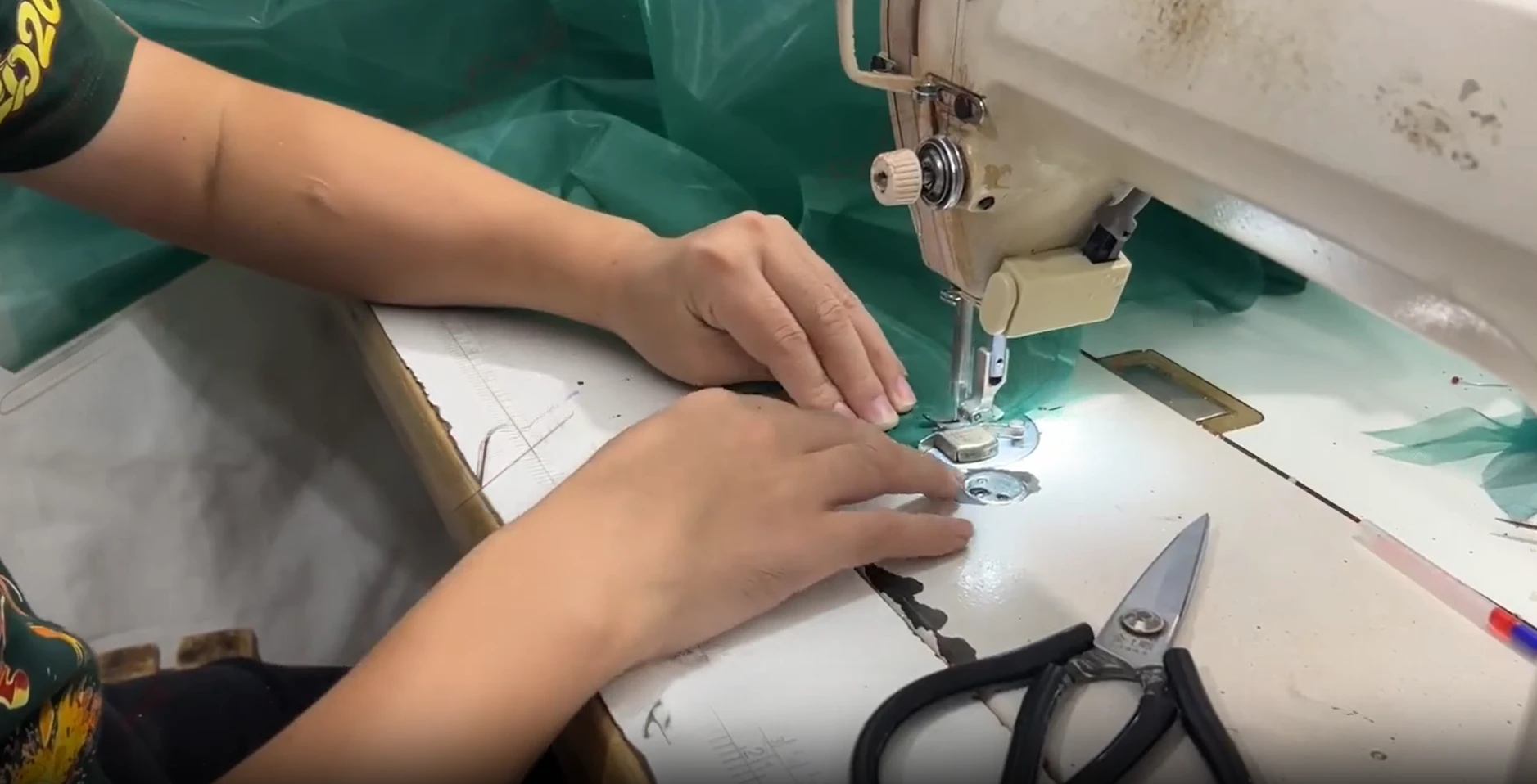
After the pattern is approved, the emerald shimmer fabric is laid flat on a wide cutting table. Selvage edges and grainlines are checked carefully before individual panels are cut.
Grainline matters because a skirt of this scale must hang evenly. Each panel receives matching notches so seams can be aligned during assembly. Interfacing, lining, tulle, and crinoline are cut separately according to their own pattern pieces.
4. Building the Corset Bodice
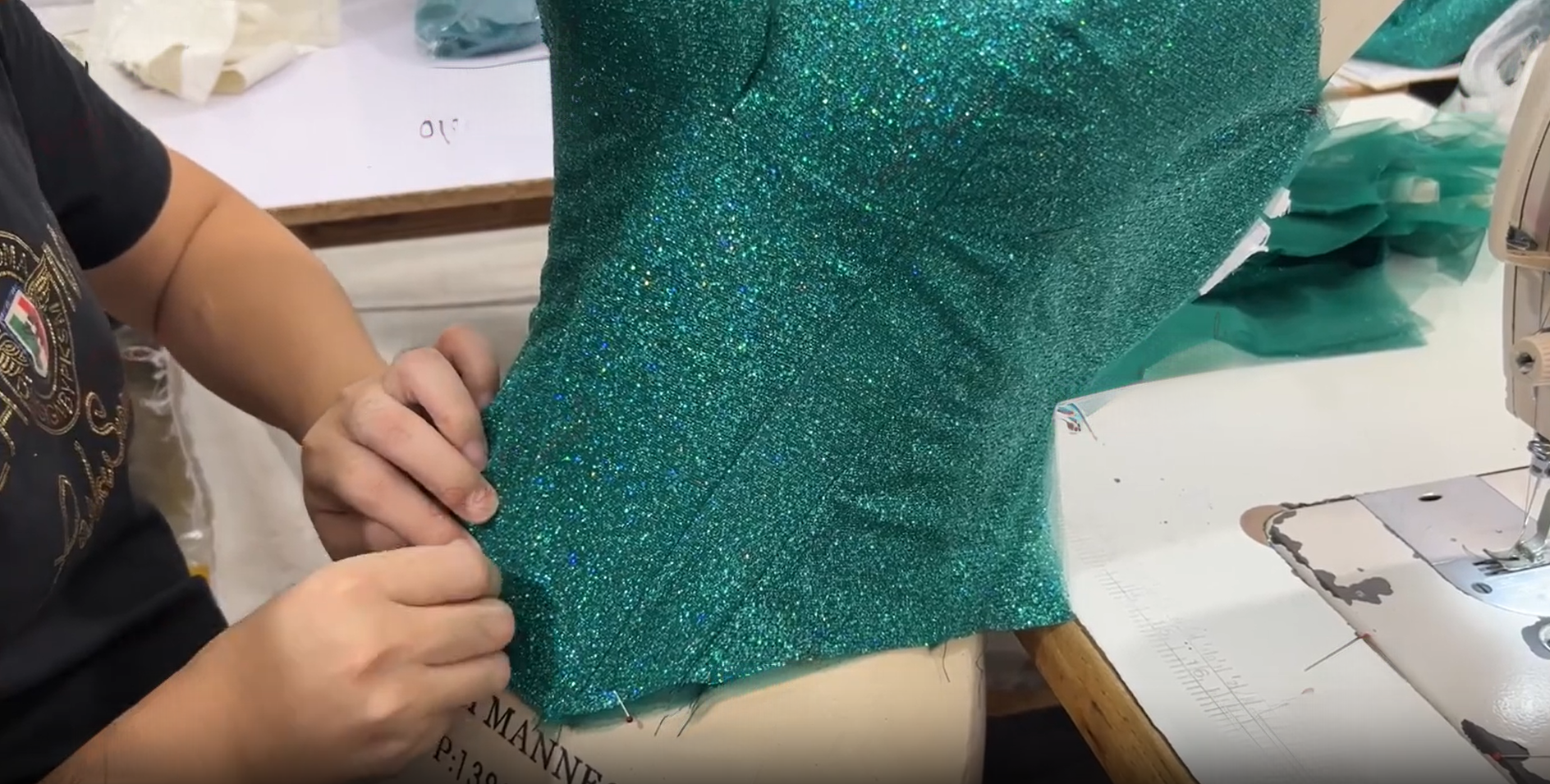
The corset bodice provides the structural foundation of the gown. Heavyweight fusible interfacing is applied to the outer fabric and lining to add body and help prevent unwanted stretching.
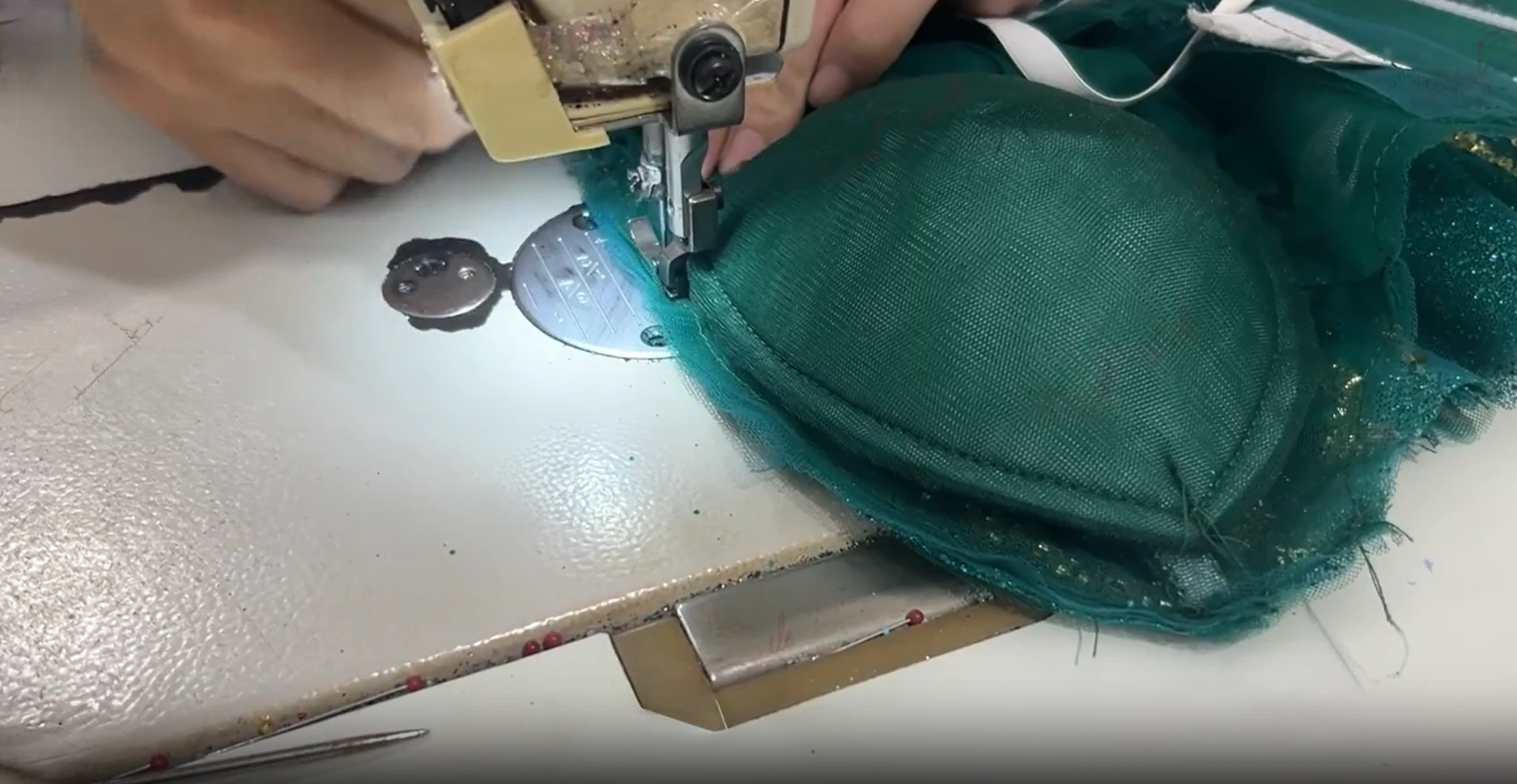
Boning channels are positioned along the princess seams and side panels. Reinforced plastic boning is cut to length, inserted into the channels, and secured so the bones remain stable during wear. Molded bust cups are incorporated into the lining before the outer bodice and lining are joined.
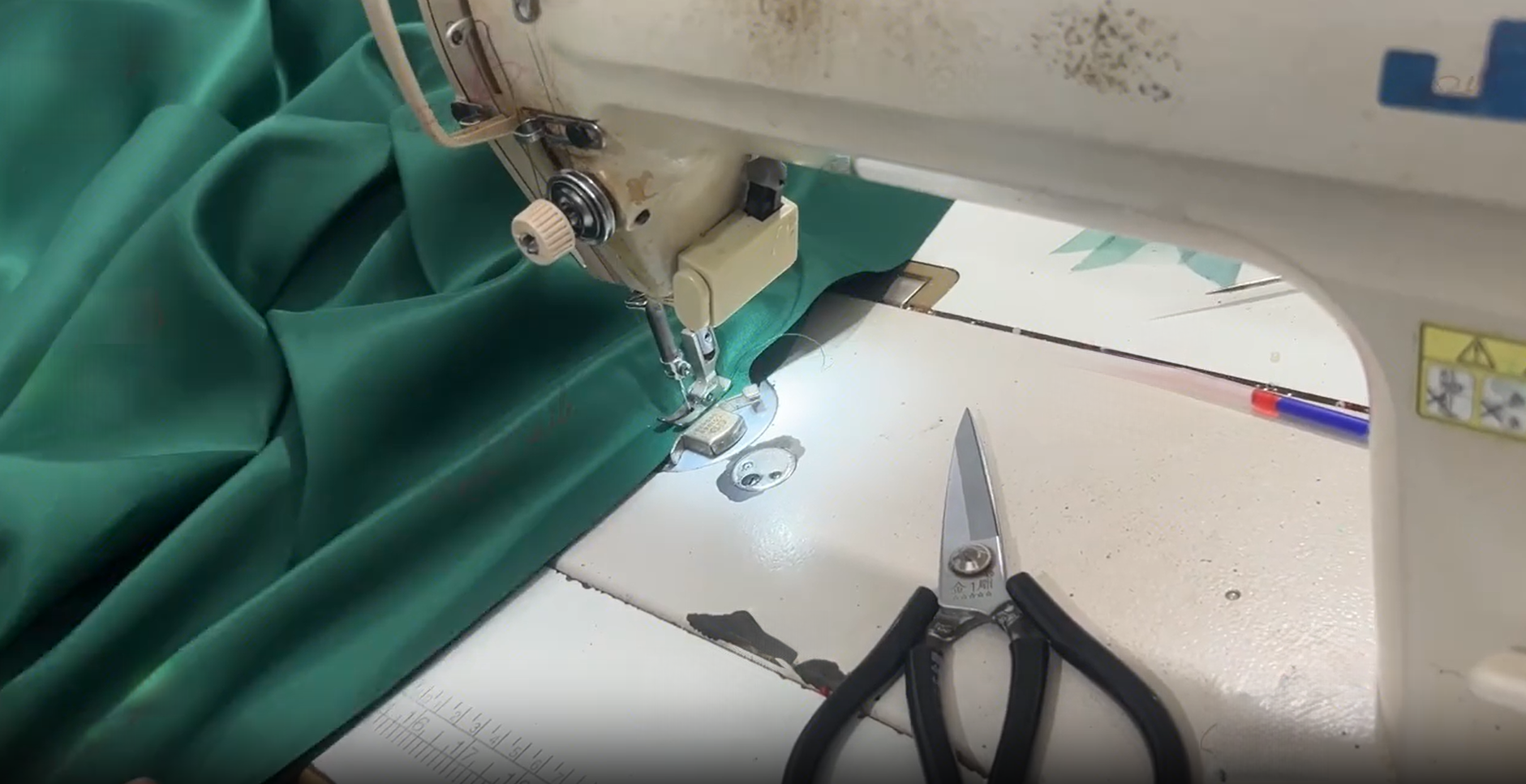
Once the bodice is assembled, steam pressing helps establish clean edges and controlled curves. At this stage, the gown begins to resemble the final silhouette, but much of its structure remains hidden beneath the visible fabric.
5. Building the Multi-Layer Ball Gown Skirt
One of the defining features of a full ball gown is its volume. Instead of treating the skirt as one layer, the workshop builds several systems that work together.
Outer Skirt
Emerald shimmer taffeta forms the visible silhouette and carries the gold embellishment.
Tulle Layers
Stiff tulle creates body and supports the dramatic skirt volume.
Satin Lining
Smooth satin creates a comfortable inner layer against the body.
Each layer is gathered evenly before being attached to the bodice waistline. Two parallel rows of long stitches help form controlled gathers, which are then distributed by hand. Even gathering is important because uneven fullness can create visible lumps beneath the outer fabric.
Horsehair braid is sewn into the outer hem to help the skirt maintain its bell shape. As each layer is attached, the waistline becomes an important structural junction that must carry the combined weight of the finished skirt.
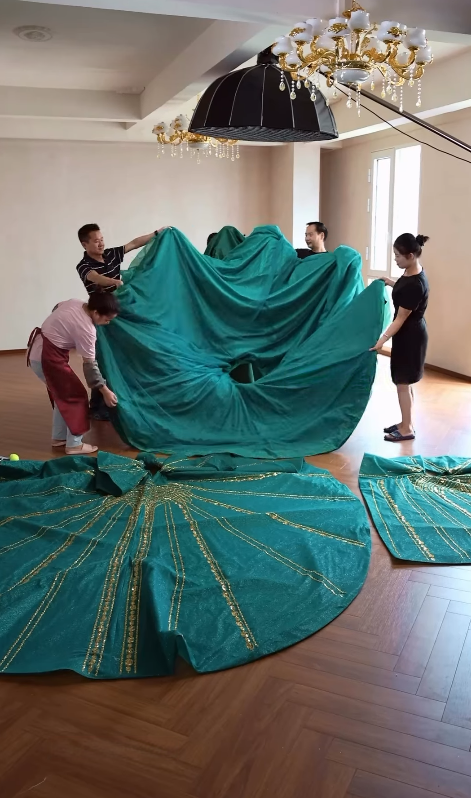
6. Adding the Radiating Gold Sequin & Bead Details
The gold embellishment is designed to work with the gown's construction rather than simply sit on top of it. Sequin strips follow the princess seams of the bodice and continue vertically across the skirt panels.
Individual gold beads and paillettes are positioned around focal areas such as the bust, waistline, and leading edges. Depending on the curve and placement, decorative strips may be secured with narrow machine stitching or by hand.
Beads can be sorted by size and shade before application so the decorative pattern remains consistent. Because the embellishment follows the gown's structural lines, placement requires both visual planning and careful handwork.
If you enjoy this level of embellishment, our heavy bead prom dresses collection offers more formal designs featuring elaborate beadwork and sparkling surface details.
Key Dressmaking Techniques Used in This Gown
Several traditional dressmaking techniques work together beneath the finished surface. Understanding them makes it easier to see why a structured ball gown holds its shape and moves the way it does.
Princess Seams
Long curved seams shape the bodice while helping distribute the structure across the torso.
Fusible Interfacing
Interfacing reinforces the bodice fabric and helps maintain a stable shape.
Horsehair Braid
Horsehair braid adds controlled structure to the hem and helps the skirt hold its shape.
Boning
Boning supports the corset bodice and helps stabilize the upper silhouette.
Inside the Dressmaking Workshop
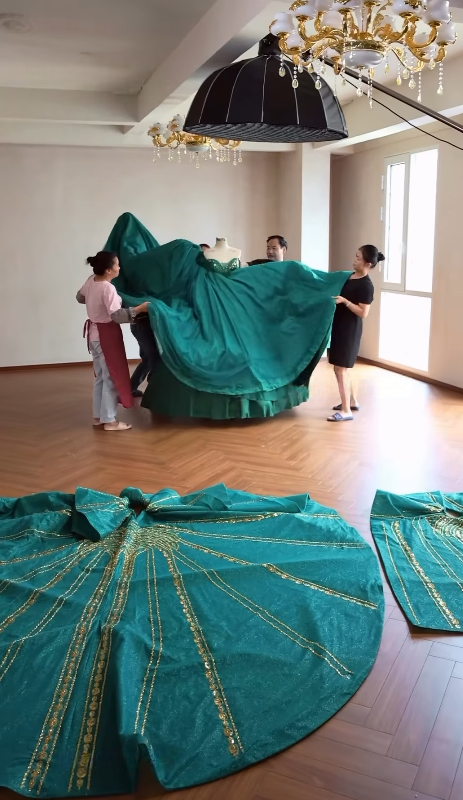
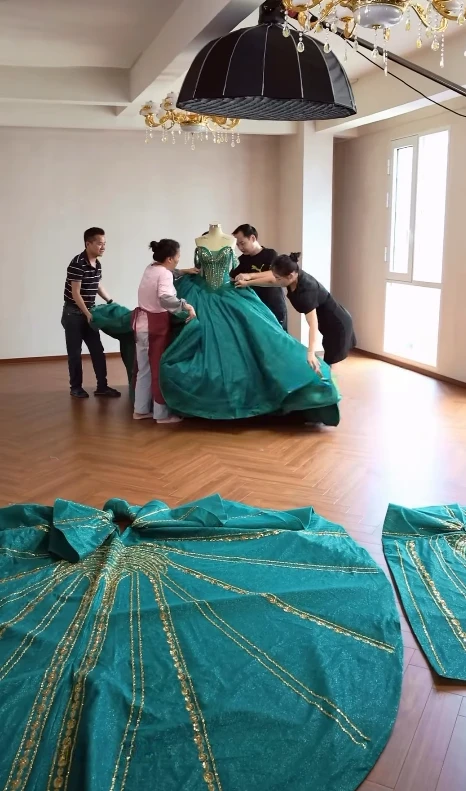
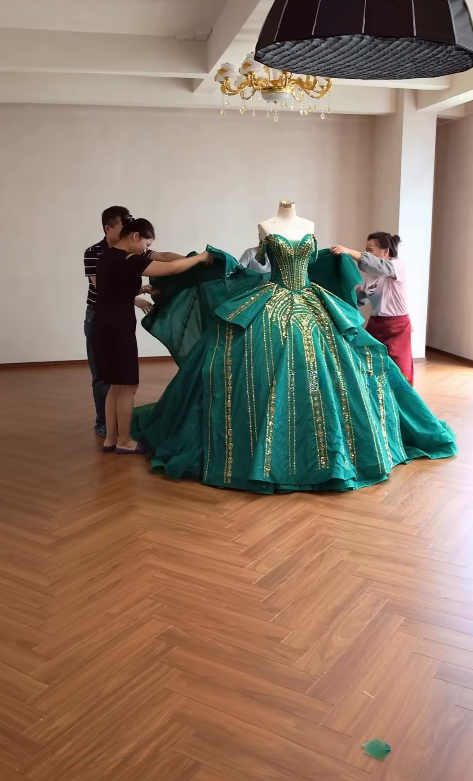
Large formal gowns often require several people to handle the fabric during construction and fitting. The skirt needs enough room to spread naturally while the bodice, waistline, train, and decorative details are checked.
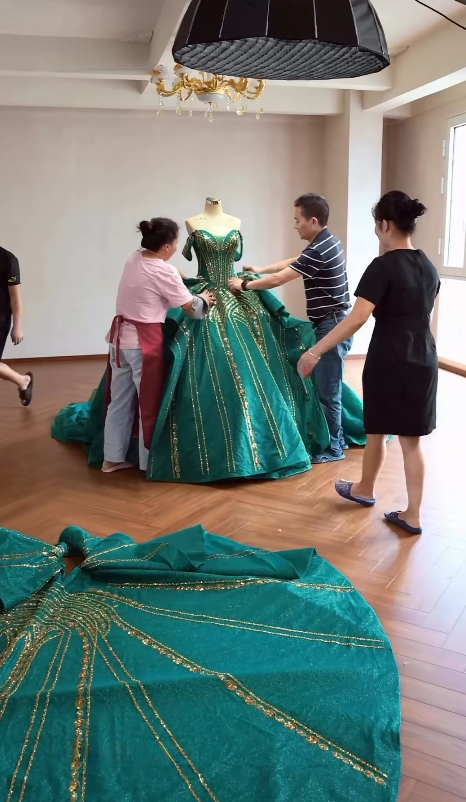
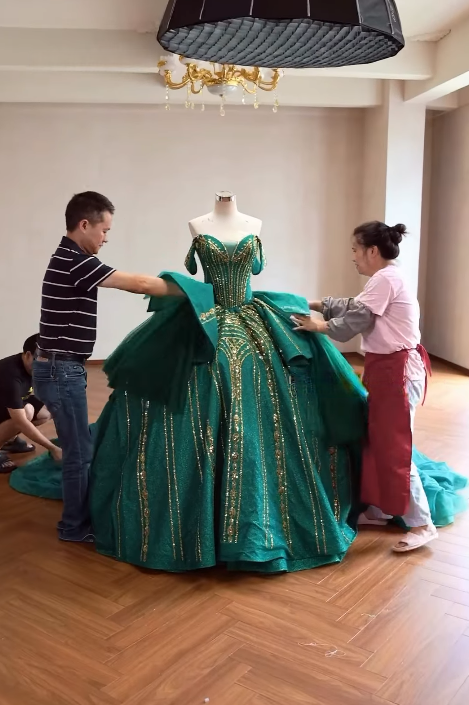
7. Invisible Zipper, Hem & Final Finishing
Once the main construction is complete, the invisible zipper is installed along the back seam using a concealed zipper foot. A hook-and-eye closure is added at the top for additional security.
The hem is checked with the client wearing her actual event heels so the final floor length can be adjusted appropriately. It is then hand-stitched for a clean, discreet finish.
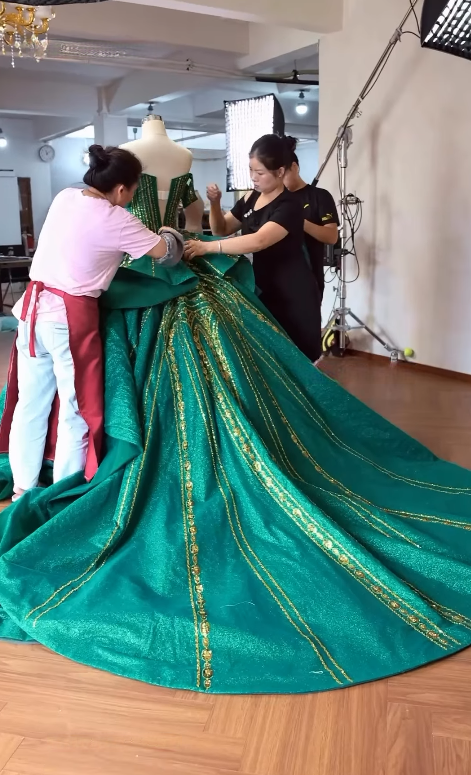
Loose threads are trimmed, seams are pressed, and curved areas are shaped with professional pressing equipment. These finishing steps may look small, but they have a major effect on the polished appearance of the finished gown.
8. Final Fitting & Quality Inspection
Before the gown leaves the atelier, the finished silhouette is inspected carefully. The team checks the seams, boning positions, zipper function, hem level, decorative surface, and overall balance of the skirt.
The gown is then steam-pressed and prepared for delivery. The final inspection takes place before the gown is wrapped in protective tissue and packed.
Final Workshop Inspection
- Seams inspected
- Boning positions checked
- Zipper function tested
- Hem level reviewed
- Gold embellishment inspected
- Overall silhouette checked
- Gown steam-pressed
- Protective packing completed
9. A Note About the Beading Process
We also want to be transparent about one part of this particular production run. The workshop did not have enough time to photograph and document every stage of bead sorting, layout planning, and individual paillette application.
That does not mean the decorative work is less important. Bead sorting, placement, and hand-sewing are among the more labor-intensive elements of an embellished gown. This particular production run simply was not photographed at every stage.
Future production of this emerald green ball gown can provide an opportunity to document those details more completely. Craft deserves to be seen, and showing the work behind the sparkle gives customers a better understanding of how a formal gown comes together.
The Finished Emerald Green Ball Gown
From the first measurement to the final press, every stage contributes to the finished silhouette. Emerald shimmer taffeta establishes the color and body, the corset provides structure, layered tulle creates volume, and gold sequins and beads bring movement to the surface.
If you are drawn to dramatic formal silhouettes, explore our Haute Couture Prom Dresses for more statement-making designs.
For bridal inspiration, our ball gown wedding dresses collection offers another look at structured skirts, formal silhouettes, and elaborate gown construction.
Frequently Asked Questions About Ball Gown Making
How is a full ball gown made?
A full ball gown is built through several stages, including pattern making, fitting, precision cutting, bodice construction, layered skirt assembly, embellishment, finishing, and quality inspection.
Why does a ball gown need multiple skirt layers?
Multiple layers can provide structure, volume, comfort, and a controlled outer silhouette. In this gown, stiff tulle and horsehair braid help support the dramatic shape while satin lining creates a smoother interior.
What does boning do in a formal gown?
Boning helps the bodice maintain its shape and supports the structured corset construction. It also works with interfacing and seam structure to stabilize the upper part of the gown.
Why is grainline important when making a ball gown?
Correct grain alignment helps large skirt panels hang evenly. Incorrect alignment can affect how the fabric falls and may cause the finished skirt to twist or sit unevenly.
Can an emerald green ball gown be customized?
Customization depends on the specific design and production requirements. A custom fitting process can involve measurements, pattern adjustments, and fitting checks before final construction.
A statement gown starts with the right silhouette, fabric, structure, and finishing details. If you have a specific vision for a formal ball gown, explore Kemedress designs and customization options.
Explore Kemedress GownsCraftsmanship You Can See
A finished ball gown may look effortless under the lights, but the making of that gown involves careful planning at every stage. Pattern accuracy, fabric control, corset structure, layered construction, decorative placement, pressing, fitting, and inspection all contribute to the final result.
That is what makes this emerald green ball gown more than a sparkling statement piece. Beneath the color and embellishment is a carefully constructed garment built layer by layer inside the workshop.
At Kemedress, the beauty you see on the outside begins with the craftsmanship you do not always see underneath.
More Stories From the Workshop
Explore different approaches to color, silhouette, skirt structure and hand finishing.
See how floral beadwork transforms a structured green gown.
Explore how one gown can be styled and transformed in different ways.
Compare box pleats and gathered construction for fuller silhouettes.
Follow another ball gown through its construction stages.